
Quick report
- Cracking
- specific
- Collapsing
- specific
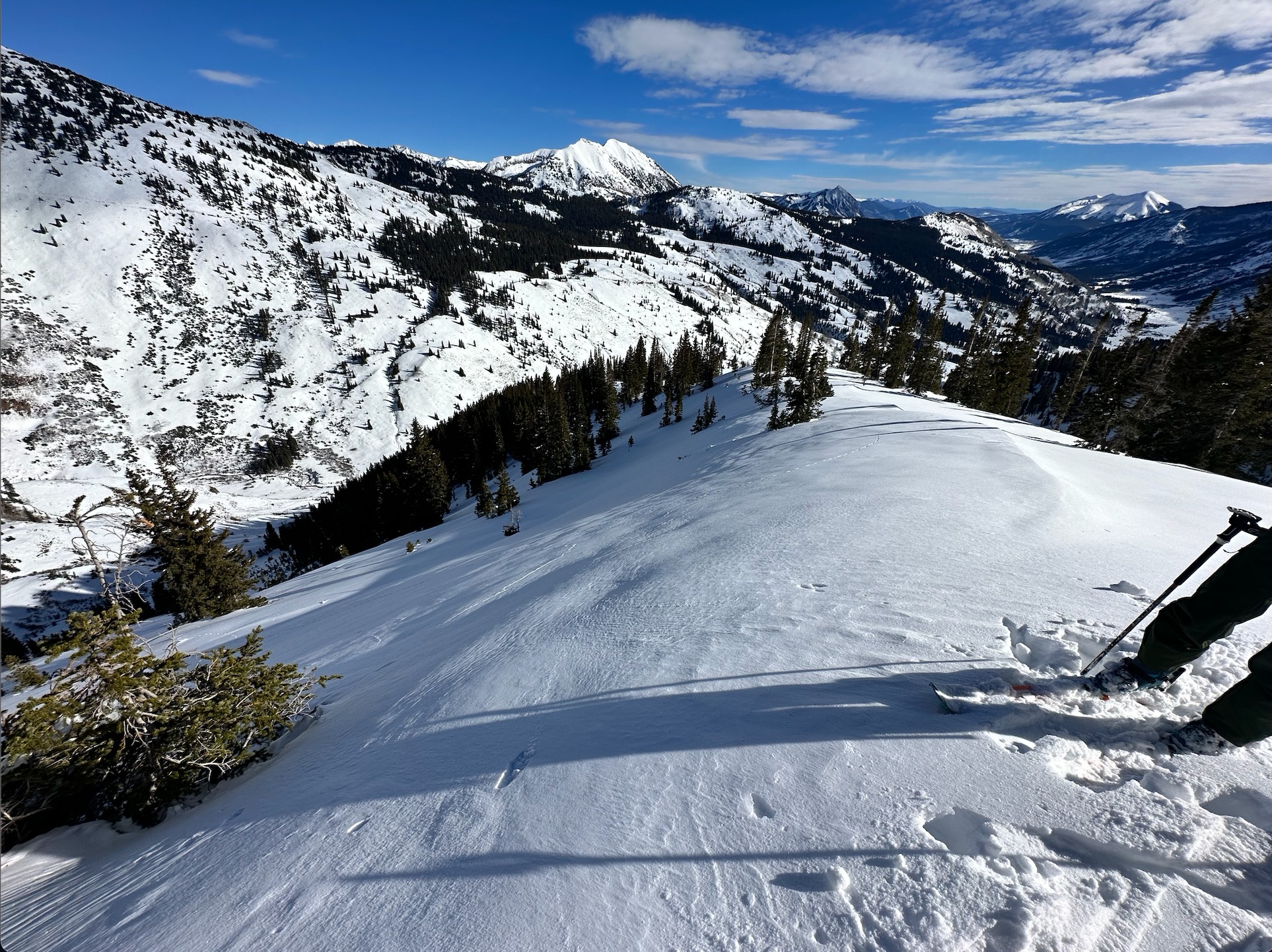
We went to investigate slab hardness at the uppermost elevations of the below treeline elevation band. In general, the snowpack was weak and soft, but even with the weak snowpack with little slab cohesion, we experienced a few large collapses with long-running cracks around 10,800 to 11,100 feet. It seems that slab avalanches remain possible in elevations just under 11,000 feet on the northerly-facing slopes. The snowpack below about 10,500 feet didn't cause much concern unless you were to find an isolated area of drifted snow.
Signs of instability appeared on shady slopes around 10,700 feet. Out top elevation was just over 11,000 feet.Weather
- Cloud Cover
- few
- Wind Loading
- none
- Snow Avail For Transport
- small smounts
Cold valley bottom with mild temps above the cold pool. Light winds.
Snowpack
Below treeline the snowpack is generally weak and shallow. As we gained elevation, collapses and cracks began to appear near 10,700 feet. Most collapses were fairly localized but several traveled a few hundred feet. While investigating the snowpack, it was hard to discern much change in the slab stiffness from areas where we did and didn't get collapses. In sheltered areas, we never found more than a few inches of 4-finger hard snow in the slab; mostly fist-hard slab with thin, soft crusts capping fist-hard weak layers. One collapse above a start zone in Purple Palace traveled around 250 feet and prompted us to take a lower-angle route back down and skip skiing the steeper terrain. Take a look at the images of the hand hardness of the snowpack on northeasterly slopes at the upper limit of the below treeline elevation band; it's soft and weak but still has just enough strength to propagate a failure.