
Quick report
- Collapsing
- specific
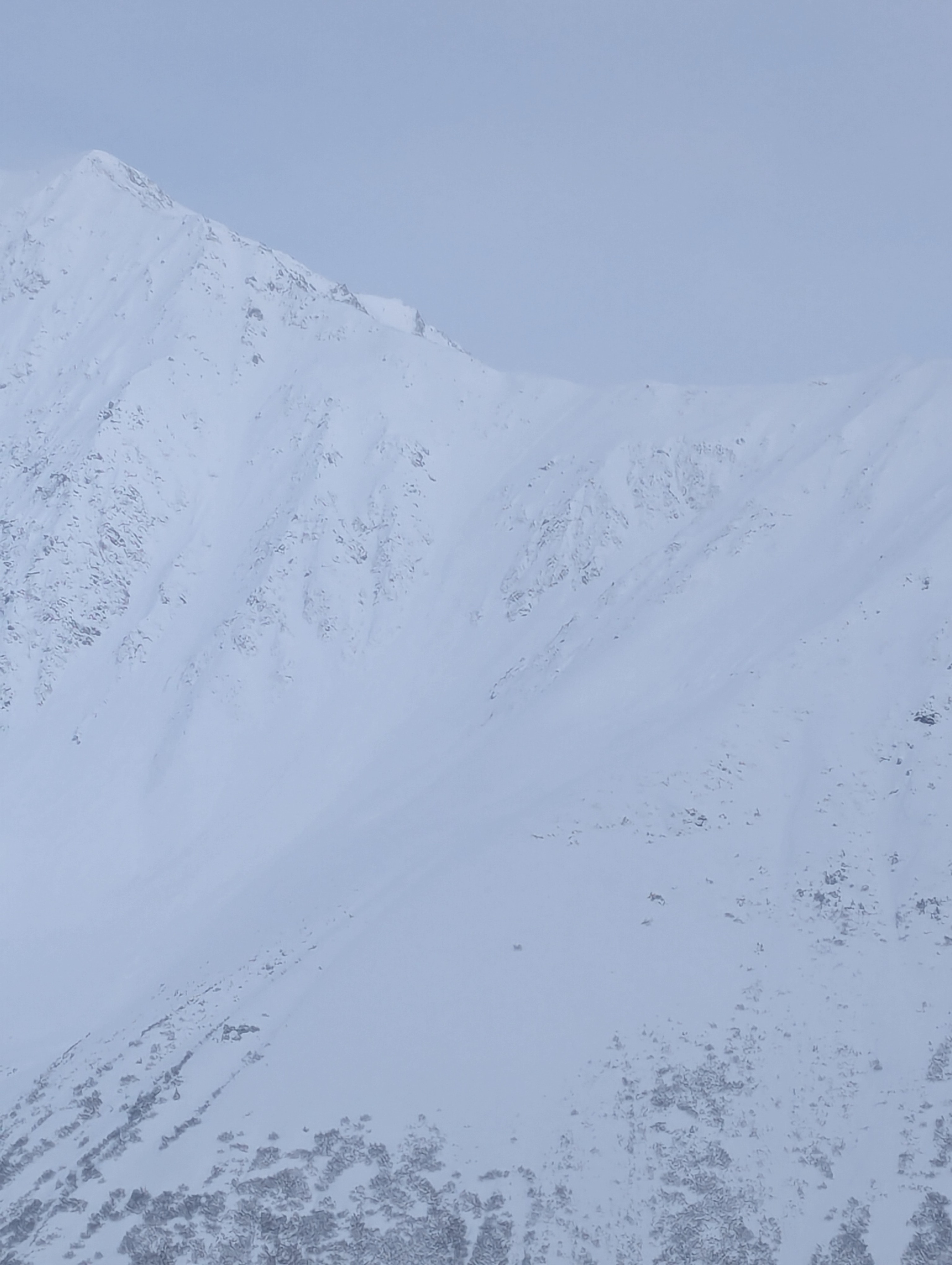
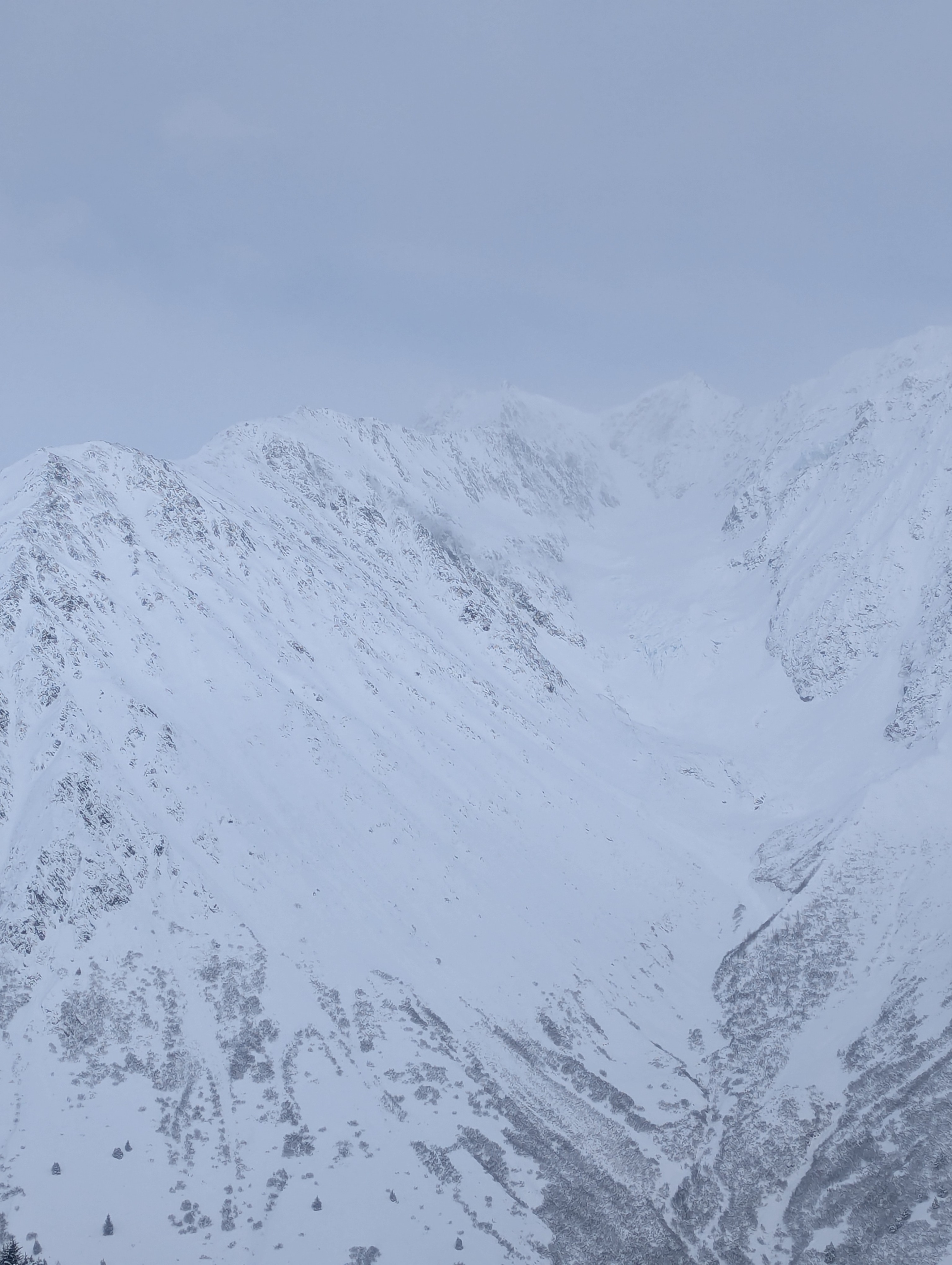
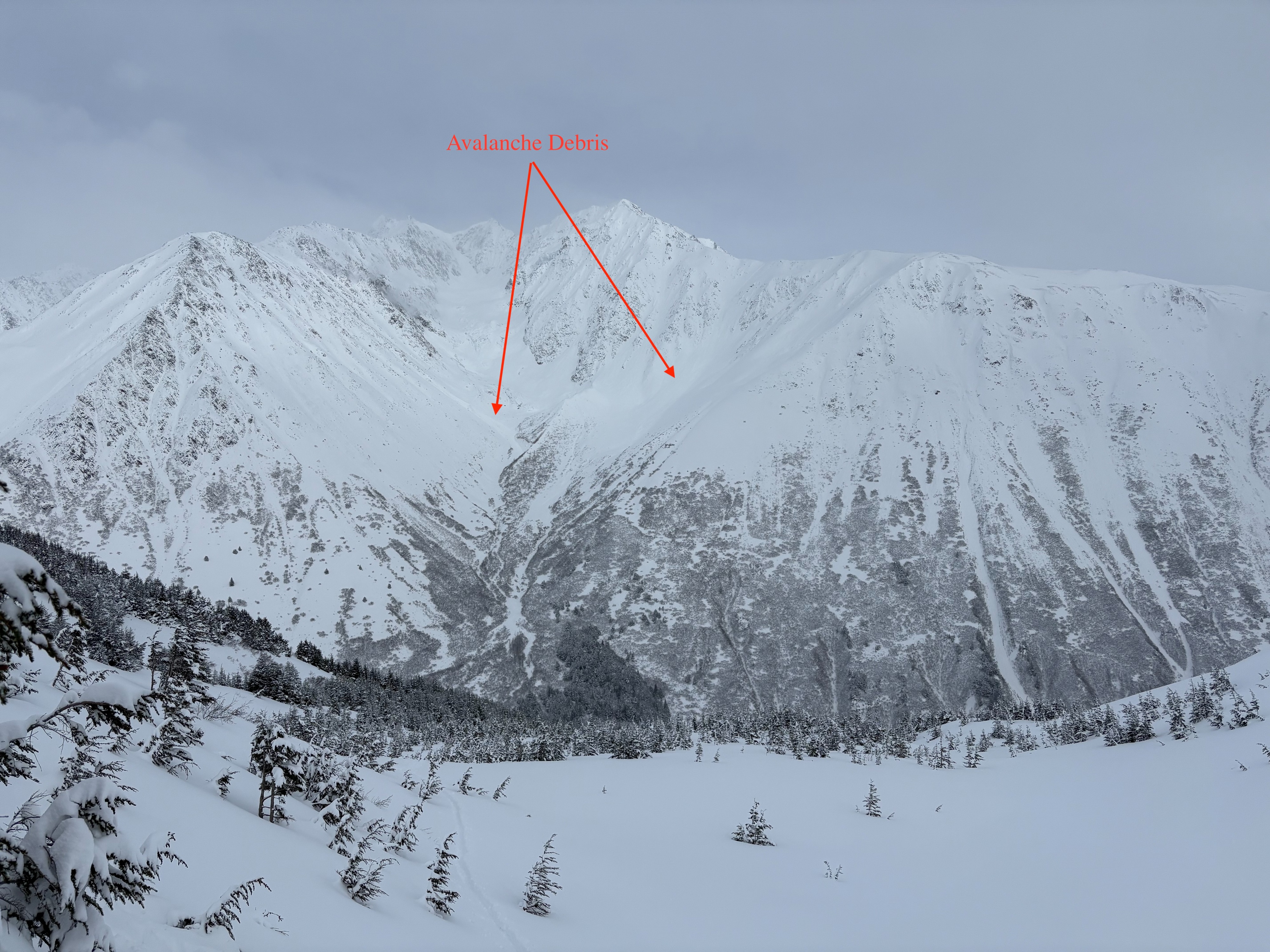
We toured up Raggedtop to assess how the recent storm snow was bonding to the underlying surfaces and to field check snow totals. Before leaving the parking area, we observed a large, connected avalanche across the valley on Goat Shoulder. As visibility intermittently improved into the upper alpine, we identified numerous additional debris piles on Goat and within Raggedtop Bowl. From a distance, these avalanches appeared to have failed at the new/old snow interface, with crowns estimated at 1–2 ft deep, though limited visibility made closer assessment difficult. Upon reaching Raggedtop Bowl around 2,500 ft, we experienced a couple collapses and after further investigation we determined that a layer of faceted snow just beneath the recent 10-12 inches of storm snow was the likely culprit for the observed instability. Given these clear red flags, along with persistent fog and snow showers, we made the decision to turn around and avoid further travel into avalanche terrain. Freshly formed wind slabs and storm slabs will remain a concern in the near term. With faceted snow present beneath the new load, these instabilities may persist longer than typical following a storm cycle.
Road conditions on Crow Creek Road are currently poor, and we were unable to reach the usual trailhead. During our attempt to drive up, multiple vehicles were stuck in an overflow section that has turned into a slushy, pothole-filled mess. Many locals chose to park below this section and walk to their homes farther up the road, and even many truck owners were unable to make it through. Parking is limited below the overflow, with space for only a handful of vehicles.
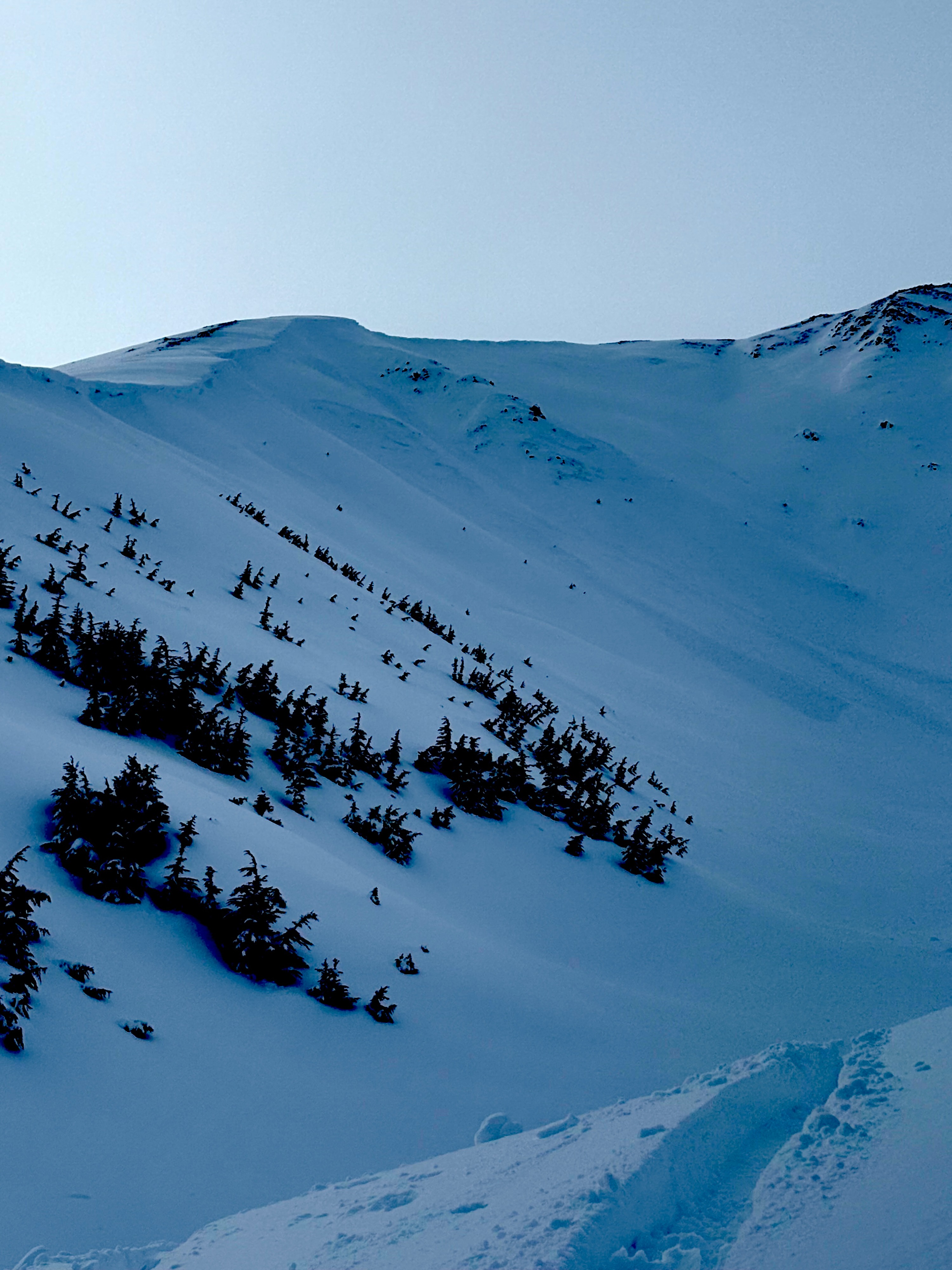
We observed numerous recent avalanches in the Crow Creek Valley, including multiple slides on Goat Shoulder (both road-facing and higher elevation paths), with debris extending into Glacier Gulch. We also saw an avalanche on the northern side of Raggedtop Bowl (looker’s left shoulder). Although we were unable to clearly see the crowns, debris characteristics suggest these avalanches likely failed at the new/old snow interface, with estimated crown depths of 1–2 ft. We also experienced a couple collapses while skinning into the Raggedtop bowl at 2500 ft. After investigating this spot we determined that the collapses were likely on this same interface about 1 ft below the surface.
Weather
- Cloud Cover
- overcast
- Wind Loading
- light
- Rain Elevation
- 0
- Recent Snowfall
- 25-30
- Snow Avail For Transport
- large amounts
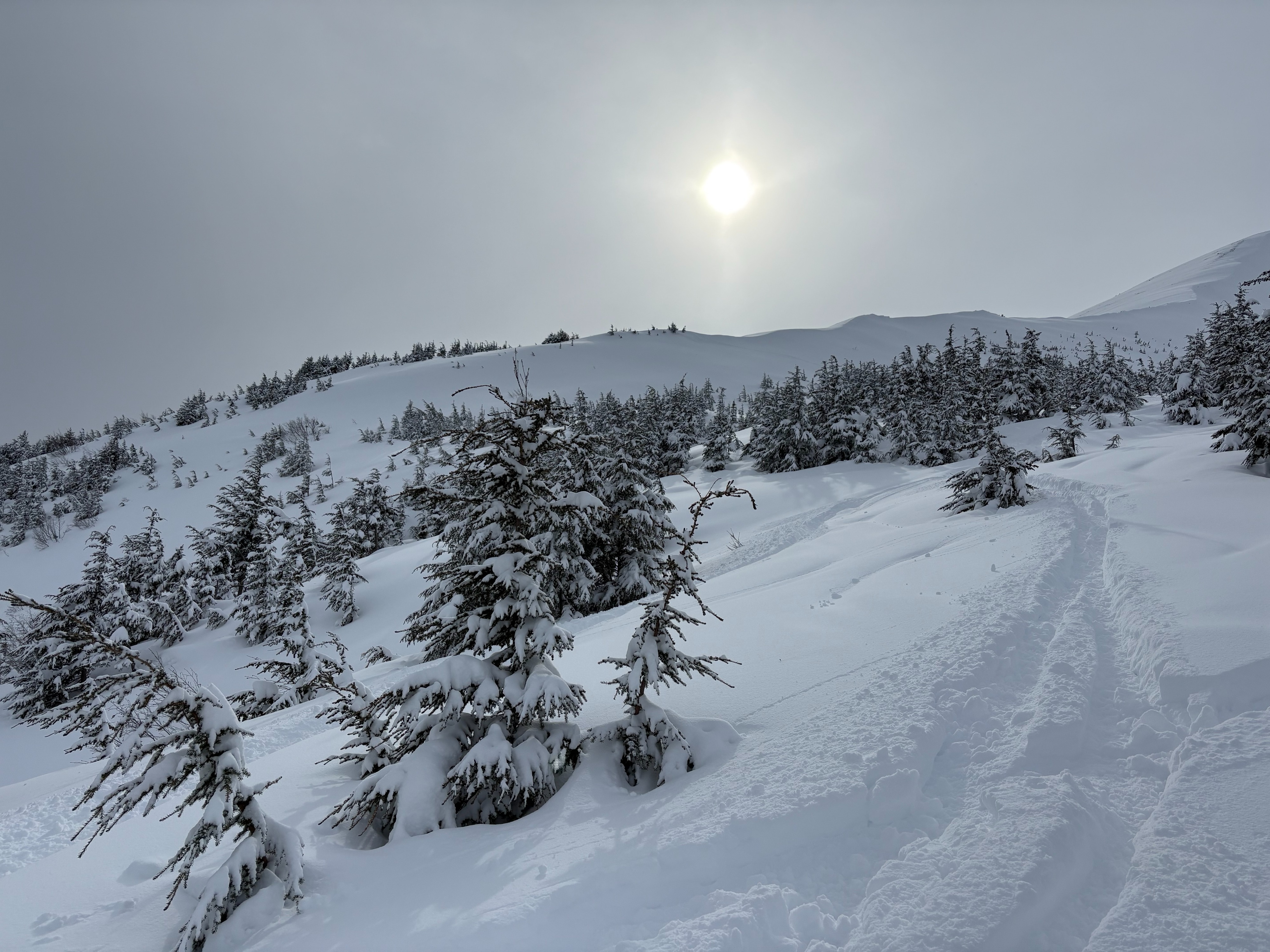
Conditions were a mix of clouds, snow, and light winds. We experienced mostly overcast skies with occasional valley fog and light snowfall.
Snowpack
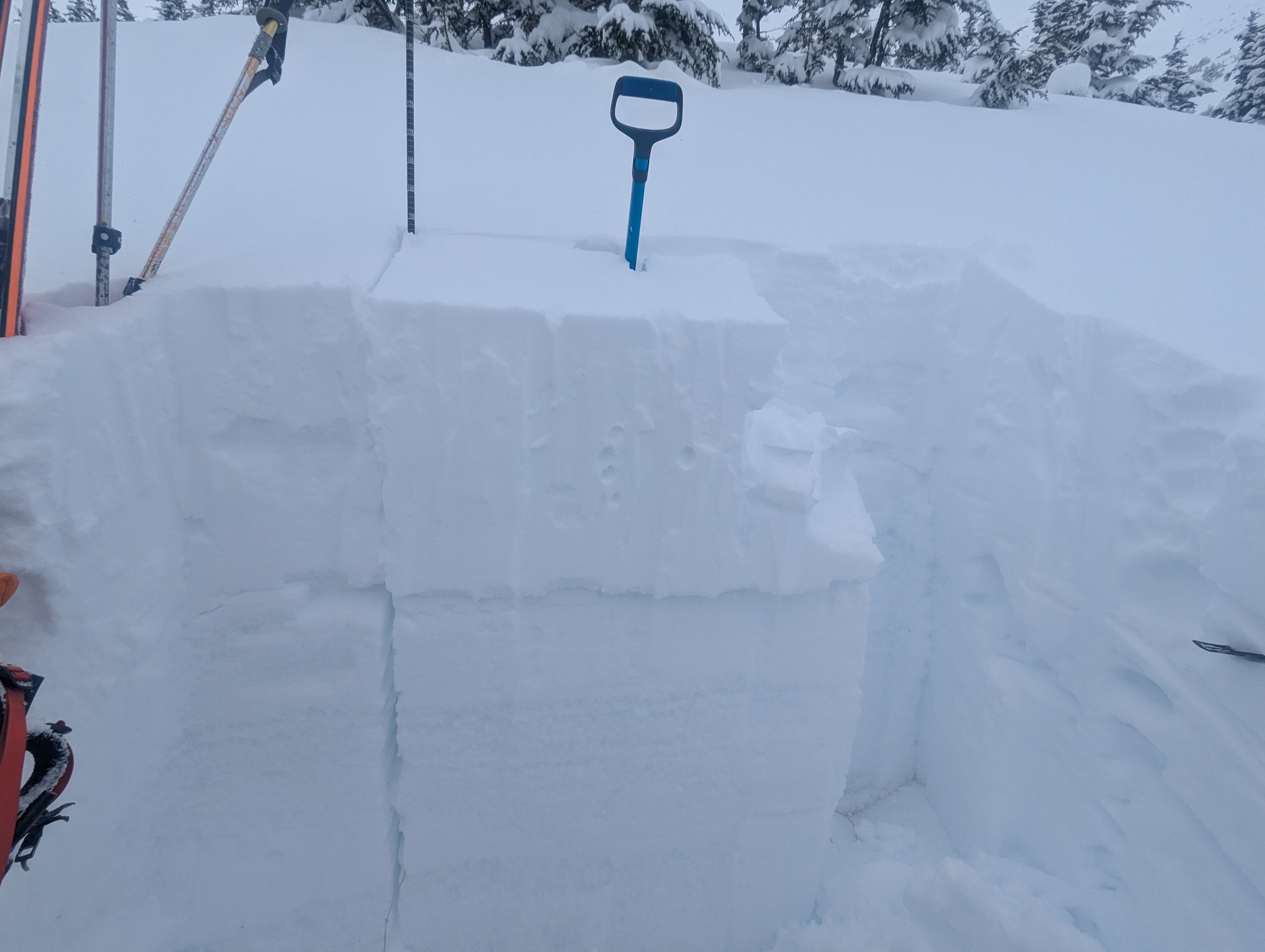
We dug two snowpits at 2,500 ft on both a southerly and a northerly aspect. In both locations, we found 8–12 inches of soft storm snow overlying a layer of weak facets that formed during the recent cold, dry spell. We observed unstable Extended Column Test results approximately 1.5 ft down on a layer of facets at the 3/6 interface (ECT P 21).
Both pits had poor snowpack structure, with recent storm snow sitting atop faceted layers and multiple crust/facet combinations below. While the storm snow may lack sufficient cohesion to produce avalanches in some areas, locations with wind deposition or slightly denser storm snow are more likely to form cohesive slabs and produce avalanches. Additionally, with weak faceted layers present deeper in the snowpack, there is potential for avalanches to fail 1–3 ft deep on these layers.
Avalanche
- Size
- D1.5 R2
- Type
- SS
- Aspect
- NE
- Trigger
- N
- Elevation
- 3400 ft