
Quick report
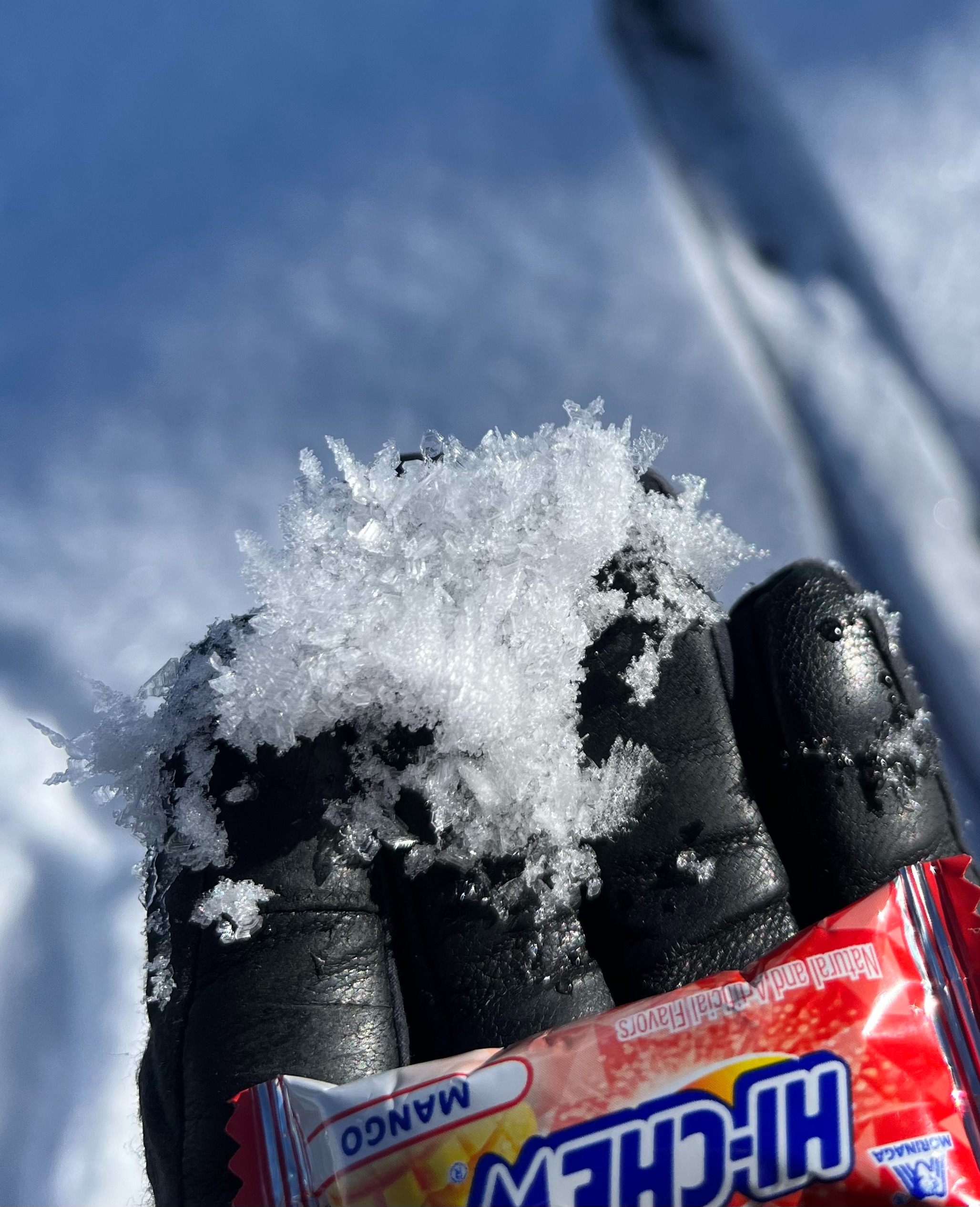
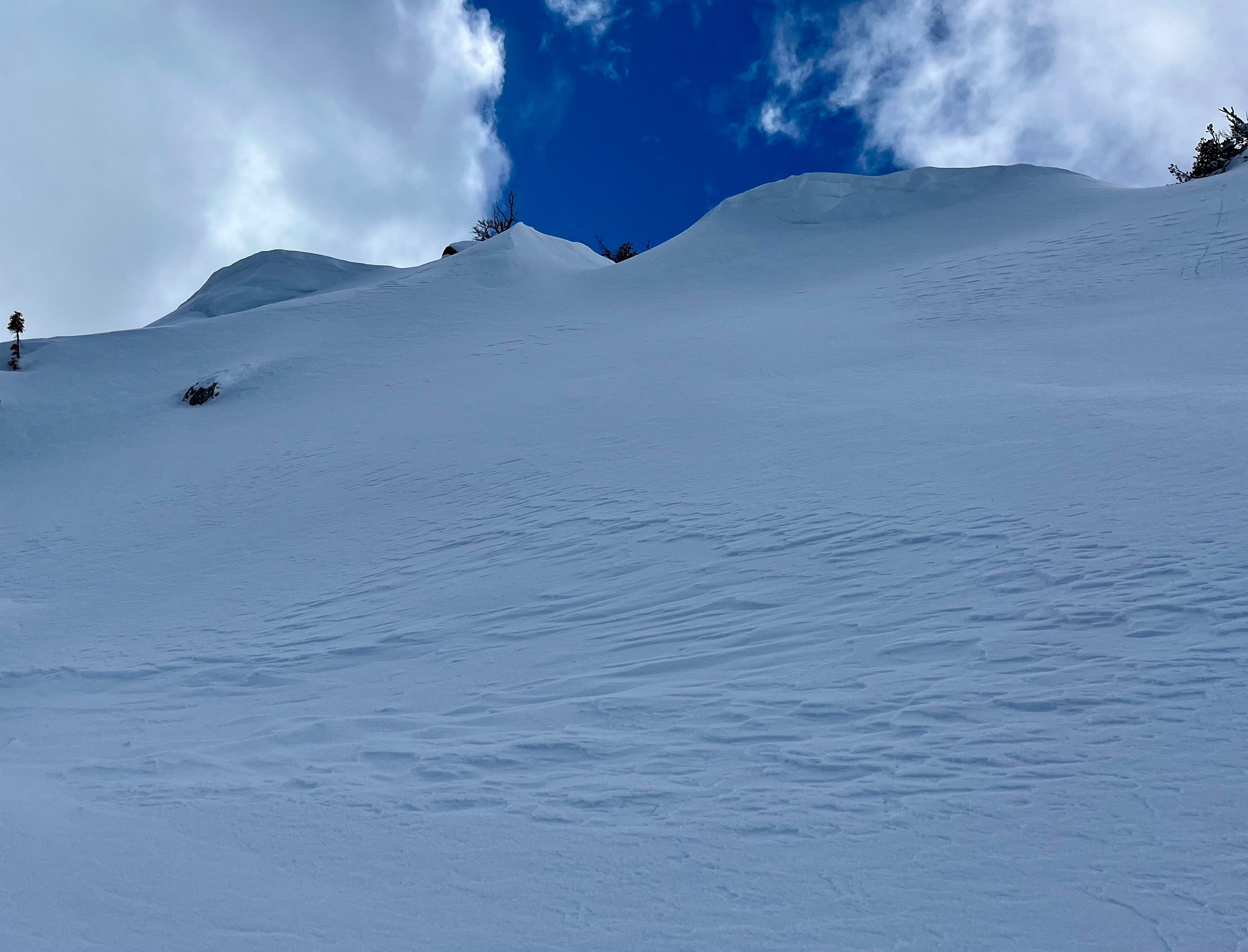
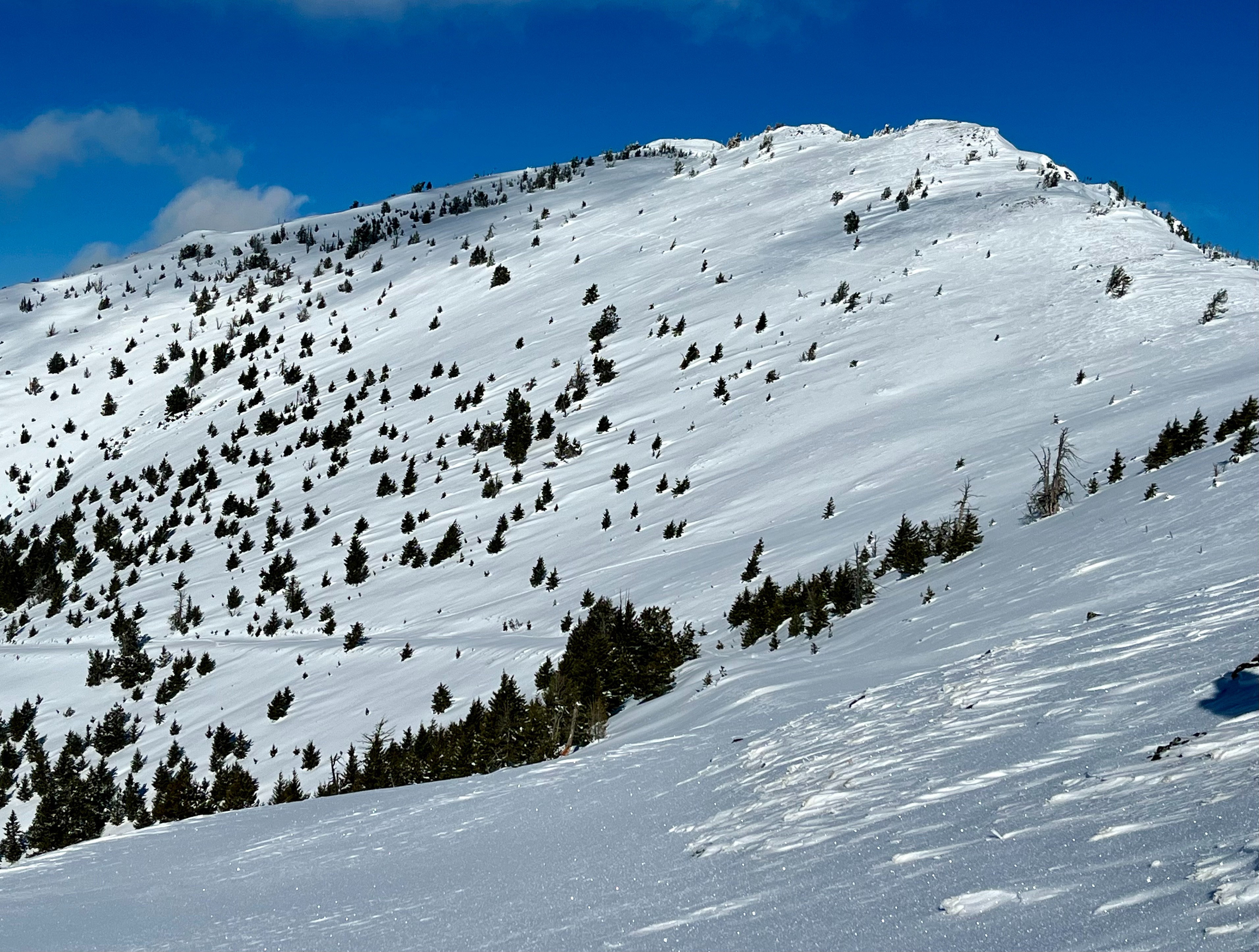
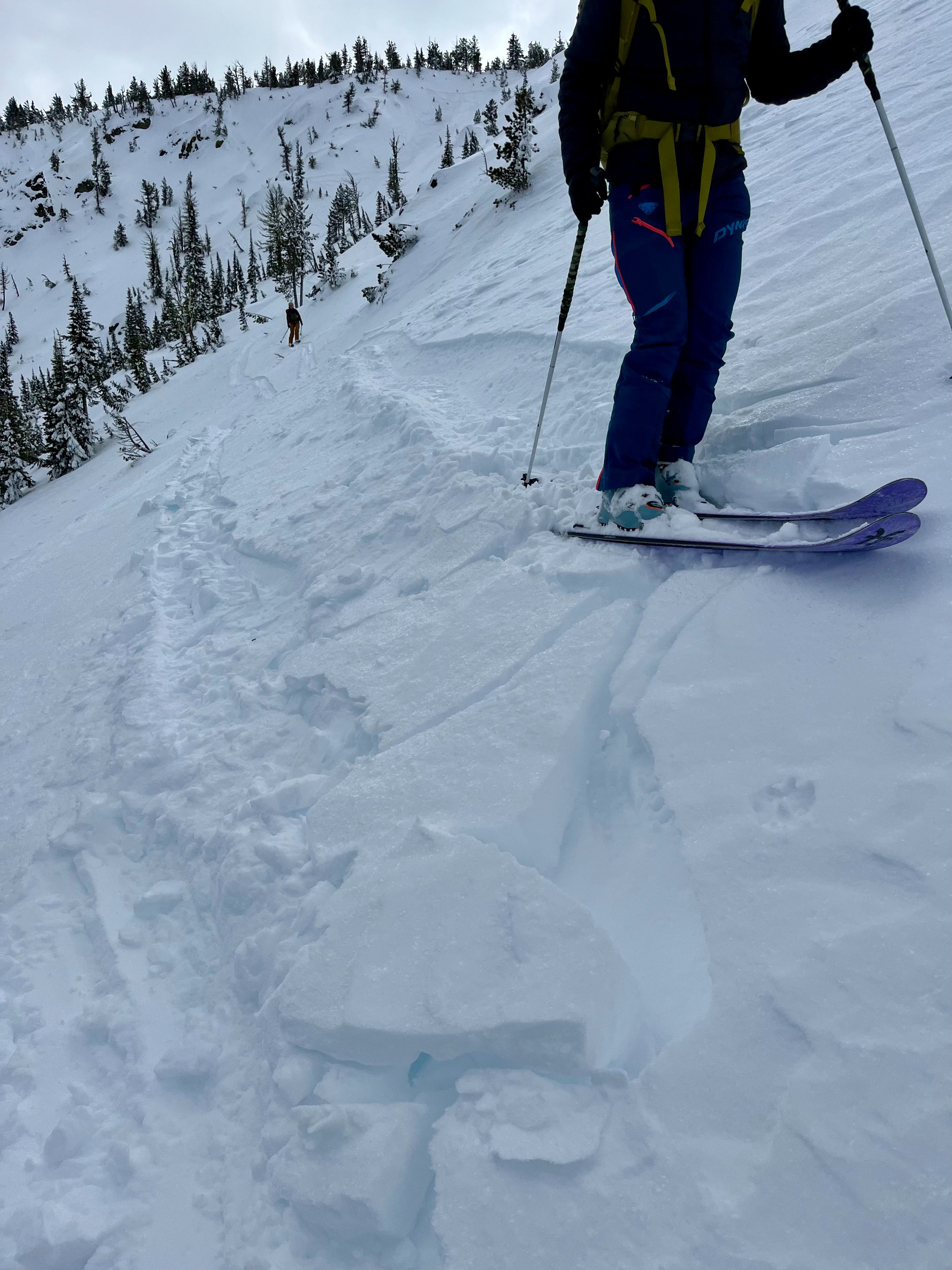
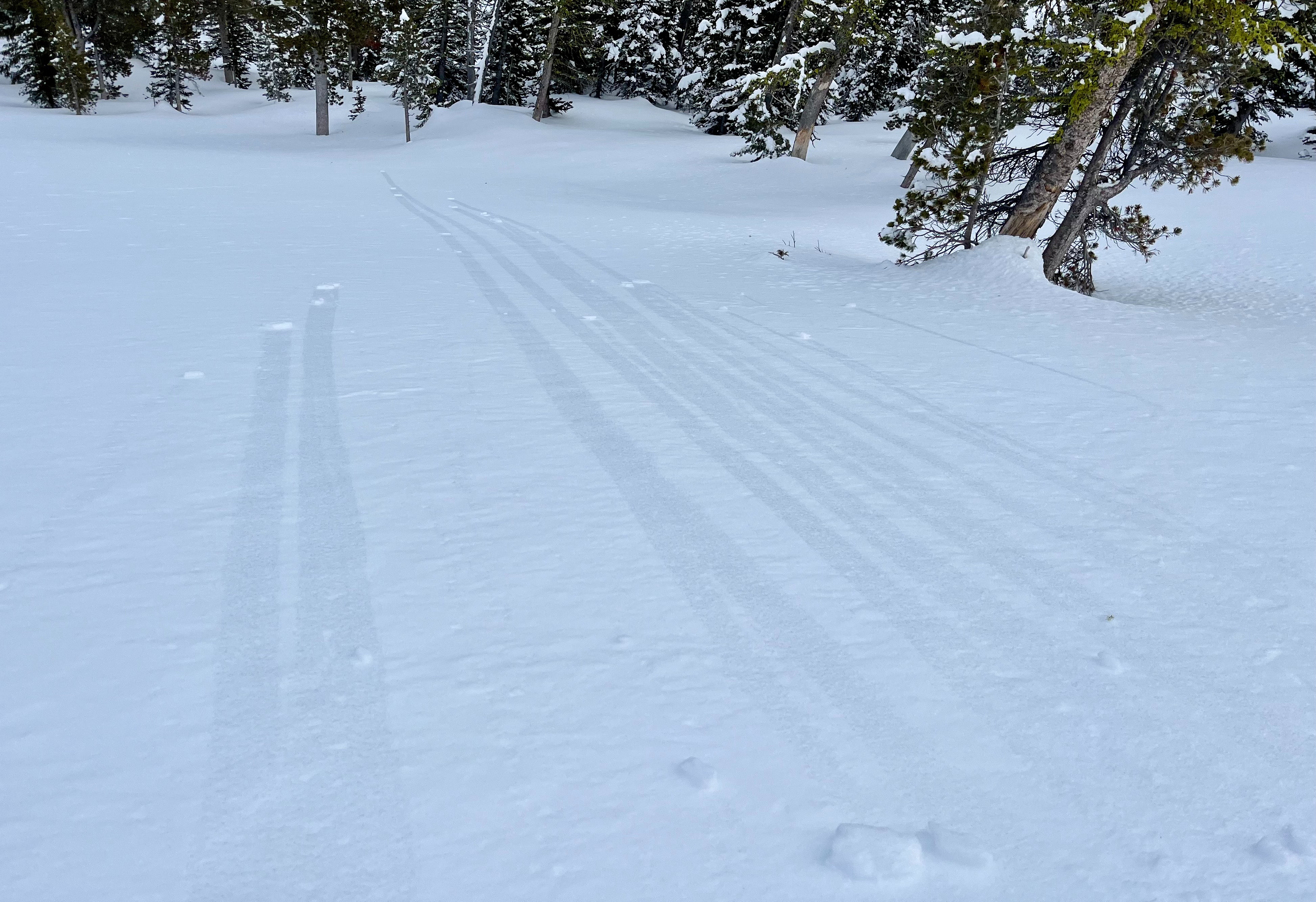
Our objectives were to observe snow surface conditions, determine distribution, depth and sensitivity of windslabs, and explore a new area. We had a mindset of limiting our exposure rather than avoiding avalanche terrain. We found widespread small to large surface hoar (2mm all the way up to 8mm) on all aspects we observed, This made for fast and fun skiing, including triggering loose-dry micro-slides in the surface hoar, knocked down by a pieces of crust (see photo). This surface hoar layer will be a concern when buried tomorrow and through the week. Leeward and crossloaded slopes east of the crest had texture to remind us they were windslabs. These were 10-20cm thick, F+ to 4F hardness, and none failed easily in our many handshears. After assessing consequences of pieces of wind-loaded avalanche terrain, we traveled one at a time through them. Using these test slopes through the day gave us confidence in similar slopes. This lead us to call these windslabs, all greater than 48 hours old, unreactive. We considered an E aspect planar slope at 7900', but seeing some visible rocks and expecting a shallow snowpack, we had concerns with the persistent slab and poor overall snowpack structure, so decided to pass on it. Instead, we skied a smaller N gully with a deeper snowpack, few trigger points, and high points to regroup safely on. We did not observe any recent avalanches that ran in the past few days. There was widespread evidence of previous wind scouring and loading, but cracking was only a few feet and limited to small slopes undercut by the skin track.
Weather
- Air Temp
- 27
- Cloud Cover
- broken
- Wind Loading
- previous
- Recent Snowfall
- Nil
- Snow Avail For Transport
- moderate amounts
A band of clouds pushed from the northeast up valley in the AM to around 7000', leaving it sunny at ridgeline from 10 til 12:00, until upper level clouds moved in from the SW. In the PM, the sky altered between scattered and broken, which preserved surface hoar intact on solar aspects at 4:00 on our exit.
Snowpack
Near ridgelines on shady aspects, we found 10-15cm of F hard decomposing fragments from last week's snow above the late Jan rain crust. Lower on these slopes, the same 10-15cm sat above 10-25cm of 4F rounds above the crust, making for better ski quality, right-side-up surface snow. On SE slopes, the sun had heated the 10cm of soft snow above the late Jan crust, but not enough to melt the surface hoar. On SE and some E slopes, a solar melt-freeze crust from this past weekend exists below the surface hoar. A windloaded pocket at 7600' NE had 210cm height of snow, but most averaged around 150cm. At 6000' on a shady section of road, I found HS40-70cm.