
Quick report
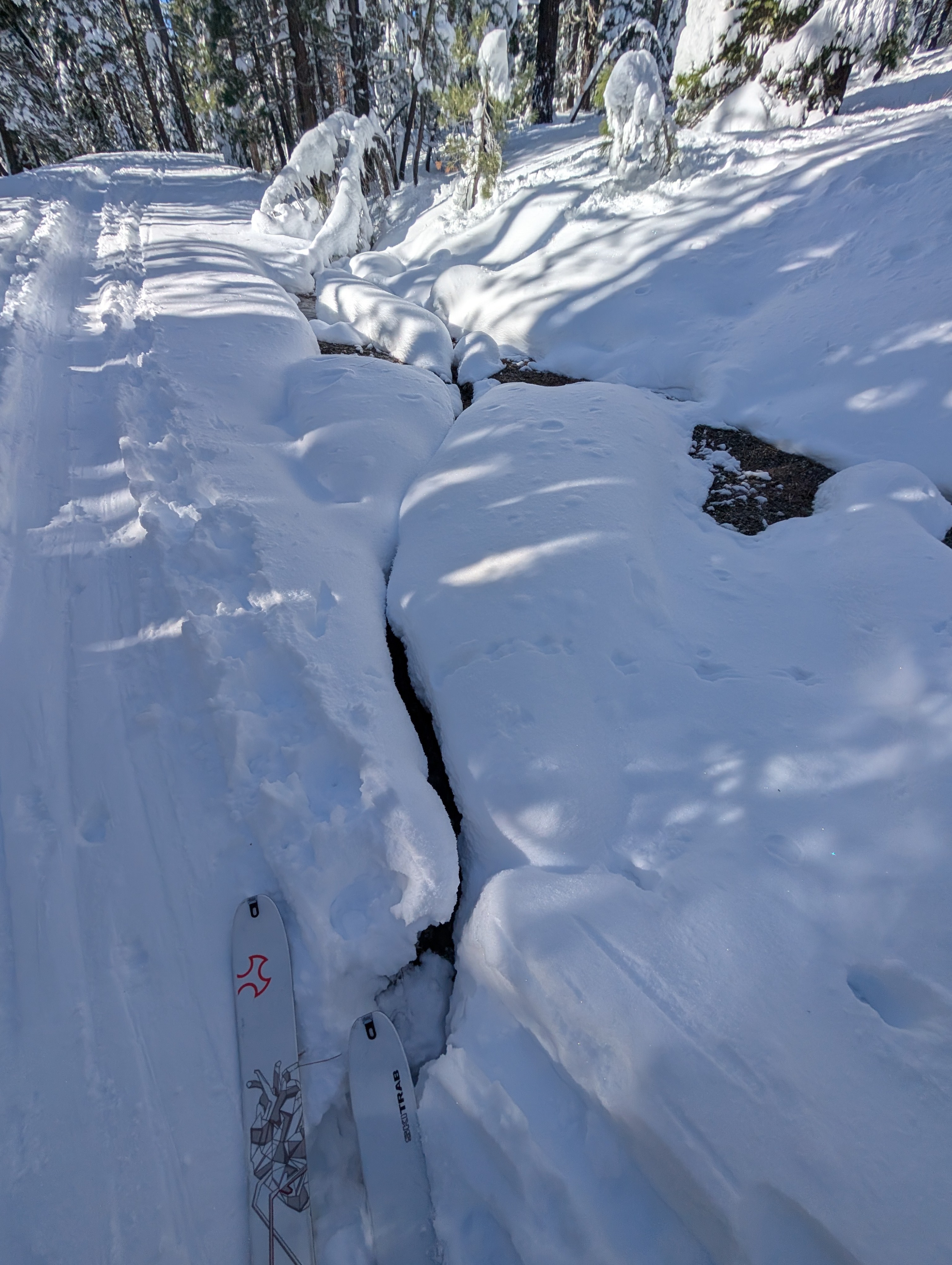
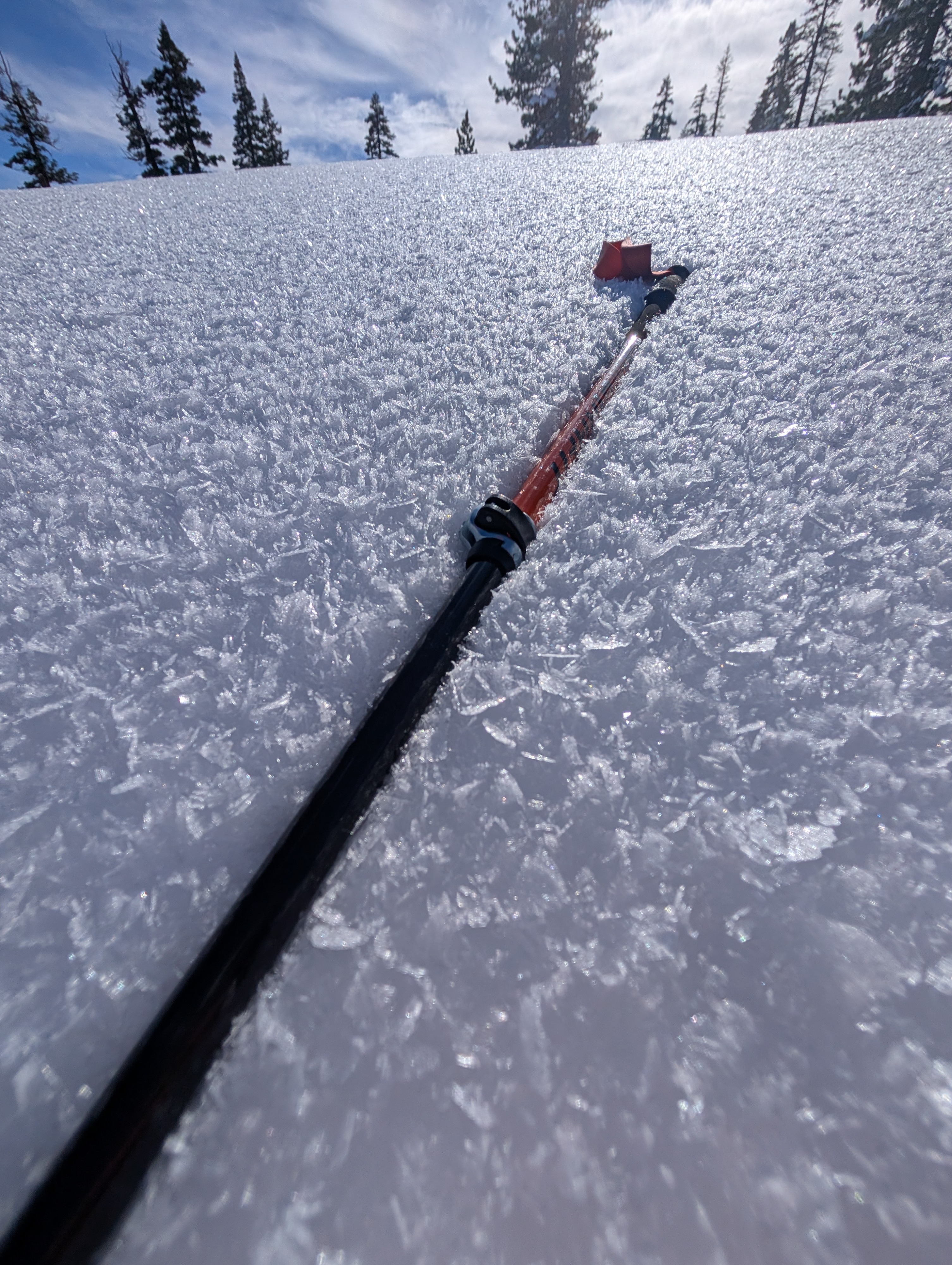
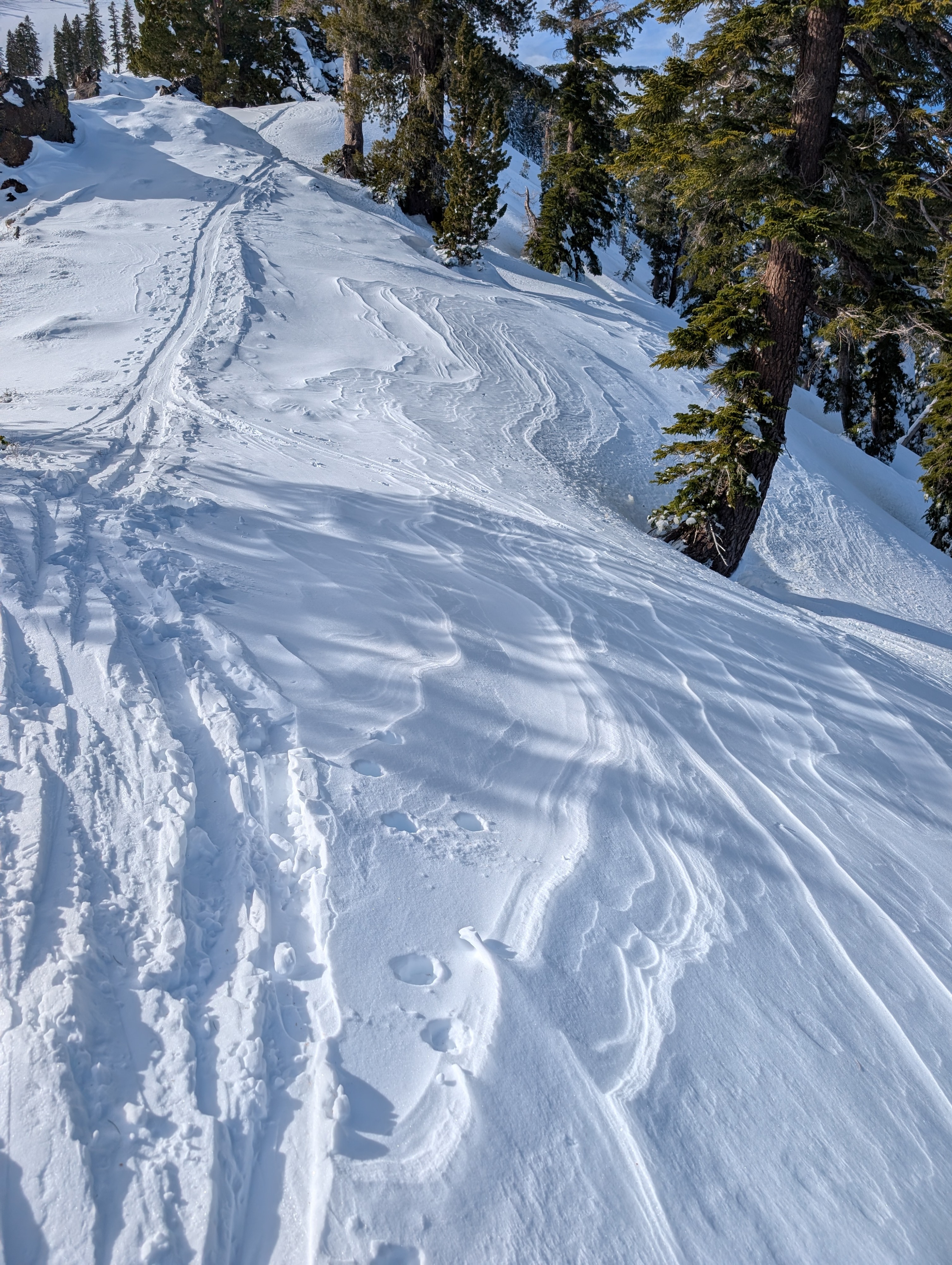
Getting out of the car at the trailhead, we were struck by how cold it was. The cold air and clear skies also caused the snow surface to lose cohesion (near-surface facetting) and formed some surface hoar in many open areas below about 7000-7500 ft. This colder softer snow gave way to denser, wind-affected snow surfaces as we climbed above the inversion and temperatures warmed up. We found a right-side-up snowpack (more dense with depth) and well-consolidated snowpack whenever we dug into the snow or probed with our poles. We saw plenty of evidence of SW wind transport during the Christmas storm, but few signs of E-NE wind transport and no signs of lingering unstable wind slabs.
Weather
- Air Temp
- 41°F at 8000 ft @ 11:30 am -- 18 °F at 6050 ft @ 9:30 am
- Cloud Cover
- scattered
- Wind Loading
- none
- Snow Avail For Transport
- moderate amounts
Below about 7000 ft, temperatures remained colder due to cold air trapped in the valleys. It was warmer at the higher elevations. Winds shifted to the S and SE during our tour, and clouds started building over the region from the south.
Avalanche
- Size
- D1.5 R2
- Aspect
- NE
- Trigger
- N
- Elevation
- 7700 ft
This avalanche has mostly eroded and filled in, but part of the flank remained visible. There was also still some debris piled up against trees below the slope. It likely occurred sometime on 12/25 during the storm.