
Quick report
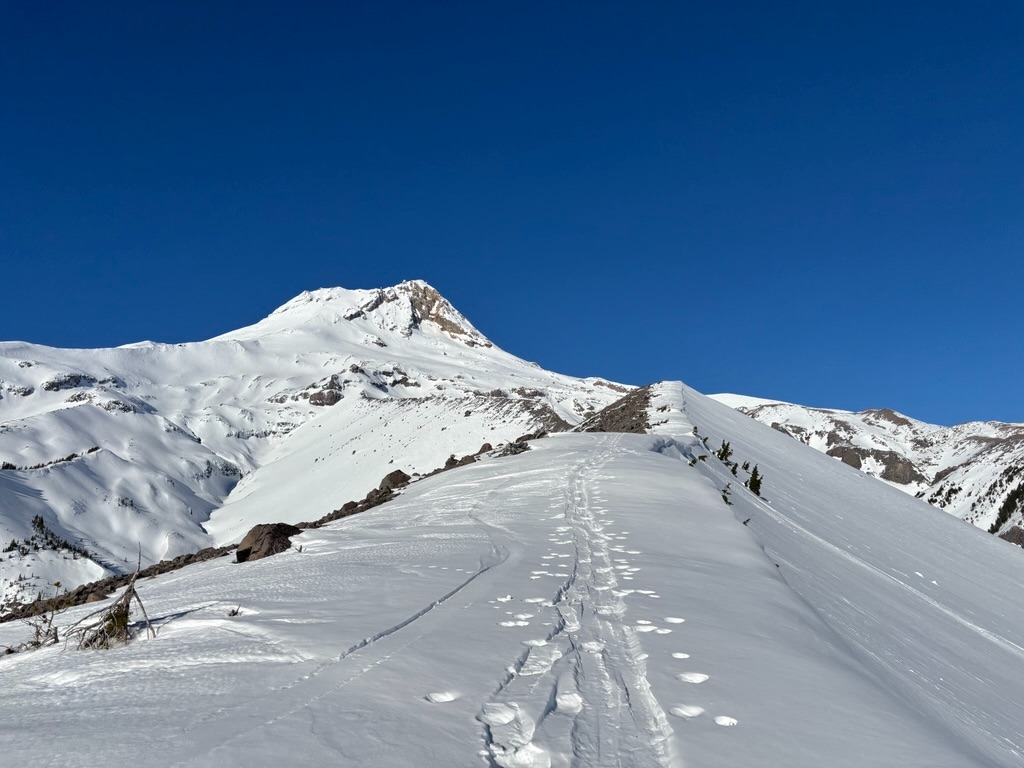
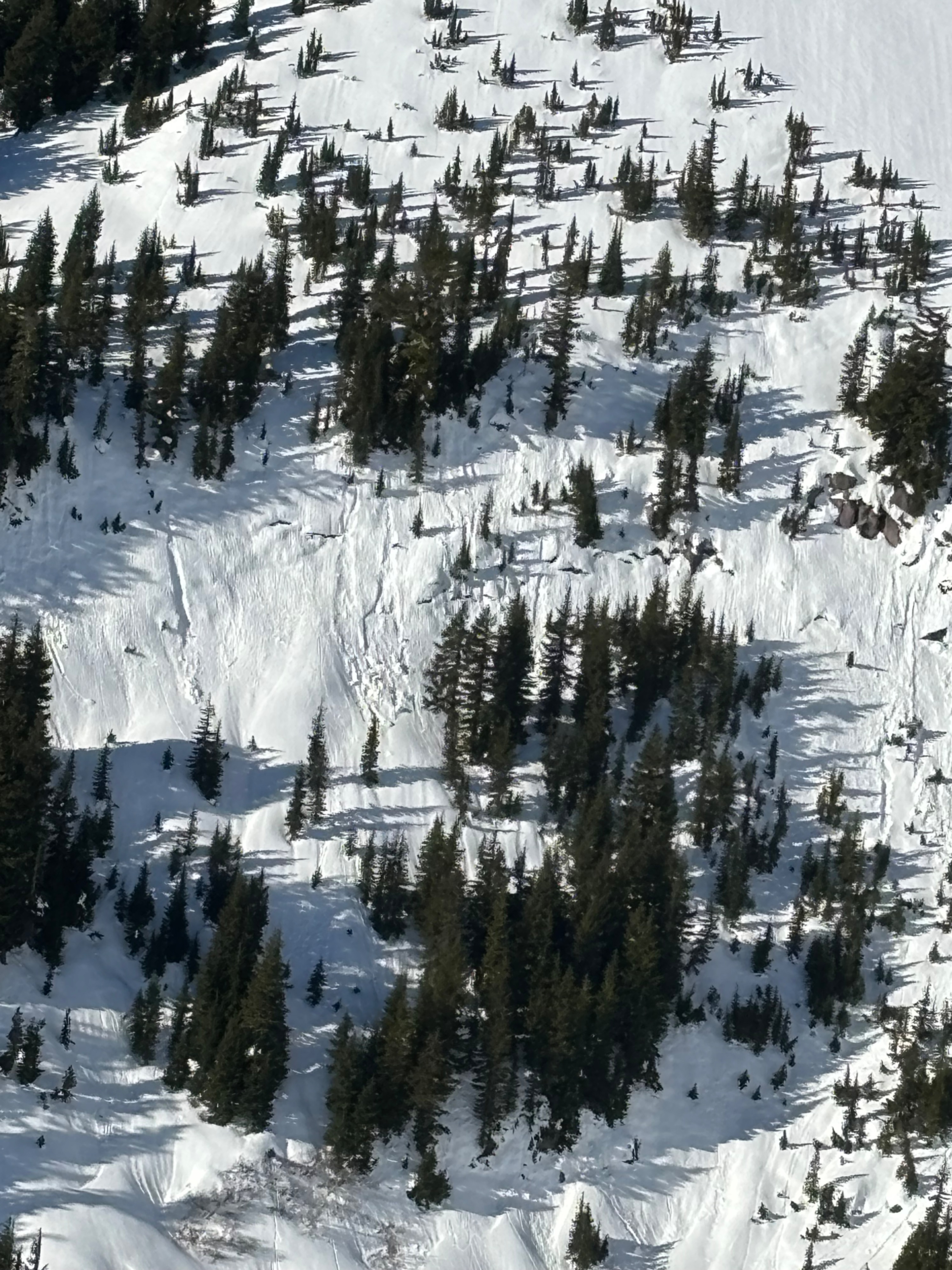
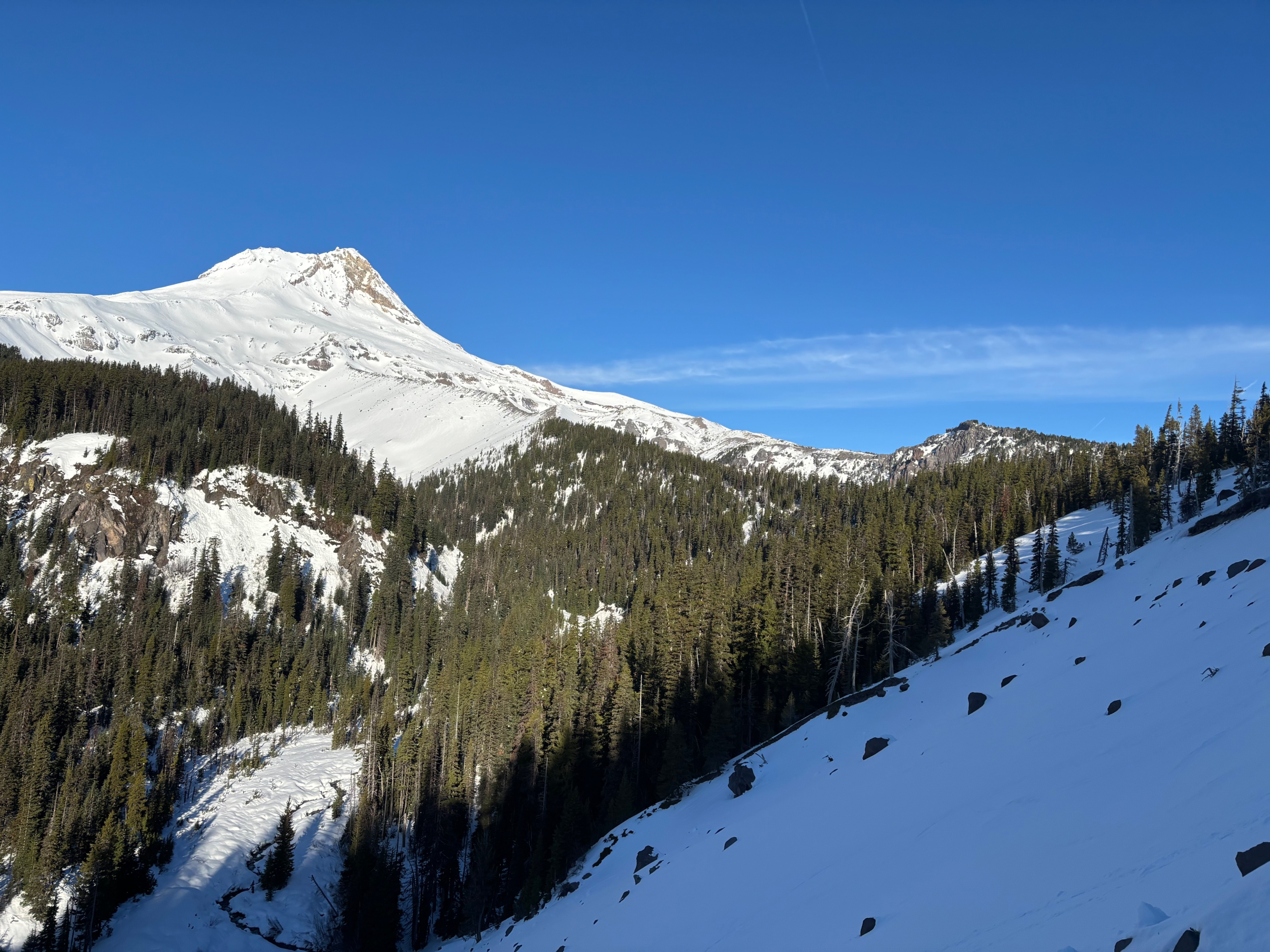
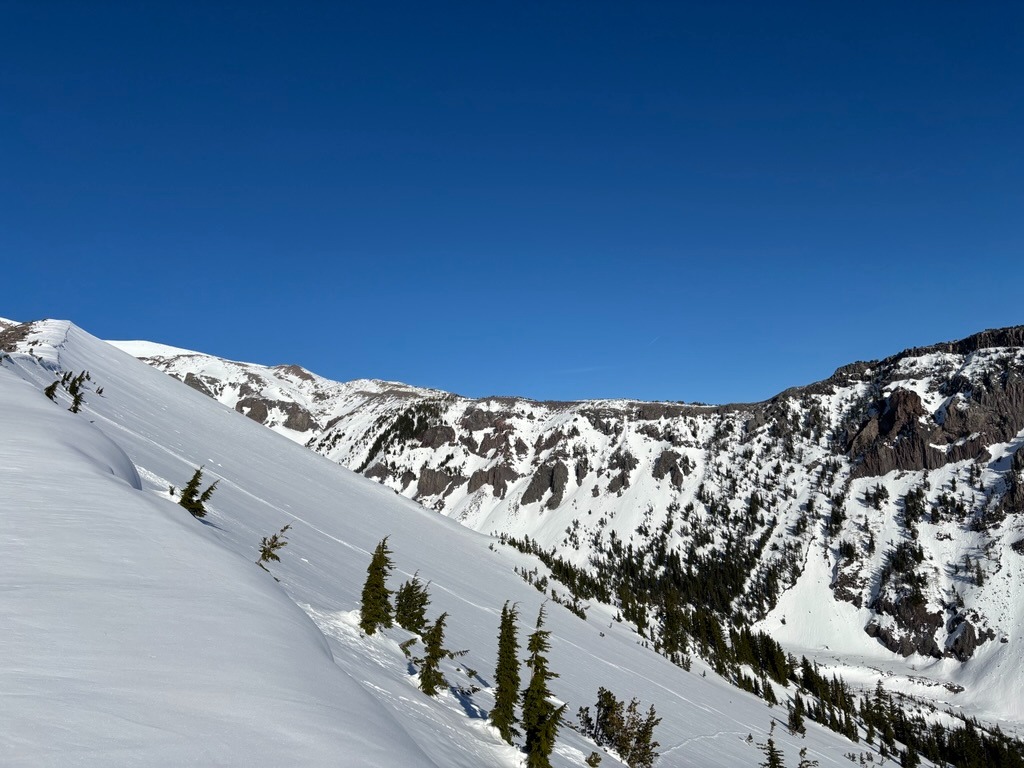
We found generally safe avalanche conditions in the area we traveled in today. SW-S-SE aspects held a supportable melt-freeze crust that broke down by 11 am. Evidence of recent wet loose avalanches were limited across the terrain we traveled through though. Shaded aspects (NW-N-NE-E) still held cold, persevered snow, and good ski quality. In these areas, surfaces are becoming quite weak, which will be worth watching if we introduce more snow towards the end of the week. Early-season hazards like open creeks and shallowly buried rocks & trees still lurk despite the healthy, early-season snowpack we currently have across the Mt. Hood zone.
There was limited evidence of recent wet loose avalanches along solar slopes. Wind slabs appeared well-aged and unreactive in the areas we traveled.Weather
- Air Temp
- Low 40's
- Cloud Cover
- clear
- Wind Loading
- none
- Recent Snowfall
- 0
- Snow Avail For Transport
- small smounts
It was another beautiful day above the inversion. There was a sharp temperature difference between 4-5000'. Below 4000' temps stayed in the low 20's. Above, temps soared into the high 40's. Winds were exceptionally calm, which made for a comfortable day overall.
Snowpack
Snowpack depths ranged from 3 ft near the base of HRM (4800') to 5 ft at our transition point at 6000'.
Overall, we found a strong snowpack in the areas we traveled. The only caveat are the surfaces. These are becoming weak with faceting grains as the high pressure persists. While these weak surfaces/upper crusts are not an issue right now, they will be worth keeping tabs on if we introduce more new snow and wind loading towards the end of the week as the weather begins to change. Subtle changes in aspect made a significant difference. I predominantly found these weak, sugary surfaces on NW-N-NE-E aspects above 5000'.
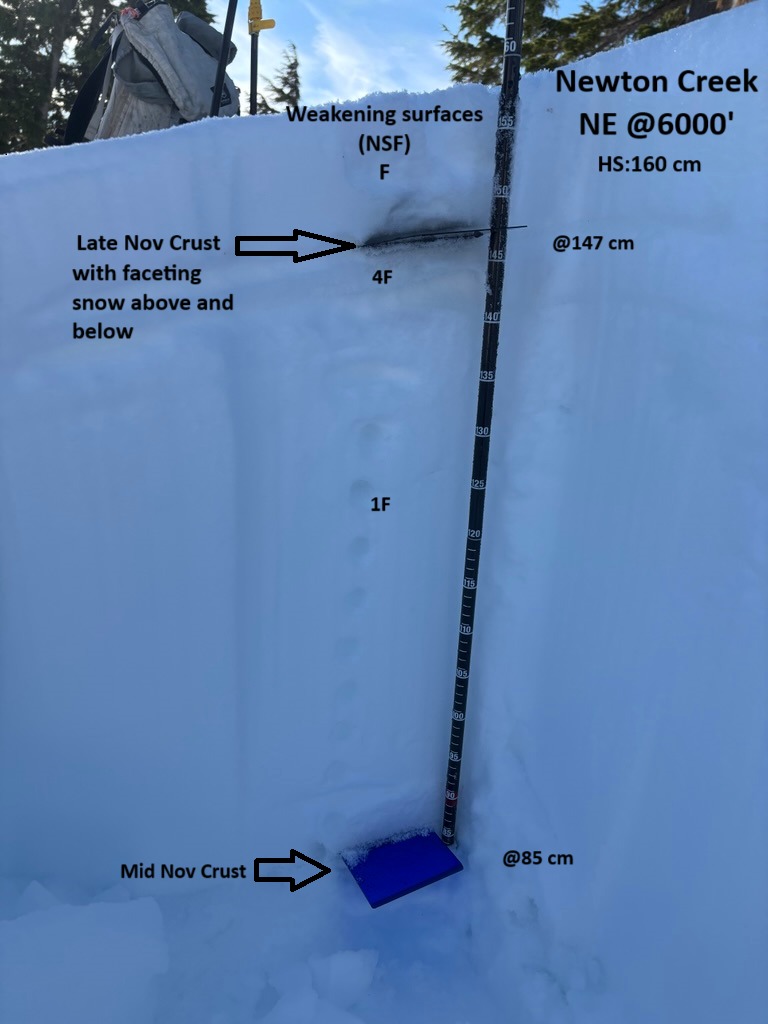
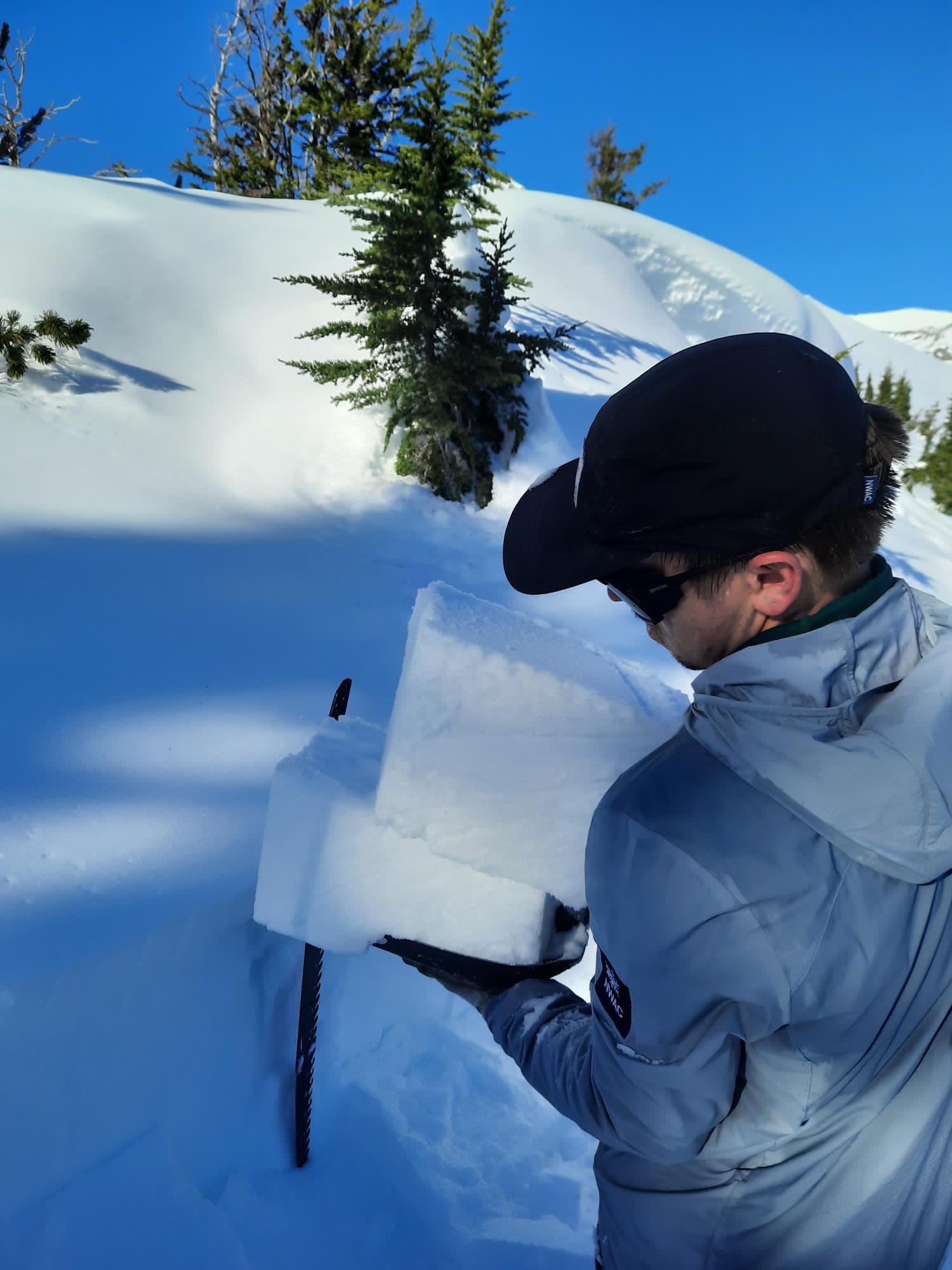
In a test profile on a NE aspect @ 6000' we found an HS of 160 cm. ECT's and CT's produced unremarkable results. However, shovel tilt tests were productive in showing consistent planar results on the 11/24, late November crust, which is decomposing and has weak snow above and below.
Probing around S-W aspects above 5000' revealed a shallower HS (2-3 ft) and more crusts from recent warming and scouring.
Lower elevations hold firm snow and early season, challenging travel.