
Quick report
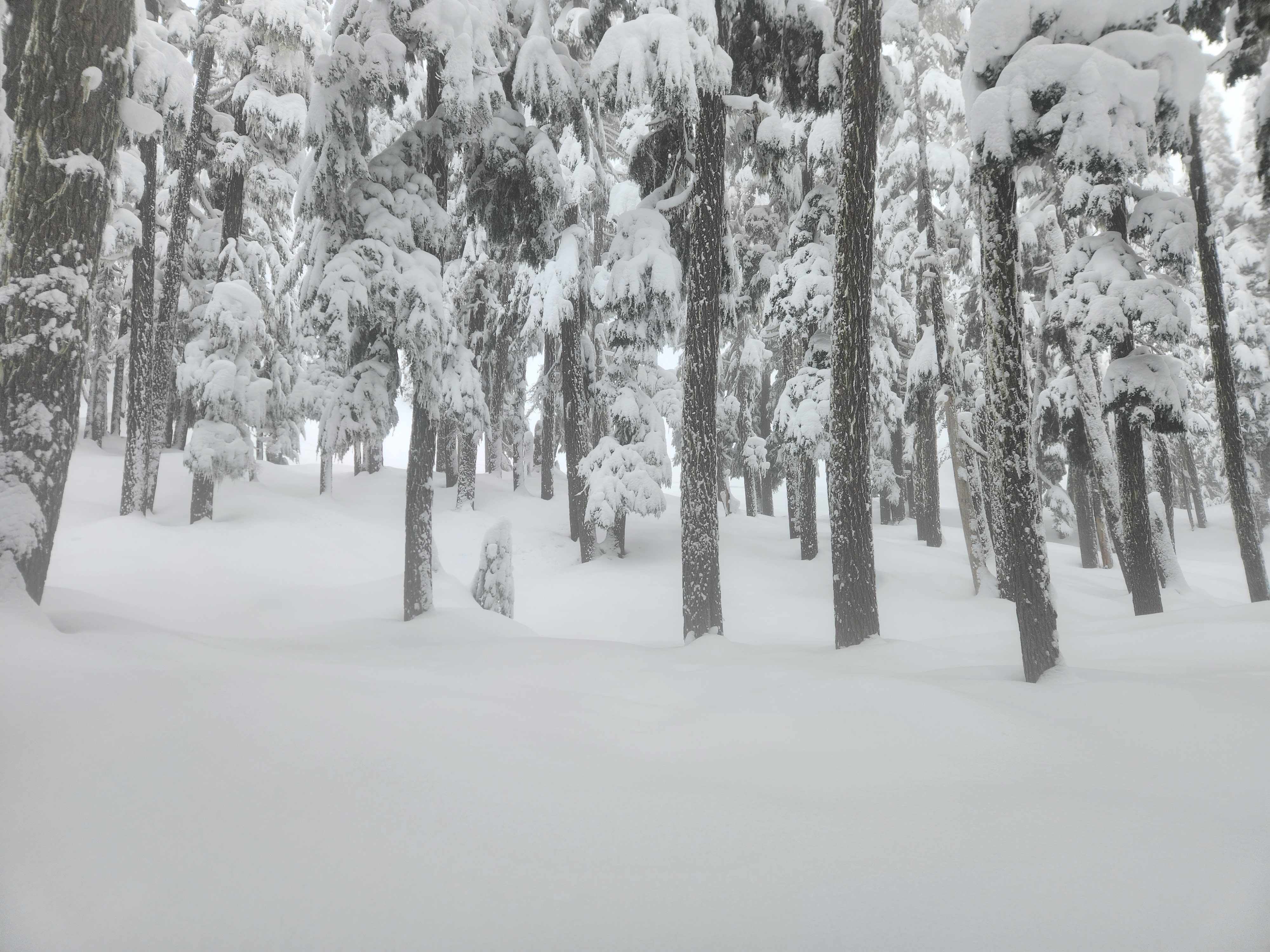
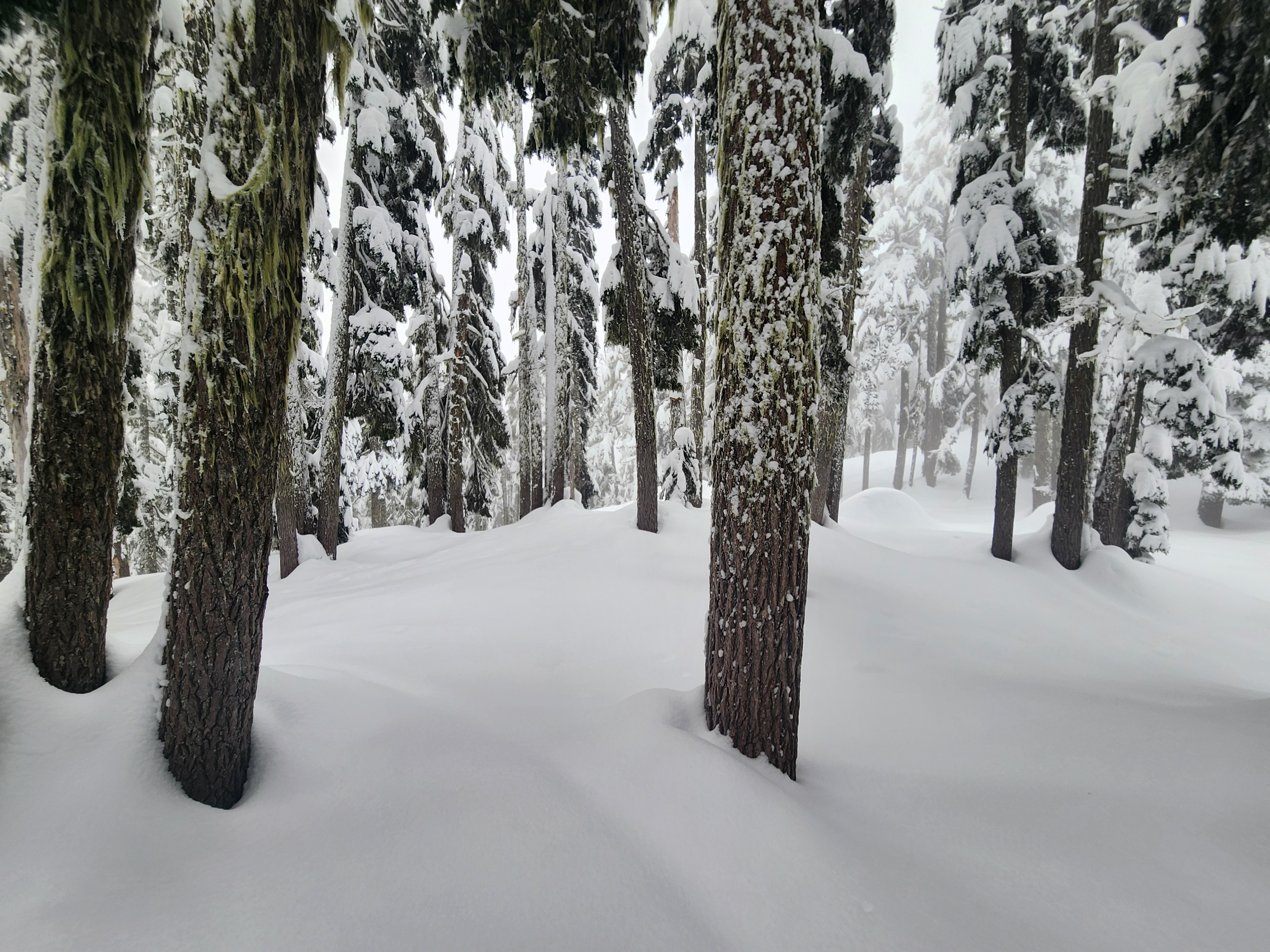
Our main goal today was to further assess for instability on the PWLs buried in the snowpack. This storm cycle has done wonders for the riding conditions at the Pass, and ski quality was excellent, despite a thin breakable sun crust down about 3 or 4 inches on some steep south-facing terrain. The storm snow is deep and generally right side up. We observed no cracking, collapsing, or recent avalanches on our tour. While the surface snow is still very soft, the slab has stiffened to 1F starting about a foot below the surface. We ascended a south-facing slope and then popped over a ridge onto a north-facing test slope.
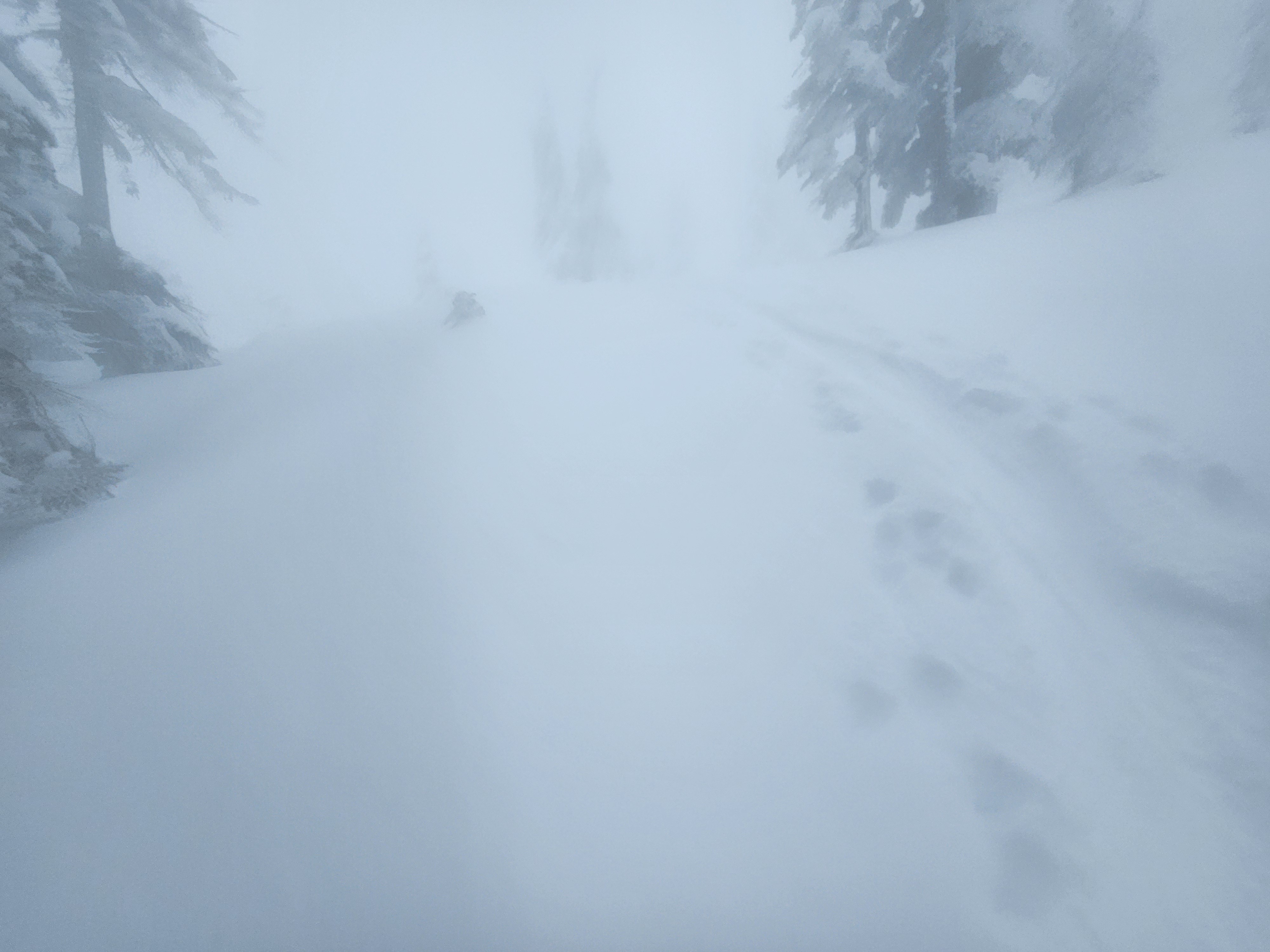
The JDL and 1/10 complex presentation are highly variable throughout the zone, however, the general structure is poor and one or both layers have consistently produced concerning results in snowpack tests over the past days. While some of our test results today indicated the slab may be a bit more stubborn to trigger, propagation propensity remains high and multiple tests yielded unstable results. There is also ample snow available for transport. Increasing winds were blowing a bit of snow around and we observed some wind texture on the surface and fresh rime in the trees during our travels.
Weather
- Cloud Cover
- overcast
- Wind Loading
- light
- Recent Snowfall
- 50-65 cm settled HST - 6-8 cm overnight
- Snow Avail For Transport
- large amounts
Cool temperatures with skies that oscillated between obscured and cloudy. Variable winds at lower elevations, light to moderate southwest winds at 5000' ridgeline. Light snow began around 12:30 pm.
Snowpack
About 20 cm of low-density snow on the surface starting at F and hardening slightly to 4F. This surface snow was sluffing in steep terrain. Then 1F snow, with a few storm density changes until the interstorm crust down about 50 cm, followed by more 1F snow until the JDL. On steeper south faces, a thin breakable sun crust formed during Wednesday’s sun is sitting beneath about 6-8 cm of new cold snow on the surface. With a slight aspect change, tree cover, or a flatter slope, that crust disappeared. Ski penetration was about 30 cm and boot penetration was about 50 cm.
We dug two pits on a northeast aspect, one at 5075ft and the other at 4975ft. In these locations, the JDL merely presented as a thin melt freeze crust atop 10 -25 cm of 1F rounding facets. No results were observed on this layer. Below that was the 1/10 complex, down 87 cm in one pit and 75 cm in the other. The complex was a thick junky combination of crusts and facets. The very top was a thin and friable zipper crust immediately overlying a thin layer of 1-2 mm weak 4F faceted crystals sitting on stout crust. All test results were observed on this layer.
ECTP26, ECTN29, and PST 30/100 End.