
Quick report
- Cracking
- specific
I made a circumnavigation of Threeway Peak today as I surveyed different aspects for both wet and dry avalanche problems. The main takeaway is that snowpack is becoming aspect and elevation-dependent. Variable is starting to be the name of the game out there. Powder, firm crust, breakable crust, wind-press, moist "corn-ish", and other types of wind-affect - they're all out there waiting for you, depending on how high you travel or your exposure to sun and wind.
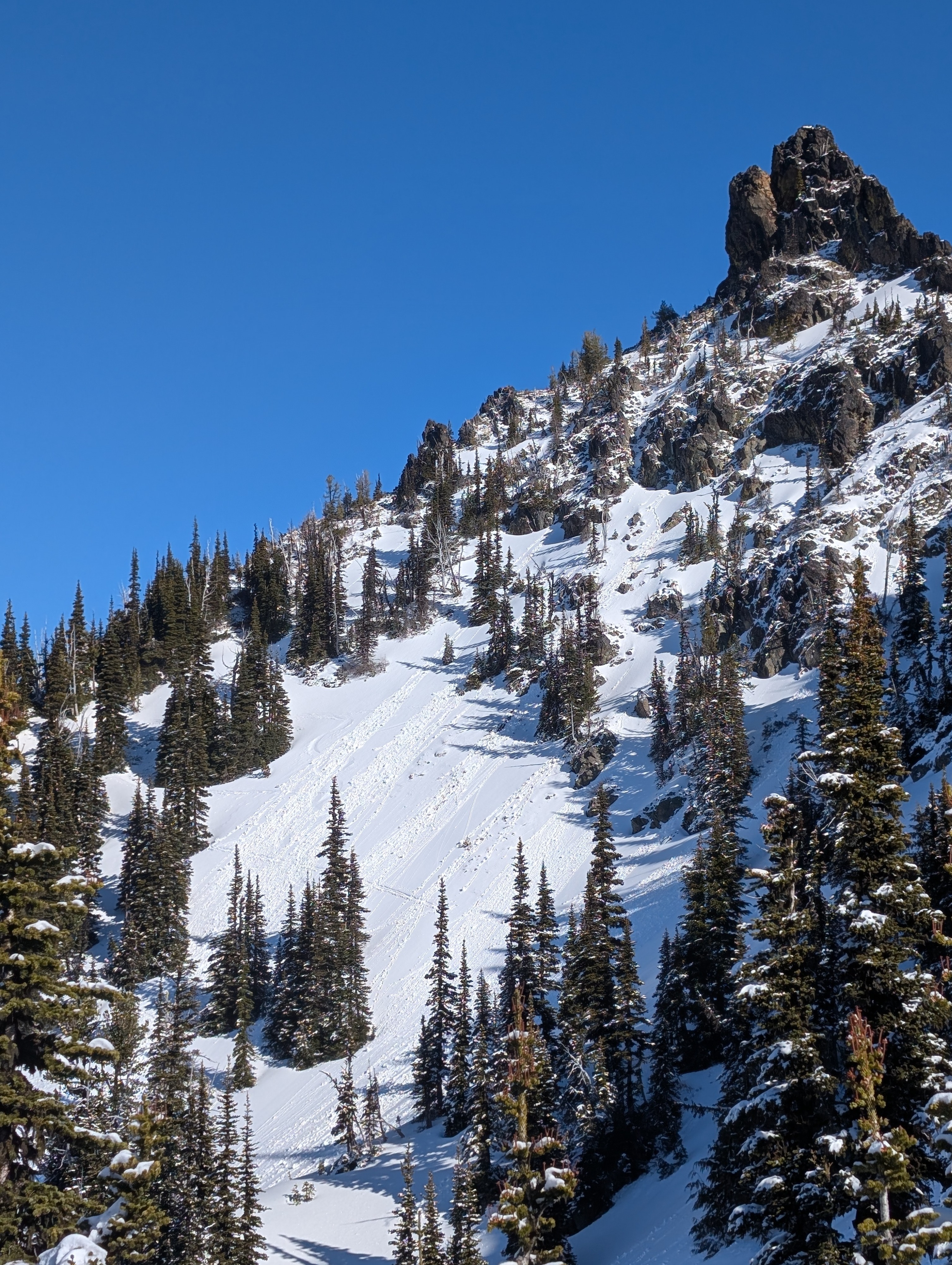
The wet loose never really materialized while I was out there, but I did see some new rollerballs coming out of steep, rocky terrain. I was out of the field around midday, and sun-exposed slopes were certainly softening.
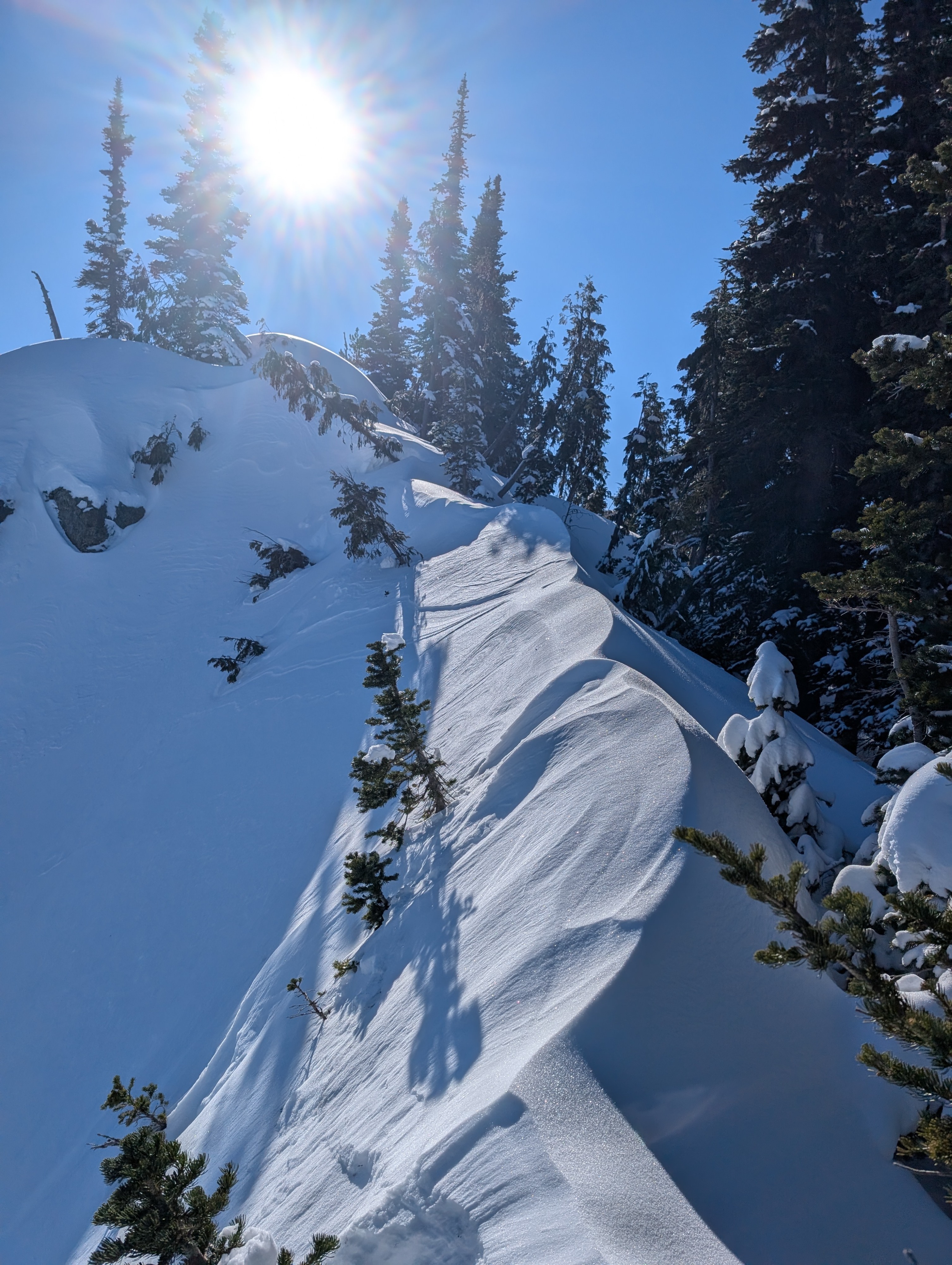
As noted below, I found firm, hollow snow along a ridgeline that had obviously been affected by the easterly winds. I stomped on a few safe test slopes without a result, but that's often the deal with hard slabs. It was easy enough to steer around these firm and uncertain areas; they stuck out like a sore thumb compared to the nearby soft snow.
Overall, travel wasn't too difficult, and the loop was pleasant. Skiing on the dark, shady slopes was fantastically fun as faceted snow made for noisy turns. But even on the sunny slopes, it was consistent and edgable, plenty of fun.
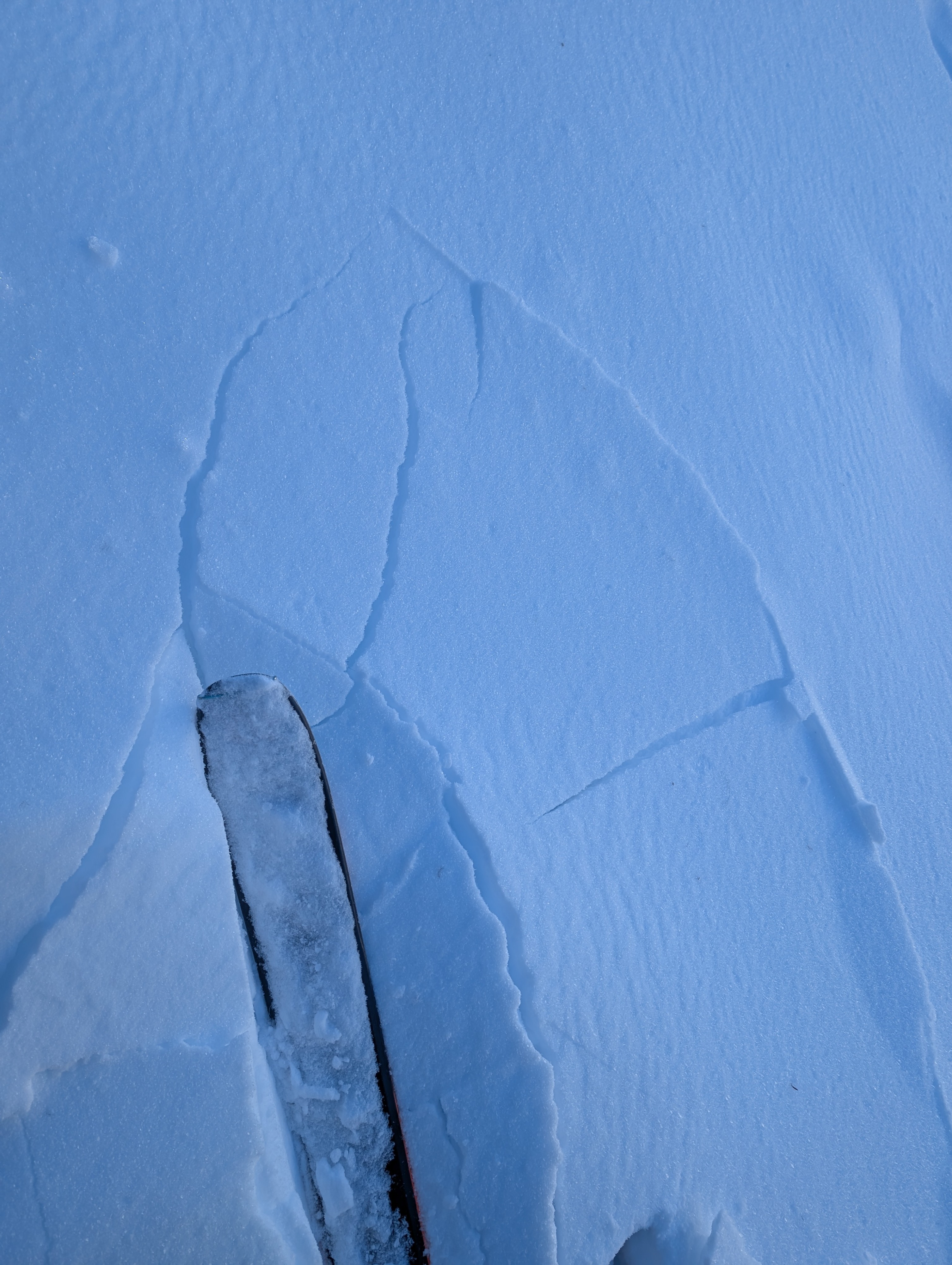
Along a ridgeline, I got cracking in wind-affected snow. The nearby snow was hollow feeling and firm compared to the low-density snow I had been traveling in previously.Weather
Bright blue skies all day with light easterly winds.
Snowpack
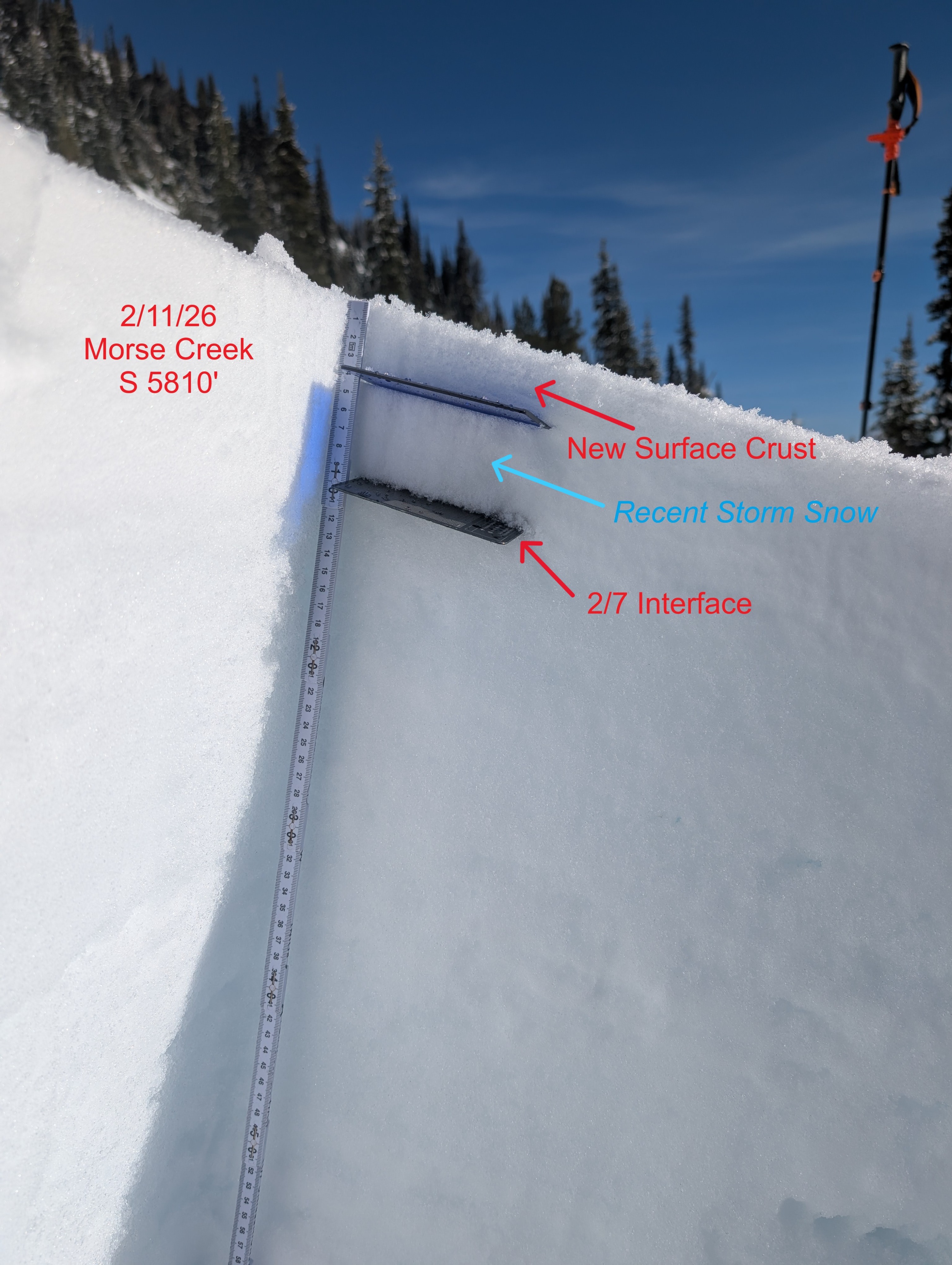
On sun-exposed slopes, a new surface crust caps the recent storm snow. It was roughly 4cm thick, meaning only 6-10cm of dry snow were left to sit over the 2/7 interface.
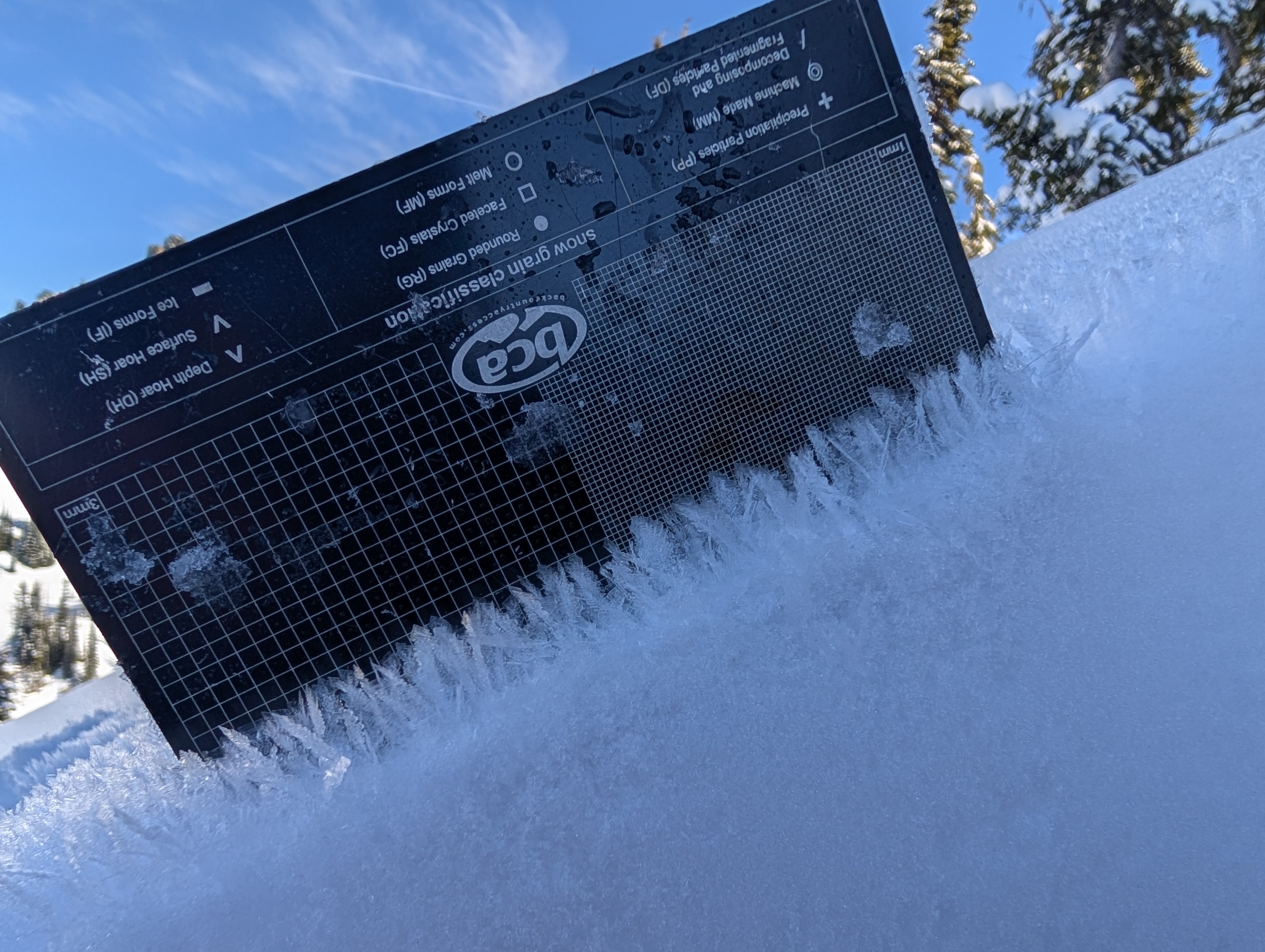
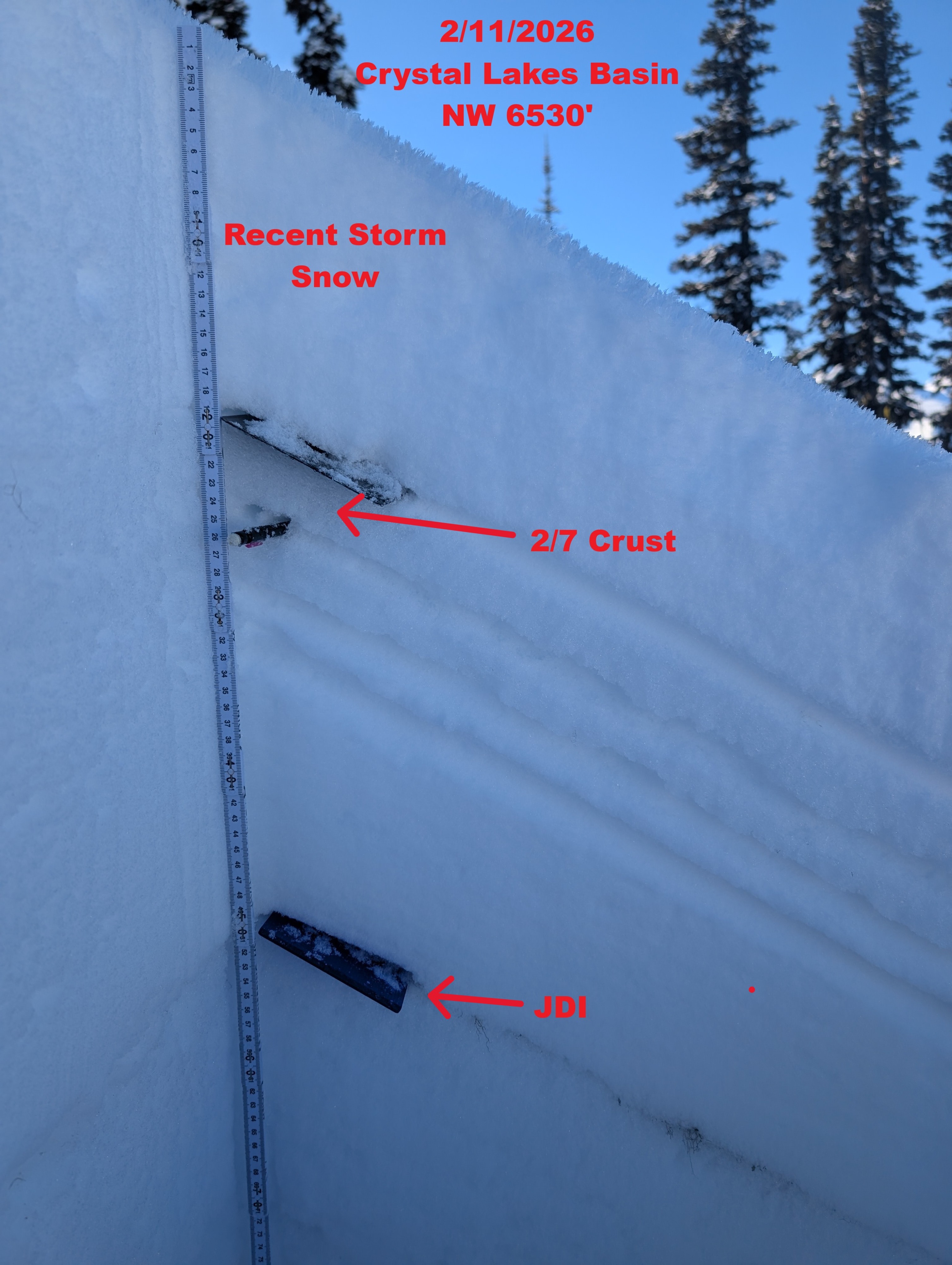
On shaded aspects, cold dry snow exists over the 2/7. The amount increases significantly above about 6000'. The most I measured was 21cm but on average, it was a few cms less than that. Large feathery surface hoar was growing on the surface anywhere it was shaded.
Below the 2/7 interface, there is a series of melt-freeze crusts. In some areas, they're separated by softer snow; in others, a single large complex exists.