
Quick report
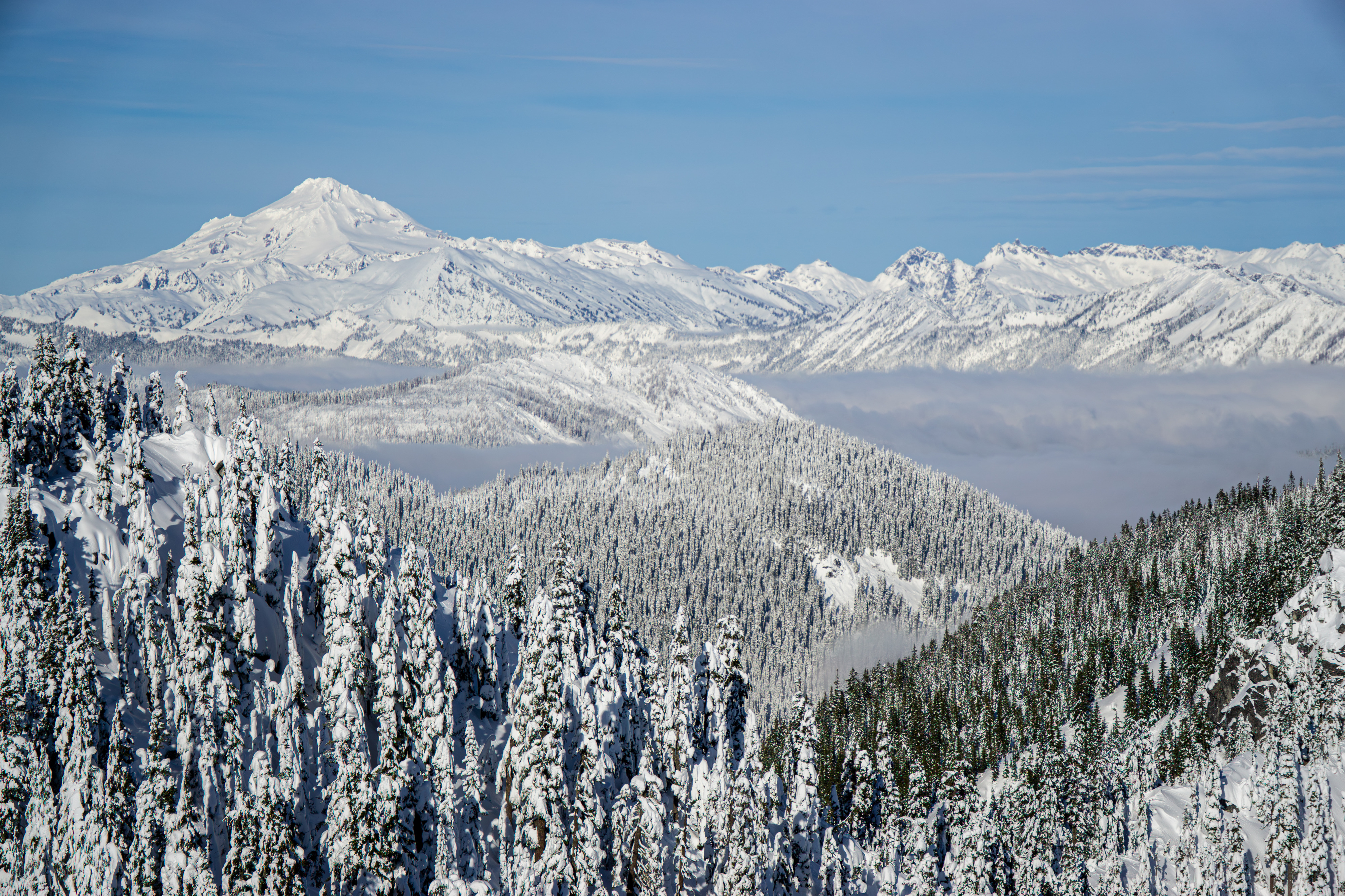
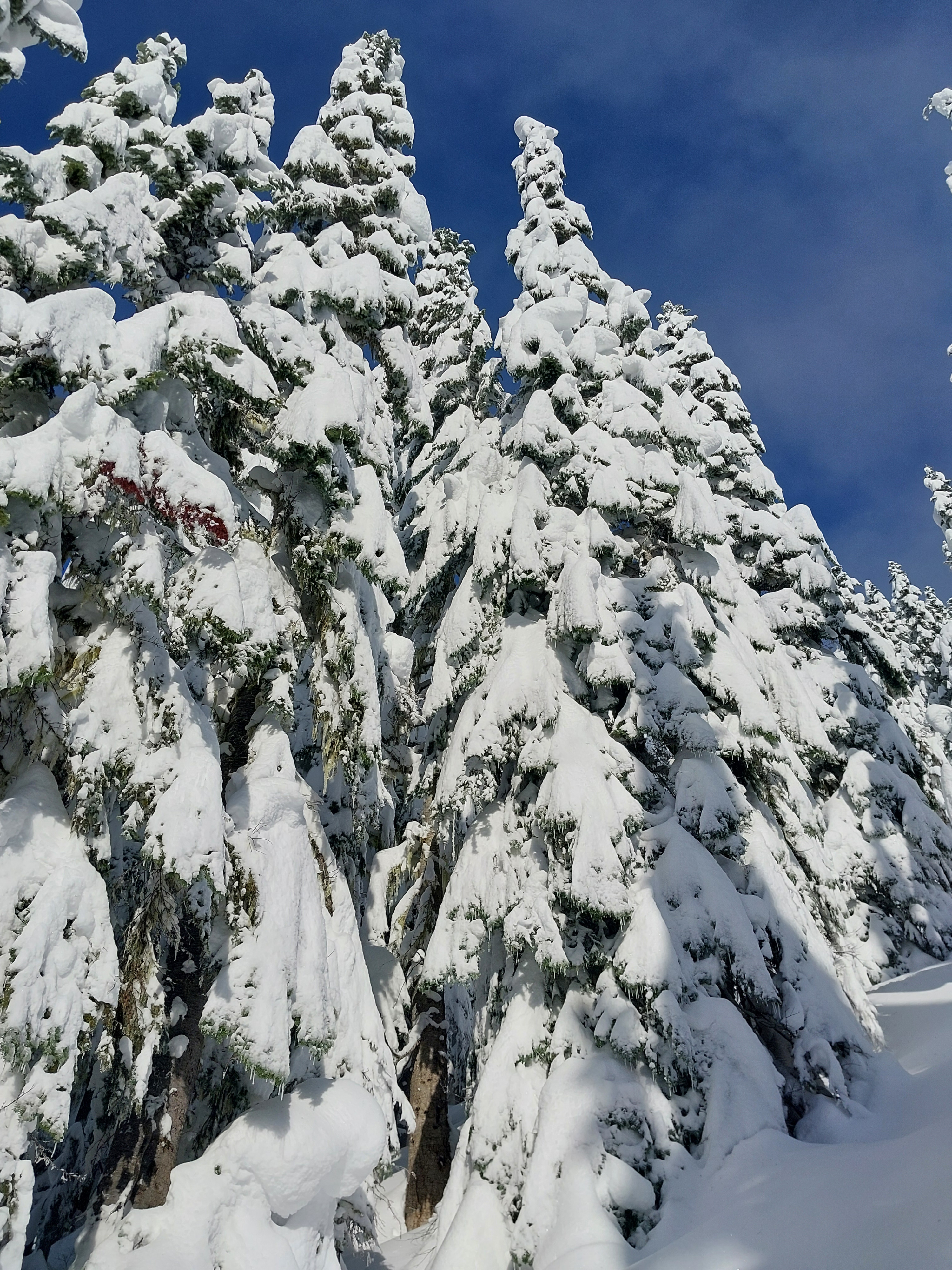
A beautiful day with incredible views. Despite the full, Solstice sun, cold air temperatures kept all but the steepest, most southerly snow surfaces cold. A surprise east wind event formed fresh wind-drifted slabs.
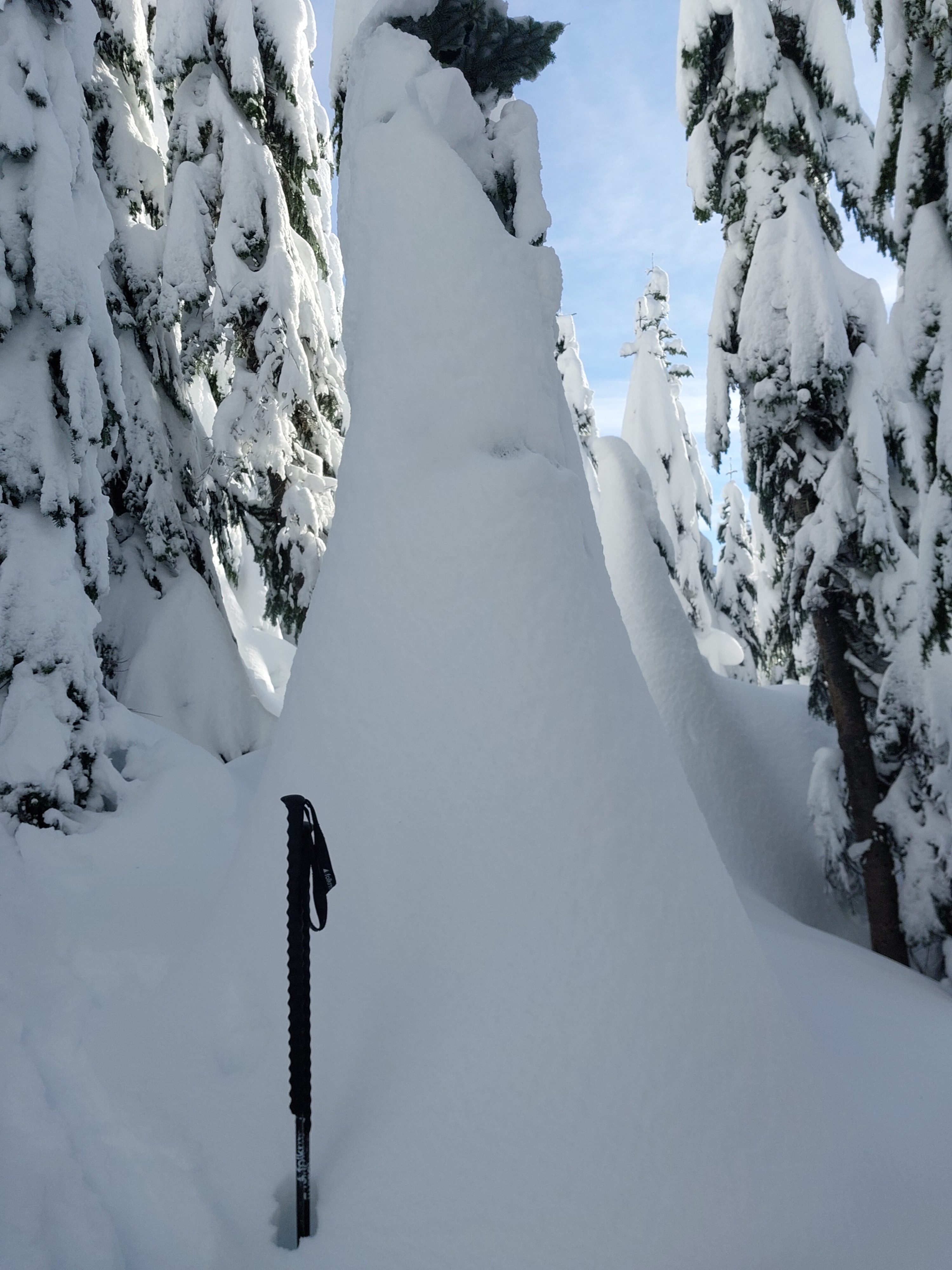
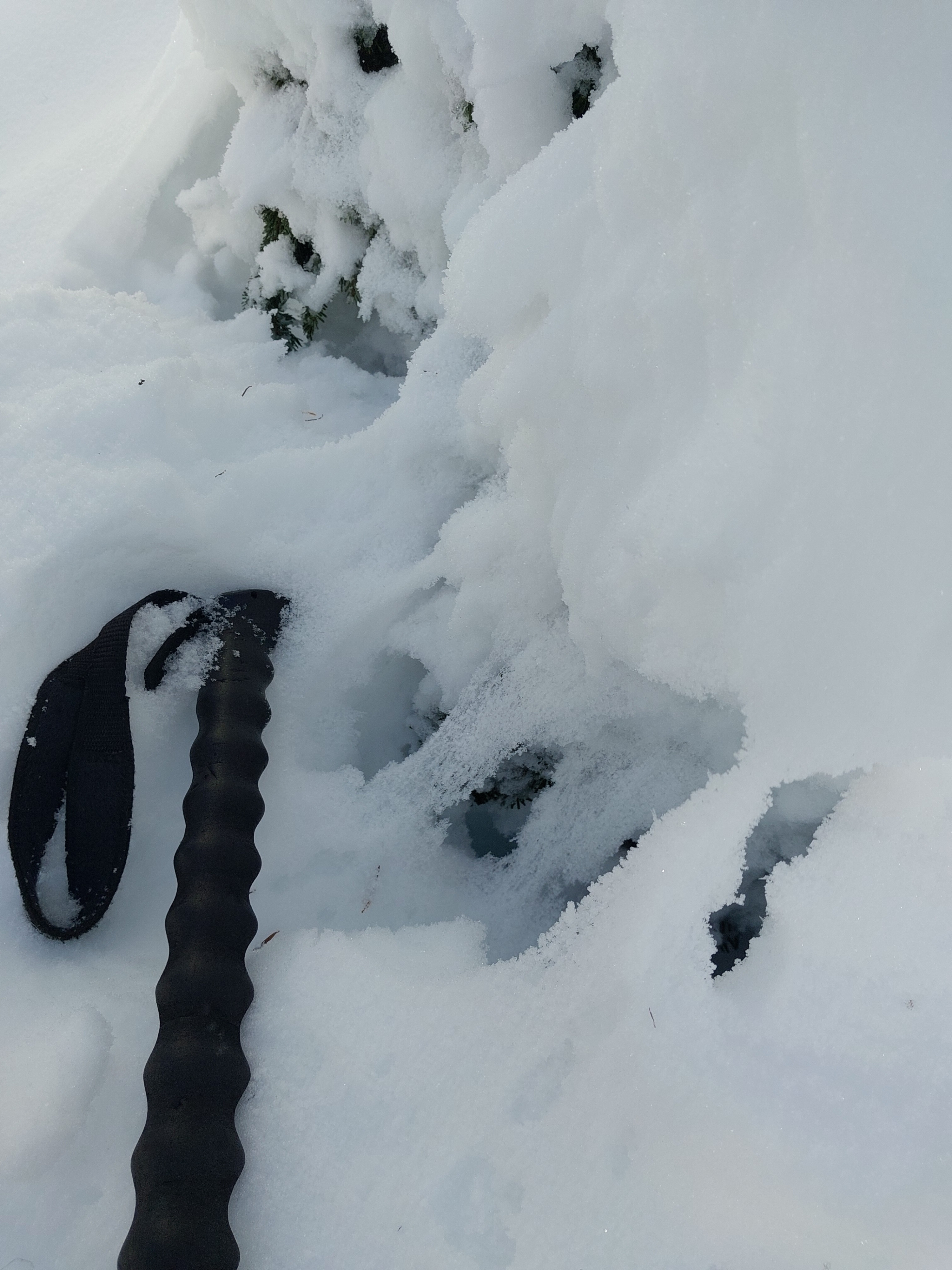
Probing and profiles revealed 5-6ft of snow on the ground with no deeper layers of concern.
Weather
- Air Temp
- 20
- Cloud Cover
- few
- Wind Loading
- moderate
- Recent Snowfall
- 0
- Snow Avail For Transport
- moderate amounts
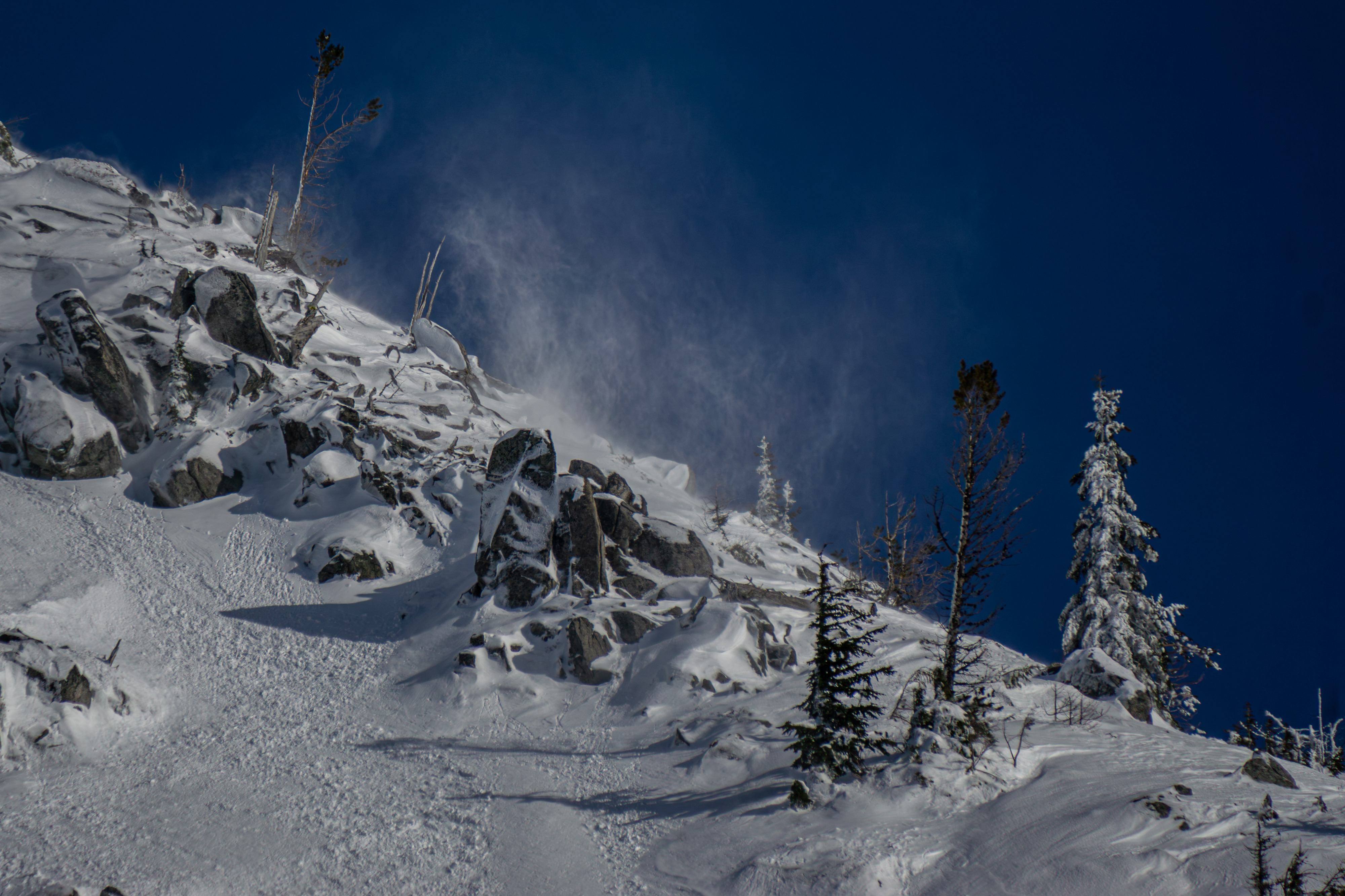
Air temperatures were 20F (6C) at 4,800-5,500ft from 11:00-2:00p Thin clouds with mostly sunny skies. Impressive east winds in select terrain. Moderate with strong gusts from 11-2:30. Periods of intense blowing snow.
Snowpack
Height of snow and layer tracking:
5,510ft: HS 210cm, no 12/24 crust, ↓90cm 12/18 crust
4,960ft: HS 175cm, ↓37cm 12/24 crust, ↓85cm 12/18 crust
4,060ft: HS 115cm, ↓35cm 12/24 crust, ↓80cm 12/18 crust
Surfaces:
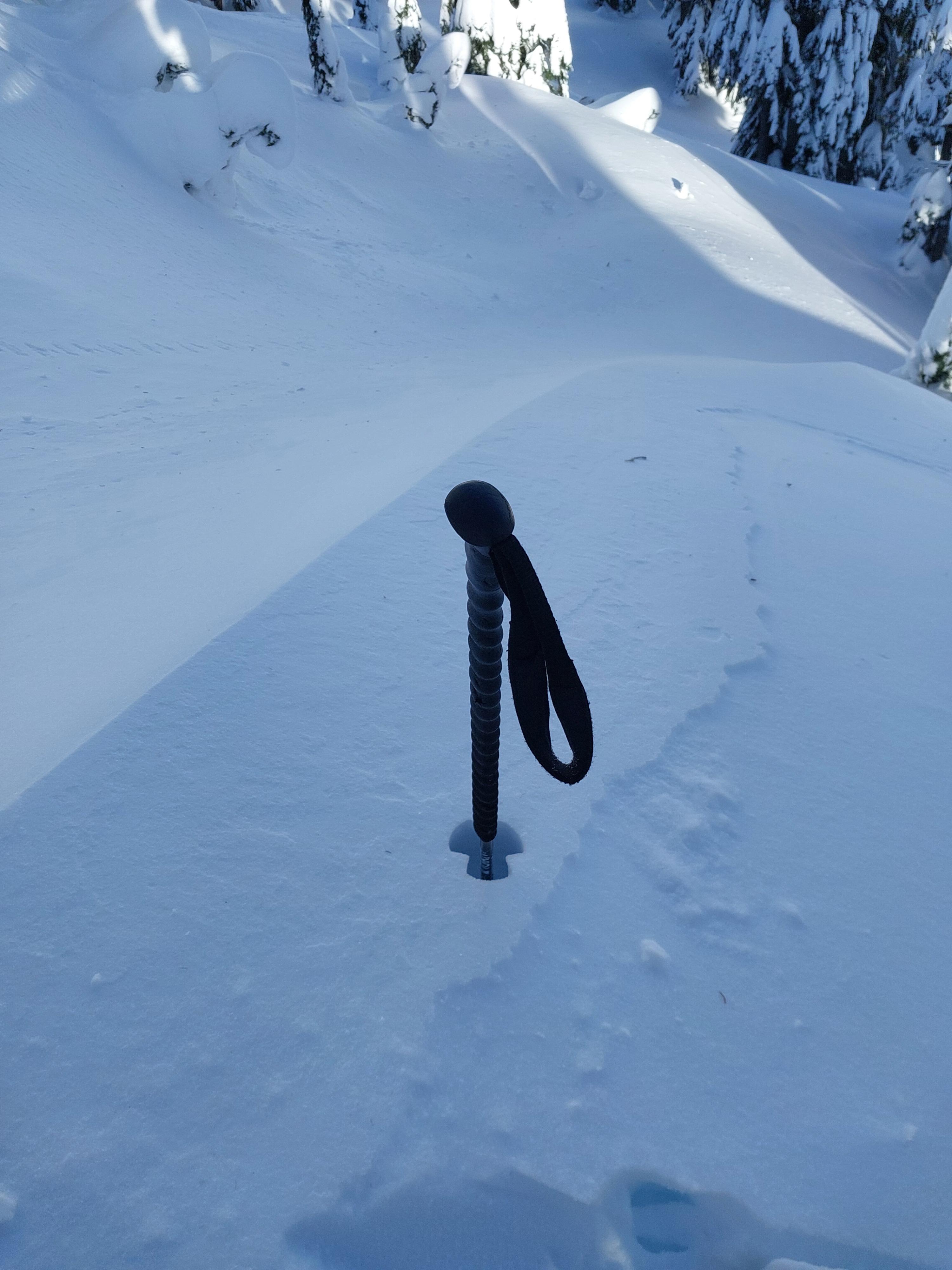
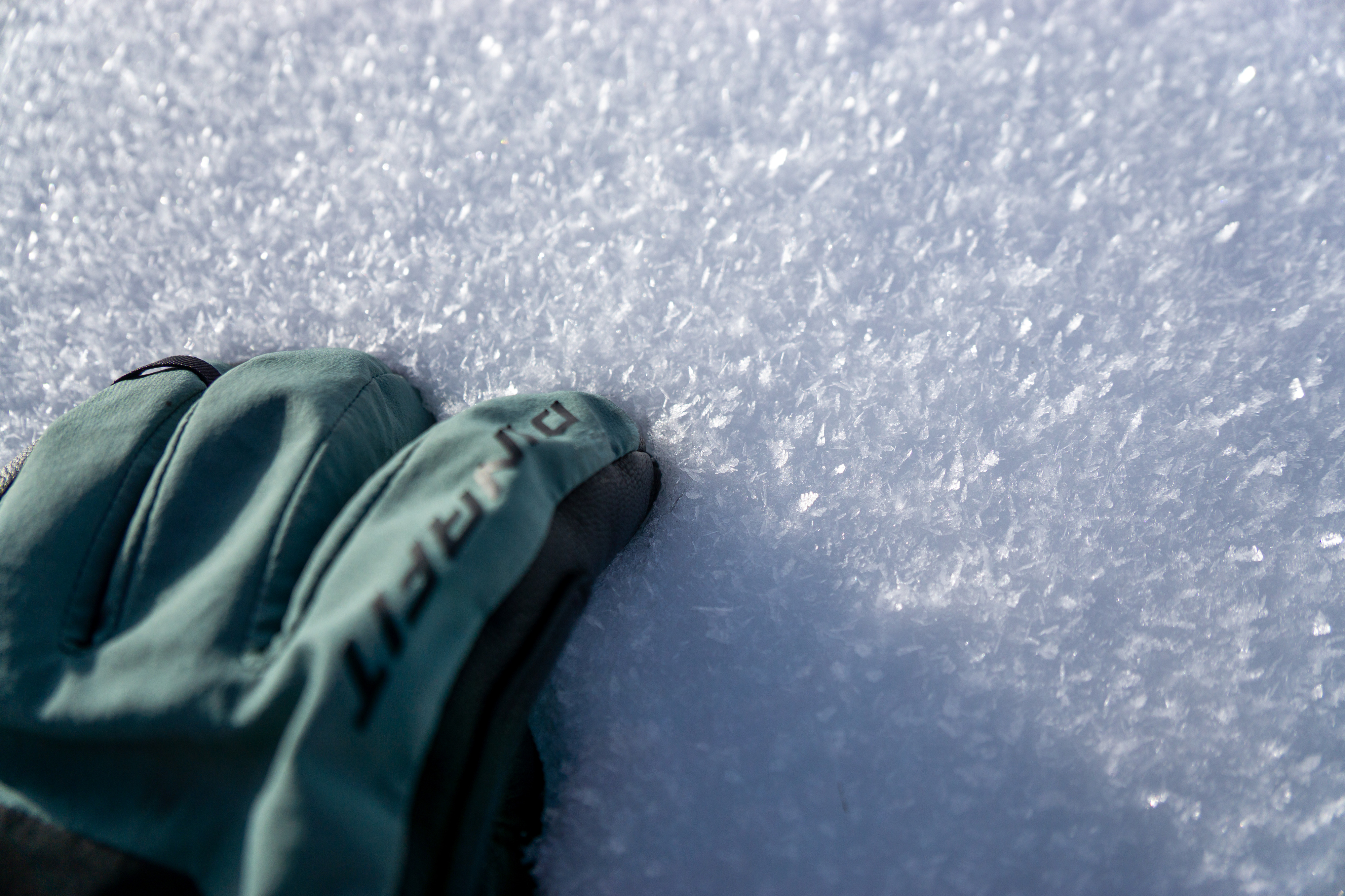
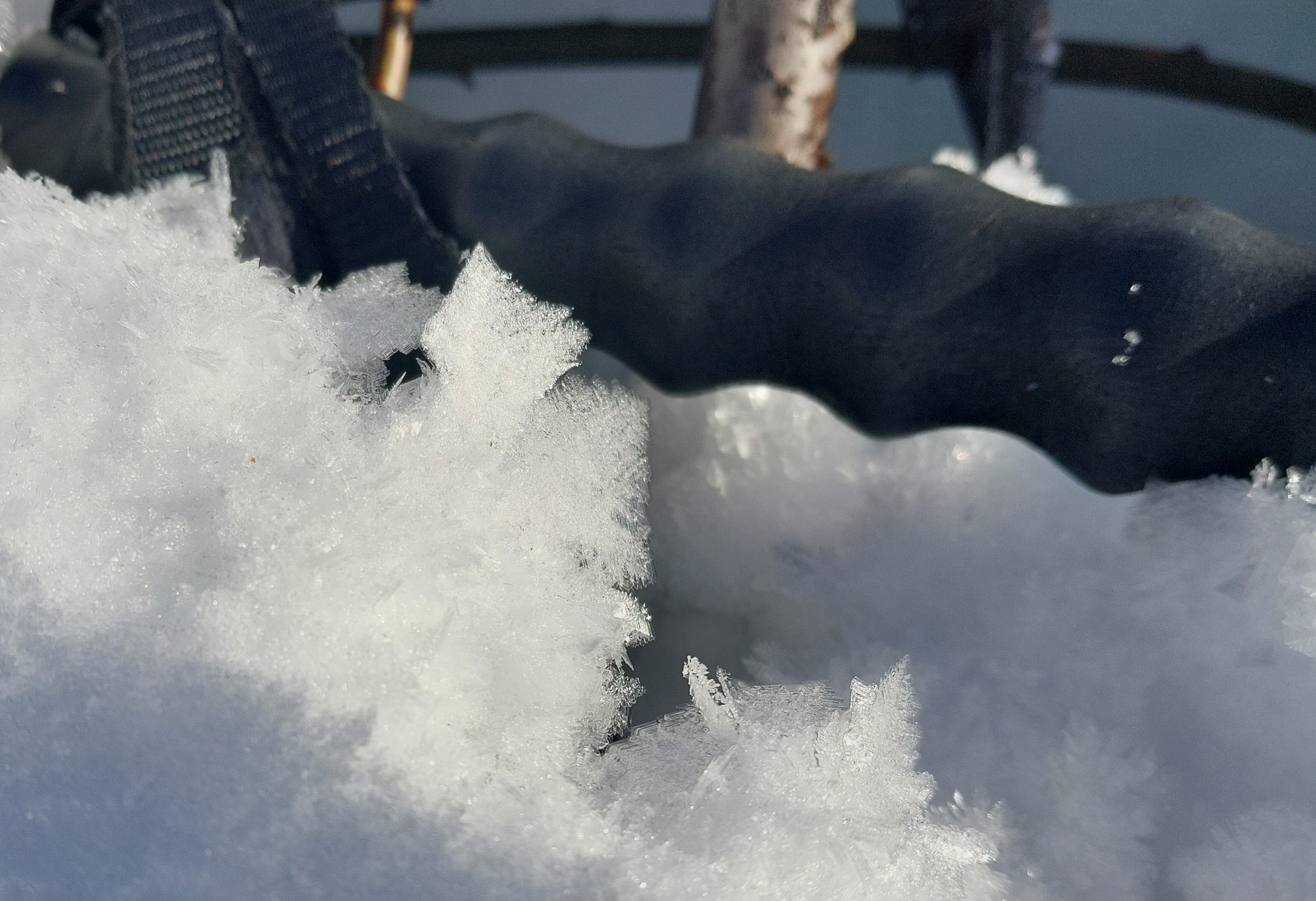
Surface hoar was widespread. Mostly small, but up to 4mm in places.
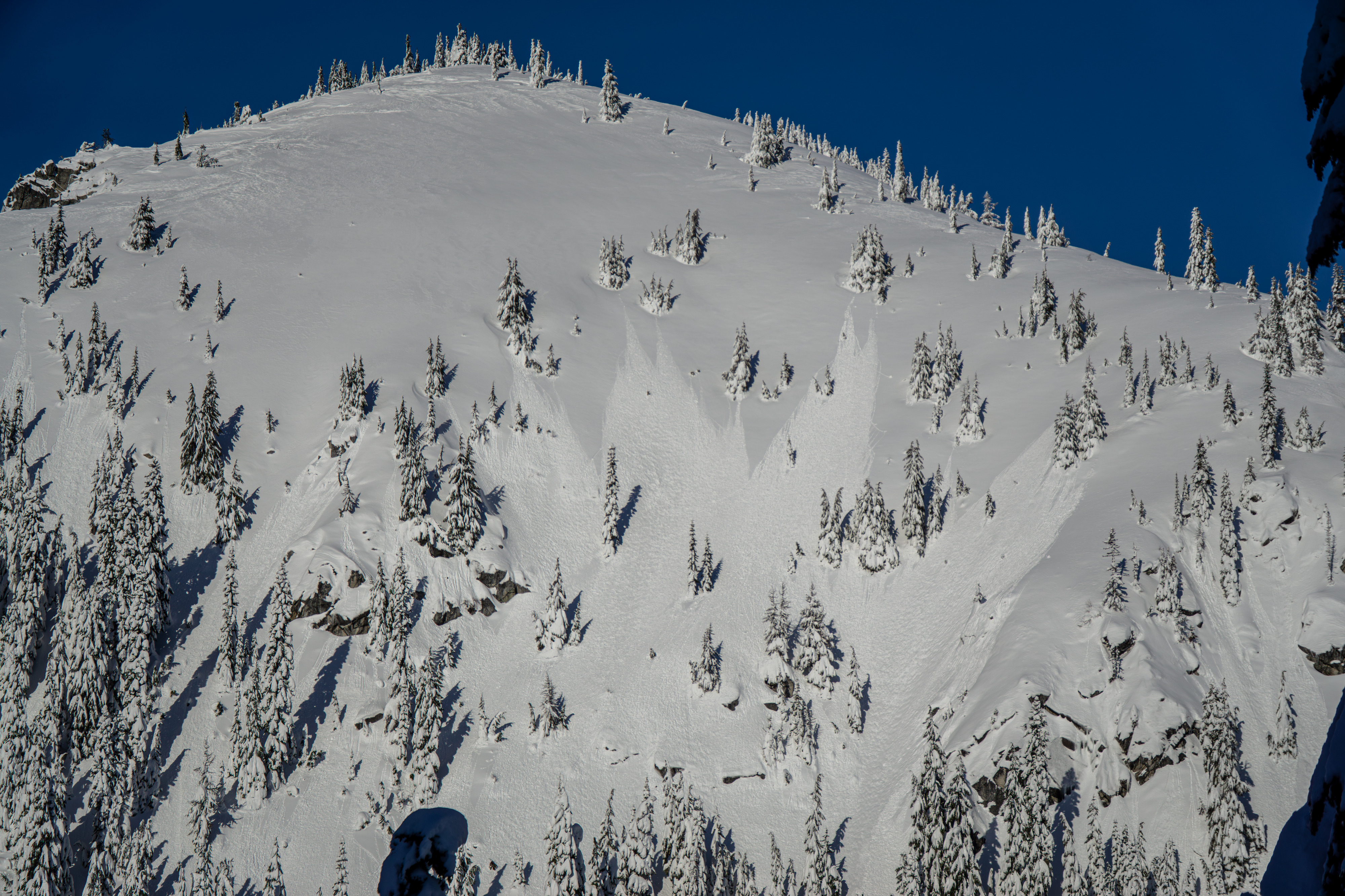
Steep, sun-exposed SE-SW: By 3p, we were able to find isolated thin, zipper crusts or slightly moist near-surface snow between 4,000-5,300ft. Some slopes had 1cm of dry snow over a thin, moist, sub-surface layer.
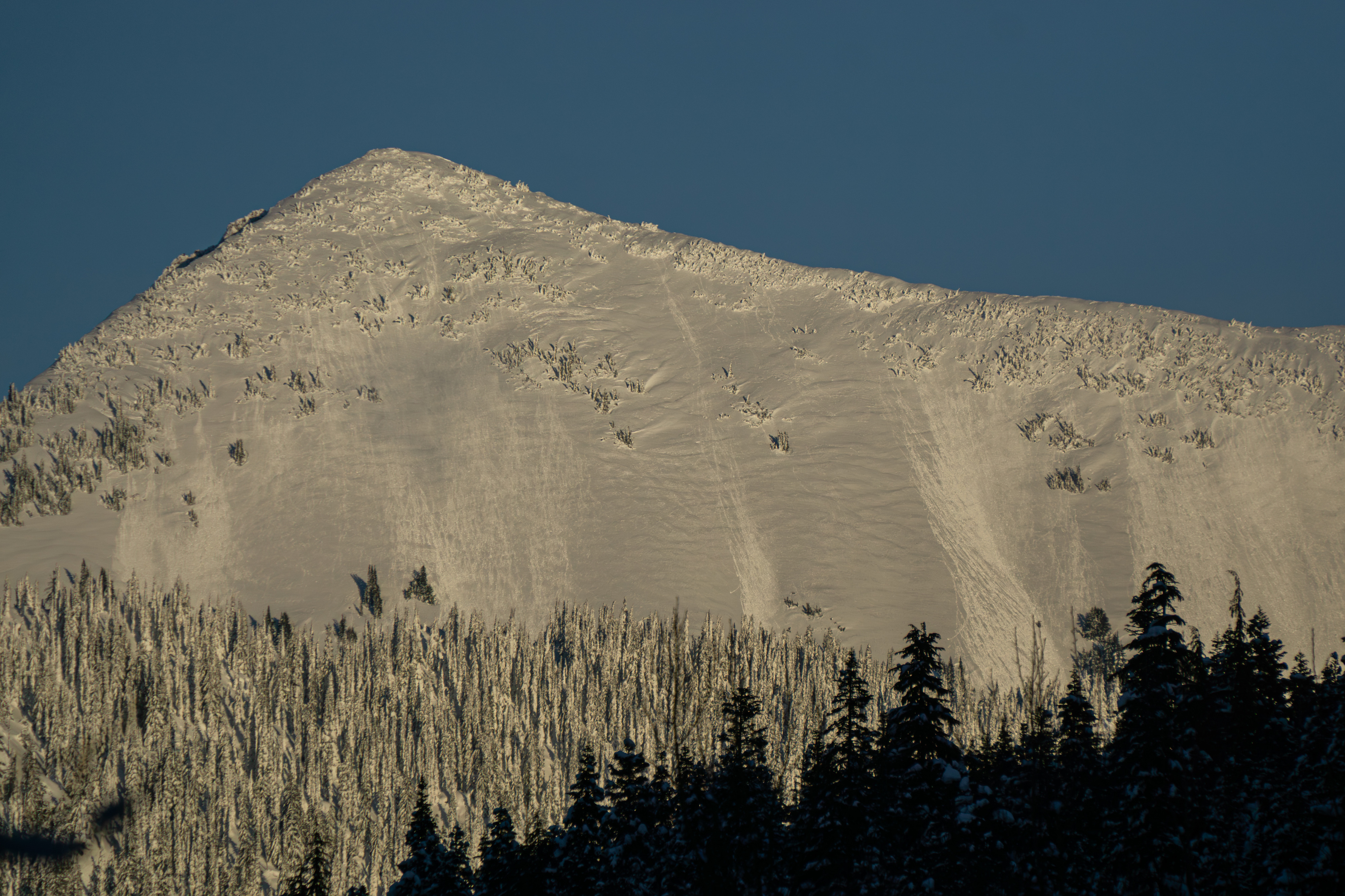
Wind-exposed middle and upper elevations had mechanically broken rounds.
Profile at 5,510, SSW
Low-angle terrain
HS 210cm. Surface: Surface hoar- dry
Layers in the upper snowpack got progressively harder down to the 12/18 crust (↓90cm). The 12/24 crust wasn't present as that rain line was somewhere between 5,100-5,500ft. There was a slight weak layer of very small grains immediately above the 12/18 crust, but this yielded no results in tests, including Deep Tap. Stomping on the DT aka "Hirshberg's Cascadian boot test" did result in a very clean, planar failure. Not an official result, nor concerning. No other layers of interest. See profile graph.
Wind Effects
The blowing snow from east winds and new slab formation was the big surprise. I believe the somewhat variable wind, isolated/terrain-based nature of slab formation, and shorter duration of loading resulted in less significant impacts than if winds were more consistent. We weren't able to test immediate lee slopes, but slight cross-loaded slopes at 5,400ft resulted in no cracking or slab initiation.
Avalanche
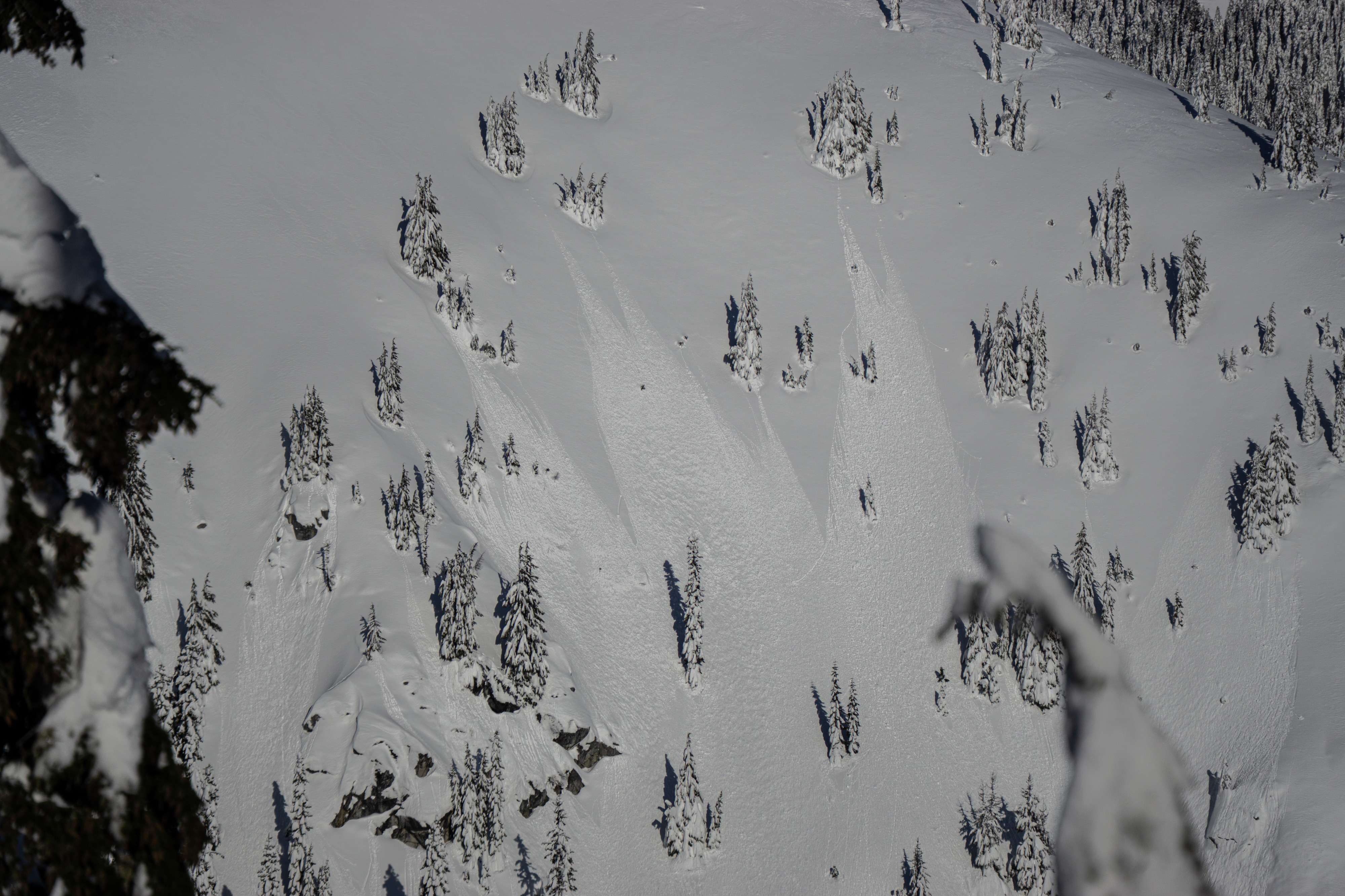
Numerous small (D1) very shallow point releases on steep SE-SW aspects. These predominantly resulted from falling tree bombs. Many were likely dry loose, though some that occurred after 1p may've been wet.