
Quick report
- Collapsing
- widespread
Dallas and I grabbed our friend Robin and went for a walk in the Crystal Backcountry to get more information on how our PWLs are looking after a stormy weekend and some warming temperatures.
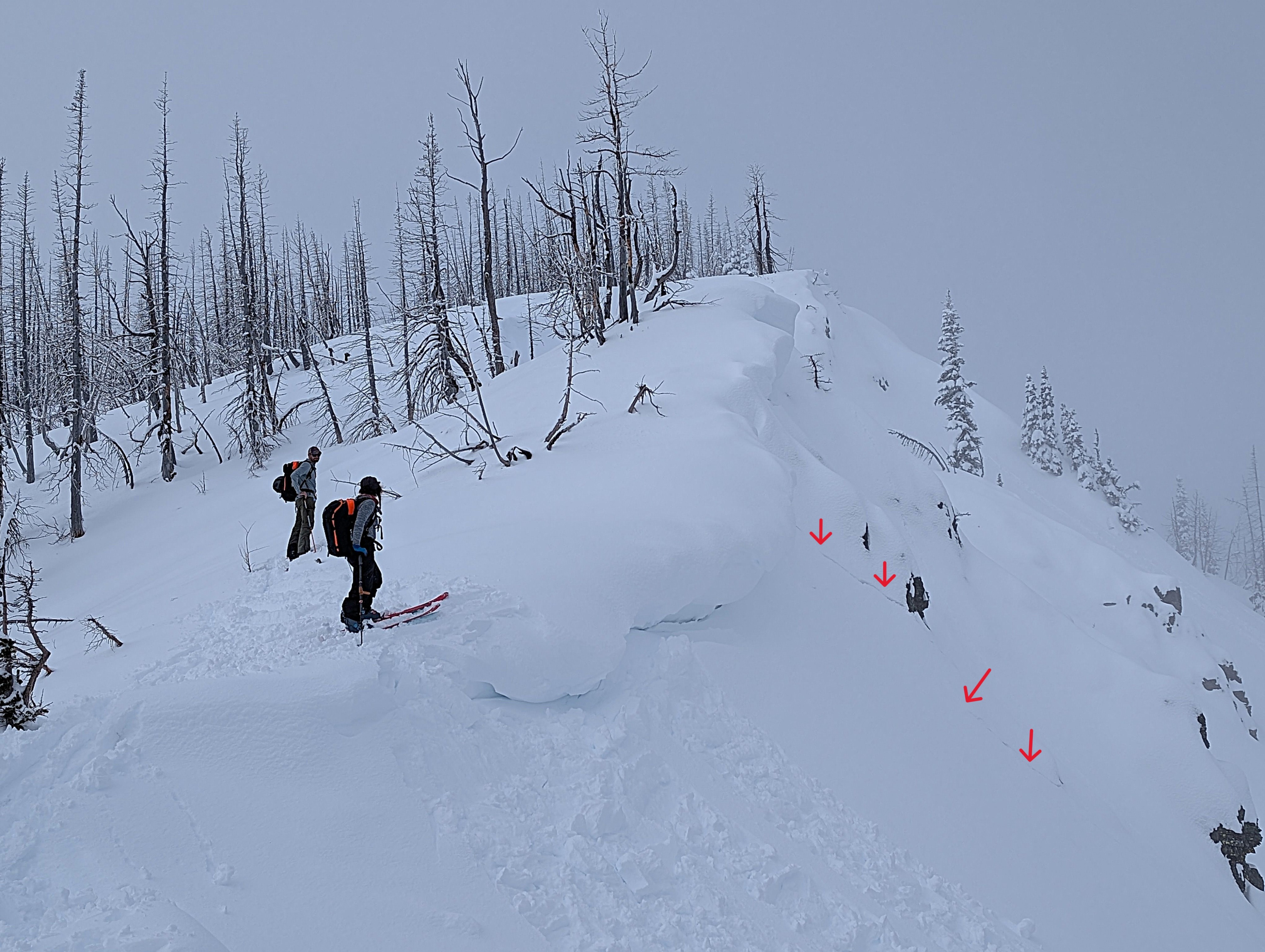
What started off as a pleasant walk, suddenly got spooky as we started triggering whumpfs all over the place. Ridgelines, meadows, midslope, this aspect, that aspect, it didn't matter. All throughout Cement Basin and as we traveled the ridge between Cement and Lakes, whumpfs were popping off. Three of these were the kind that make your hair stand up on the back of your neck and look around to see if an avalanche occurred. No persistent avalanches were spotted, but one whumpf was large enough to shake trees, which then shed their snow in the process. Another traveled over the ridgeline and produced a long crack on the slope just below the ridge.
That was enough for us to stay out of some terrain we had hoped to go grab information from when we initially made our tour plan. Instead, we stuck to the ridges and well supported slopes as best we could.
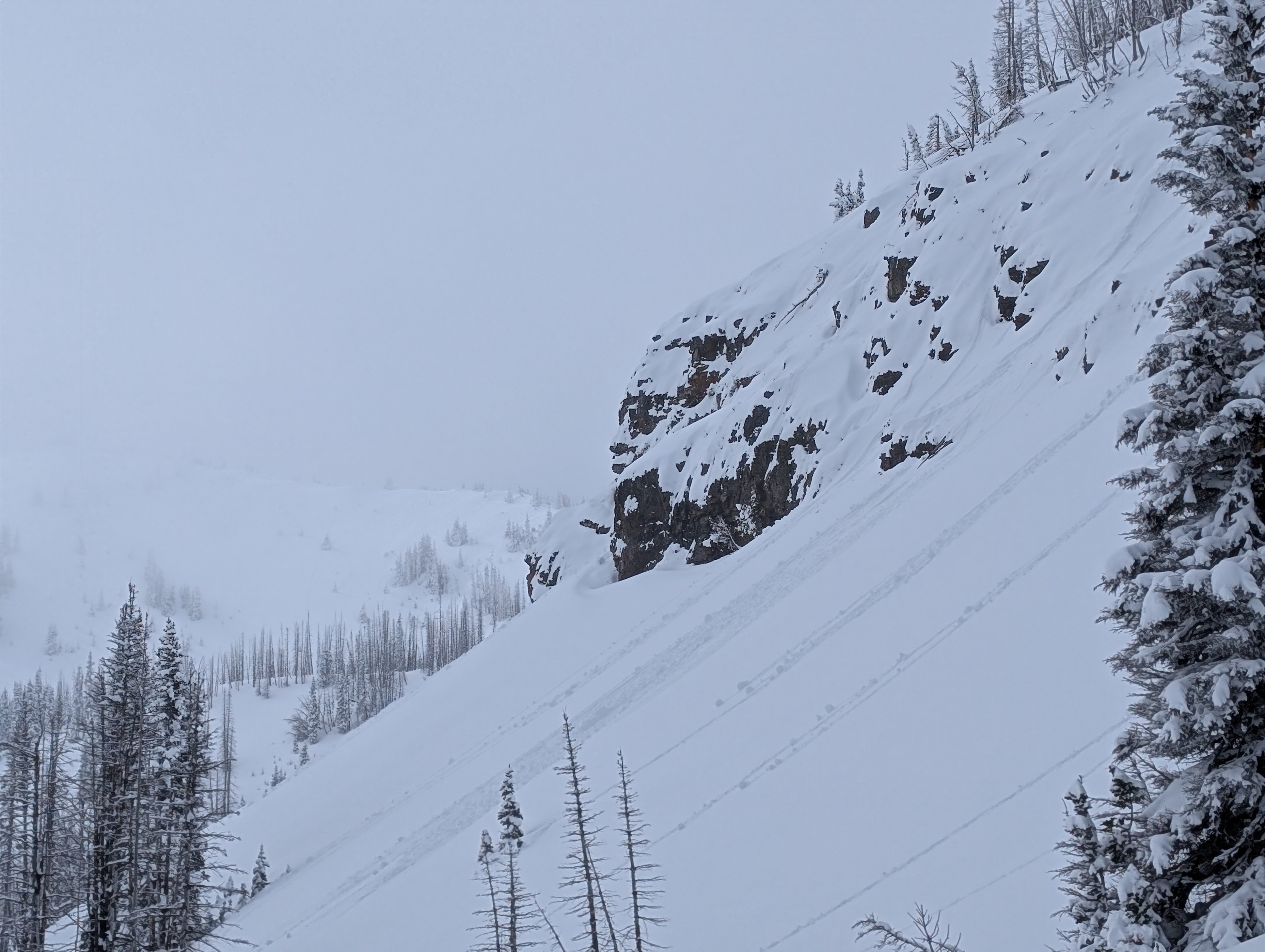
The warming trend was also taking a toll on the snowpack. Snow was shedding from trees and rocks, resulting in small amounts of wet avalanche activity. The upper snowpack got very heavy and moist, resulting in upside-down conditions.
We initiated 7 whumpfs during our travels, 3 were large and the kind that make your hair stand up on the back of your neck.Weather
Mostly cloudy with periods of both high and low clouds and a few snow flurries throughout the day. Temps were warm with periods of greenhousing.
Snowpack
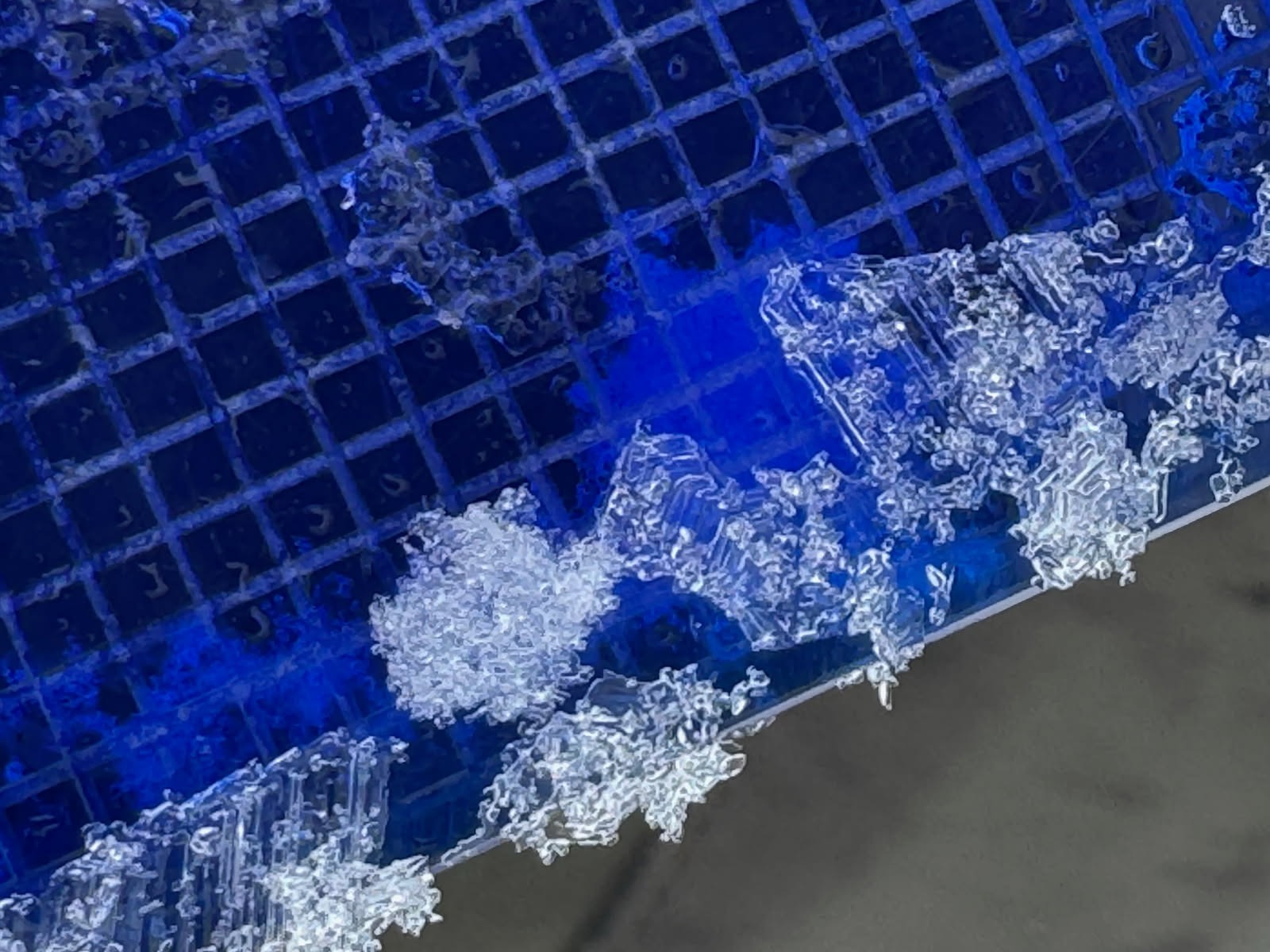
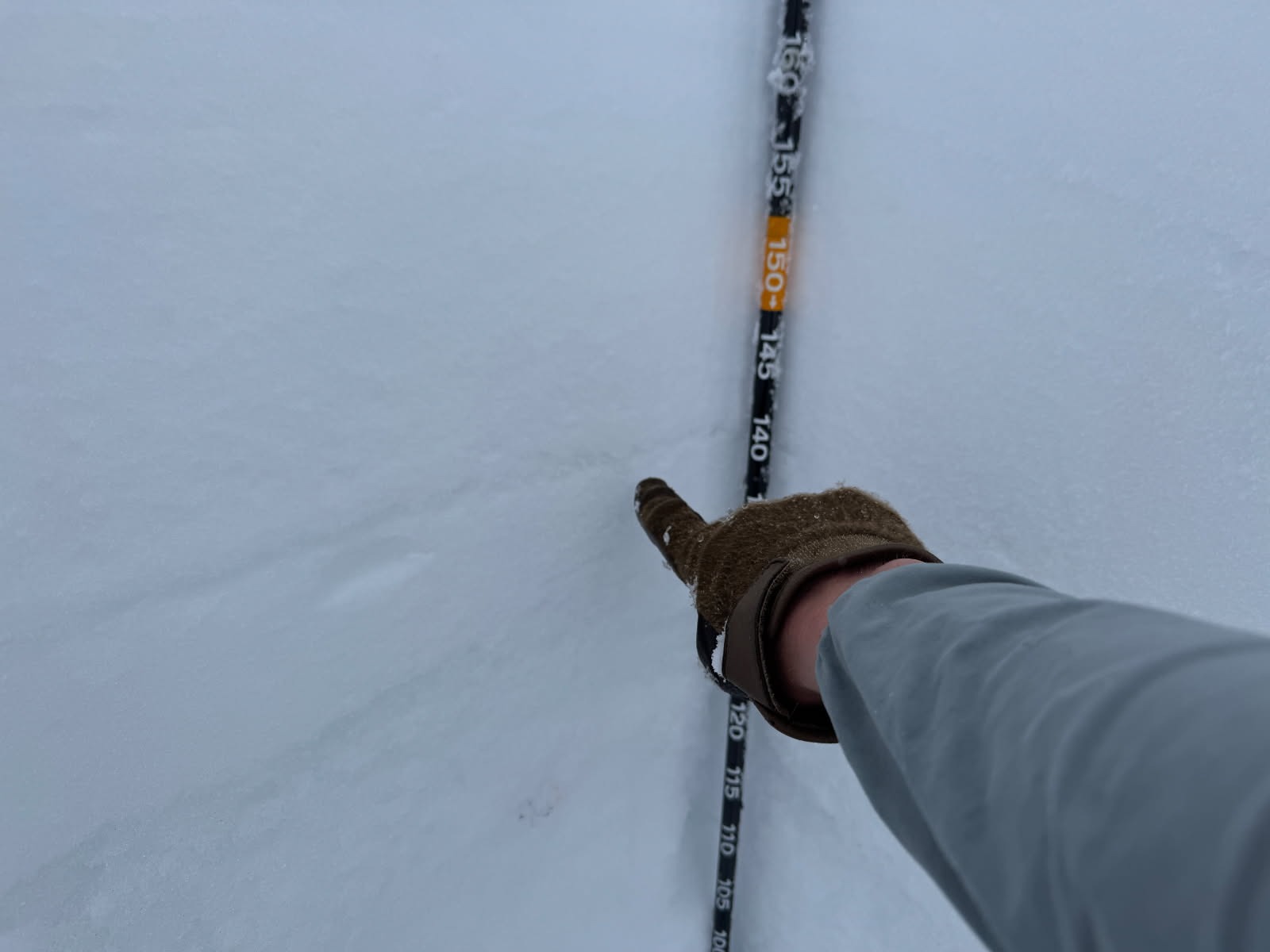
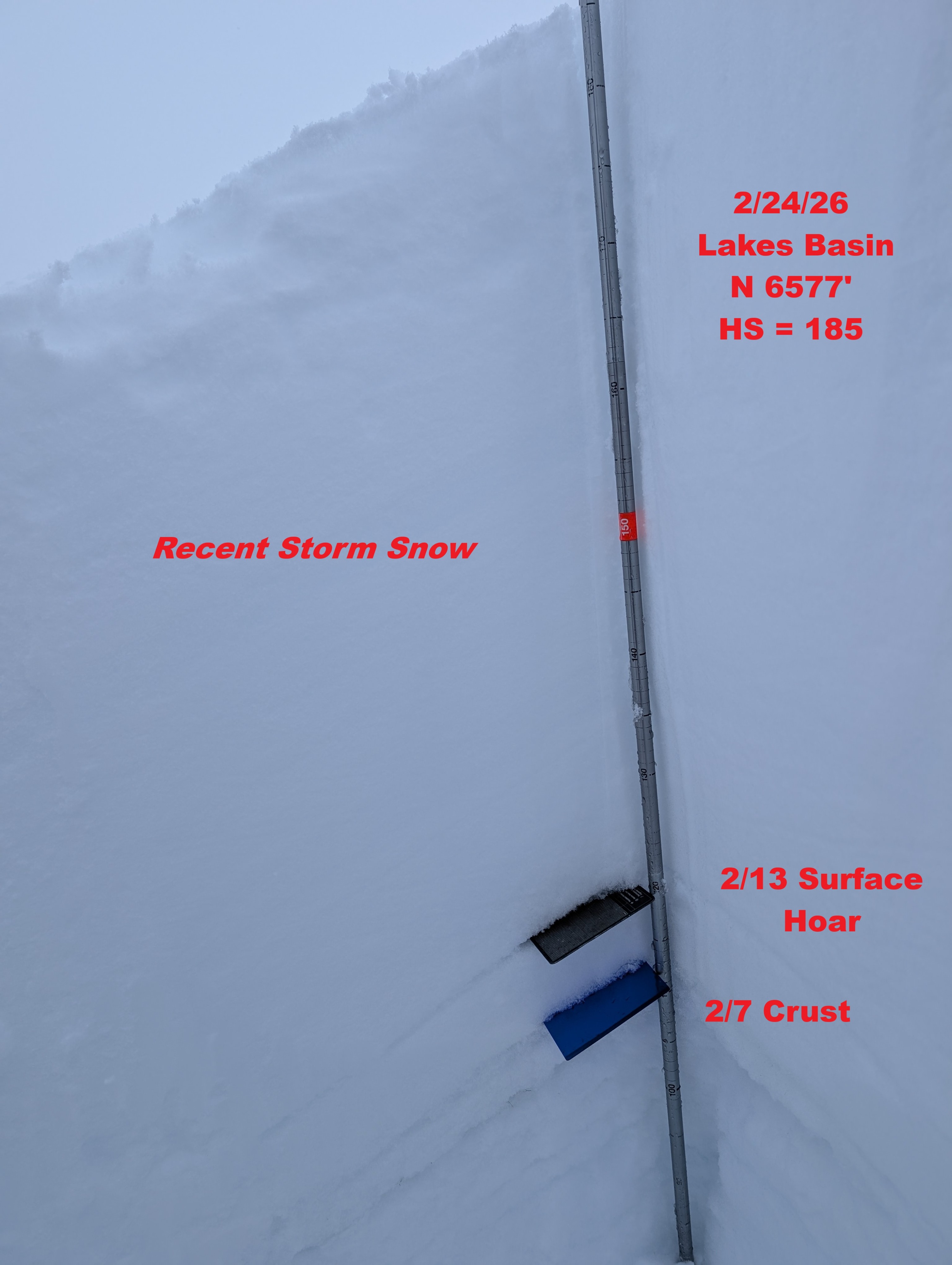
Our persistent weak layers remain largely unchanged. The 2/13 and 2/7 still contain weak grains such as buried surface hoar and facets. On southerly aspects, the snowpack is much thinner, and the 2/13 is harder to discern.
The change is that the upper snowpack is now very heavy and moist after a few days of warmer temperatures.
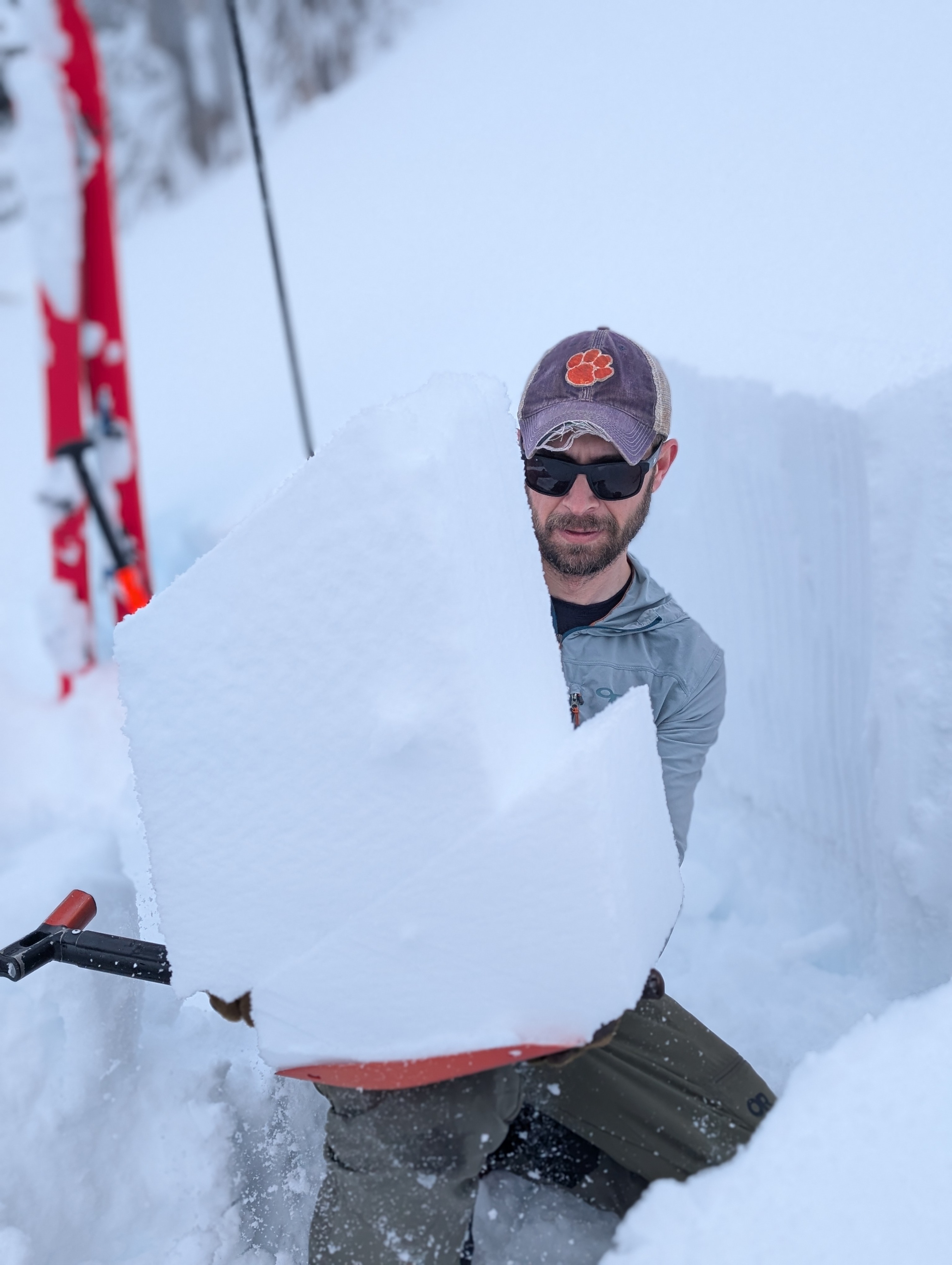
We dug 4 holes today and consistently found a reactive midstorm layer, in one pit, it propagated in an extended column test, twice. ECTP23, roughly 56cm below the surface.
But mostly we were looking at the 2/13 and 2/7. Deep tap tests and propagation saw tests were the most heavily used and showed concerning results.
SW 6105': PST 50/100 END
N 6577': PST 34/100 END, PST 36/100 END, DeepECTP2
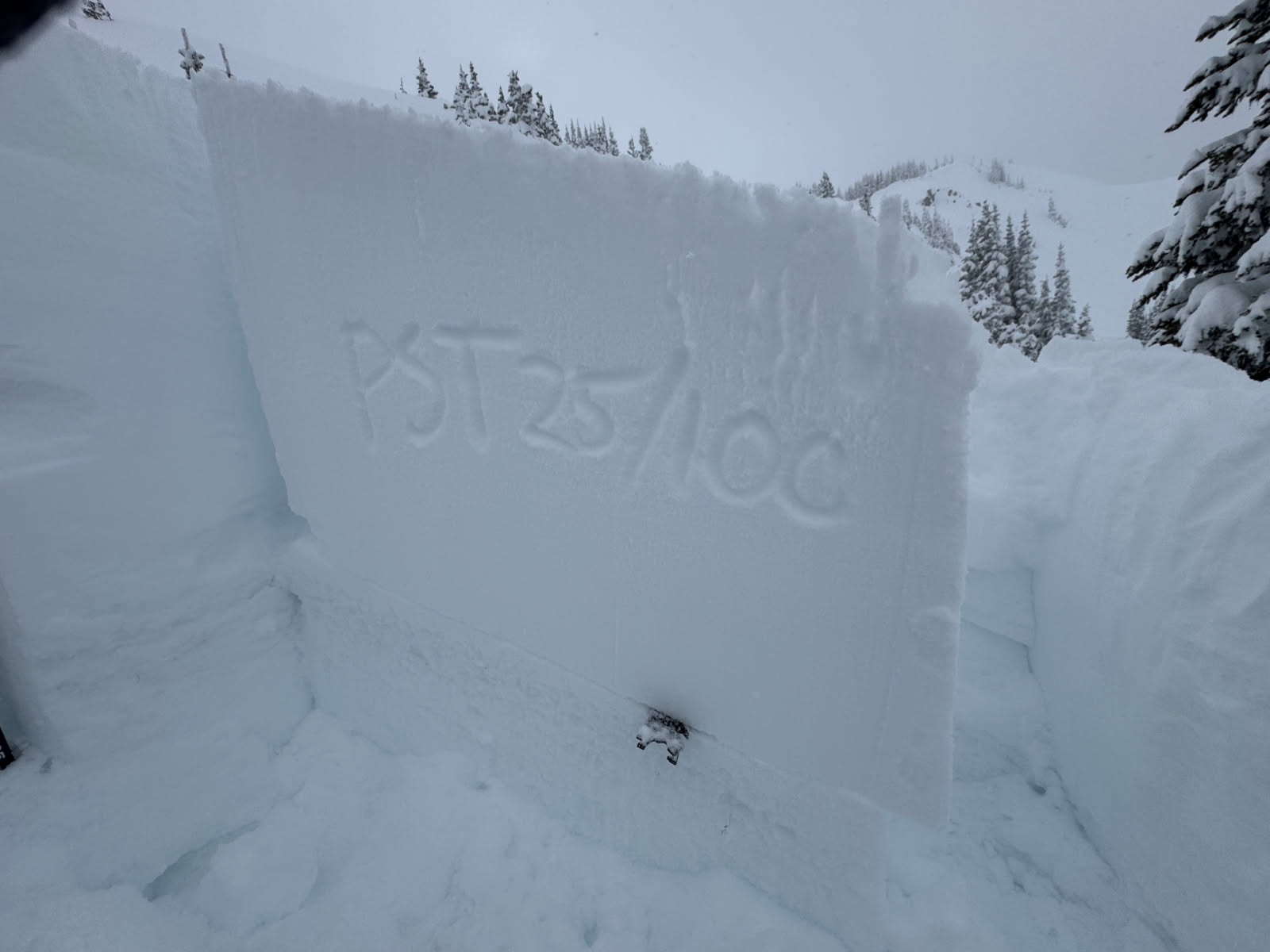
NW 6500': PST 25/100 END, PST 27/100 END
E/NE 6374': PST 27/100 END, DT2
Avalanche
During the warm part of the day, we saw small natural avalanche activity as snow shed from trees and rocks, creating wet loose slides on steeper slopes.