
Quick report
- Collapsing
- isolated
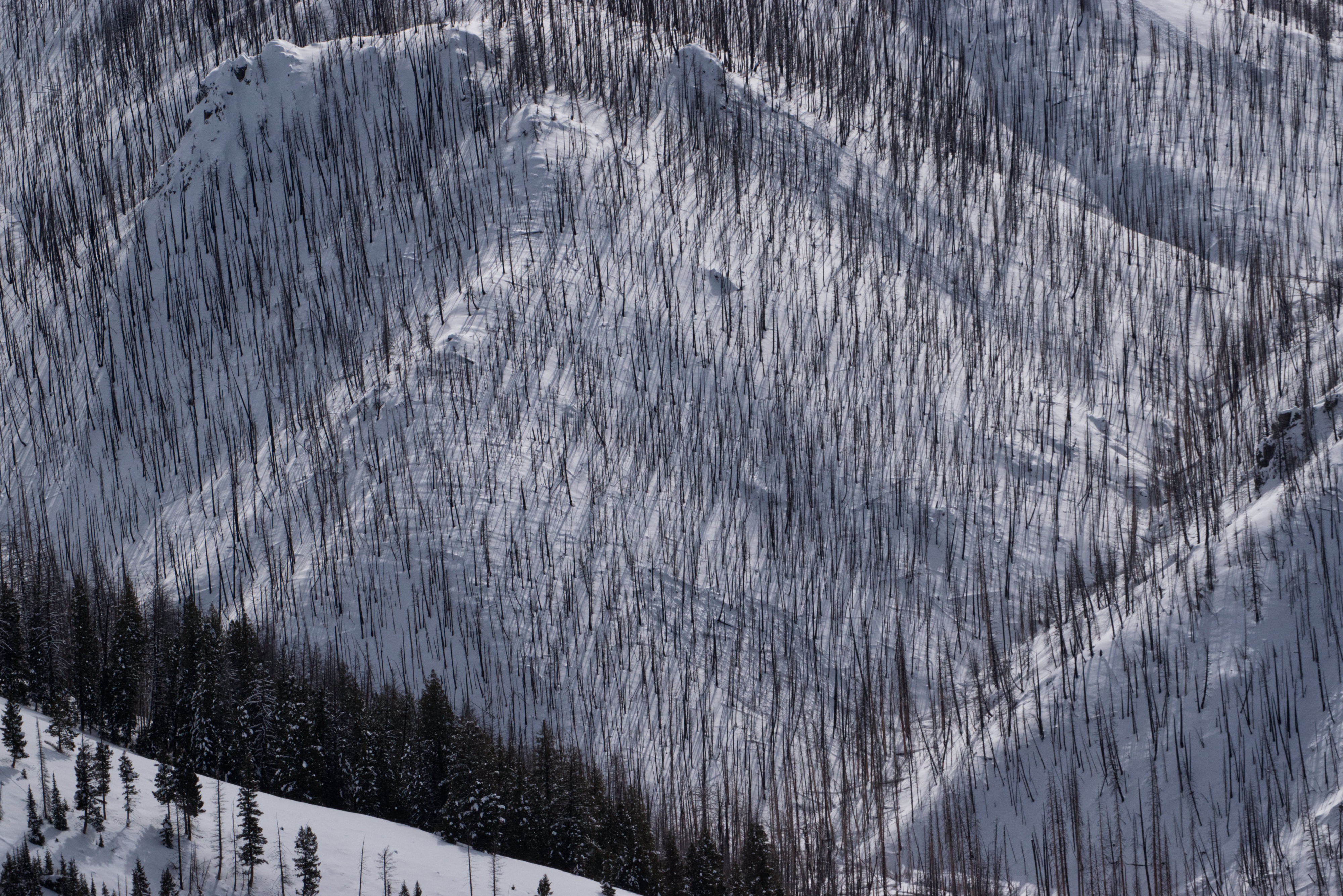
We observed about a dozen D2 natural avalanches that likely failed towards the tail end of the storm cycle. We had some isolated collapses that would probably have been more widespread if we hadn't spent most of the afternoon on an established skin track. Based on limited observations, the structure on the south slopes looked bomber at mid-elevation, but I would like to verify that one more.
Weather
- Cloud Cover
- broken
A calm day with broken skies. Sun was poking through enough to melt the surface. The skies opened up for the sunset.
Snowpack
South-facing slopes at middle elevation had about 30-35 cm of new snow over a thick melt-freeze crust from the late January thaw. Below the crust were many vertical ice columns that welded the lower snowpack together. It was 47 cm down to the melt-freeze crust on an east slope. It was a 65cm thick slab over the basal facets. We had to keep the group moving so I had limited observations besides quick hand pits.
Avalanche
- Size
- D2
- Count
- 4
- Aspect
- N
- Trigger
- N
- Elevation
- 7700 ft
We observed close to a dozen avalanches just in one drainage. Most of them were no larger than D2.