
Quick report
We did not experience any cracking or collapsing throughout the duration of our tour. See avalanche section for more information on avalanche activity.
Weather
- Air Temp
- Above freezing
- Cloud Cover
- clear
- Wind Loading
- previous
- Snow Avail For Transport
- small smounts
Clear blue skies, sunshine, and unusually calm winds for the Boulders were the theme for the day. Temperatures were well above freezing leaving the truck just around 11:00 and increased throughout our time in the field. Skies were clear throughout most of the tour, with diffuse, very few, and thin bands of high clouds making their way in from the NW towards the evening. Winds were calm even over 11,000', with the occasional light gust.
Snowpack
Leaving the truck at 7300' near 11:00, surfaces were still firm and had a 2-3cm MFcr as we made our way through the flats and up towards the toe of the W ridge near Senate Creek. Snow 2-4cm beneath this crust was already starting to become moist in less shaded locations at this time. As we gained the ridge, skinning surfaces varied as one would expect in the springtime with a weak to non-existent overnight refreeze: thicker supportable, firm, and slick MFcr in more shaded locations, with a breakable, thinner crust in more solar locations.
The wind had been at work during our last wind event even near 8600', as surfaces were firmly pressed while out of the trees. Ascending through treed terrain, we found everything from mostly dry soft snow, to moist soft snow, to a very thin (1cm or less) MFcr for surfaces depending on how much light filtered in through tree tops. This of course made for some lovely glopping despite the fresh skin wax in the parking lot. Popping out of the denser portion of the trees near 9500', wind features towards the N side of the ridge were large, well-sculpted, and firmly pressed, making it more difficult to keep an edge on while traveling. This continued as we climbed higher to the verge of treeline, sastrugi, cornices and wind dunes were absolutely solid, with our skis not leaving a mark on many surfaces despite it being close to 14:00. Wind effect was apparent throughout many surfaces in the Boulders, with many surfaces either stripped down to bare rock that held snow before our last wind event, or looking locked down with how firmly the snow was deposited.
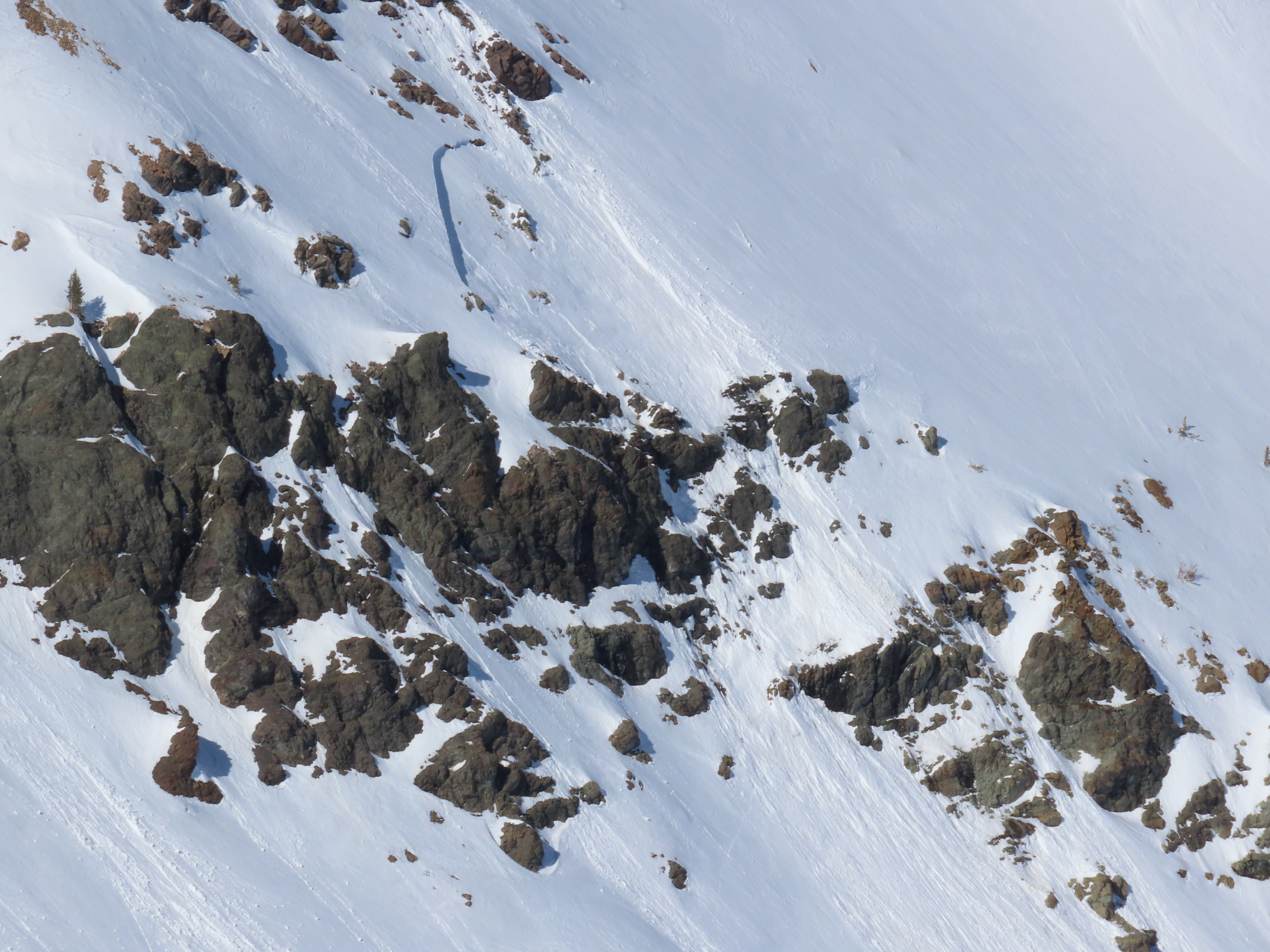
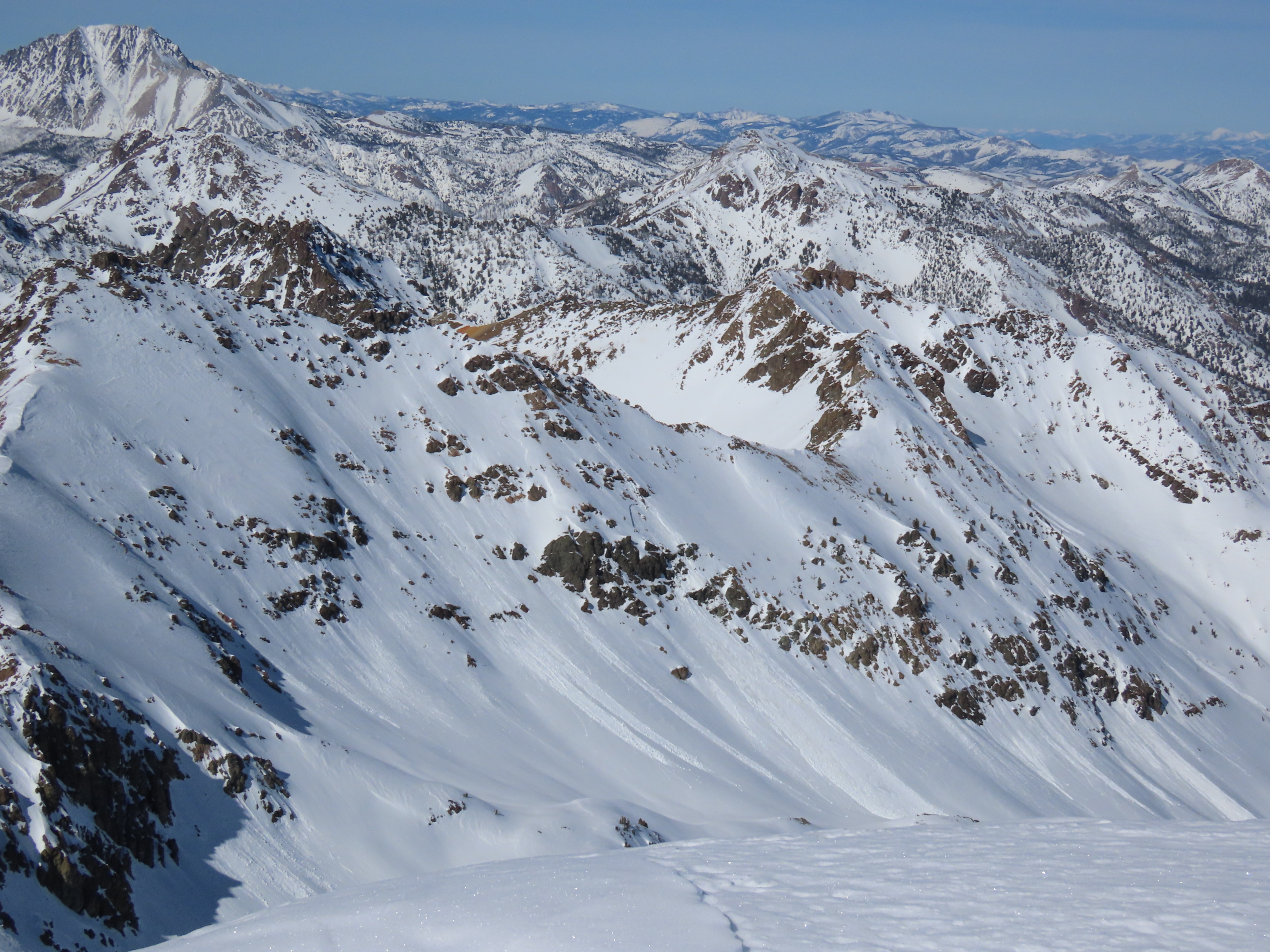
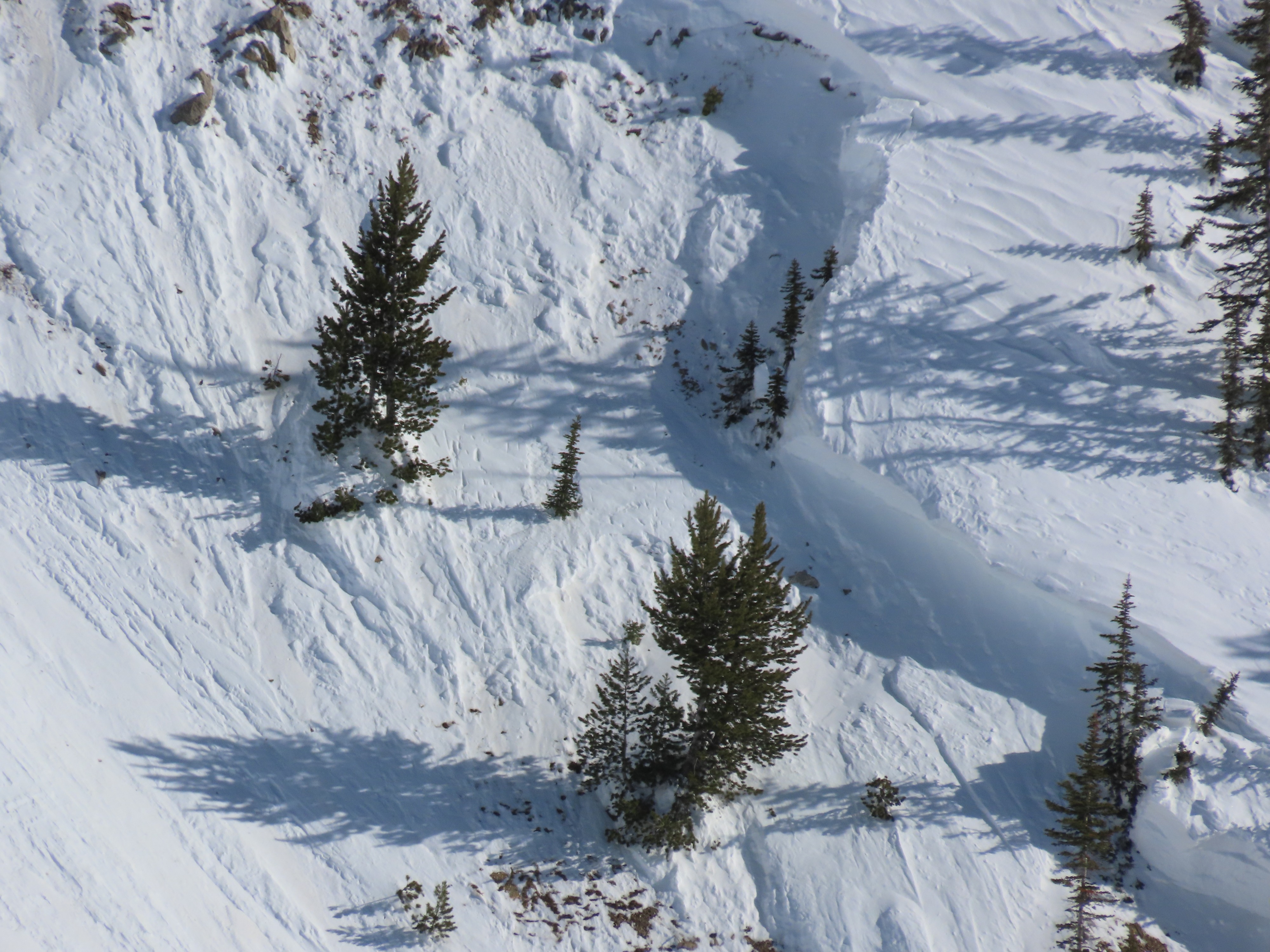
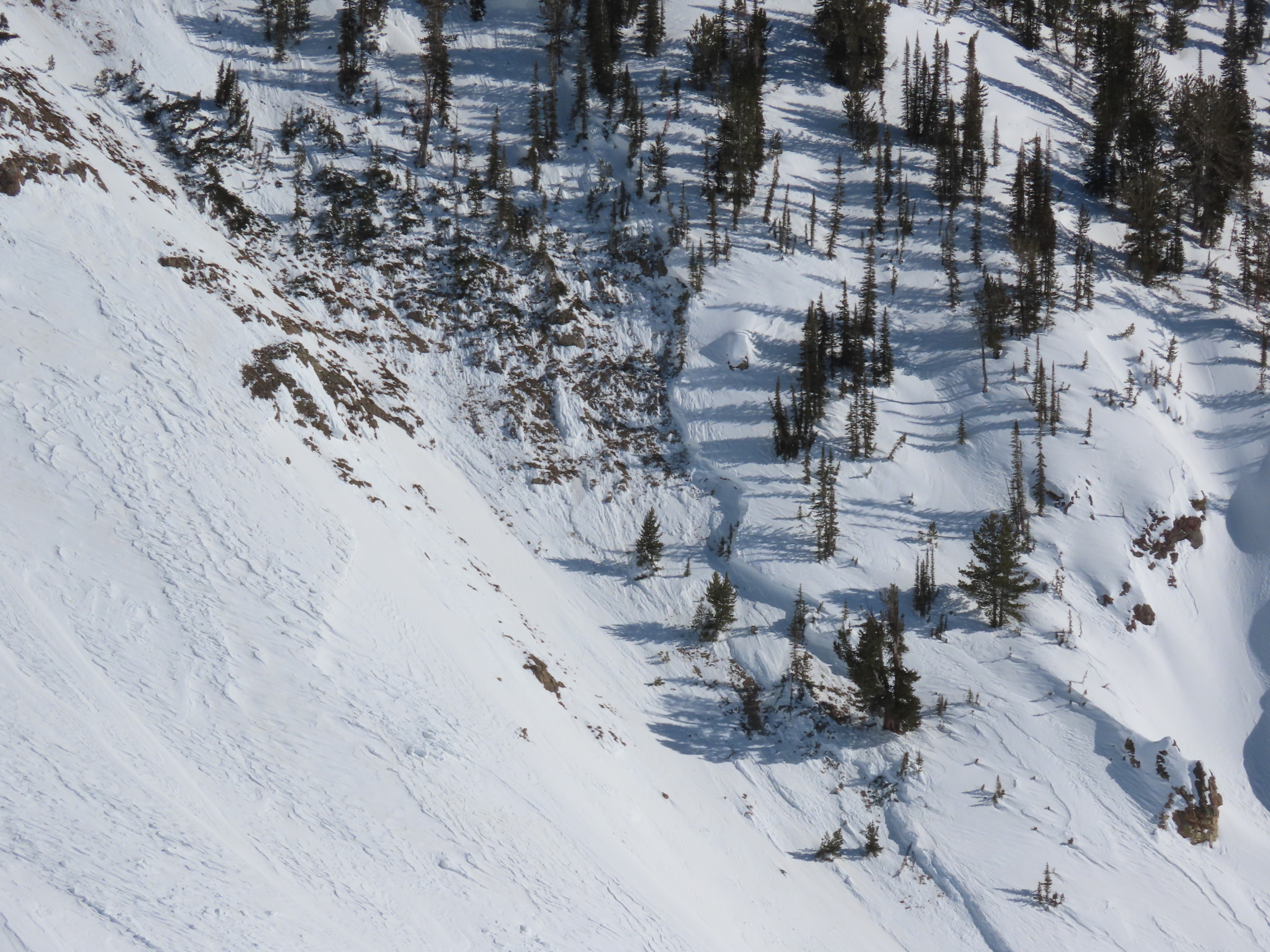
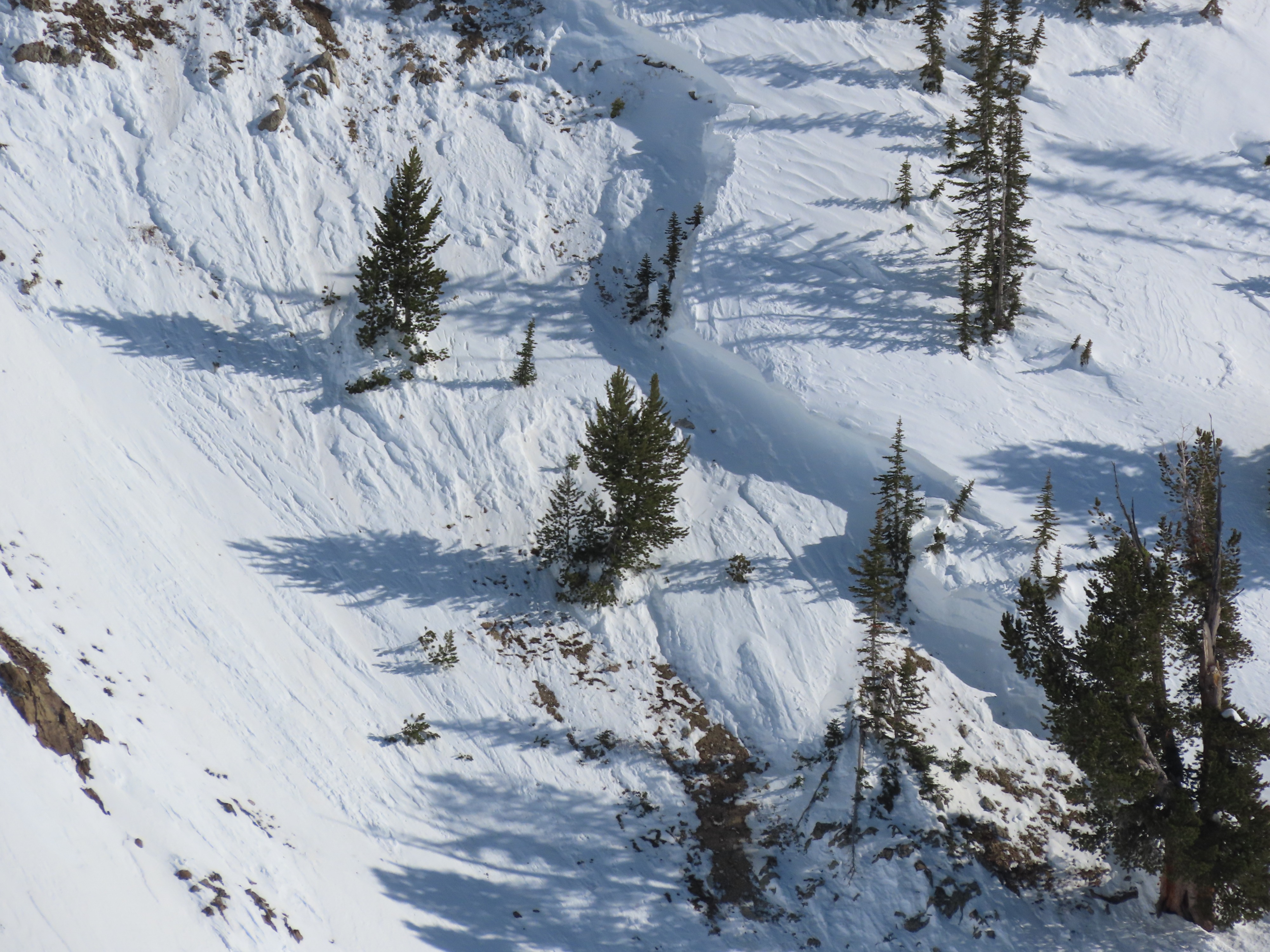
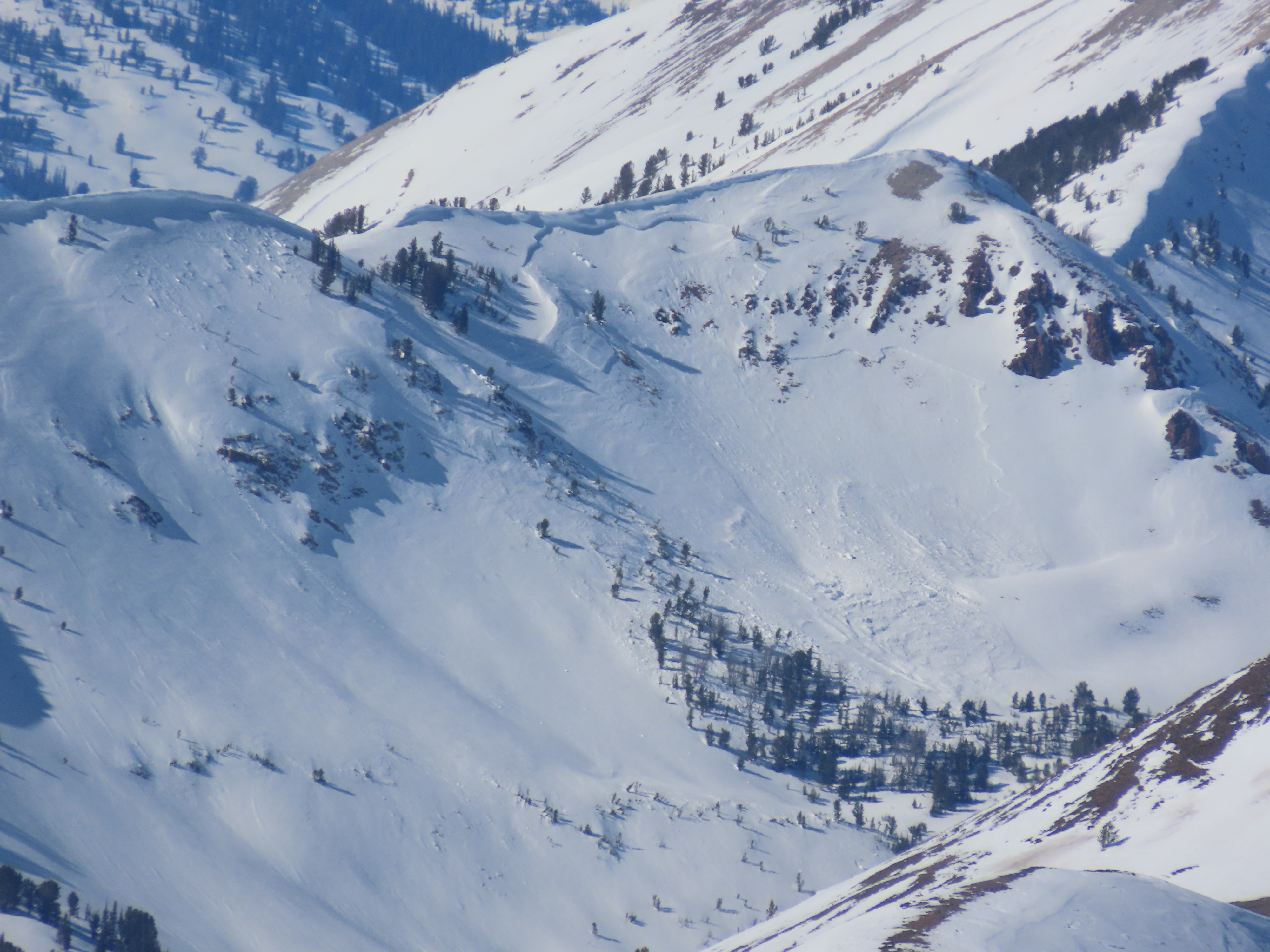
I waited near 10,000' to glass avalanche activity until 15:30, to give additional time to make skinning surfaces on the rest of the ridge more edge-able. The rest of the climb up to the summit involevd mushy, wet snow on the S side of the ridge and more pressed and nearly not edge-able snow just 6-12 inches away on the N side of the ridge despite high enough ambient temperatures to have me in a tank top. Climbing up to the summit, I observed 2 cornice falls in nearby drainage and many wet loose slides in real time, as well as one wet slab avalanche on a SSE aspect near 10,500'.
While the many bowls of Galena Peak looked tempting to ski, our overlapping problems and the uncertainty that comes with them during this warm up kept me out of and out from under avalanche terrain for the most part. I have stepped back considerably in terrain I am entering since the warmup began, and will continue to do so until reevaluating after a solid refreeze and shift in weather. Natural wet snow avalanche activity (both wet loose & wet slabs) were obvious reasons to stay off more solar bowls given my timing in the day. However, even if I was standing on top of the peak earlier in the day, I personally could not justify skiing a large piece of solar terrain here given the uncertainty of meltwater percolating deeper in the snowpack without a solid refreeze for multiple nights. While wet snow issues tend to get worse throughout the day, after many warm days during a transitional period for our snowpack, all bets are off and I wouldn't be surprised to see unusual slides at odd times at this point in the warmup. The colder northerly bowls of Galena looked inviting and are terrain where you're more likely to avoid wet snow issues, the persistent slab problem still lives on many of these slopes.
Avalanche
- Size
- D2
- Count
- 4
- Aspect
- SE
- Trigger
- NC
- Elevation
- 10050 ft
Observed 3 natural D2 (large) wet slab avalanches run while in the field. Many (well > 20) natural wet loose avalanches ran, ranging from mostly D1 in size to larger D2 slides that gouged down deeper in the snowpack while gaining mass heading downslope. While I did not spot any new persistent slab activity, this problem along with the added uncertainty of triggering due to meltwater from the warm-up kept me off of steep northerly slopes.