
Quick report
- Collapsing
- widespread
You can easily trigger large avalanches from a distance that fail in surprising ways on most steep slopes. While the upper weak layer in our snowpack can create large destructive avalanches, our deeper weak layer near the ground is capable of producing even larger slides as well. This layer is something that could pan out to become more reactive and "wake up" despite its recent inactivity as we add loading to our snowpack — only time will tell. Our snowpack is complex, and unstable — build in wide safety margins where you choose to travel.
In my short tour from the road up to the crown, I experienced widespread collapsing through all terrain I traveled.Weather
- Air Temp
- ~32
- Cloud Cover
- overcast
- Wind Loading
- previous
- Rain Elevation
- 7100'
- Snow Avail For Transport
- small smounts
Rain/snow mix in all terrain I traveled up to 7100'. Winds were light out of the S, and temperatures hovered around either side of freezing. Skies were overcast for the duration of my tour.
Snowpack
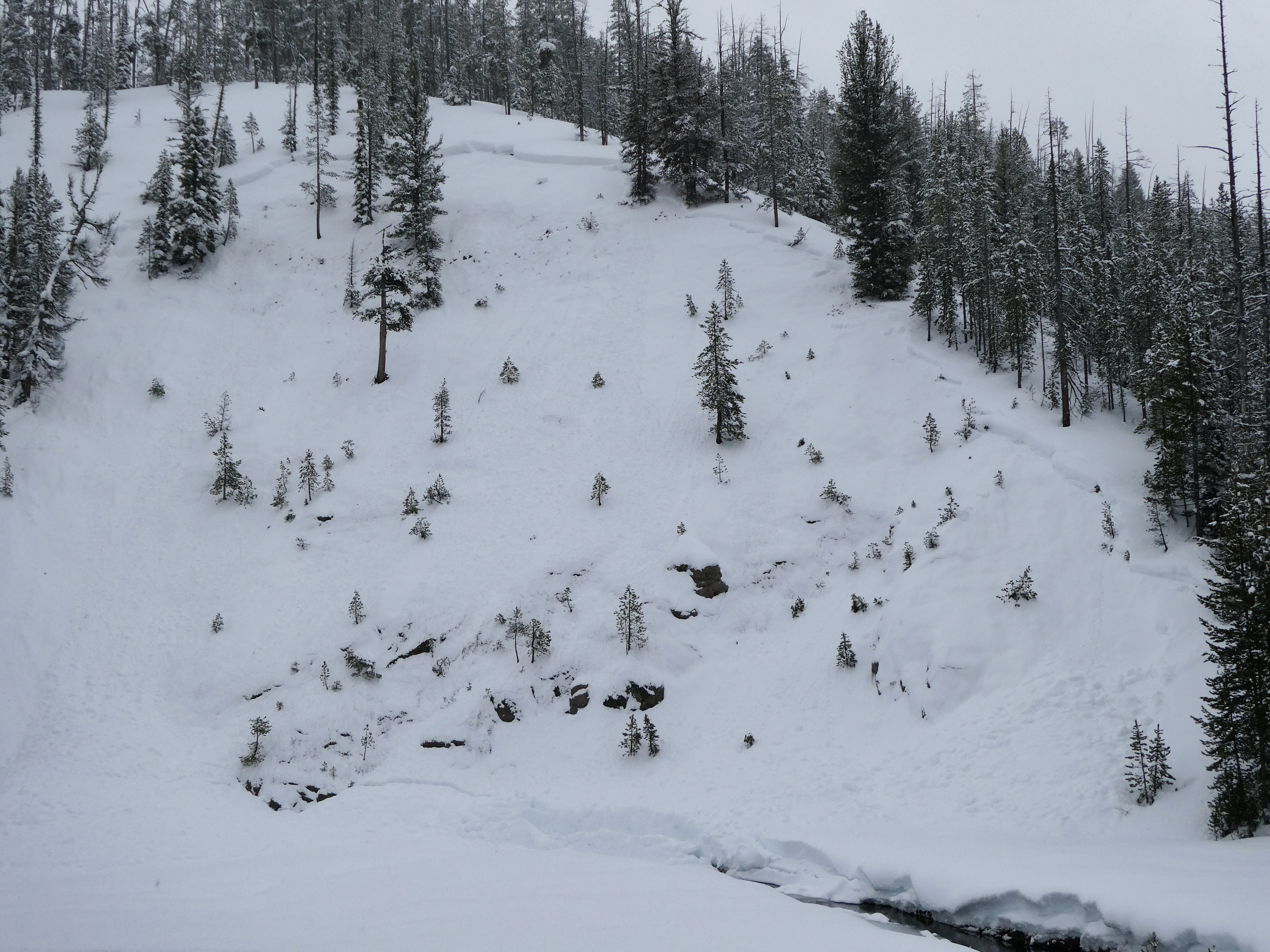
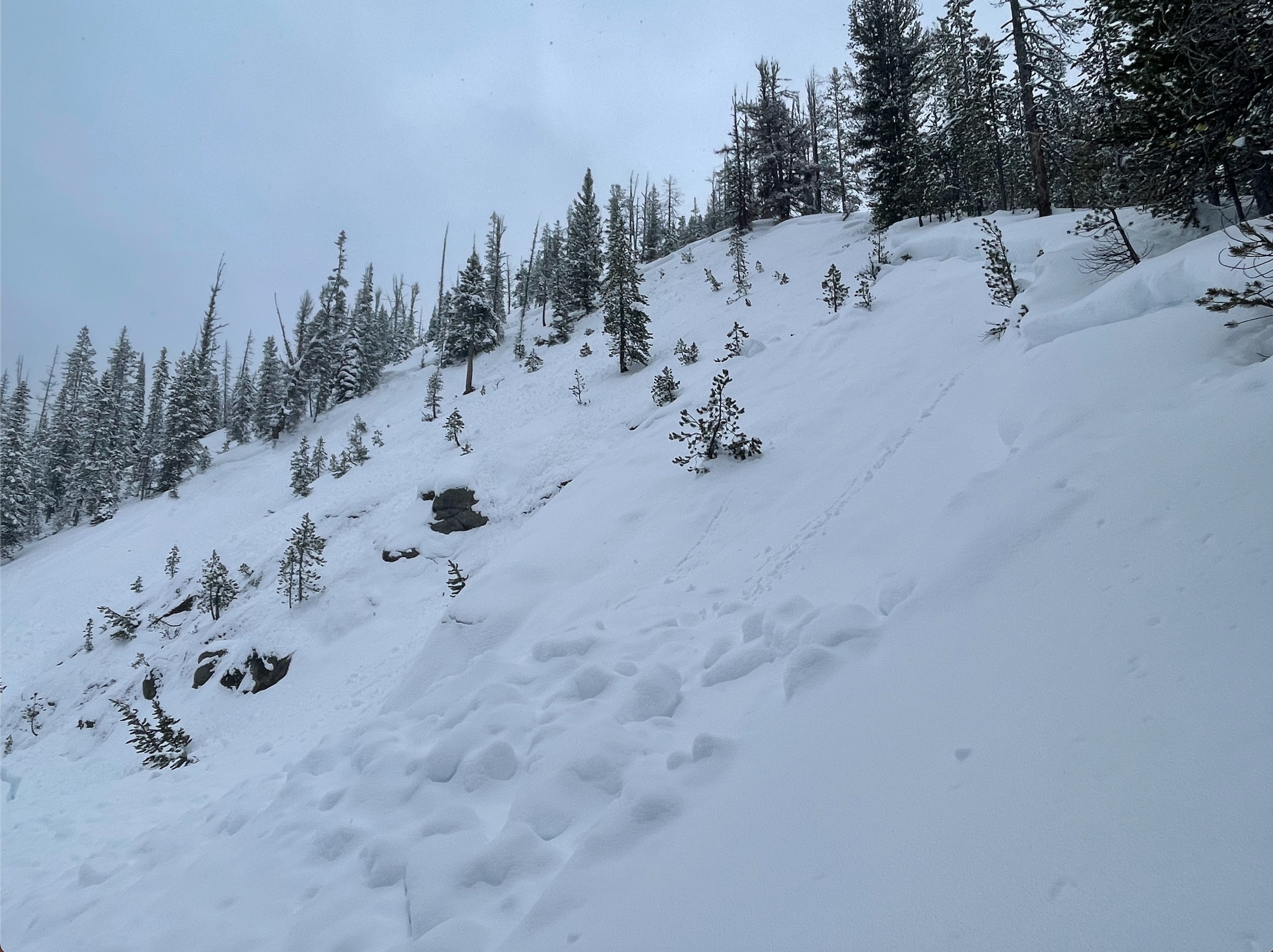
Being highly aware of the terrain I was selecting and mitigating any overhead hazard, I traveled from the road 0.5mi N of the Bull Trout parking area, across the creek, to the crown of this avalanche. On my short way to the crown, I experienced widespread collapsing with almost every step. The avalanche ran from 7100' down to 6850' on a NE aspect, and placed quite a bit of debris into the creek below. Lower and mid-elevation terrains traps like these are characteristically common of the Banner Summit Zone, and mulitply the consequences of even small avalanches.
Once at the slide I was able to determine that the slab that ran was 127-130cm thick in the area of the crown I dug at 6900', and broke in the top portion of the 11/30 weak layer near the ground. HS was 142cm, leaving 13cm of 11/30 before a 1-2cm thick basal ice layer at the ground. The 11/30 layer was well-developed cupped, chained, and striated DH crystals that were 3-5mm in size, chaining up to 7mm long. This layer is something that could pan out to become more reactive and "wake up" despite its recent inactivity as we add loading to our snowpack — only time will tell. This avalanche is one data point to keep track of as we continue to add stress to the snowpack.
Avalanche
- Size
- D2 R3
- Type
- HS
- Aspect
- NW
- Elevation
- 7100 ft
A large persistent slab avalanche ran on our deeper 11/30 weak layer close to the ground into the creek below. The slide initiated at 7100', ran 250', and the crown was 600' wide. See avalanche observation for more details.