
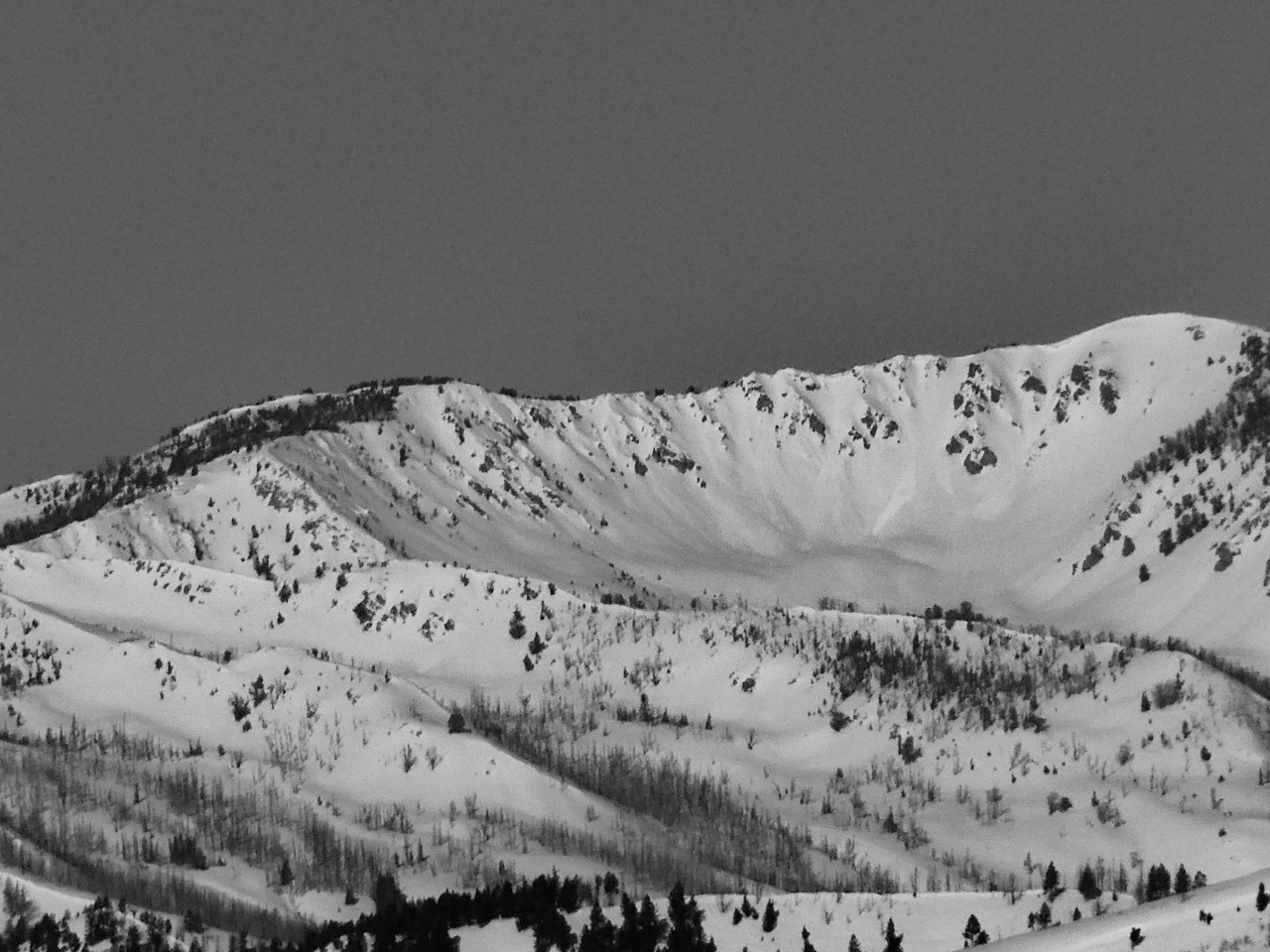
Quick report
Triggering a large avalanche remains a possibility but you'd likely need to find a very steep, previously wind-loaded slope facing NW-N-NE.
No obvious signs of instability.Weather
- Cloud Cover
- clear
- Wind Loading
- previous
- Recent Snowfall
- 0
- Snow Avail For Transport
- none
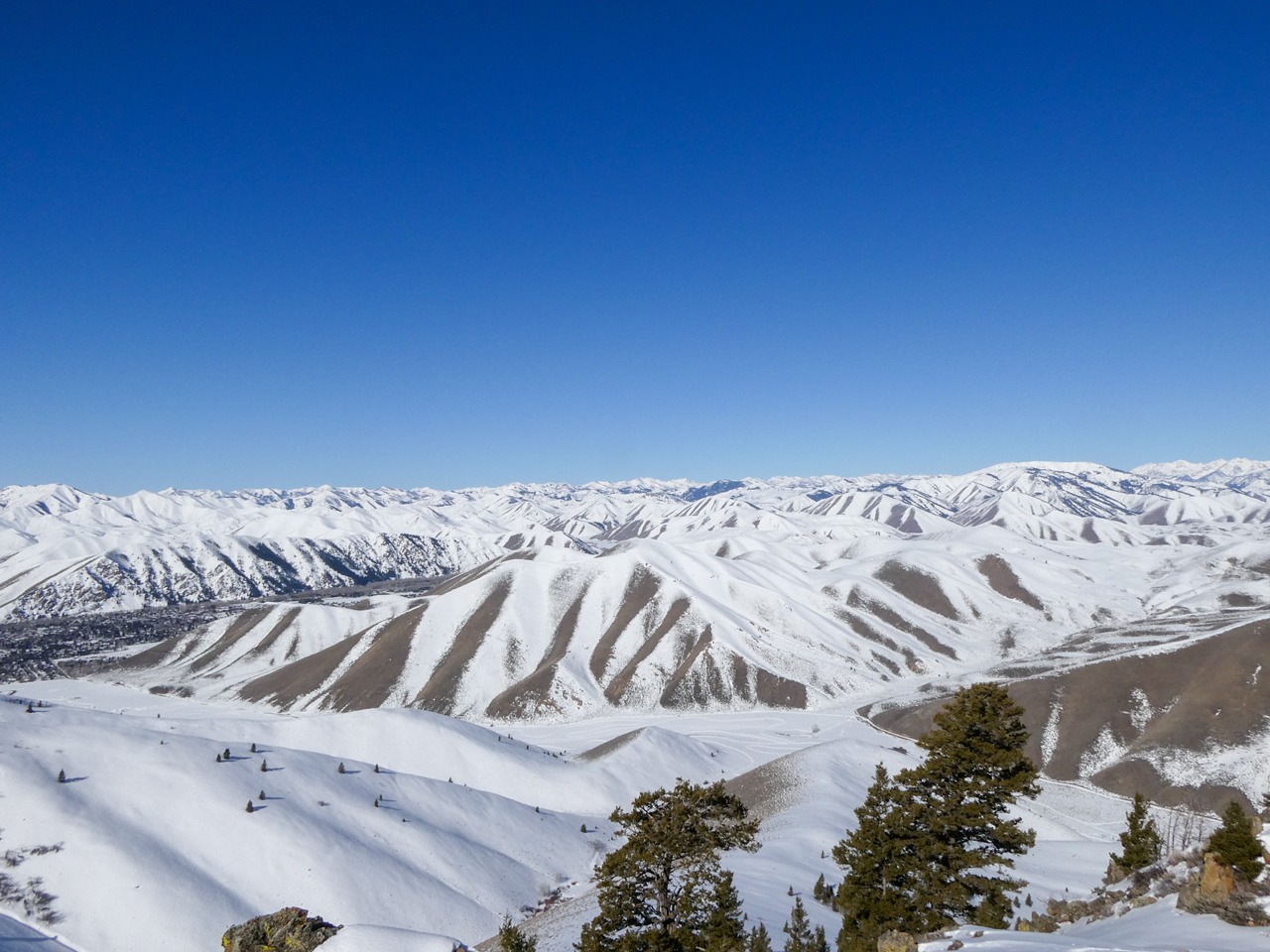
Blue skies. Very light E wind kept it feeling cool before noon.
Snowpack
Depth:
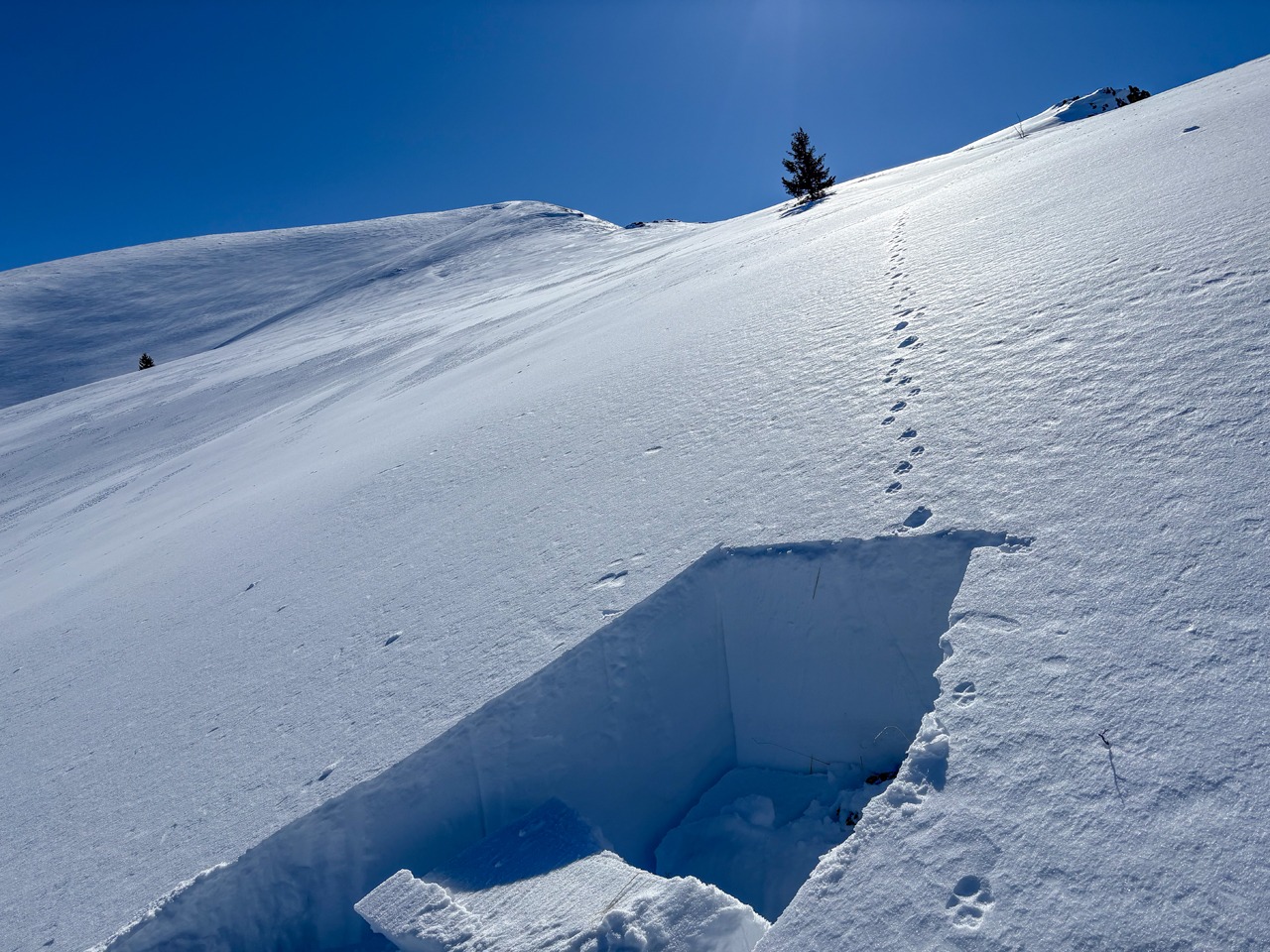
Shaded slopes ranged from 60 cm near the valley floor to 120 cm at 8,000'.
Surfaces:
All slopes had near surface crusts of some sort with very isolated areas holding noticeable surface hoar.
Snowpack:
On shaded slopes, pole pokes went through 2-3 crusts and interpersed weak facets on all slopes except those that were obviously wind-loaded by early Feb. storms. S and SW were bare. W was thin and generally welded to the ground.
The skier triggered slide on Patterson on the 18th failed in a heavily wind-loaded area. Much of this wind-loading occurred on Feb 6-7th, which also caused nearby natural avalanches. The triggered slide involved the 1/31 interface and gouged to and below the 12/13 interface, which were only about 20 cm apart. I dug on a nearby representative slope. The slab thickness was 65 cm and graded F at the surface but quickly turned to 1F. Snowpack tests returned ECTP 17, 20, 31 involving both layers.
The persistent slab problem here appears to be tightly confined to previously wind-loaded, steep start zones facing NW-N-NE. Too high, and slopes are stripped, to low or sheltered and there is no slab.
Avalanche
- Size
- D2.5
- Count
- 3
- Aspect
- NW
- Trigger
- N
- Elevation
- 10000 ft
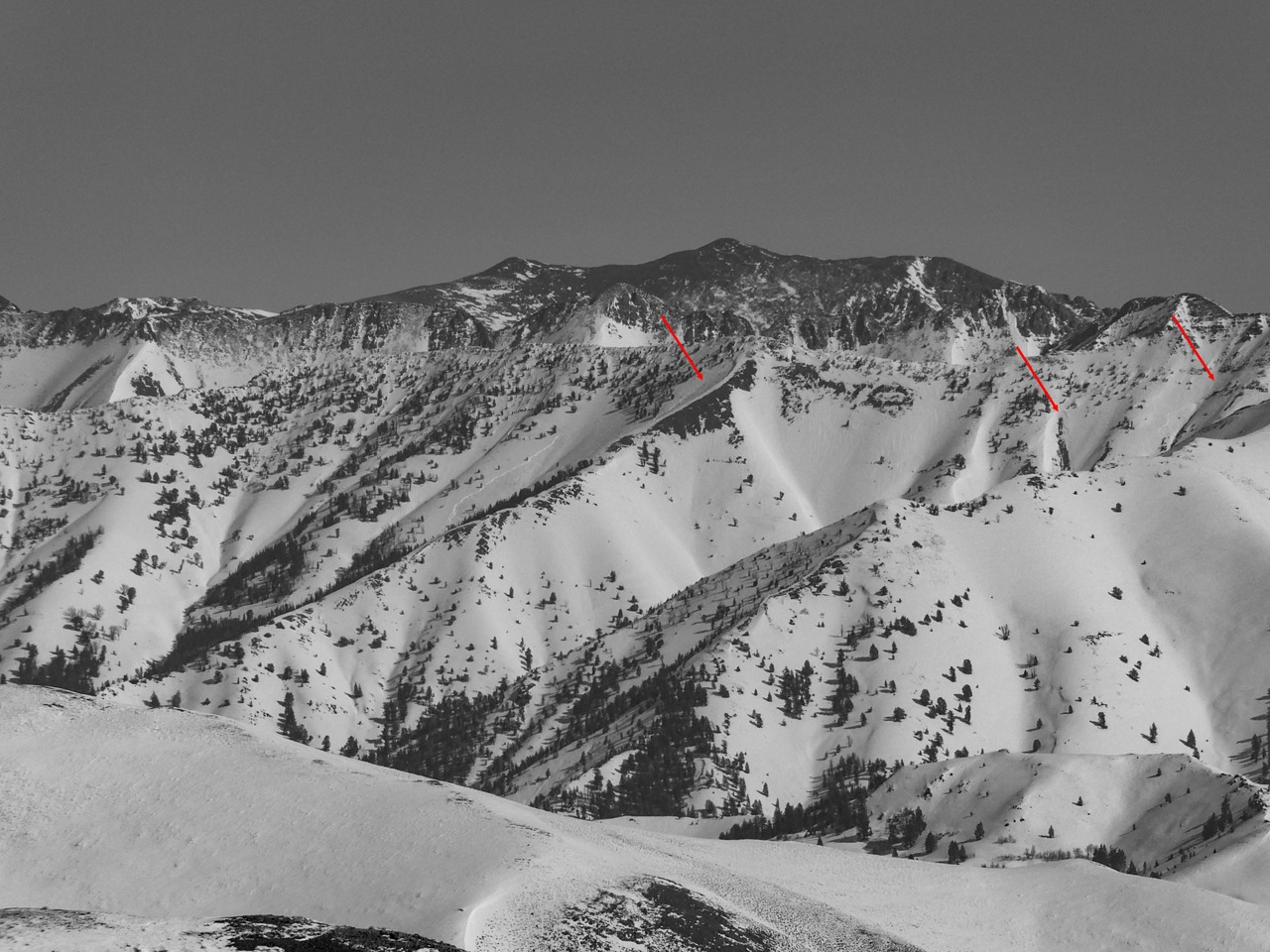
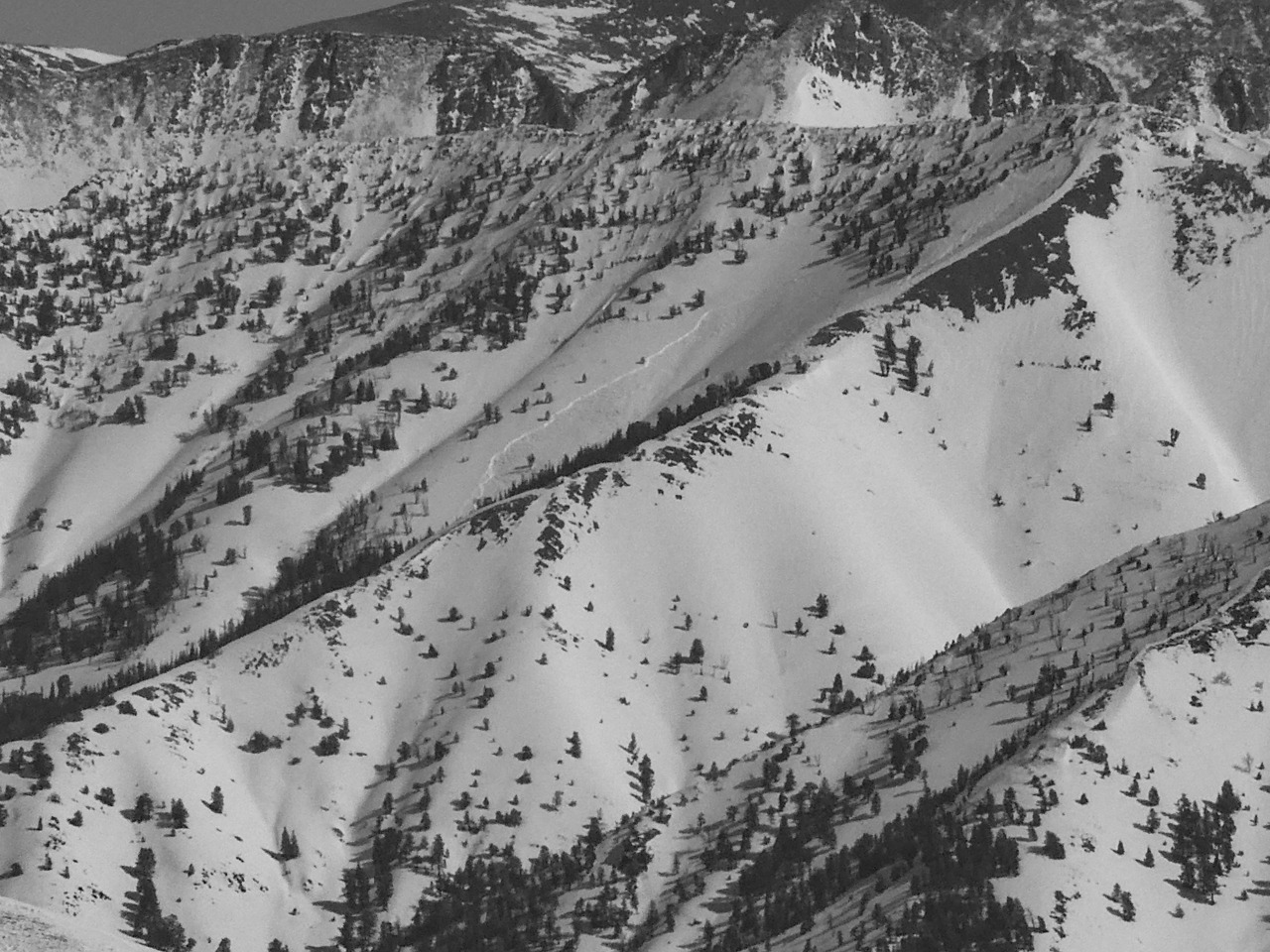
Patterson: D1 wet loose initiating from rocks and tree within the last 48 hrs. Pioneers: D1-1.5 wet loose but not widespread. No obvious activity in the core Pioneer complex. Older large slab avalanches just past Mormon Hill in the Pioneers. Smokys: Some obvious recent wet avalanches at the head of Baker Ck.