
Quick report
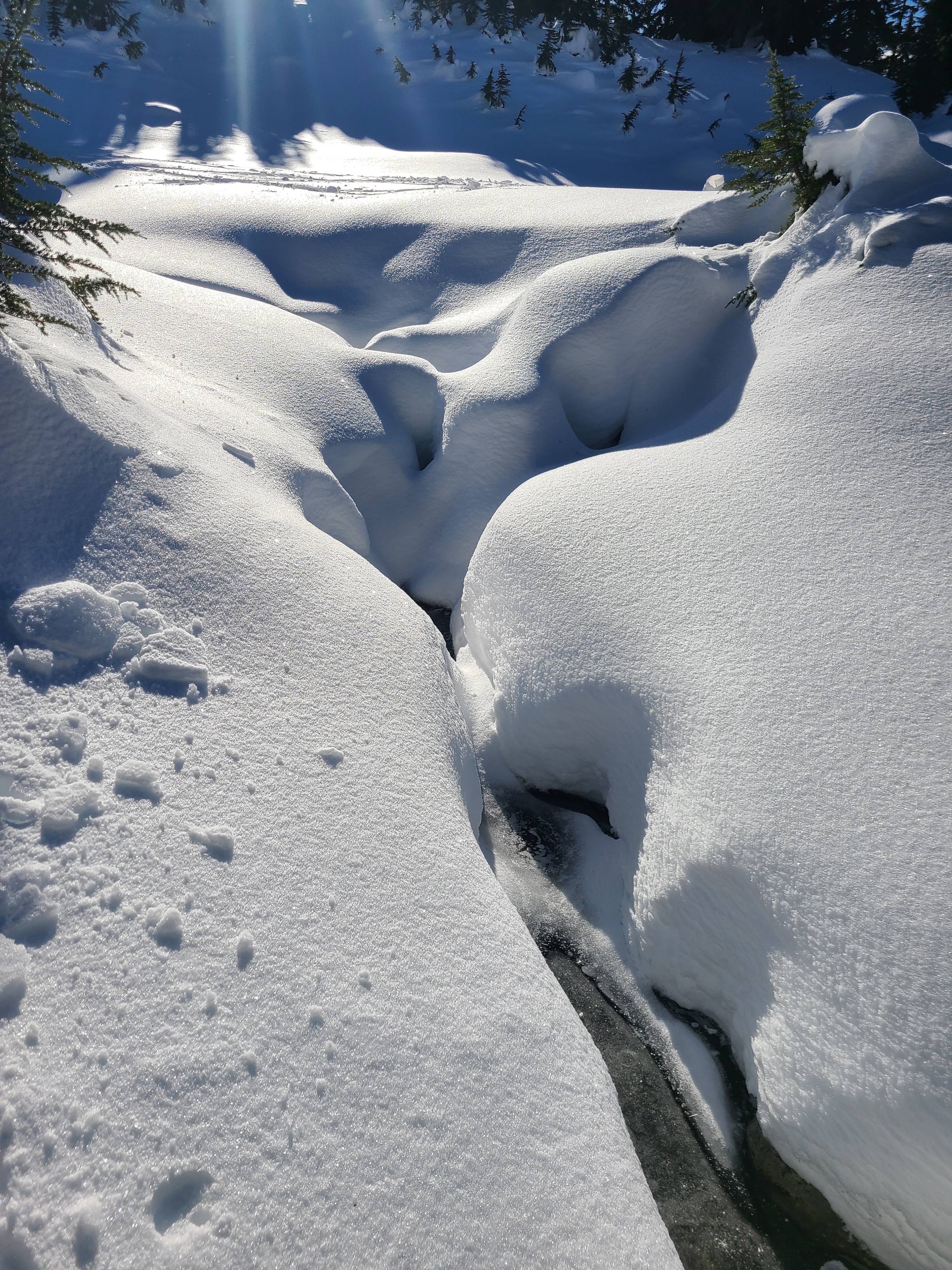
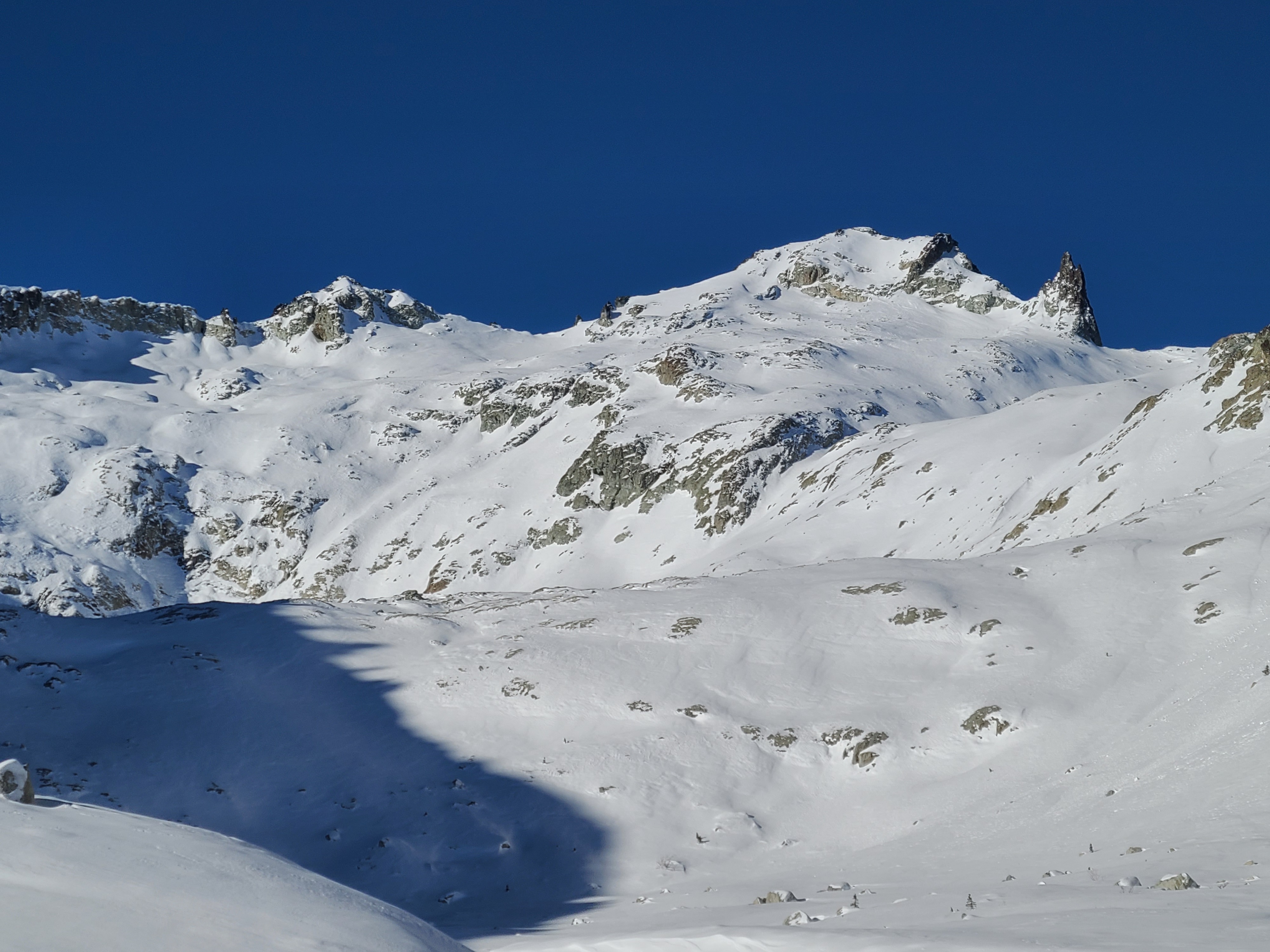
Snowcover is thin even at higher elevations. While there isn't much concern for avalanche hazard, there are many exposed obstacles that make travel challenging.
No signs of instability.Weather
- Air Temp
- mid-20's
- Cloud Cover
- clear
- Wind Loading
- previous
- Recent Snowfall
- 2-3cm
- Snow Avail For Transport
- small smounts
We enjoyed two days of clear skies, calm winds, and cold temperatures. The direct sun felt warm, but temperatures stayed well below freezing. Overnight lows were in the mid to low teens.
Snowpack
Snow Depths/ Boot or ski pen
3500ft: 15cm/ boot pen down 15cm to ground
4700ft: 30-40cm/ boot pen down 20-25cm
5700ft: 60-70cm/ ski pen down 5-10cm
6700ft: 60-70cm with deeper drifts/ ski pen down 3-5cm
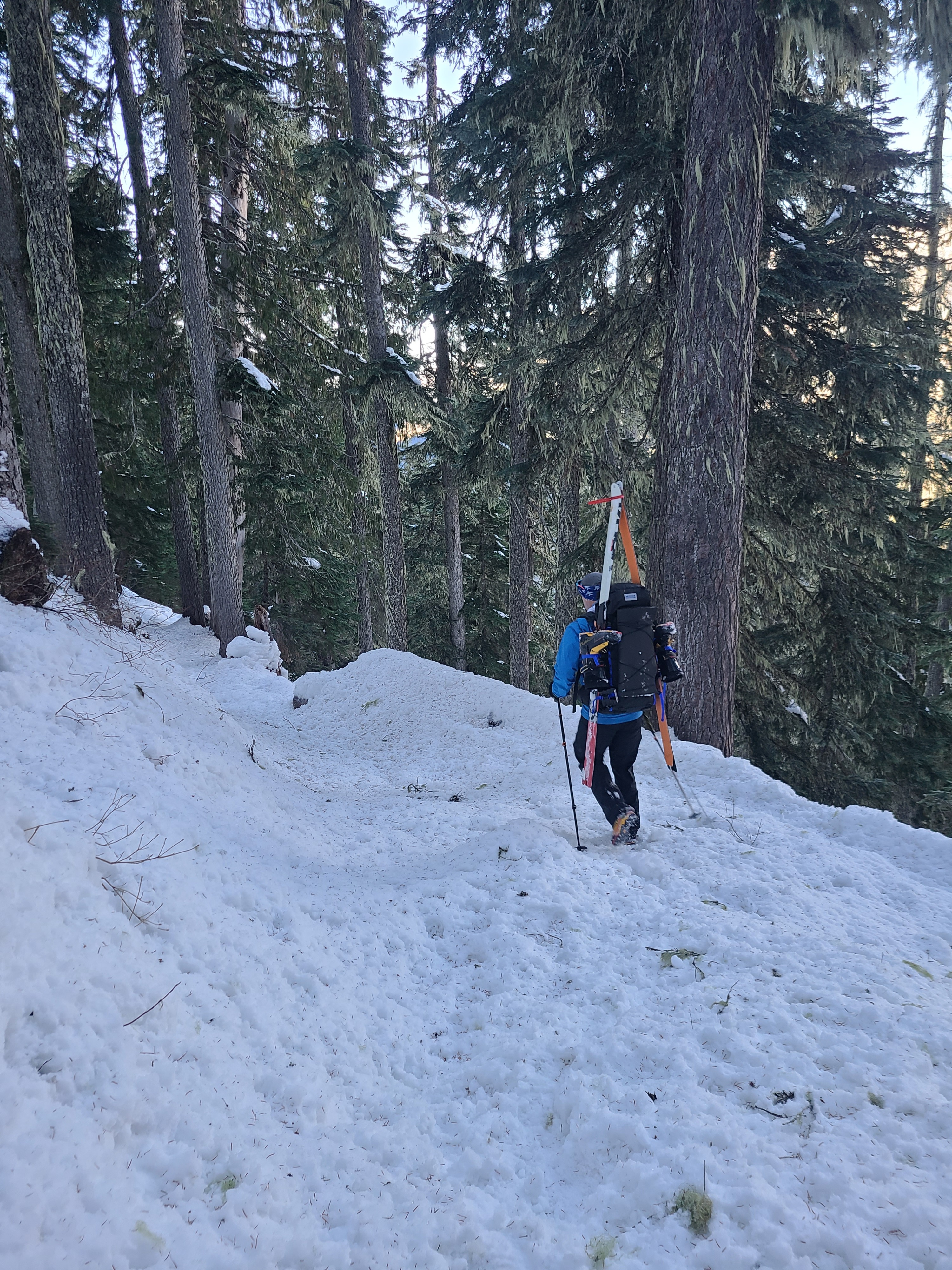
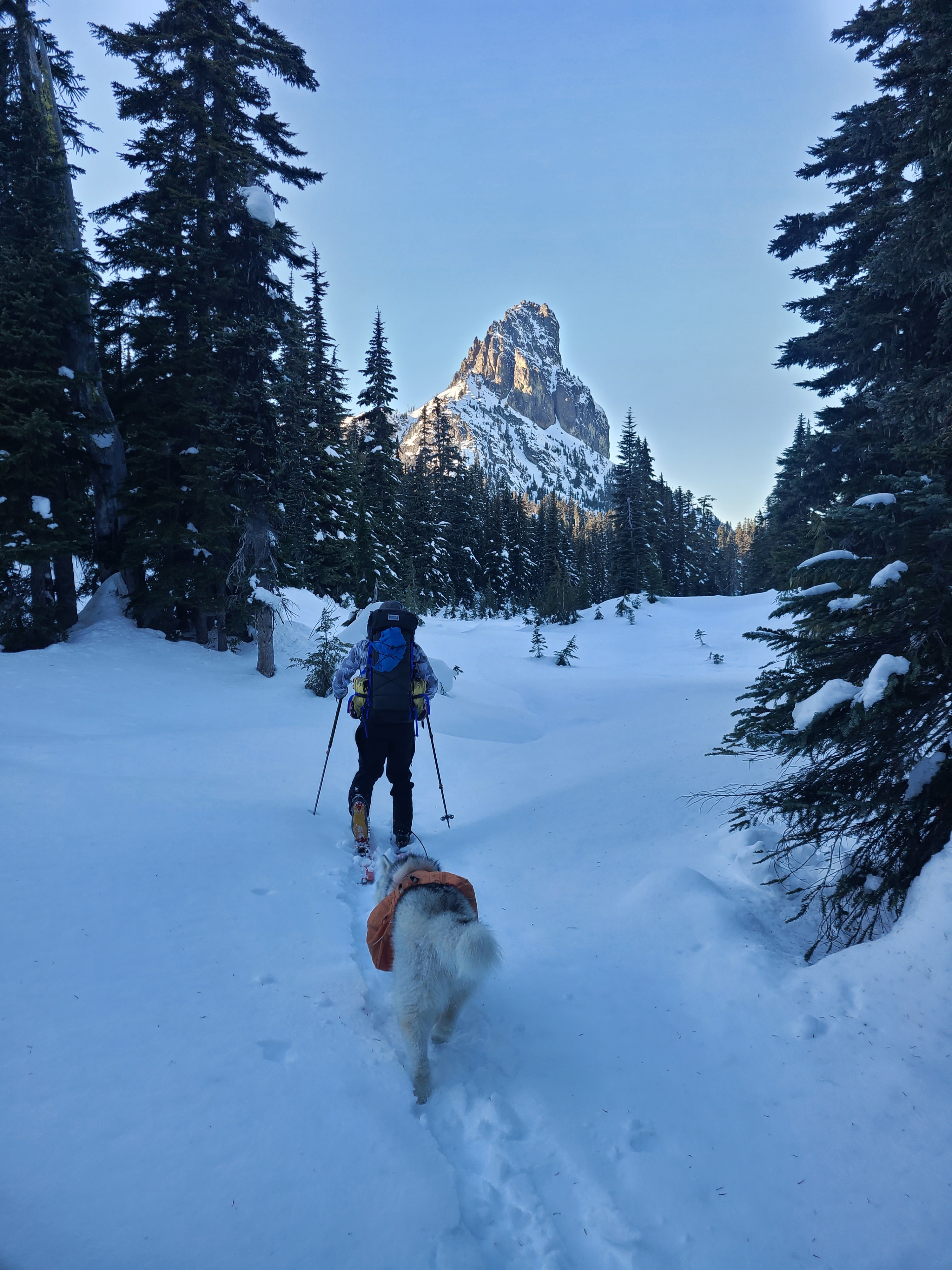
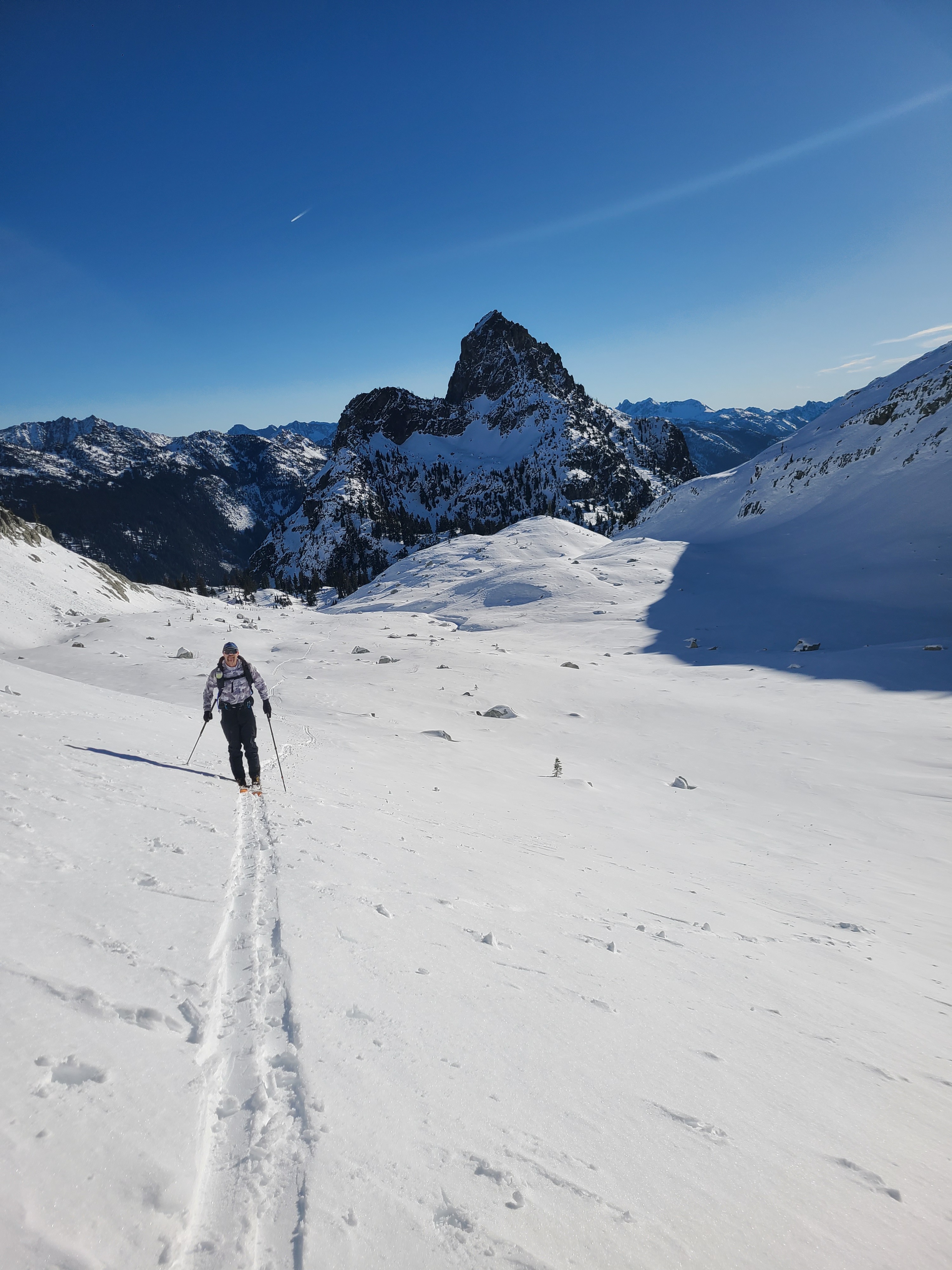
Starting out in soft boots at the trailhead, the thin snowpack made for easy travel along the summer trail. Open areas held unconsolidated snow, and areas under the tree canopy were a thick supportable melt-freeze crust. We switched to skis and skins at 4700ft with around a foot of snow in forest openings. Although, we still had to contend with thin spots and some carry-over creek crossings. Snow was consistent, and travel became much easier by 5000ft.
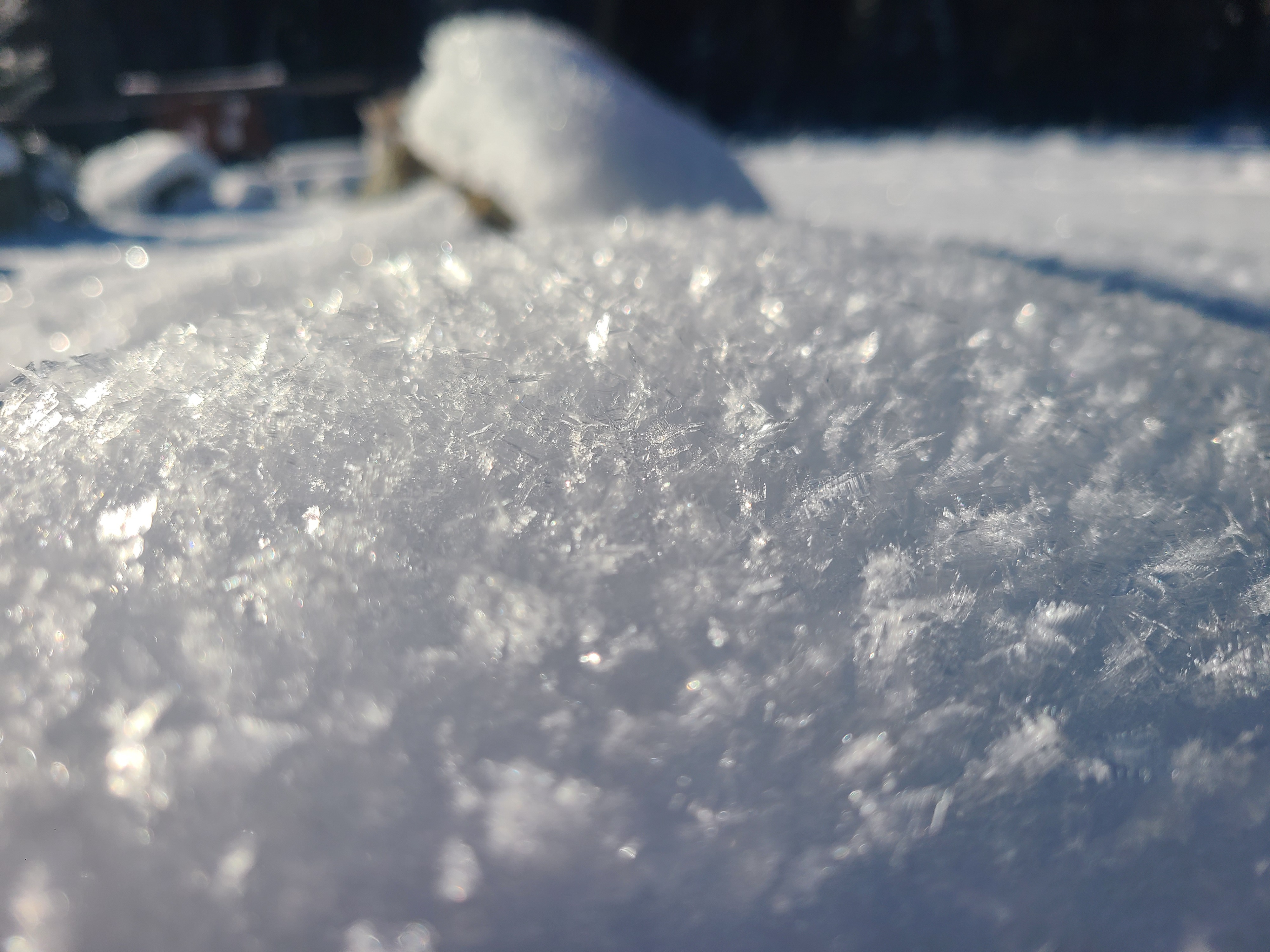
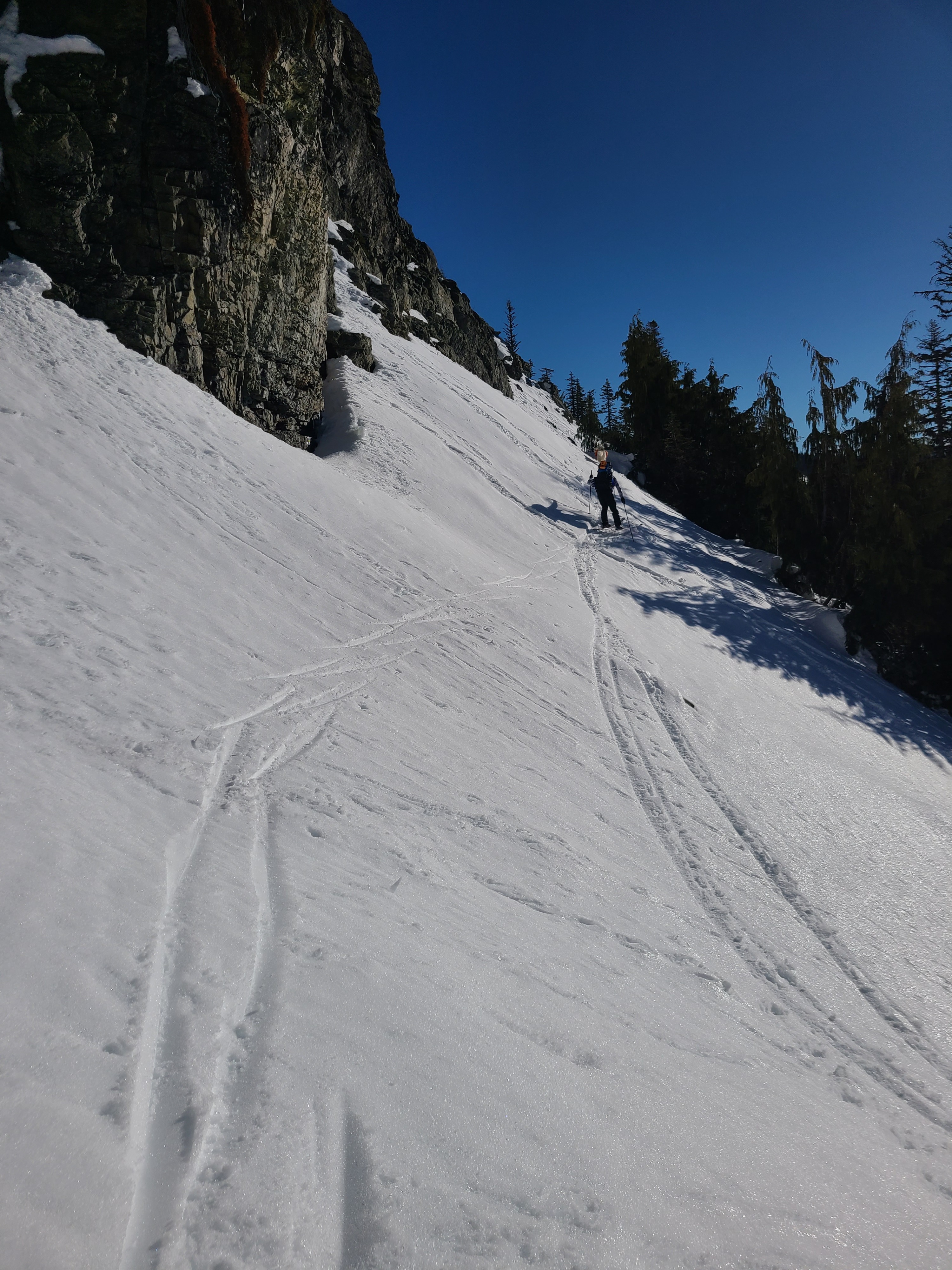
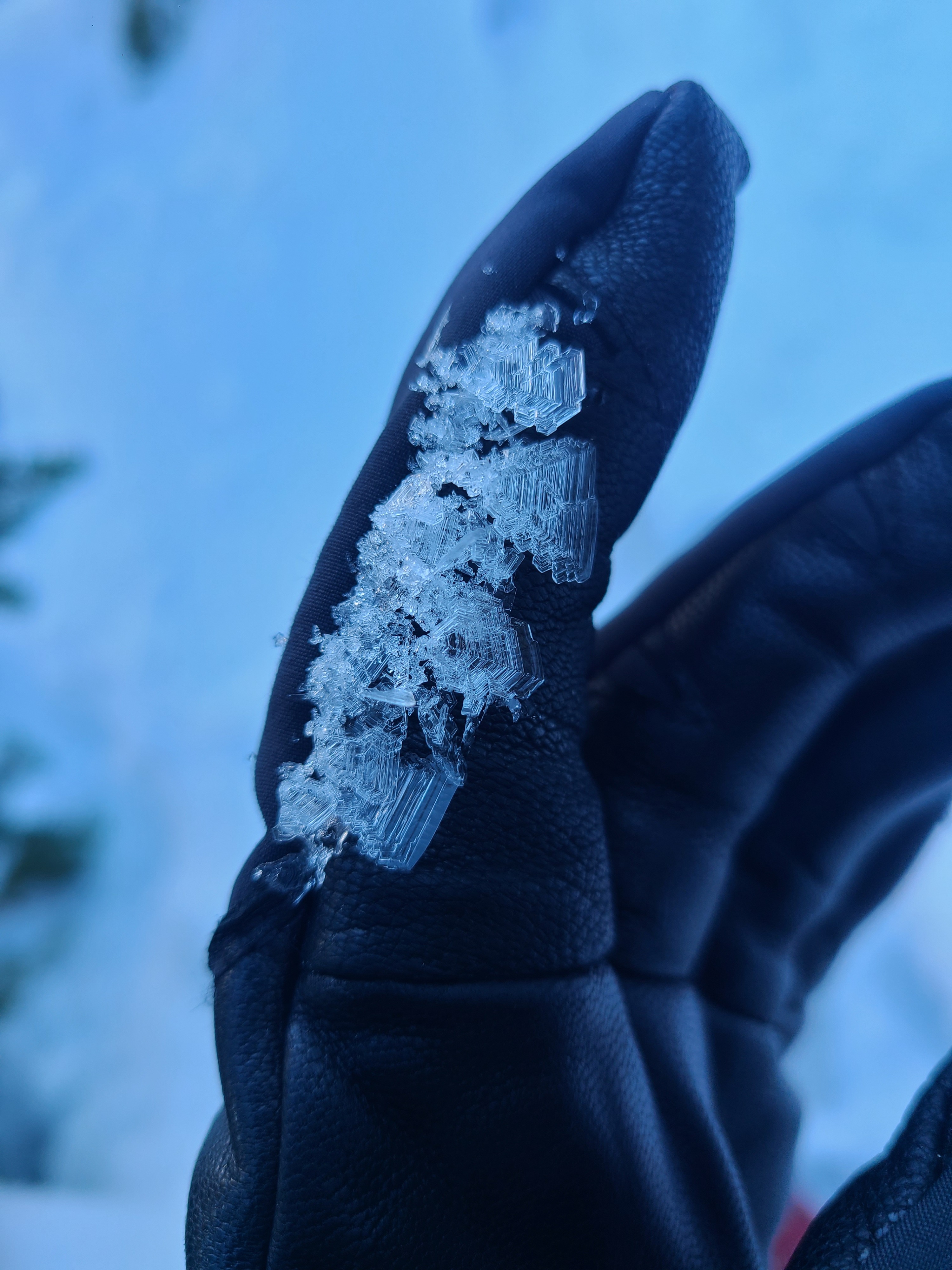
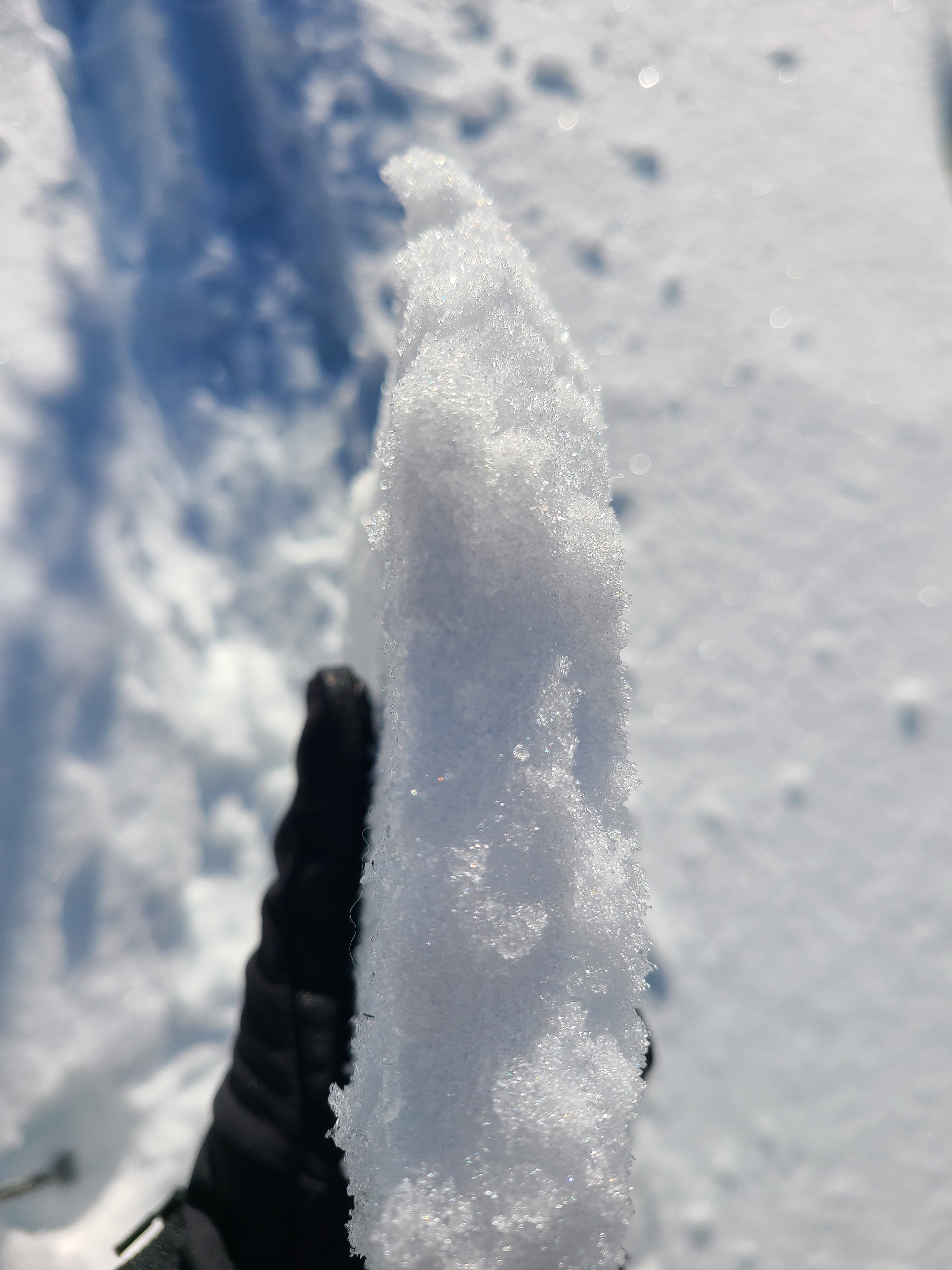
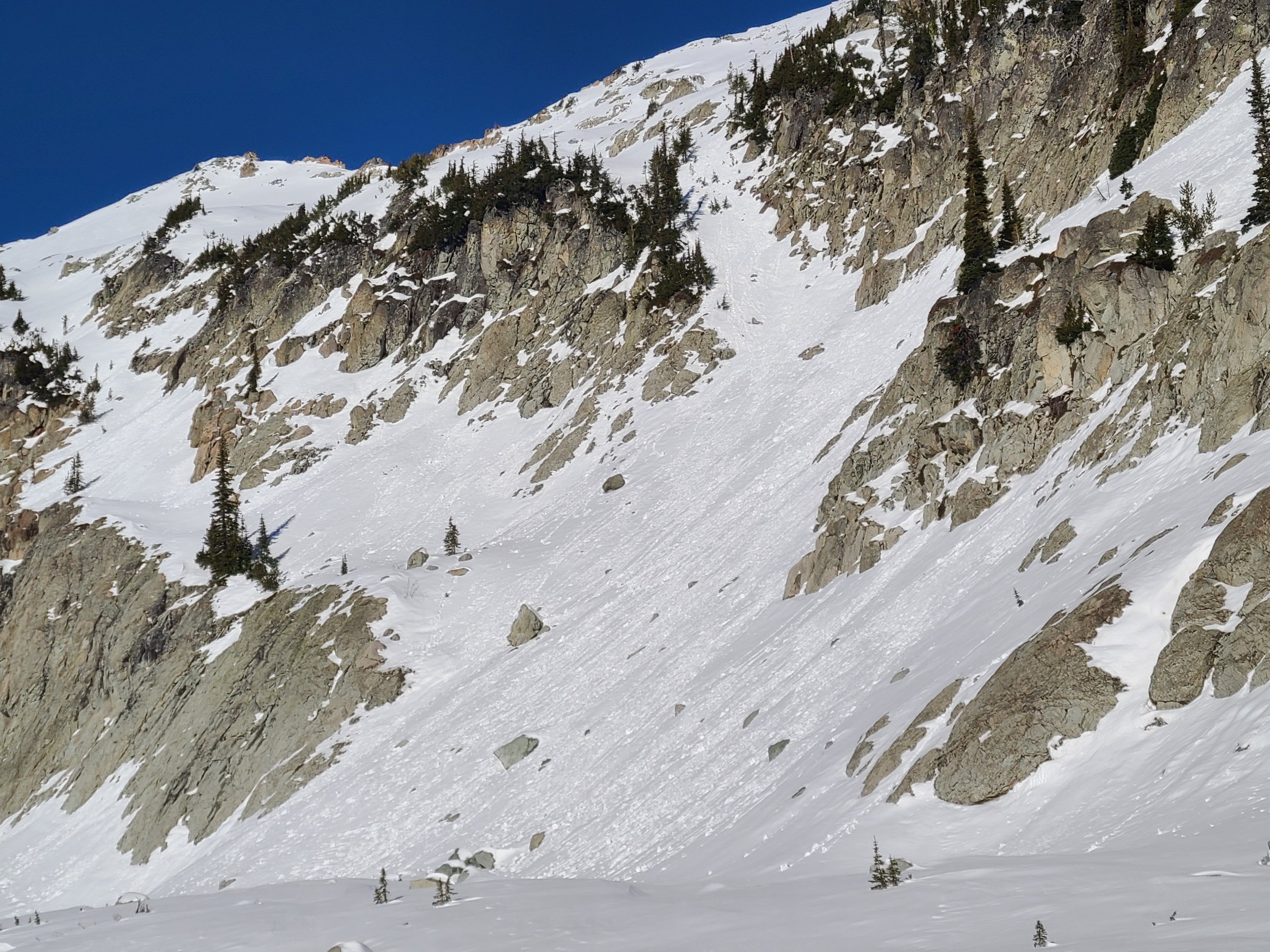
Snow at all elevations had a breakable melt-freeze crust covered with surface hoar. Both the thickness of the crust and the size of the surface hoar varied considerably depending on aspect. In sheltered, shady areas surface hoar was up to 1.5cm. The steep west-facing slopes of Cathedral Peak held a very thin snowpack that had undergone multiple melt-freeze cycles, resulting in consolidated spring-like "corn" snow. The melt-freeze crust dissipated above 5700ft on direct northerly slopes in sheltered terrain. However, most of the terrain at these elevations had a wind crust on the surface instead. South facing aspects still had a melt-freeze crust with previous rollerball and wet loose avalanche activity. There was an additional thick, supportable melt-freeze crust down 25cm at elevations above 5500ft.
Surface conditions were widely variable. With long, cold, clear nights, the snowpack was weakening, and surface hoar was widespread. Even at these higher elevations, there were still many exposed rocks and creeks to avoid.
Avalanche
Old roller balls and small wet loose avalanches off steep rocks on south-facing terrain. These looked one to two days old and had refrozen.