
Quick report
- Collapsing
- specific
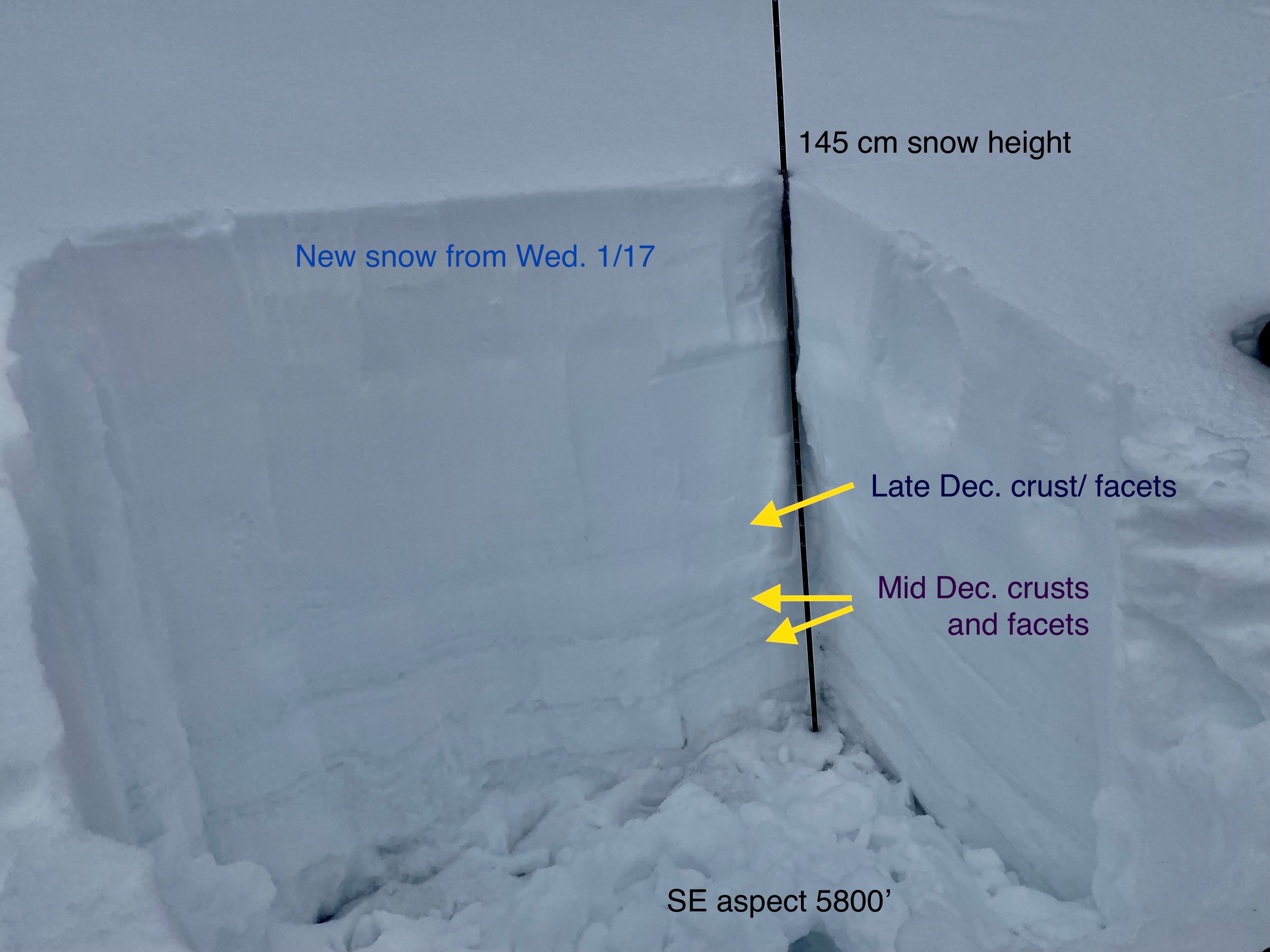
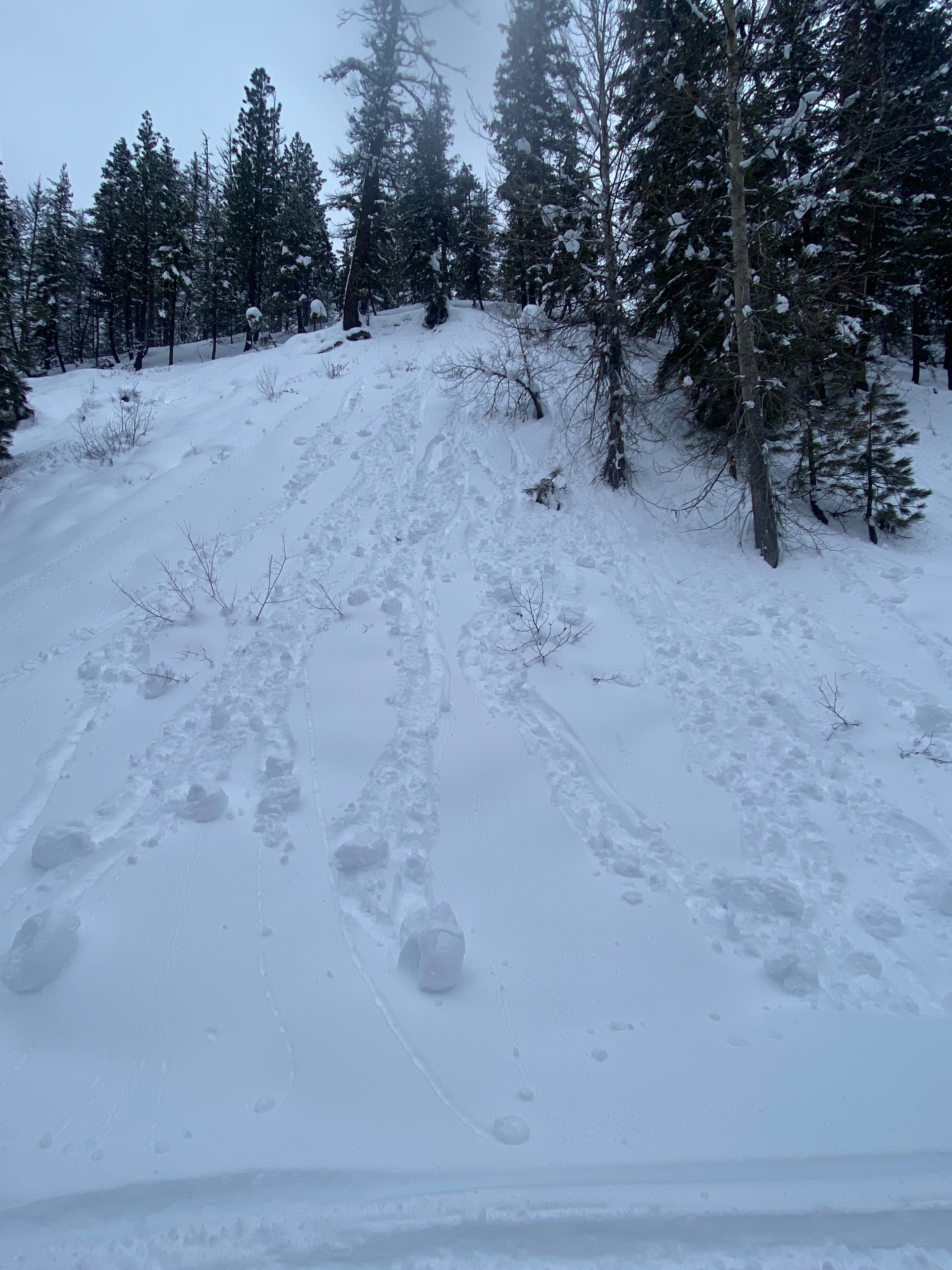
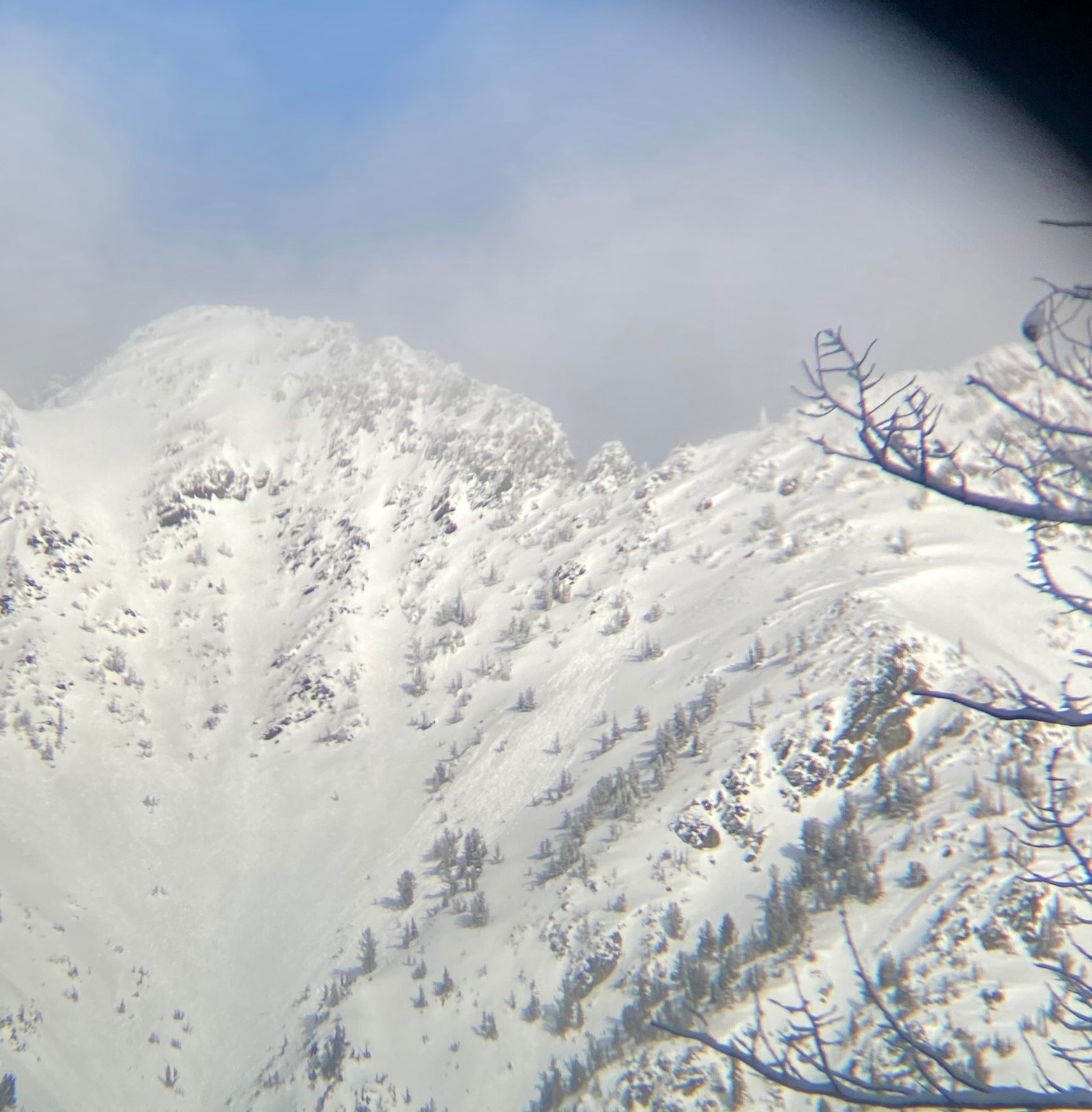
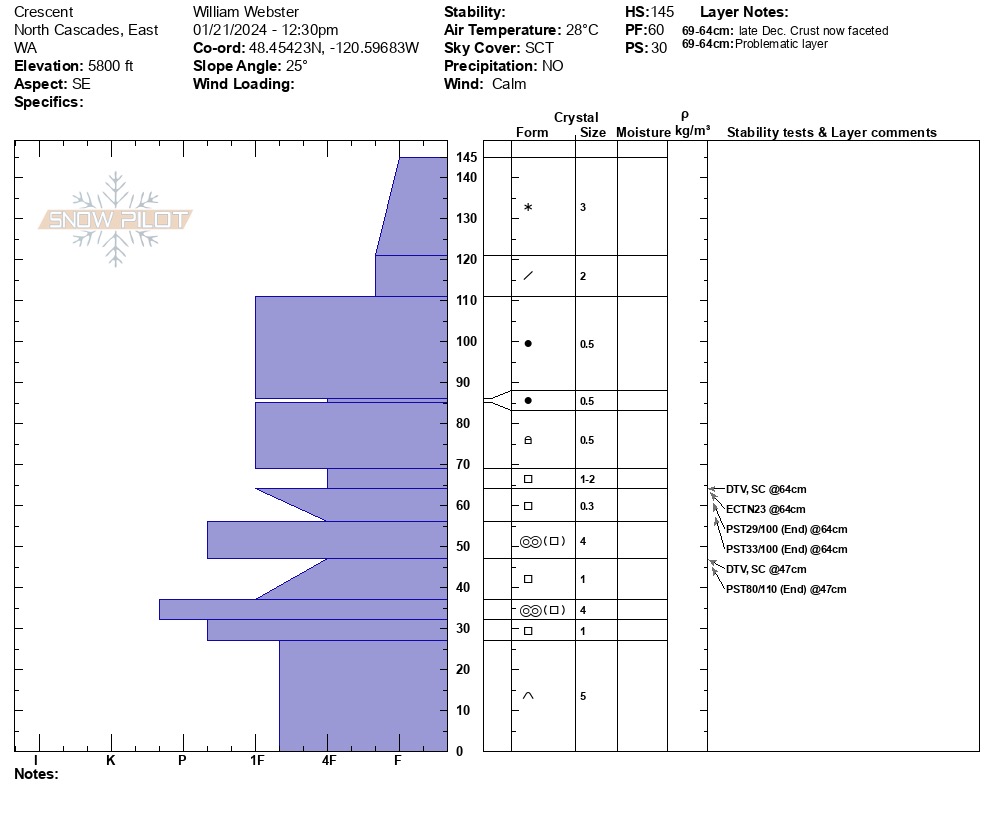
We travelled through the Twisp River area to check on recent and older interfaces in a more eastern snowpack than that found at Washington Pass. The recent snow from Wednesday the 17th appears to be well bonded. We experienced two rolling collapses or whumphs that shook snow loose from nearby trees. We believe this was the weak and faceted late December crust collapsing and propagating. In propagation saw tests this layer still shows some readiness to propagate. We saw no signs of any avalanches that involved this or any other deeper layer.
We experienced two impressive rolling collapses or whumphs. The first one on a gentle ridge at 5800' rolled through the terrain in front of us and knocked some snow loose from trees. I believe this was the well faceted late December crust collapsing.Weather
- Air Temp
- 28
- Cloud Cover
- scattered
A warm and calm day with occational sun breaks. The cold valley air held out in the morning, but by the afternoon temps were close to 36 F near 3800'. At 5800' temps stayed just below freezing at 28 F.
Snowpack
We've had a very interesting series of weather events which are evident in our snowpack.
Upper snowpack:
The snow from Wednesday the 17th makes up our upper most snowpack and skied nicely, if a little warm now. This appears well bonded to the older snow.
Middle Snowpack:
Below this we have snow that fell mostly during Jan 8th and 9th which sits atop the late December crust. This snow experienced the cold snap and underwent some impressive metamorphism. In the location I dug, the late December crust is fully faceted and actually less dense than the snow above and below it. I believe it was this whole layer collapsing when we heard those whoomphs. In temperature profiles from the cold snap, the steepest temperature gradient was near this crust.
Lower snowpack:
The two mid-December Crusts were also faceted, but still hold up their density/ hardness. There are weak lower density grains in the middle of this sandwich. It was impressive to find descent sized basal facets at the bottom of the snowpack, but thankfully these are rounding and fairly hard.
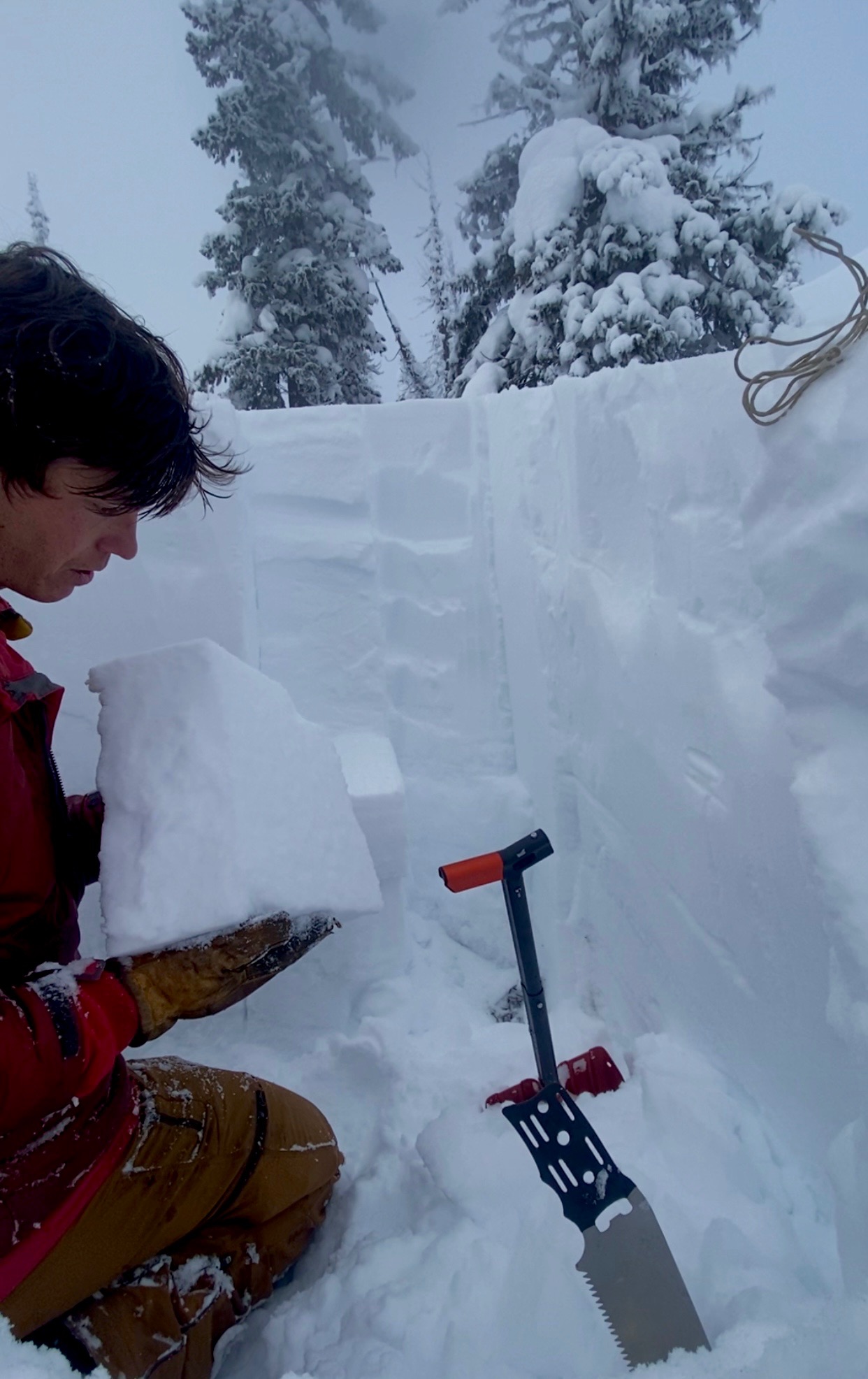
In deep tap compression tests, both the late December crust and the upper mid-December crust failed in sudden collapse fashion (DTV, SC 81cm down) (DTV, SC 98cm down)
Propagation saw tests on the late December crust showed propagation potential. The mid-December crust did not show propagation signs in this test. (PST 29/100 End @ 81cm down) (PST 33/100 End @ 81cm down) (PST 80/110 @110 down)