
Quick report
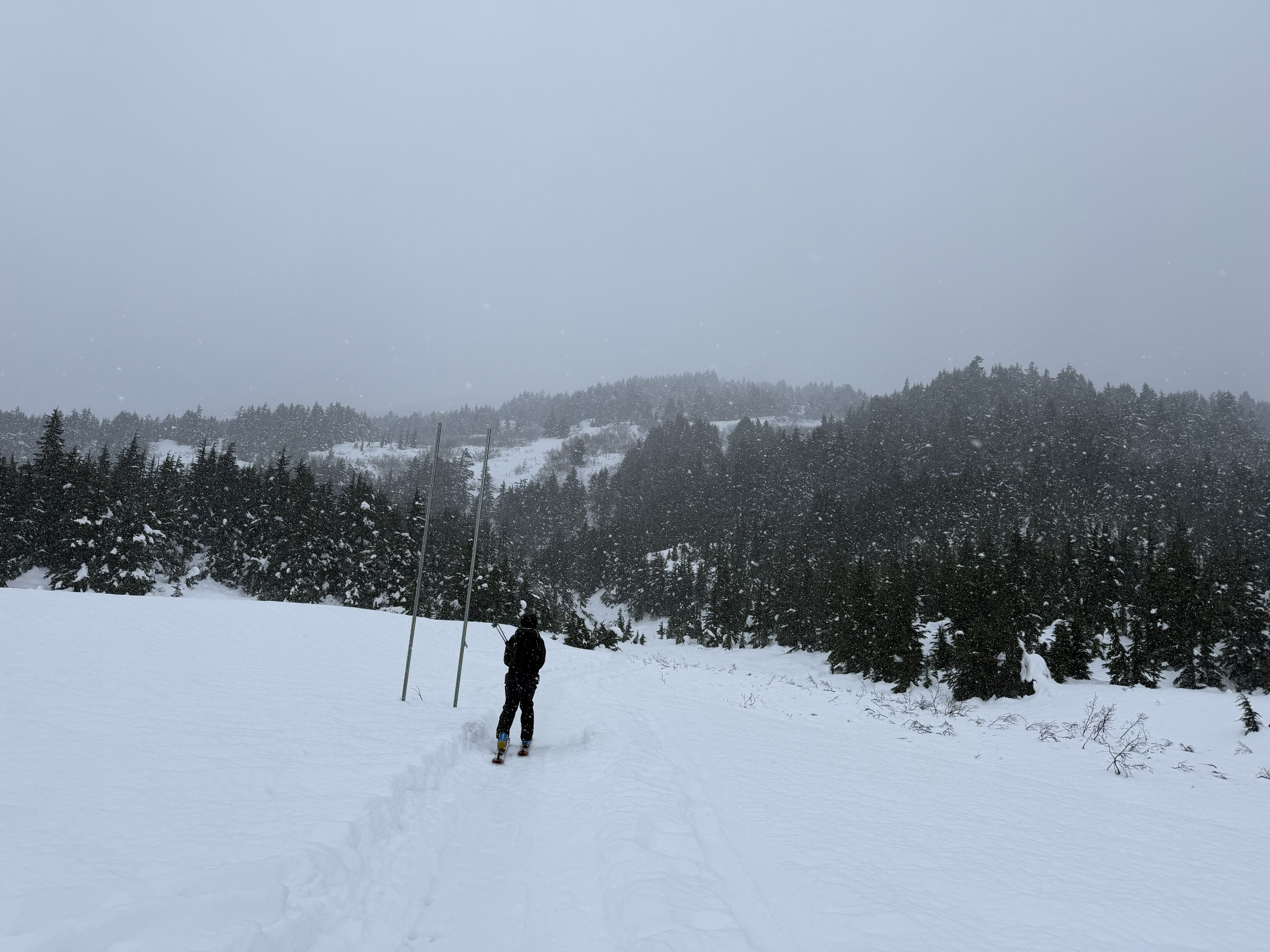
We toured up Tincan on a storm day to see how the new snow was bonding to the old snow surface. It was snowing at the parking lot, but the snow didn't start accumulating until about 1,700'. It continued to snow through the day and at 2,200' where we dug our snowpit there was 6 to 10" of new snow. We got an unstable result in our test (see snowpack section), which means it's safest to give the snowpack time to bond to the snow beneath. We don't know how quickly this process will happen and this problem may take a while to go away, but we will keep you posted.
The clouds were really low so we couldn't see if there was new avalanche activity.Weather
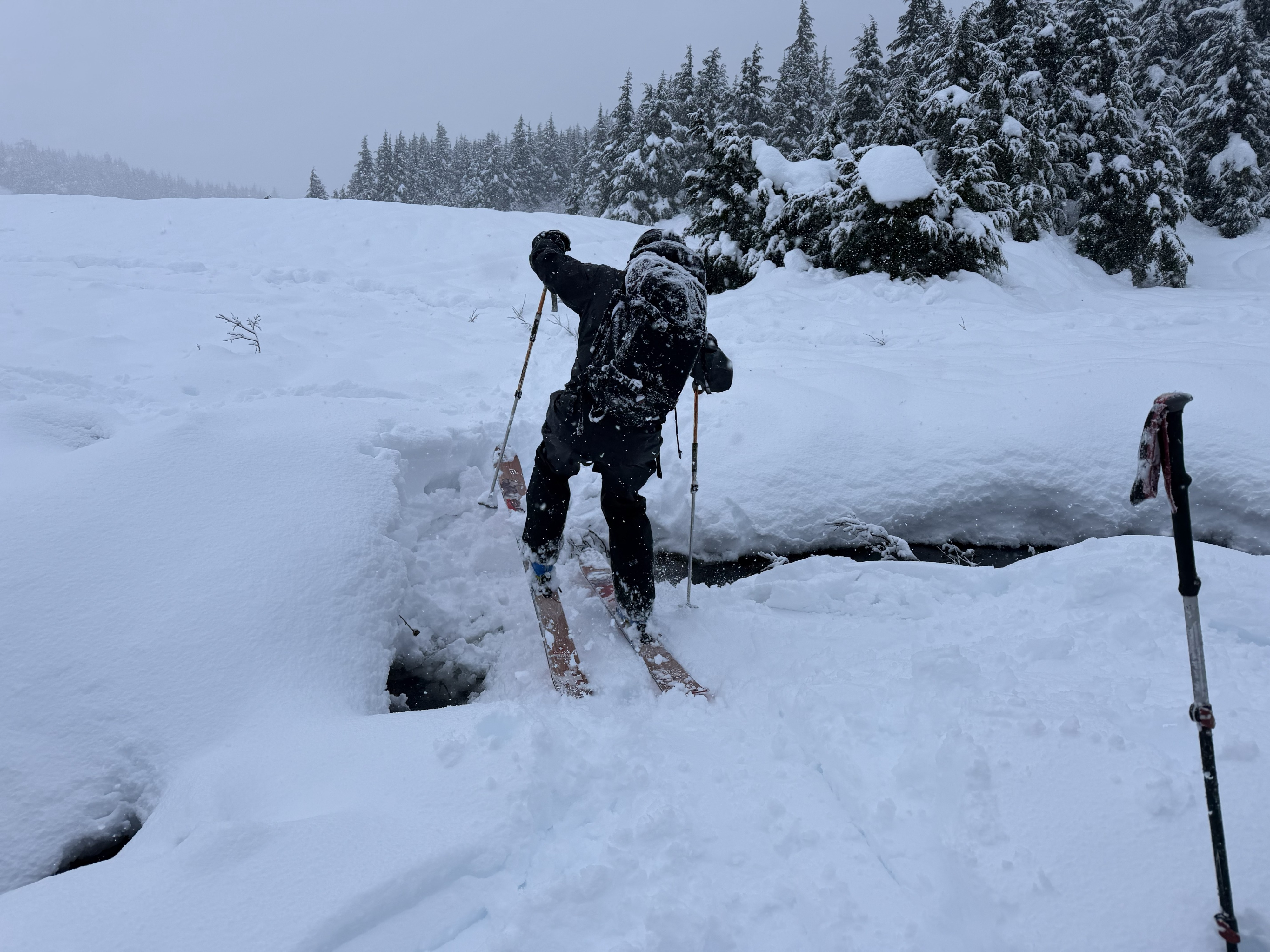
It was storming all day. Winds were calm at lower elevations, but once we got close to treeline it was blowing steady and gusting from the NE. It was snowing barely in the parking lot heavy wet snow and didn't start accumulating much until about 1,700'. It was 33 degrees according to the weather station at 1,800'. It was raining on the drive from Seward until we got to Summit Lake where there was some mixed rain/snow, then rain again until we got to Turnagain Pass.
Snowpack
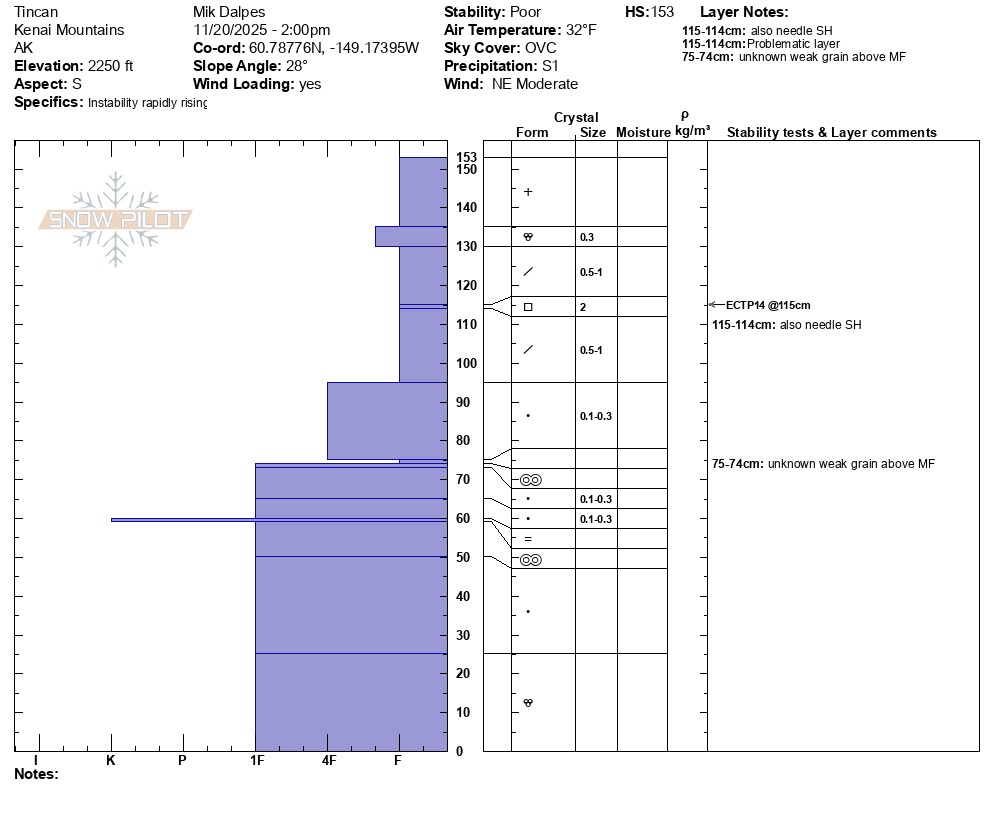
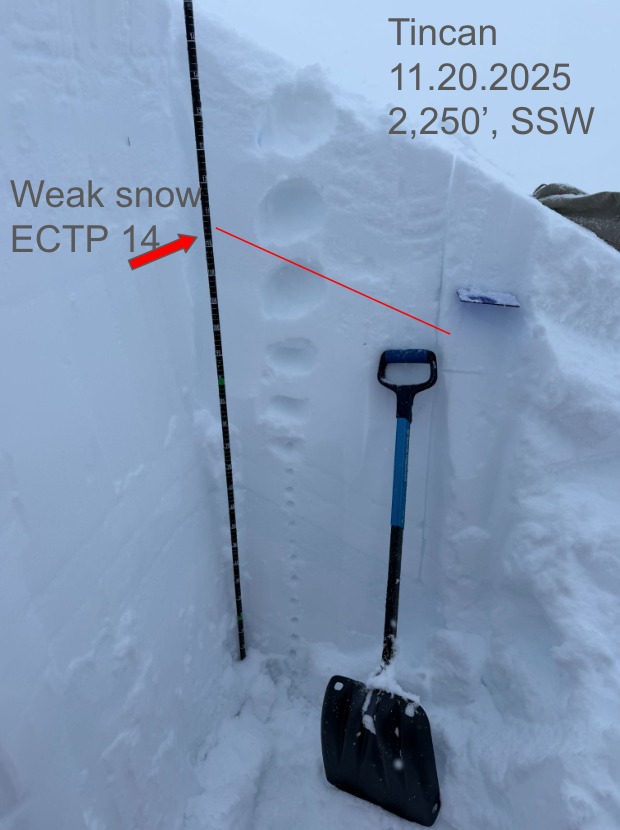
There was about 1" of wet heavy snow on the old surface which included surface hoar at road level. At around 1,700' the snow started accumulating to about 3" of heavy snow on top of surface hoar. The surface hoar looked like it was getting smushed, it was recognizable, but not upright. The new snow continued to get deeper as we climbed and there was 6 to 10" of new snow by 2,200'. We dug a snowpit at 2,200' on a SSW aspect. The total snowpack was 5' deep (153cm) in this location on the south ridge. There was some melt freeze 8" below the surface, which made me think the rain got to this elevation earlier in the storm. We found a few concerning layers, one of which produced an unstable result in our test (ECTP14 38cm down on 2mm facets). There is some weak snow from the long period of calm, cold, and clear weather that is now sitting beneath the new wet heavy snow. This is the recipe for an avalanche with a slab sitting on weak snow so the safest thing is to give the new snow time to bond to the snow beneath and keep slope angles below 30 degrees. This problem may stick around for a while, hopefully not, but we will keep an eye on it.