
Quick report
- Collapsing
- specific
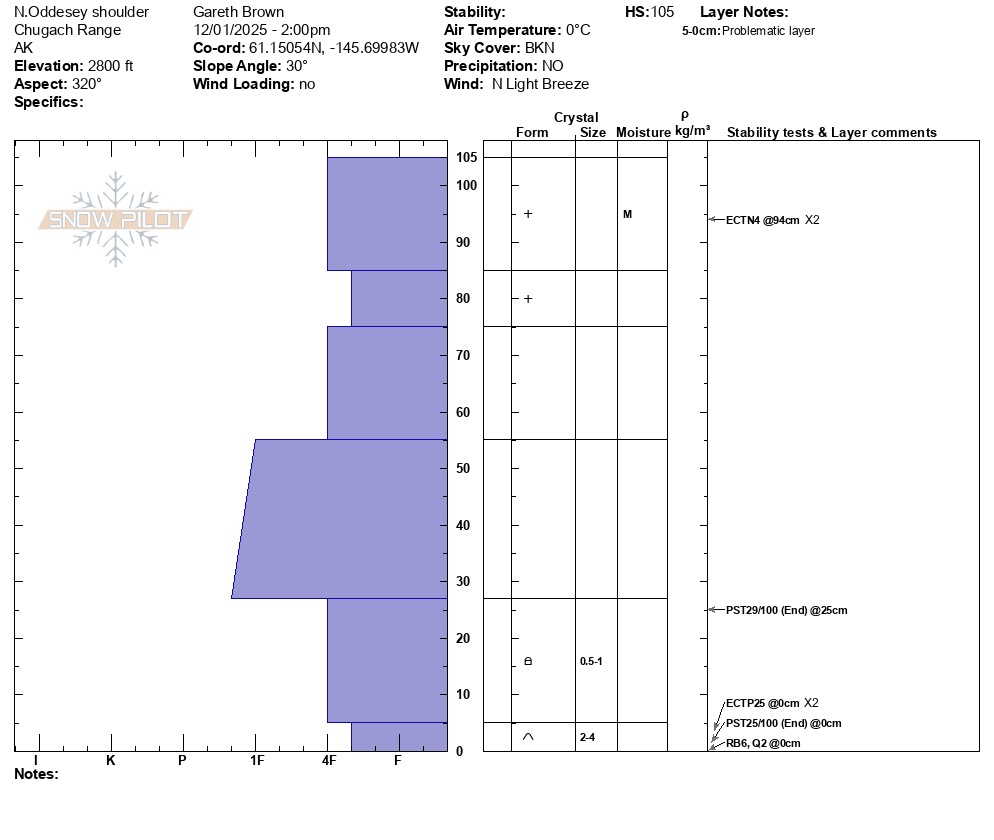
Found an upside down upper snowpack with settled storm totals from the last week of 35-40 cms. One test slope near the valley floor was reactive with 3 separate failure planes. First was 20 cms down where moist snow sat on top of drier snow, second was a layer of rounding buried surface hoar down 40 cms and third was layer of old rounding facets down 63 cms. Rain runnels are visible up to 3500 feet and may go higher.
Dug a pit at ~2800' and found that the load of the new snow along with warm temperatures had made multiple failure planes reactive in ECT's, PST's and RB's. Most notable was propagation at the ground on ECT repeated 2x at 25 taps. See snow profile for more details and test scores.
It was pretty clear that the new load on the snowpack has caused the likelihood for human triggered avalanches to rise significantly at multiple interfaces. Step down avalanches are possible and could tear away all the way to the ground. There was a lot of moisture in the snowpack that will take time to refreeze once temperatures go back below freezing in a few days. The snowpack needs time to adjust to its new load.
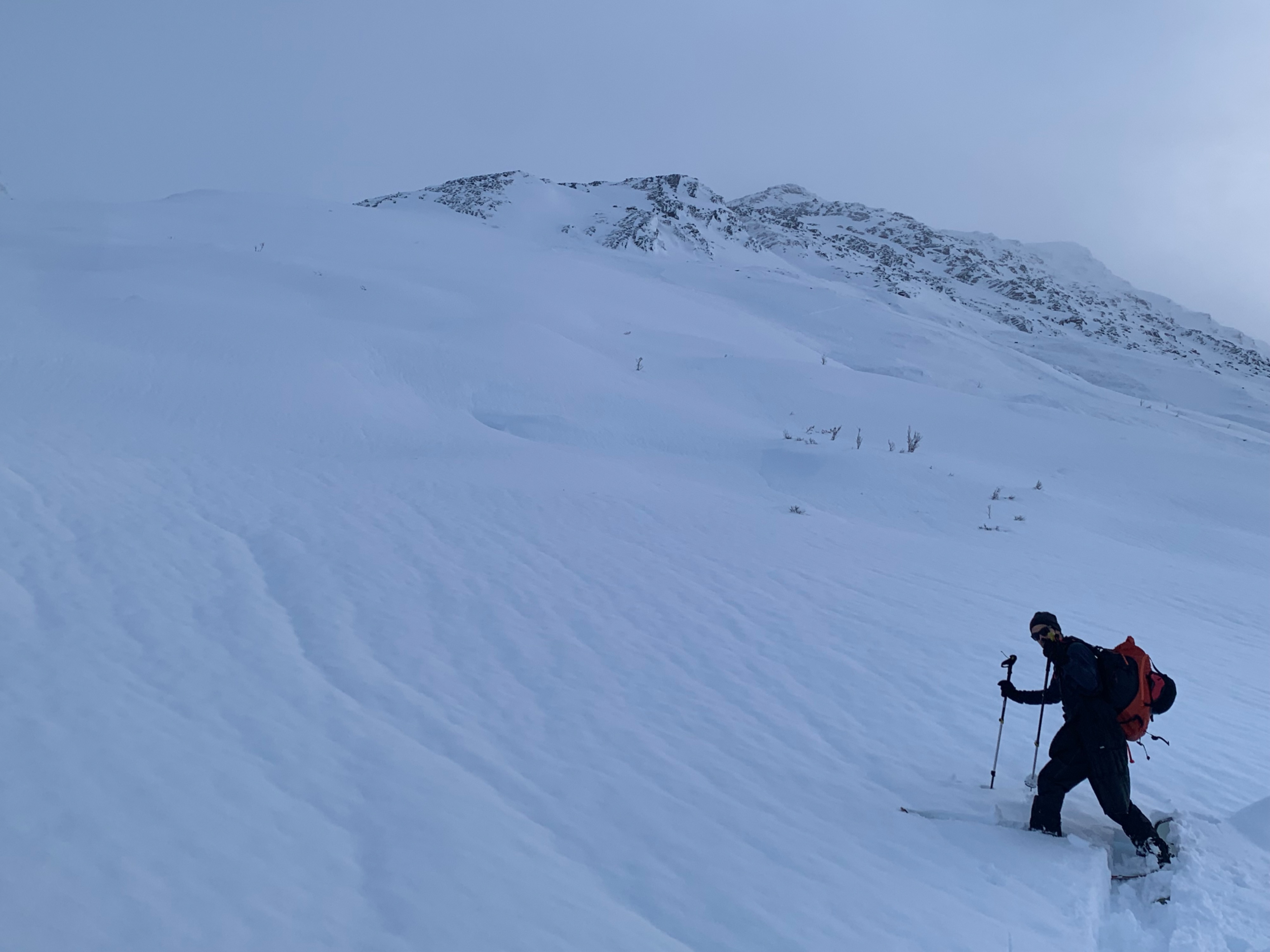
2-D2 naturals were observed in the steeper North Oddessey chutes. Crowns looked to be less than 1 foot in depth. Collapsing was occurring in valley floors. Hard to say if it was air pockets in buried bushes collapsing, or if it was buried surface hoar that was more pronounced than further up the slope.
Weather
- Air Temp
- 32
- Cloud Cover
- broken
- Wind Loading
- none
- Rain Elevation
- ~3500
- Recent Snowfall
- 20
- Snow Avail For Transport
- small smounts
In between storms with clearing skies, temps near freezing and light North wind.
Snowpack
Top 8 inches of the snowpack was top heavy from above freezing temperatures and/or rain. The entire snowpack was showing the effect of recent warm up with increased density of the snowpack and rounding observed in faceted snow at and near the ground.