
Quick report
- Cracking
- specific
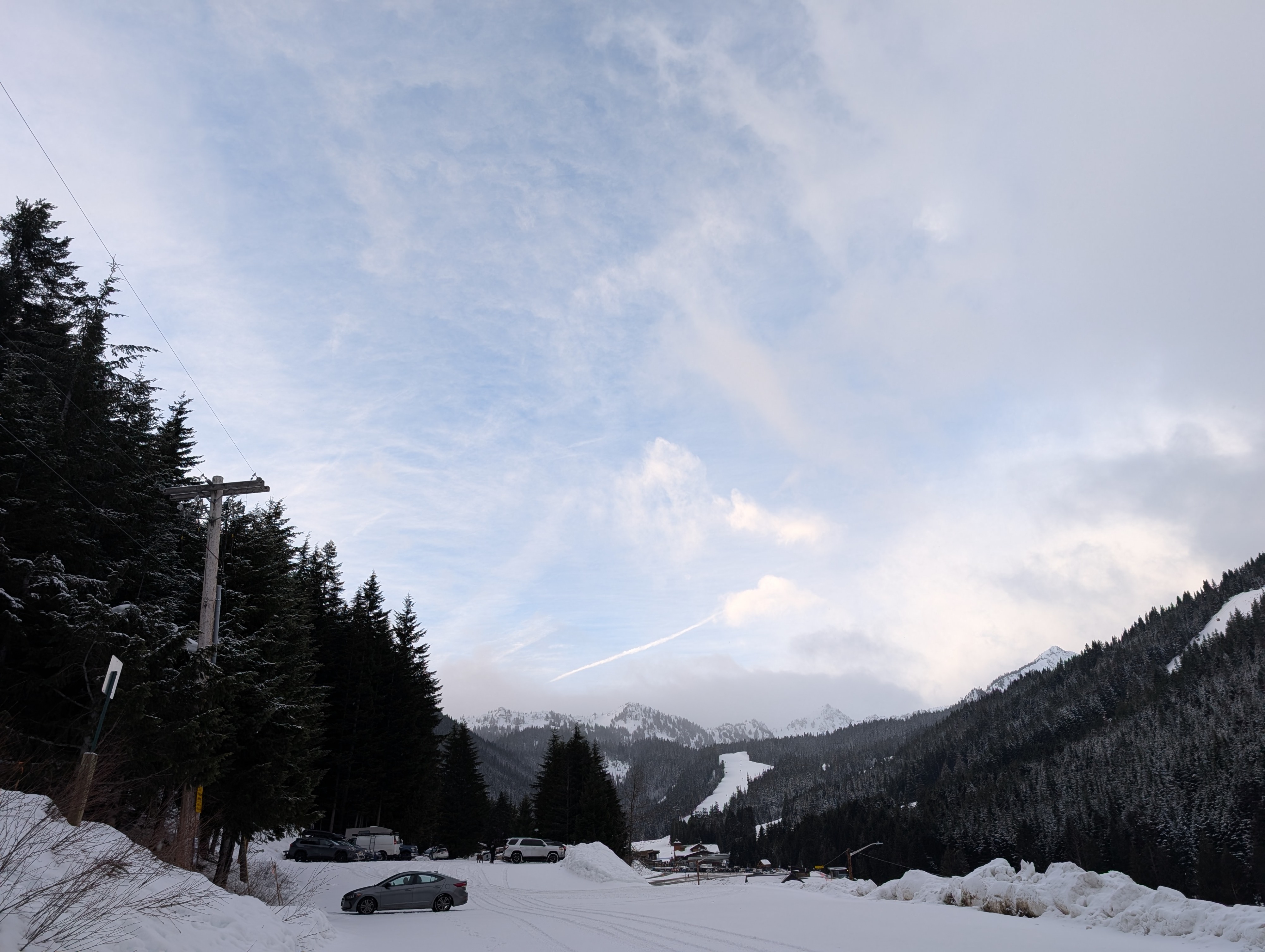
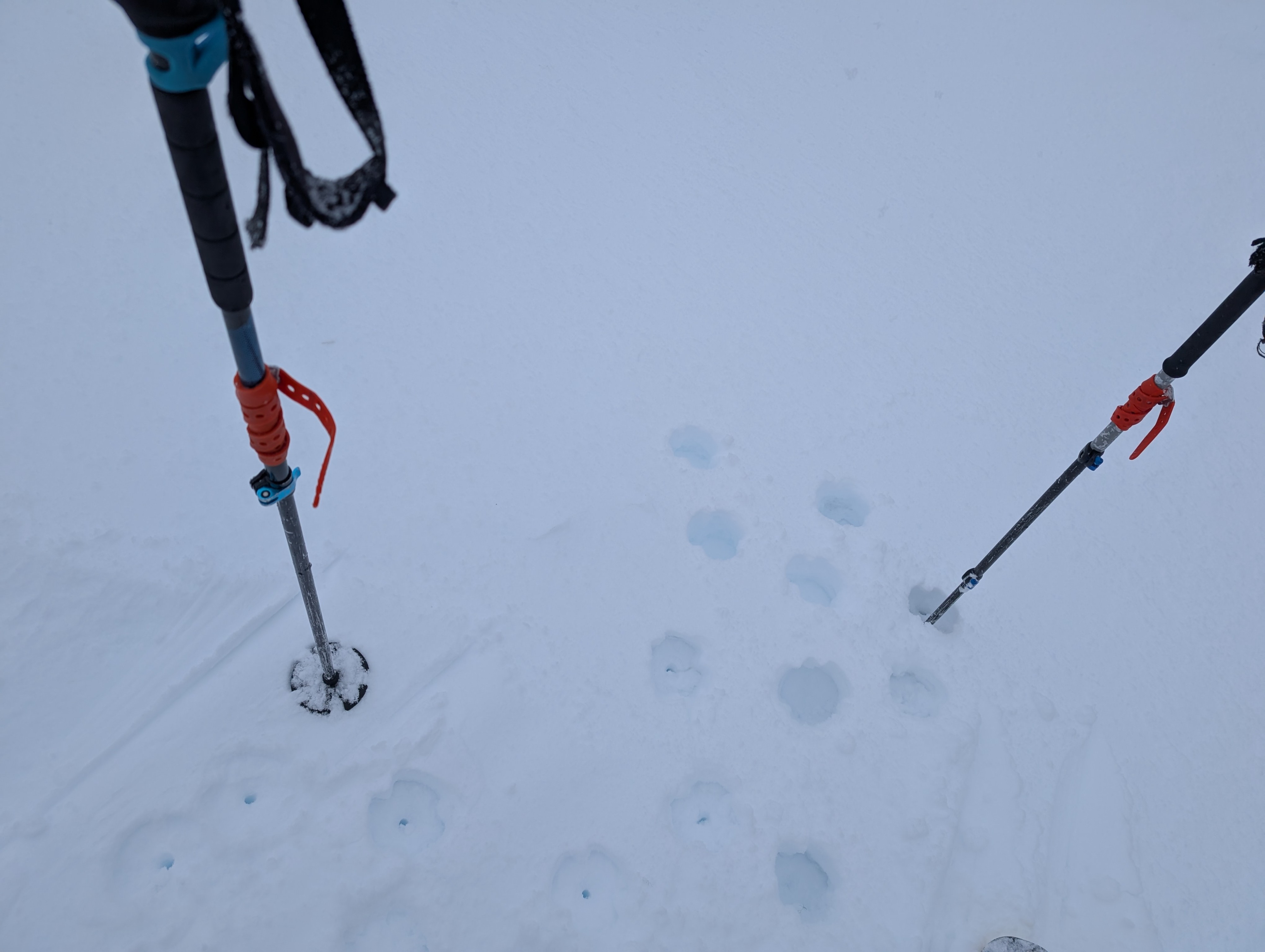
Talk about your all-time backfires. I was expecting the Crystal area to get roughly a foot of snow, but instead, I showed up to blue skies and essentially a dusting (2-3 inches). That made it hard to assess our layers of concern, but we did the best we could.
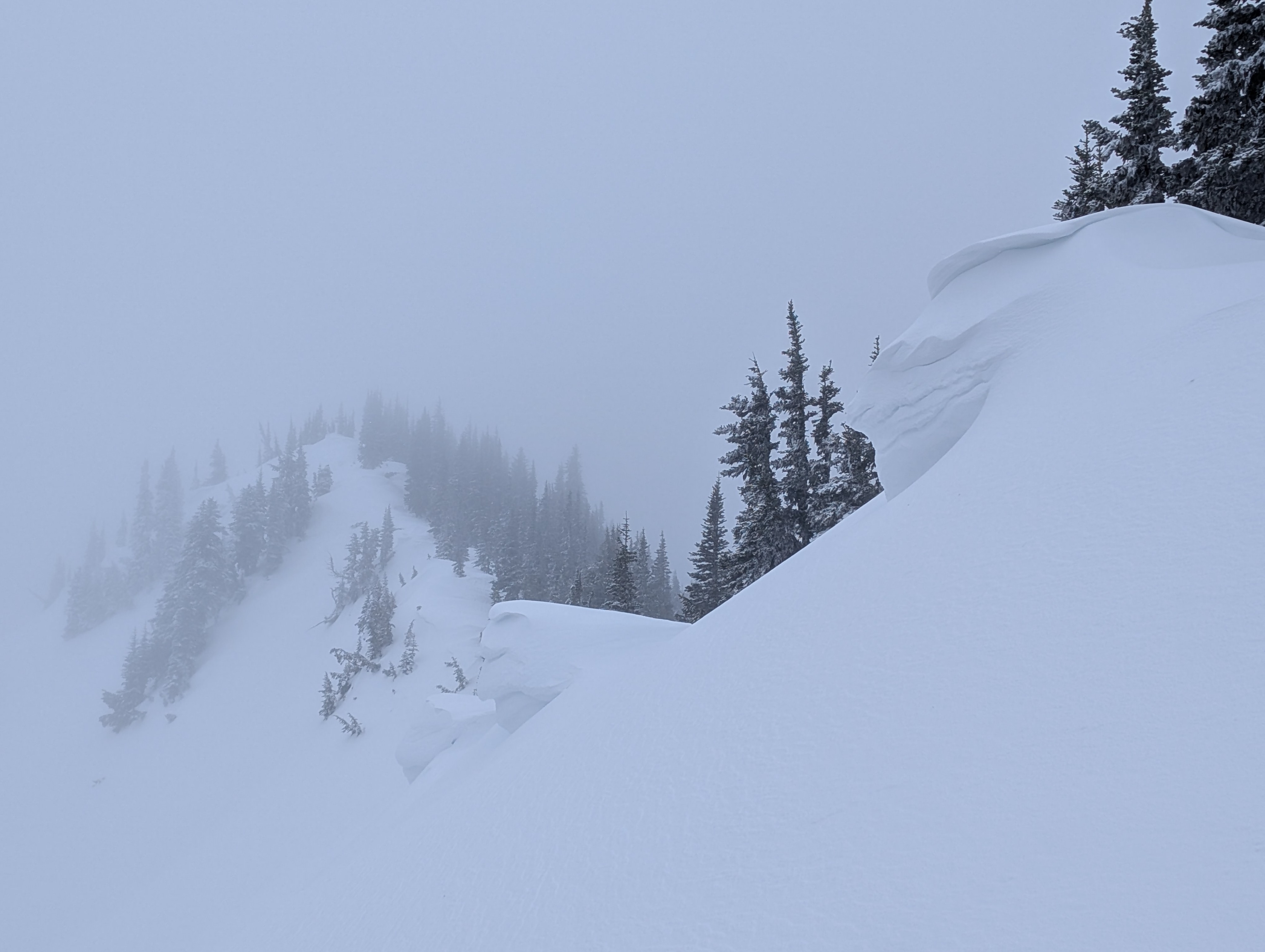
The wind was obviously whipping overnight; there was tree debris on the trail and drifts in exposed areas. Cornices were building back out again and the slopes below were loaded. Textured surfaces, actively blowing snow, and fresh drifts were all observed. I was able to get cracking in drifts along the side of the trail and on small test slopes.
The variable surfaces we just buried were easy to notice with only a few inches on top. I would categorize the bond at the new/old interface as poor, but with only a few inches, it is admittedly hard to assess.
On the descent back to the truck, snow got progressively heavier as we changed from snow to mixed precip, to eventually rain. Seems like the line was around 4800'.
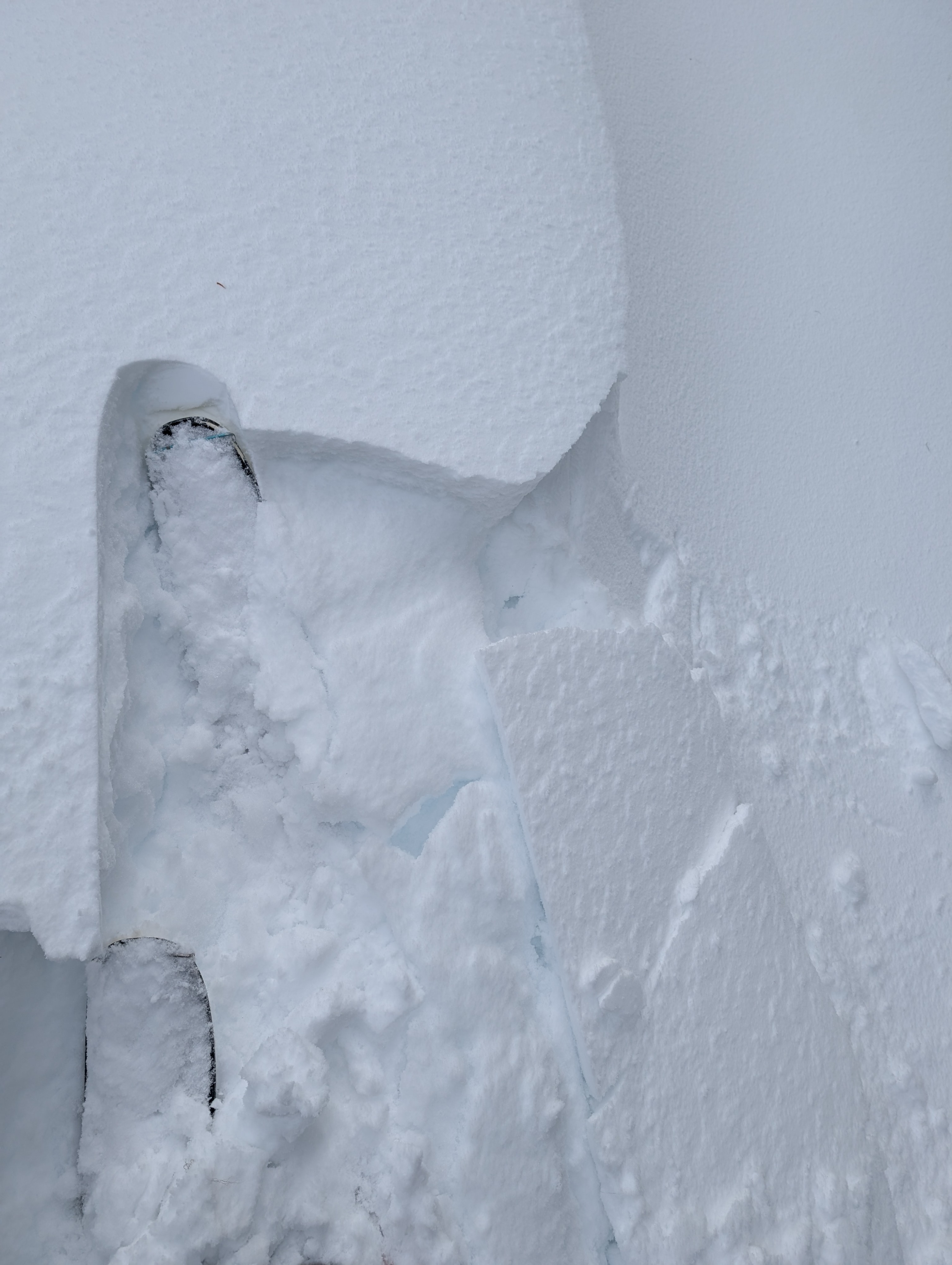
I got cracking in wind-drifted areas throughout our tour, despite the low snow totals. I also got one collapse/whumpf as I approached a cornice that I wanted to kick. There was no resulting avalanche due to the collapse. No avalanches on the slopes below a handful of kicked cornices.Weather
It's complicated... I arrived in a sucker hole, with blue skies and no wind. Late morning, the Rainier block gave way some, resulting in snow showers and an uptick in wind. When I got back to the truck, it was raining below ~4800'.
Snowpack
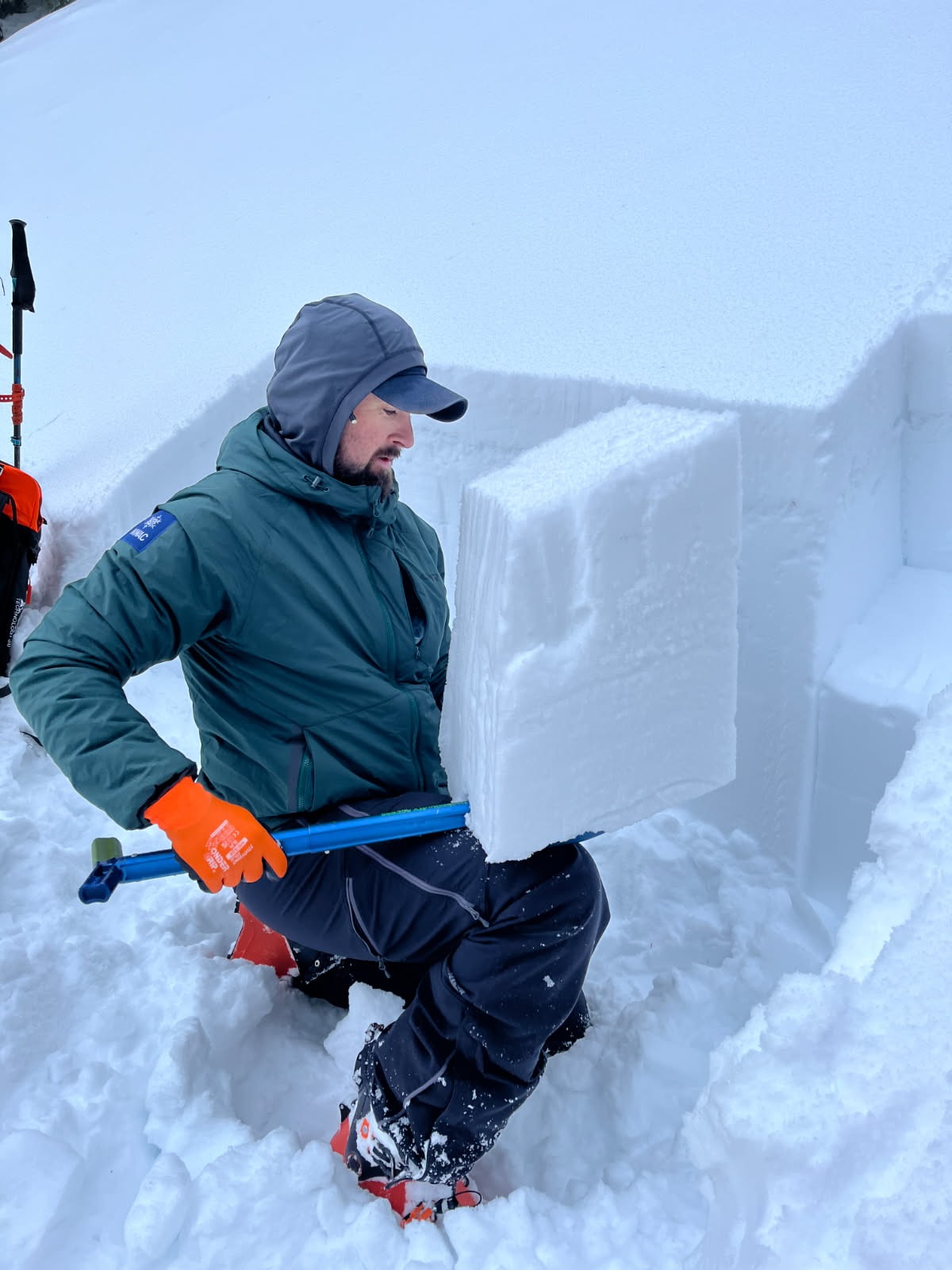
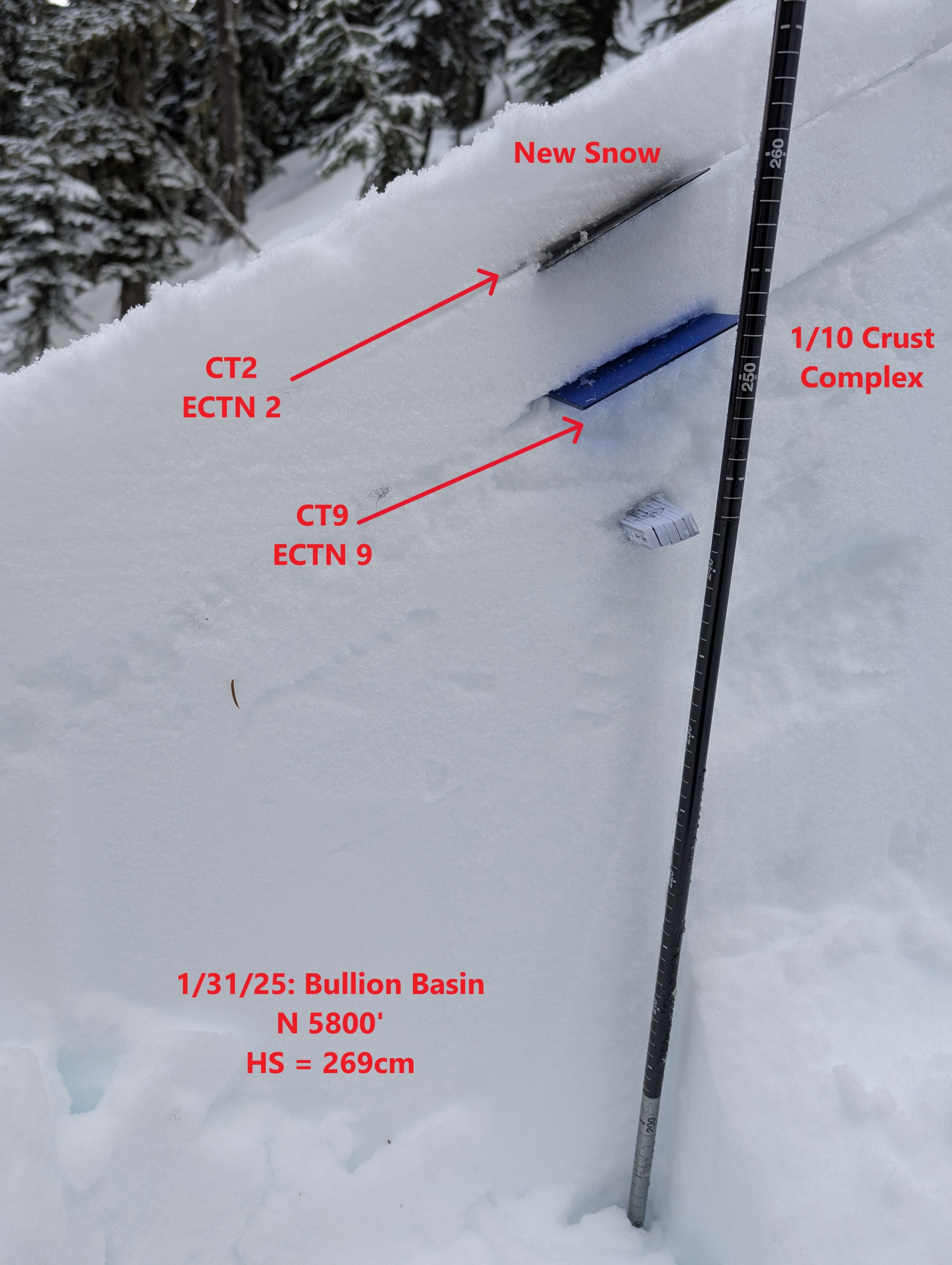
The upper snowpack is weak but currently does not contain the slab necessary to produce widespread avalanche activity. Compression, extended column, shear, and tilt tests all highlighted failures at the base of the storm snow and within the 1/10 complex.
I made some modifications to my ECT by placing larger chunks of snow on top of the block to simulate a slab. When I did that, although imperfect, it did propagate a fracture.
Avalanche
No new avalanches observed.