
Quick report
- Cracking
- isolated
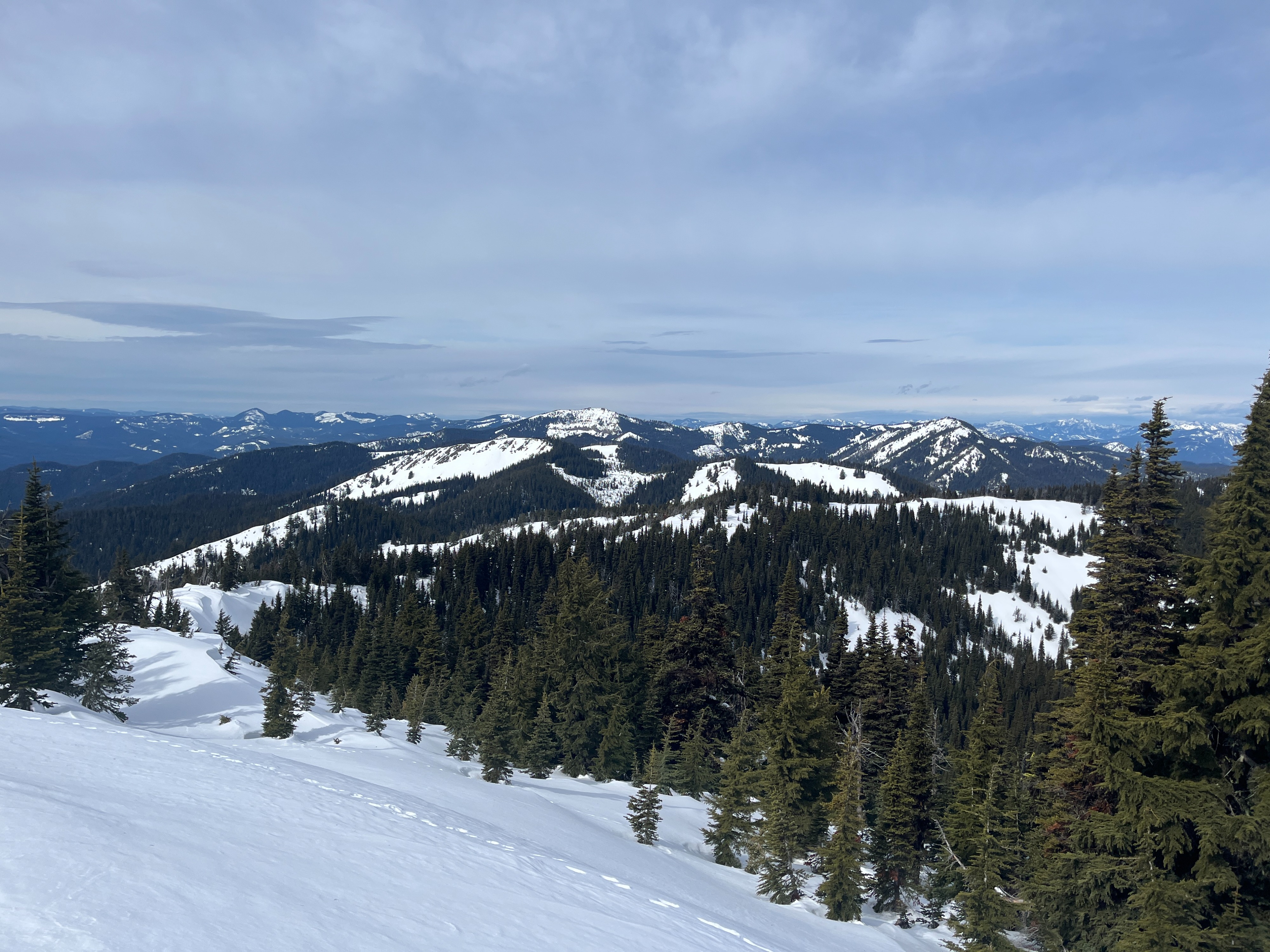
The effects of sustained dry weather were apparent at Manastash. The snowpack is inconsistent below 4500 ft. But as you gain elevation and find more snow, the good news is the snowpack is very stable at the moment. Most surfaces were quite supportable and any facets I found within were nearly healed.
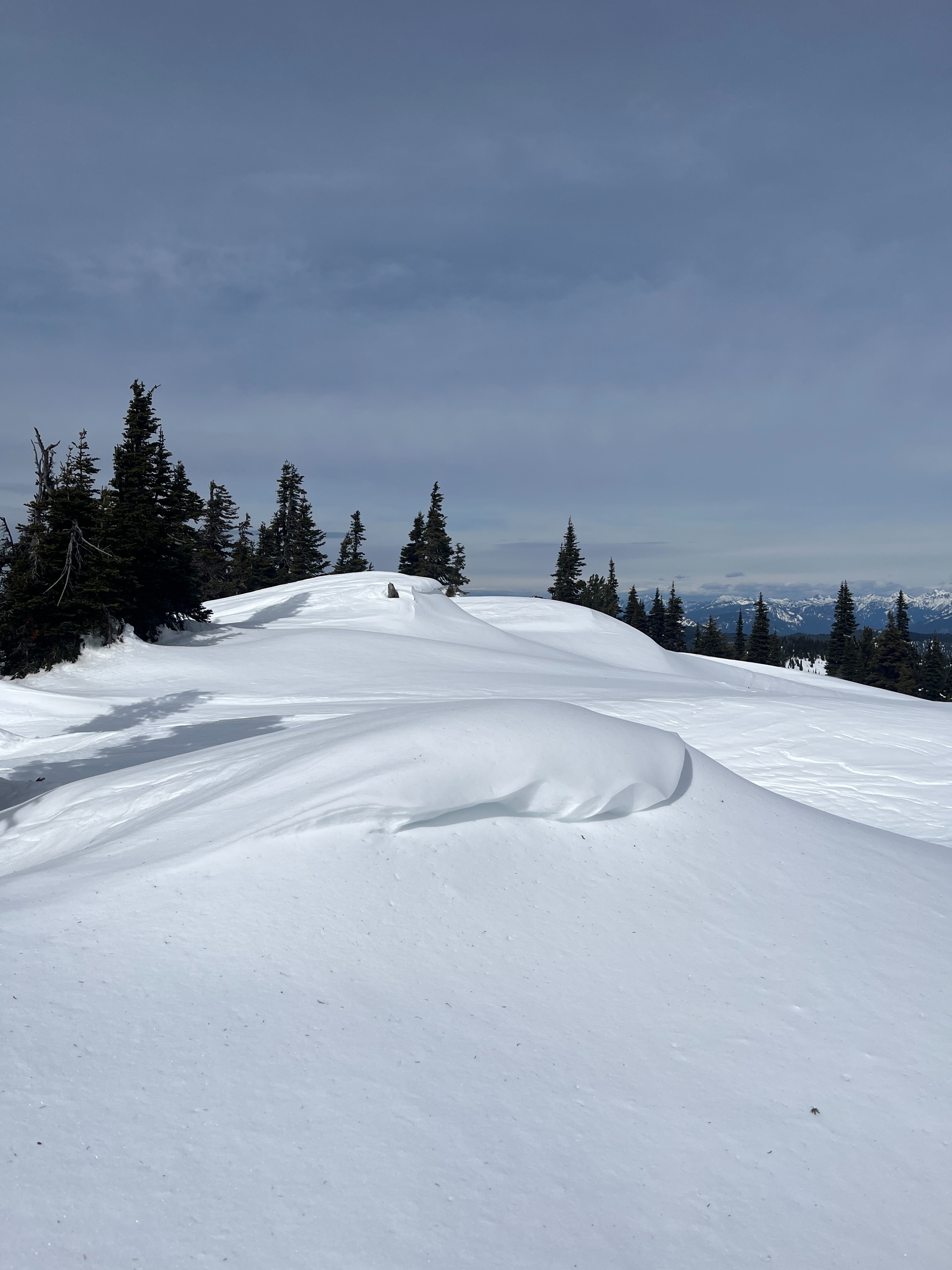
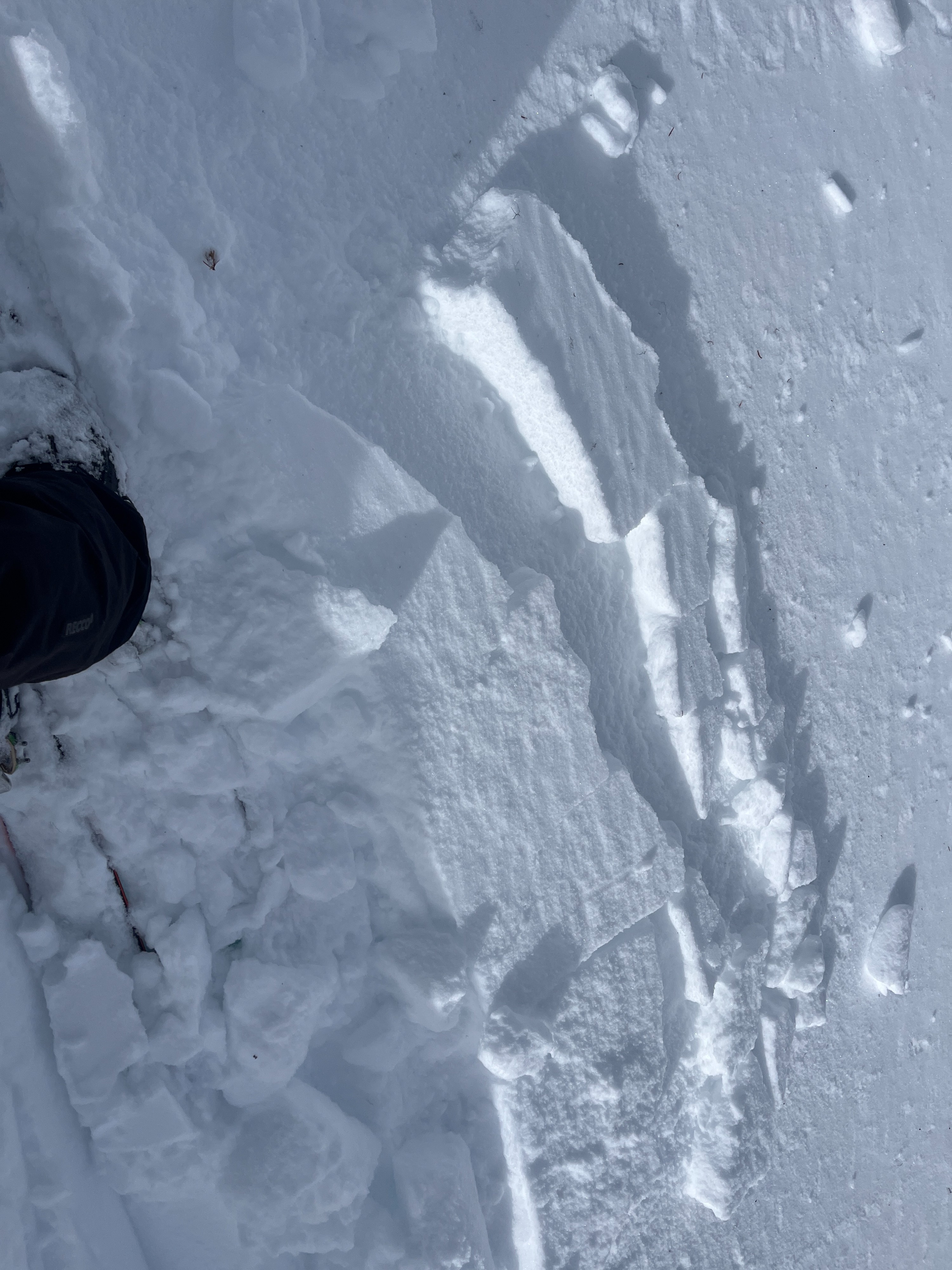
As I walked along a low angle wind loaded ridge, I was only able to get minimal cracking in one area. Everywhere else the snow wasn't consolidated enough. I observed numerous signs of previous warming at lower elevations.Weather
- Air Temp
- 27-37
- Cloud Cover
- scattered
- Wind Loading
- none
- Recent Snowfall
- 7
- Snow Avail For Transport
- none
Soft overnight refreeze. A thin layer of high clouds hovered over the area all day creating filtered sunshine. Temperatures at the trailhead in the morning were well above freezing. At ridgeline, they were just below. The wind was mostly calm-light with some moderate gusts at ridgeline from the west. As I began exiting the field, a few thicker clouds were making their way into the area and the wind was picking up a bit.
Snowpack
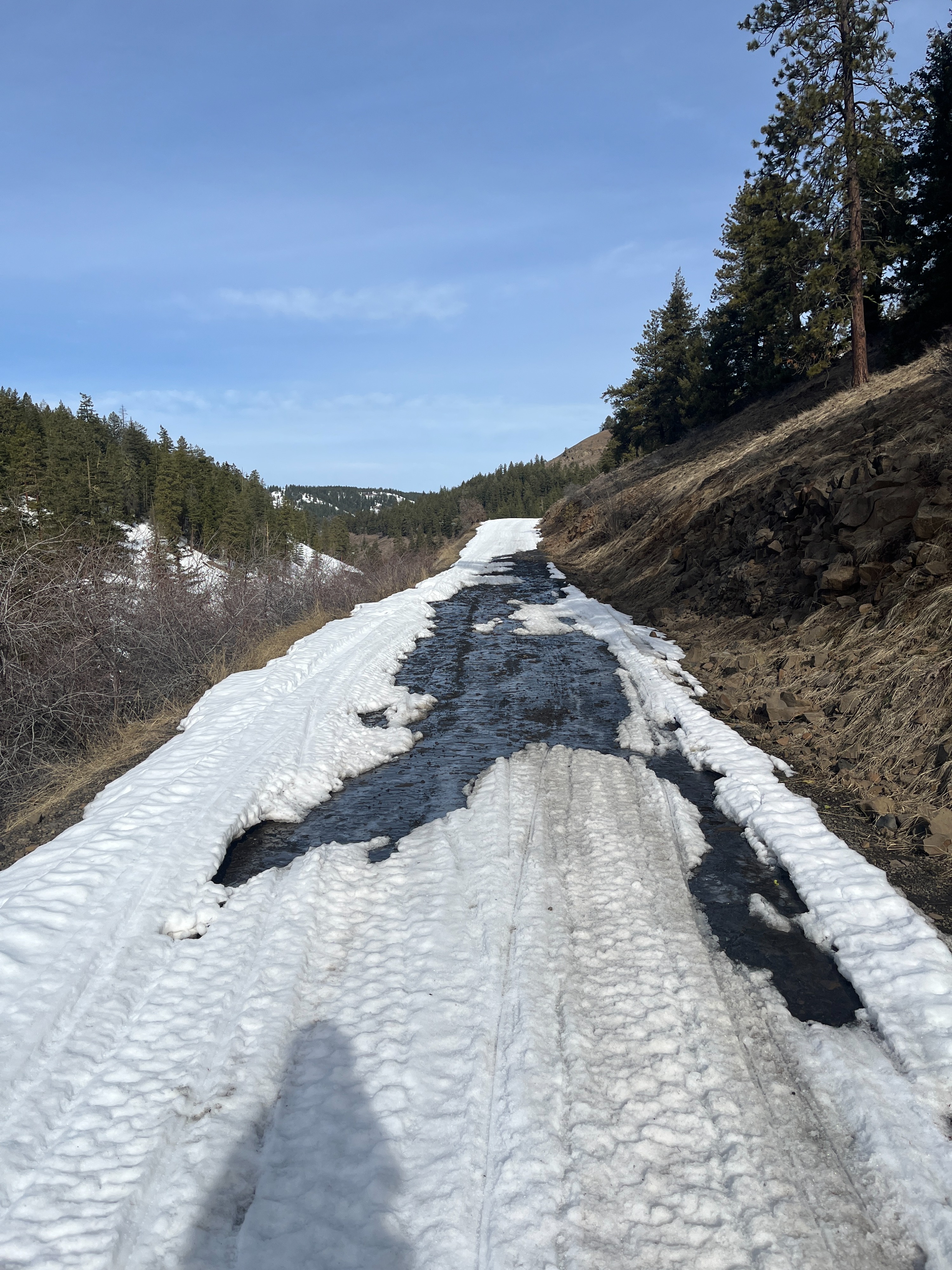
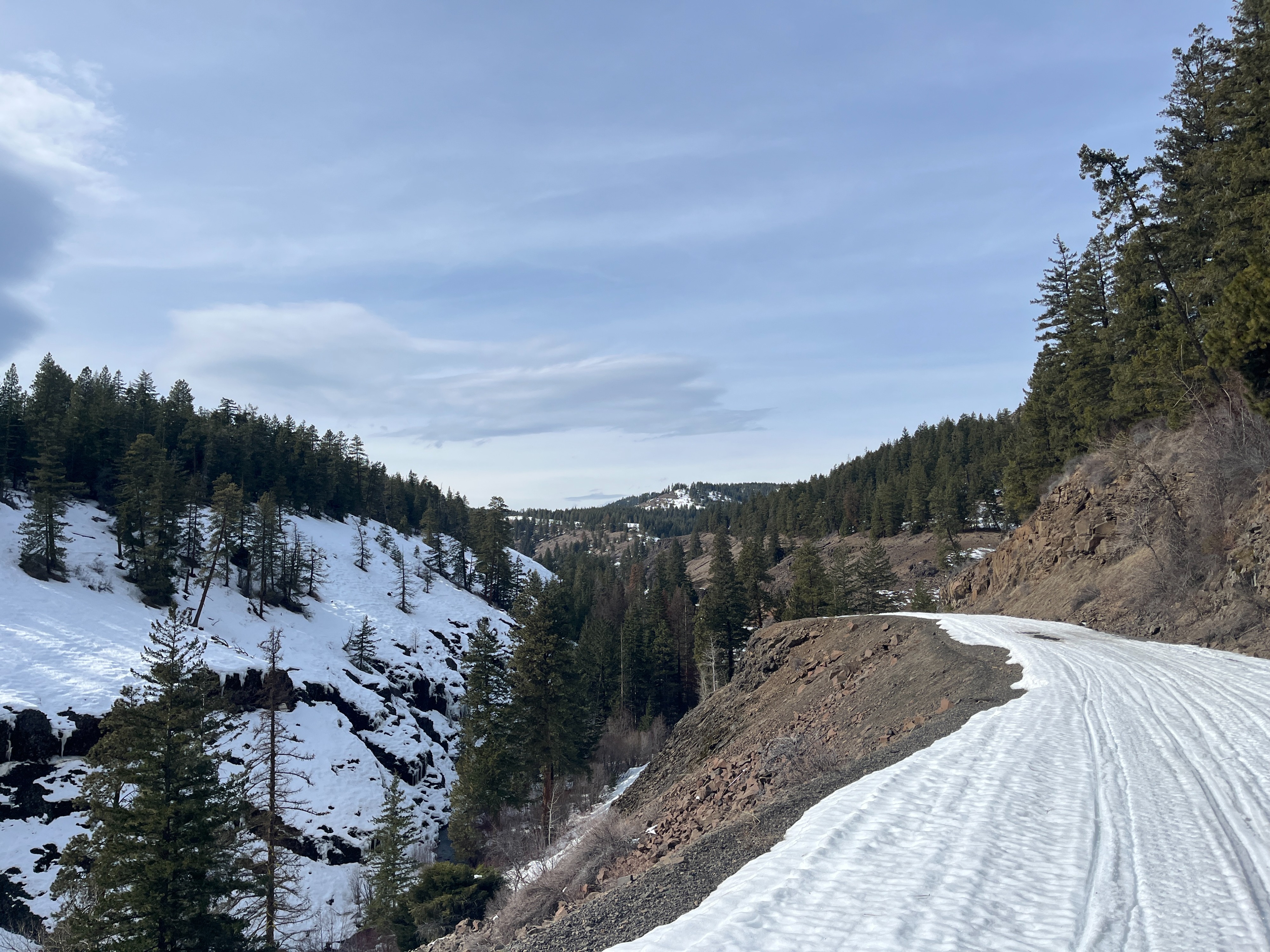
Lower elevations are definitely suffering from extended warm, dry weather. There was inconsistent snow coverage on all aspects below 3900 ft. Around this elevation, north facing aspects began to look a bit better. At around 4500 ft, most aspects had generally consistent coverage.
I dug a pit on a south aspect at 6078 ft. The depth of this pit was 52in/132cm. I found a very hard and supportable melt freeze crust at the surface. Below, I generally found either rounded grains or more melt freeze crusts. There was one small layer of rounded facets below an ice lense in the upper portion of the snowpack. The snowpack in this pit was dried out.
I dug a pit on a northeast aspect at 6249 ft. The depth of the snowpack at this location was 91in/231cm and the depth of my pit was 58in/146cm. I found 7cm of recent snow that had begun to facet. This layer overlayed a small melt freeze crust. Below this, I generally found either rounded grains or more crusts and ice lenses. The January Drought Layer (JDL) was still just a touch faceted but it is nearly healed and quite hard now. I performed a compression test and got a hard sudden collapse on top of a stout melt freeze crust in the upper portion of the snowpack (CT23 SC). I performed an extended column test and got a hard non-propagating result on the same layer (ECTN26).
I also observed small grains of surface hoar in sheltered areas but the grains had been blown over in many spots.
Avalanche
- Size
- D1
- Type
- WL
- Aspect
- N
- Trigger
- N
- Elevation
- 3500 ft
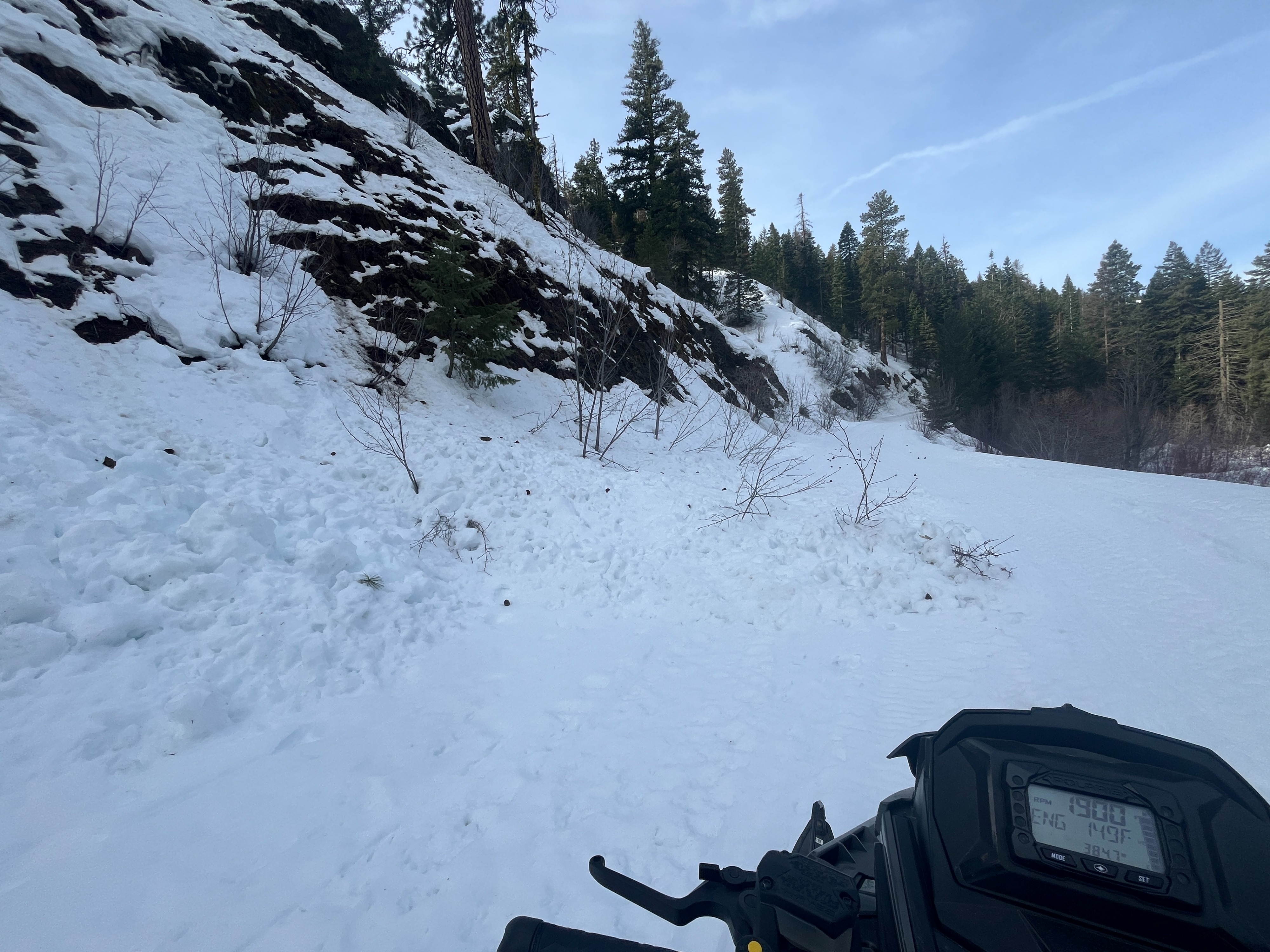
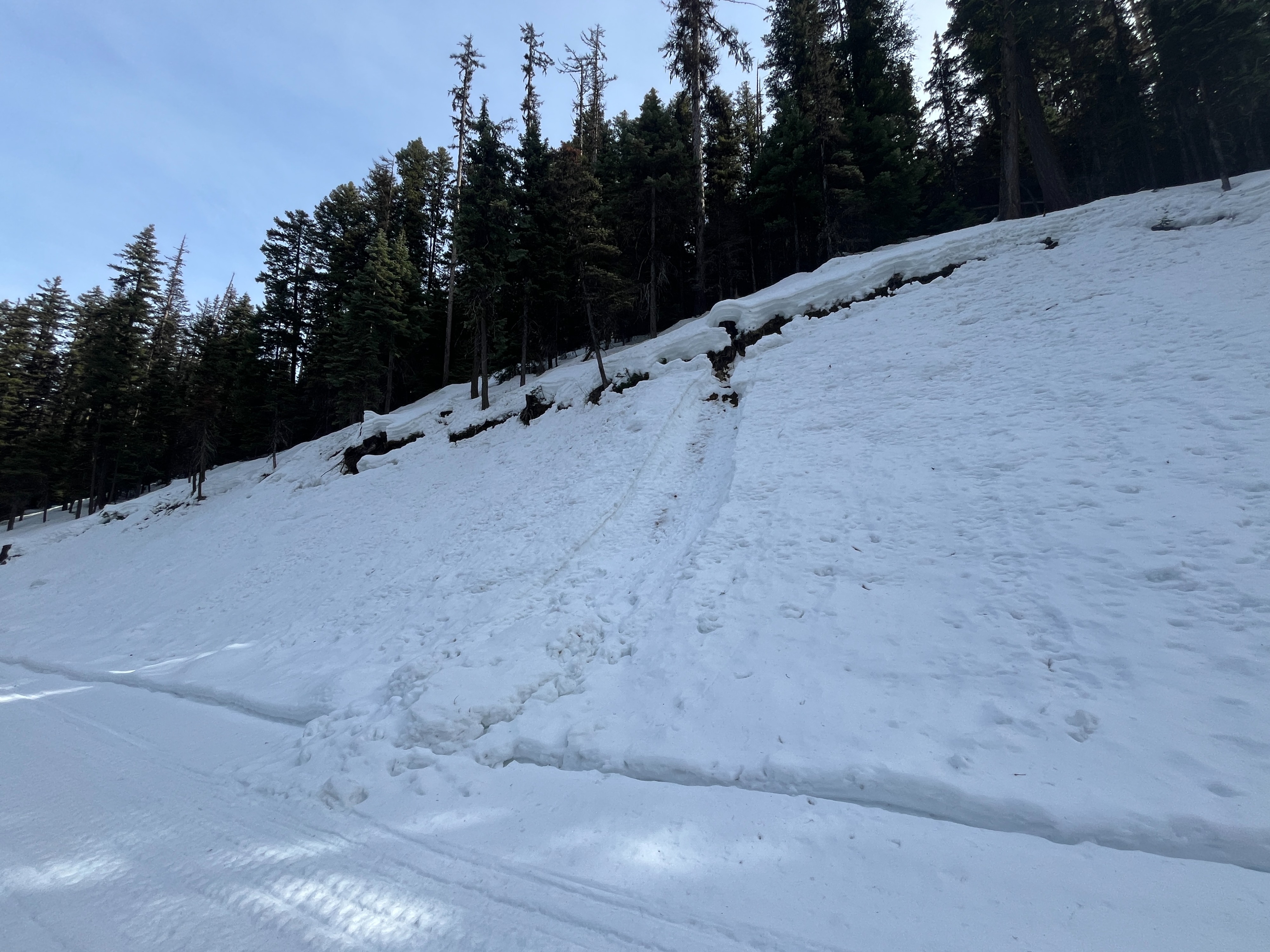
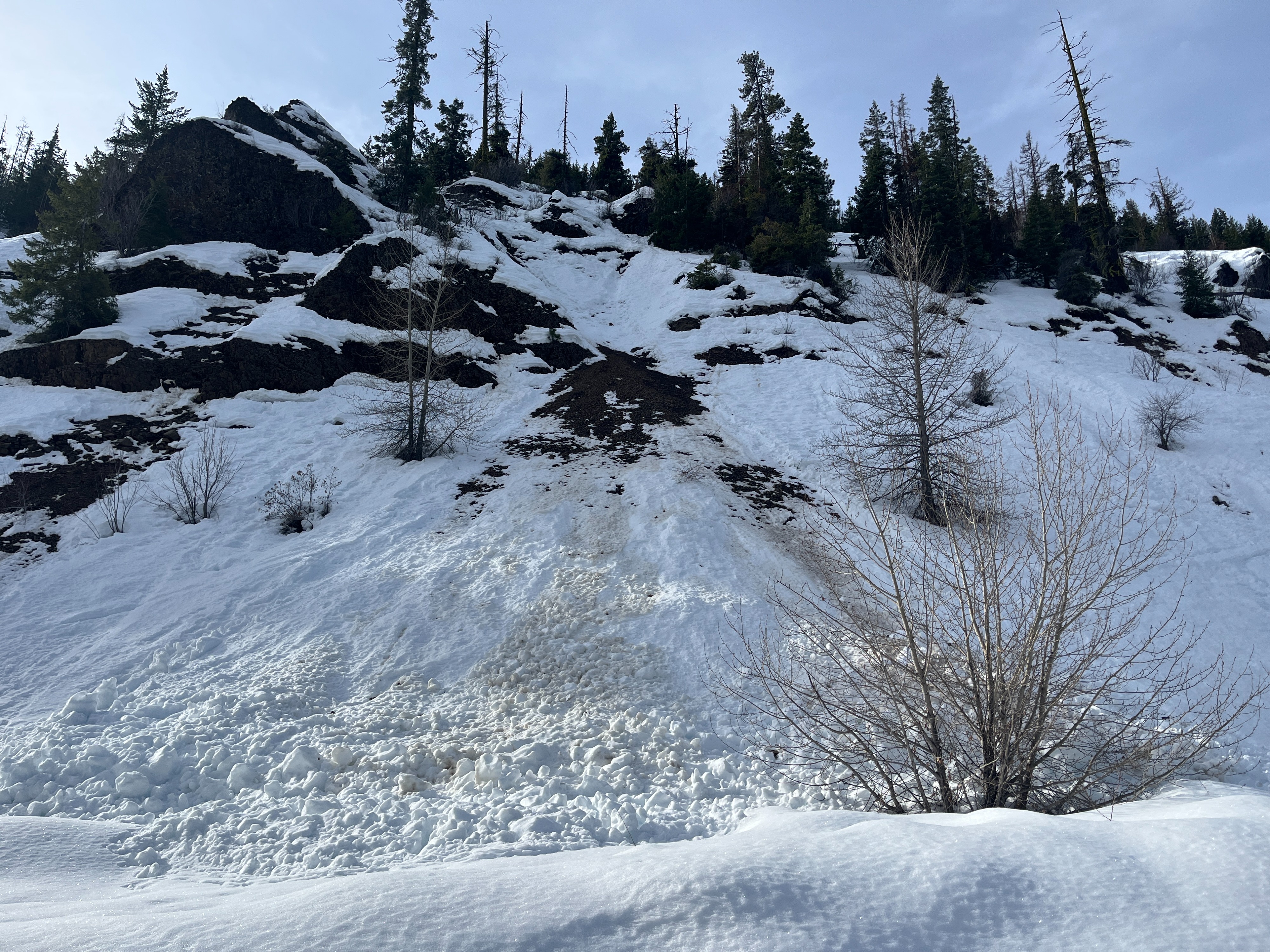
I observed many old wet loose avalanches and a glide crack. Most of these ran to the ground and were on north facing slopes.