
Quick report
- Cracking
- isolated
- Collapsing
- isolated
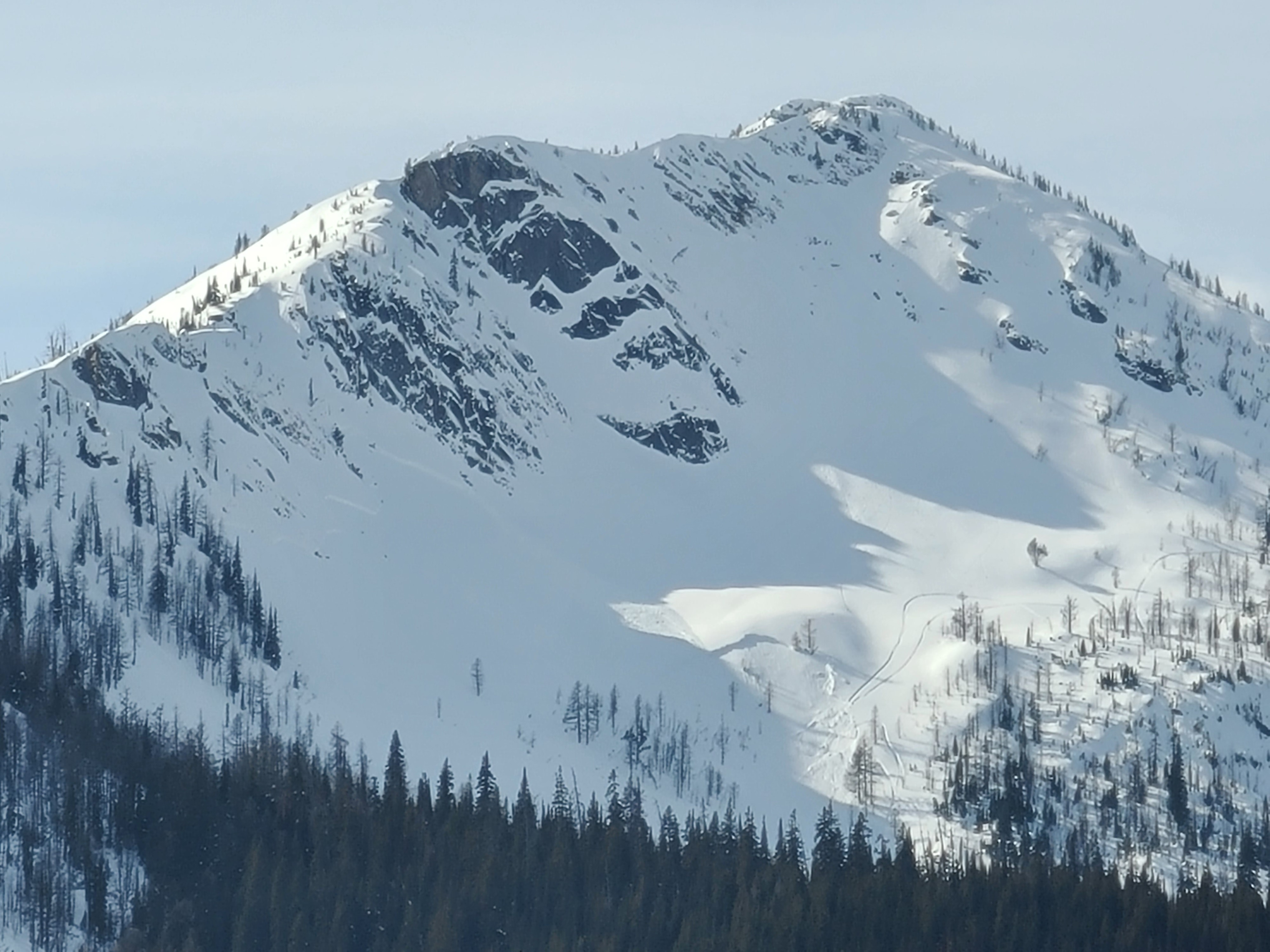
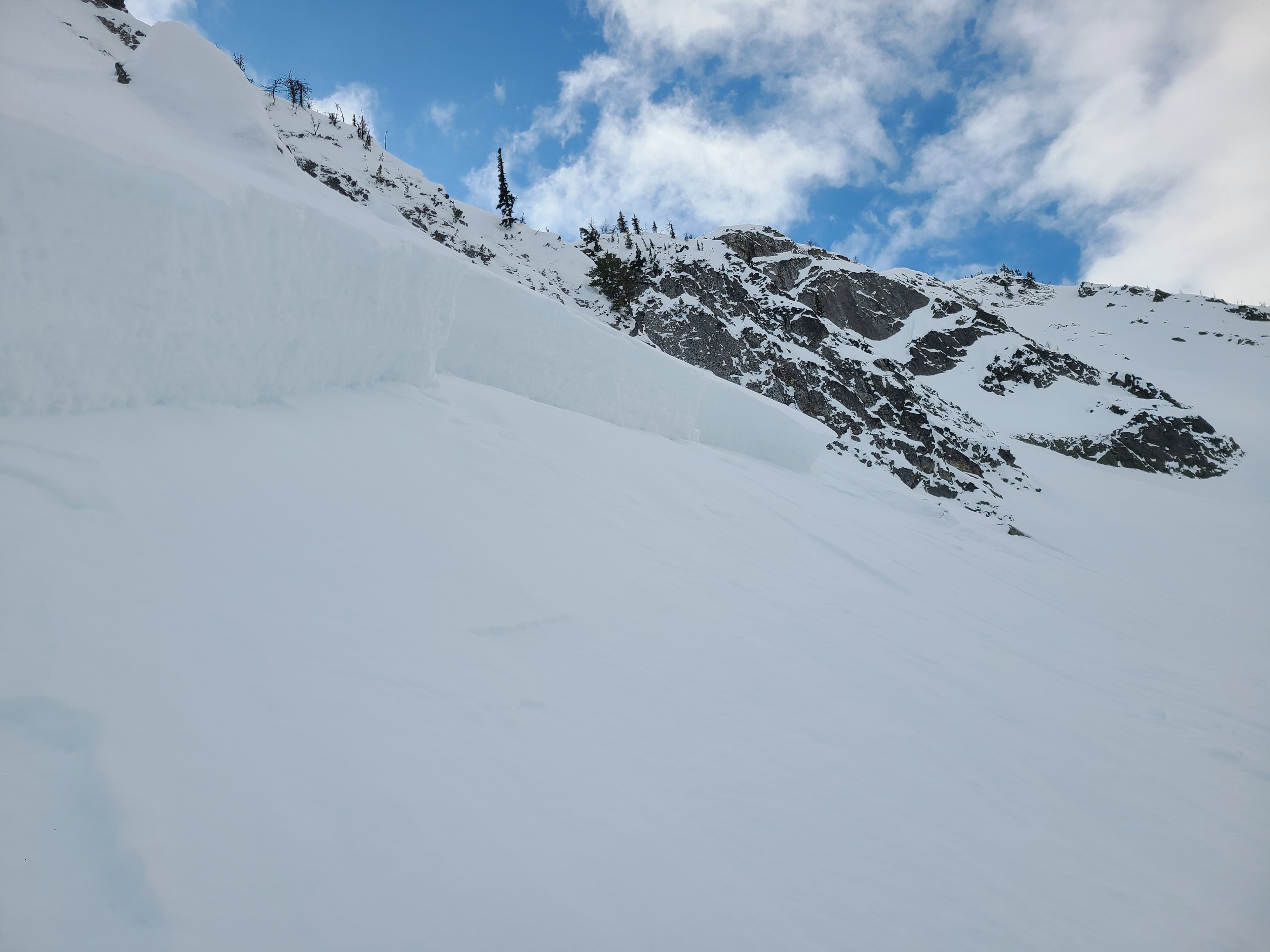
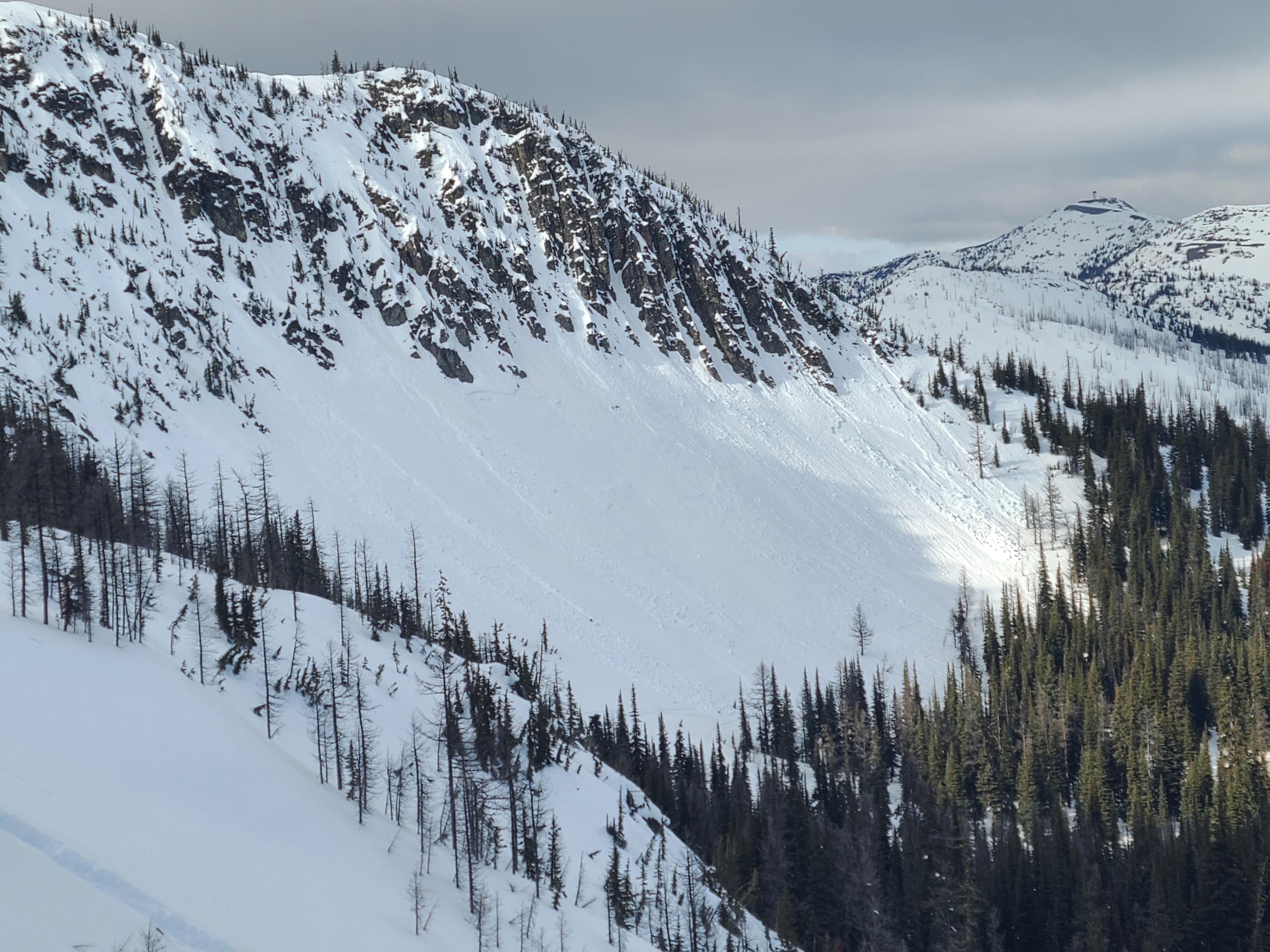
We traveled into the Hart's Pass area to investigate the characteristics of the avalanche that resulted in a fatality on February 28th. The avalanche occurred on a northeast aspect at 6700ft on Cone Mountain (Pt 7405) near the Brown Bear mine. The upper extent of the bowl has steep, rocky terrain with alpine features. This slide failed on faceted grains within the January Drought Layer.
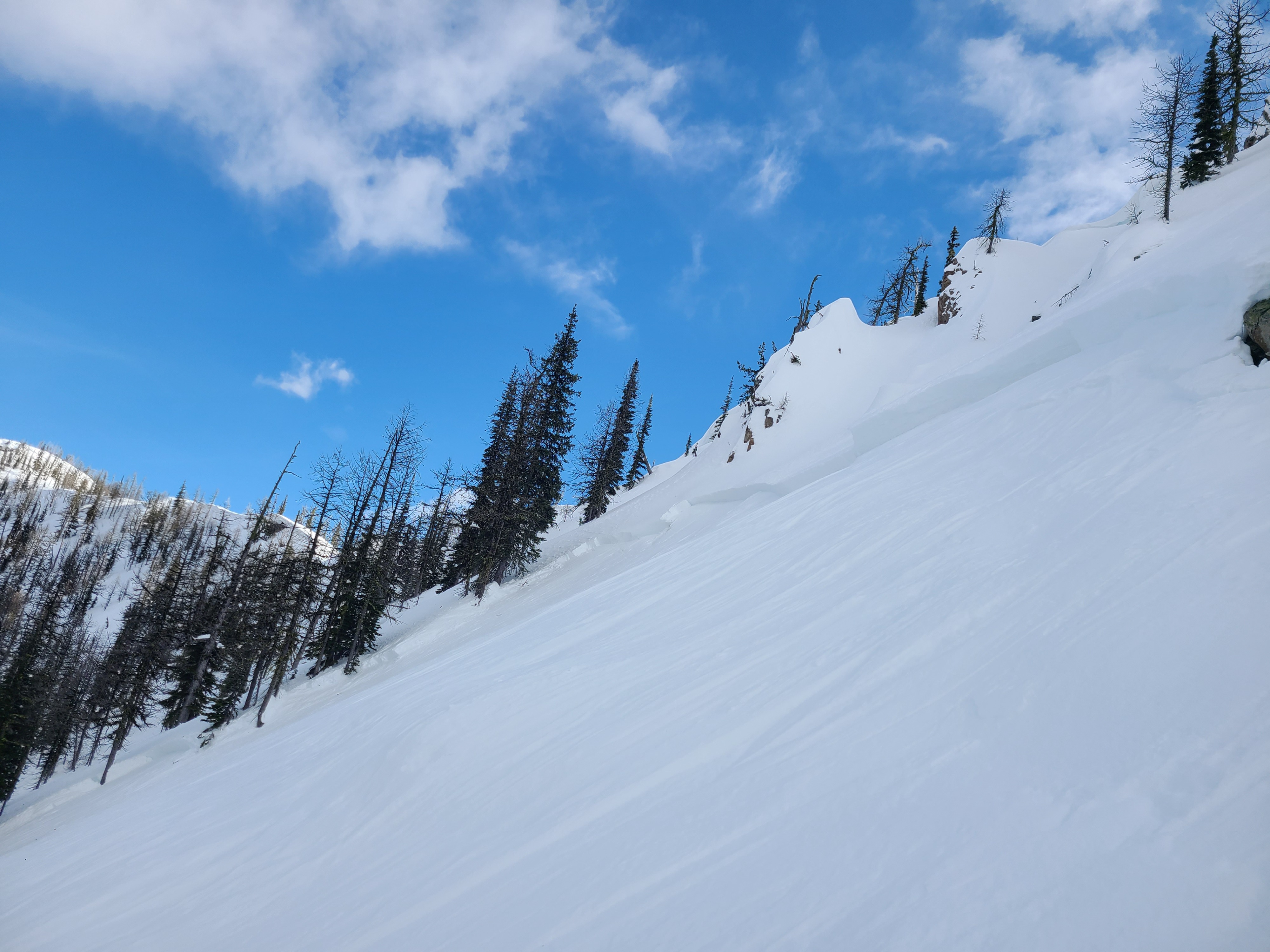
While the goal of the day was to investigate this persistent slab avalanche, we were also able to document the extent of the ongoing wet avalanche cycle and other large persistent slab avalanches in the area. One ridgeline had a crown that measured a mile wide on a steep northeast slope at upper elevations. (See attached avalanche observation)
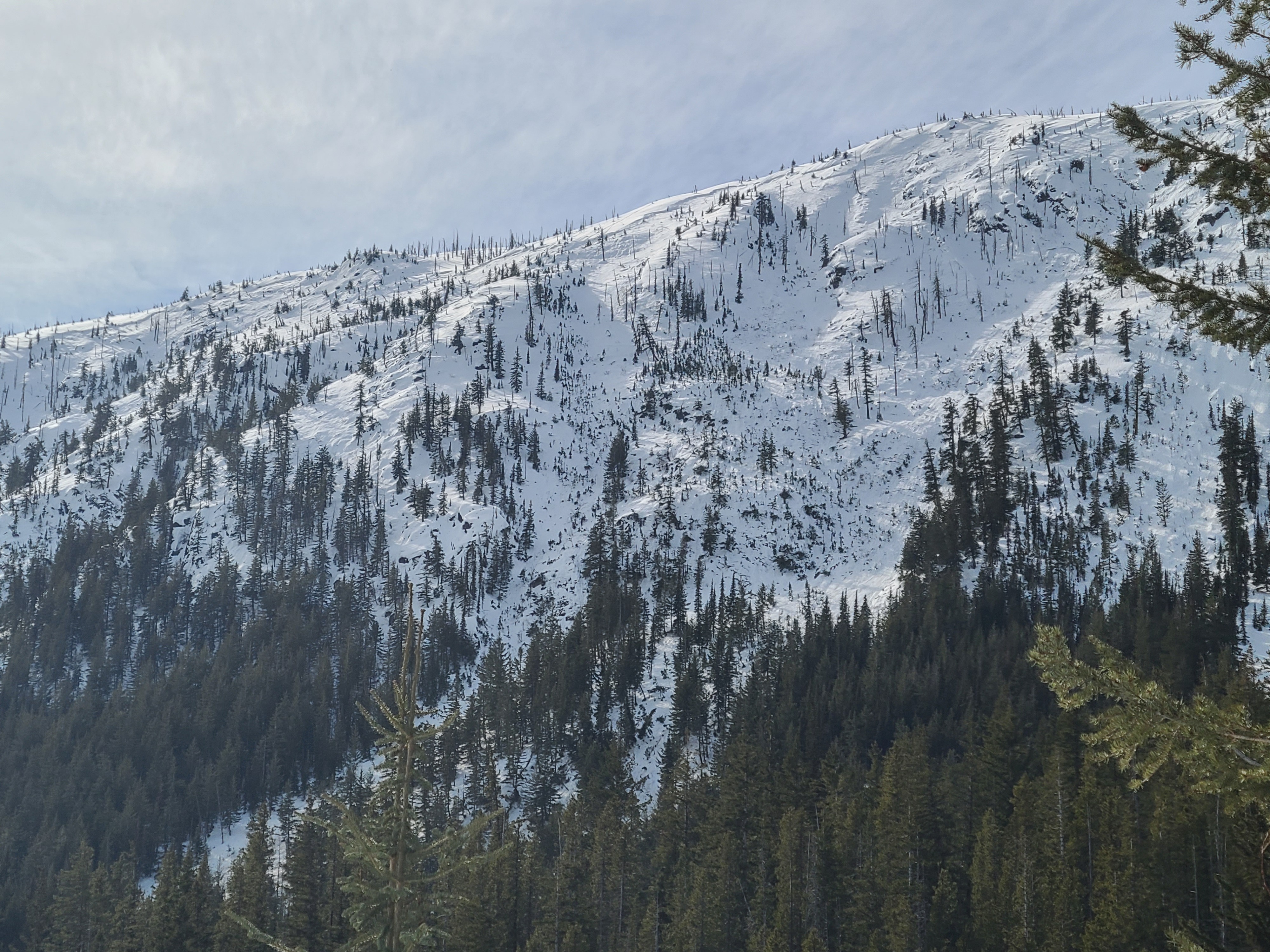
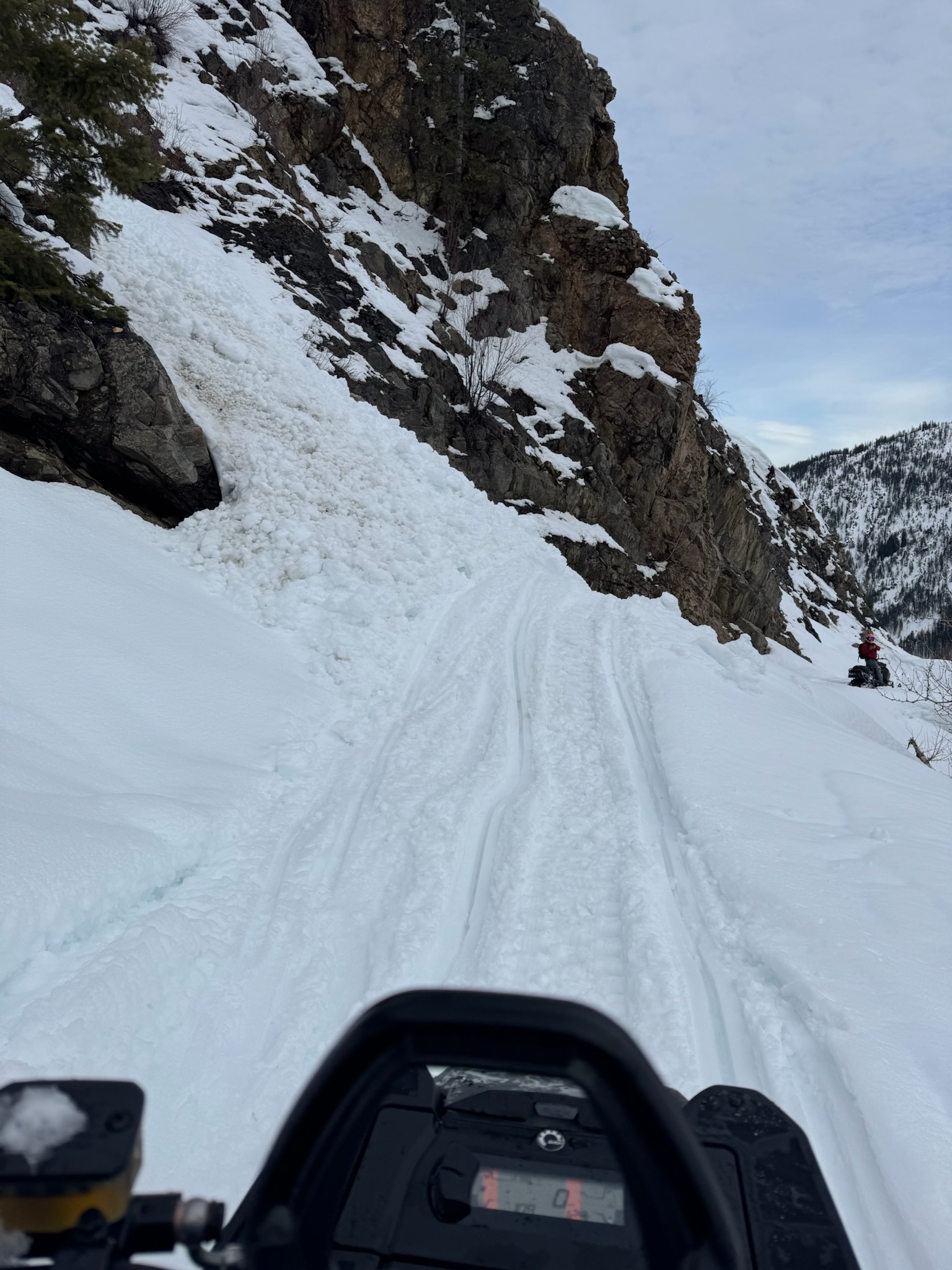
The distribution and depth of wet avalanches were impressive, with widespread southeast and southwest-facing avalanche paths full of debris. We even observed wet slabs on the easterly aspects in Brown Bear Bowl. We avoided traveling in steep terrain on sunny slopes and did not linger in avalanche paths along the road, particularly those that had not yet avalanched. The snowpack is still weak and wet, and we experience isolated collapses along the road embankment on southern slopes.
Weather
- Air Temp
- >32°F
- Cloud Cover
- few
- Rain Elevation
- 5000ft
It was a warm, sunny day. There were just a few high clouds in the morning, with increasing cloud cover in the afternoon. Winds were mostly calm, increasing in the afternoon with light to moderate gusts.
Snowpack
Snow Surface Conditions: The overnight refreeze was poor and snow on sunny aspects and within the forest was wet and punchy even at the start of our day at 9am. Shady slopes at mid and upper elevations still held dry snow with a thin breakable crust and small surface hoar.
Snowpack Observations: At low elevations and sun-exposed mid-elevations, the snowpack is wet, punchy, and saturated to the ground. Mid and upper elevations have 35-40cm of recent snow over the 2/24 interface. Below the 2/24 interface is 30cm of older snow with increasing hardness to P just above the January Drought Layer (JDL). The JDL is buried 75-80cm deep and consists of F+ to 4F faceted grains (2-3mm).
Crown Profile: We were investigating the characteristics of the recent avalanche incident in Brown Bear Bowl in the Hart's Pass area. So our snowpack observations were mostly limited to a crown profile of this avalanche, but does reflect the overall weak snowpack structure on northerly aspects throughout the zone. The crown depth was 75cm. The top 65cm consisted of February snow from F to P hardness over the JDL. The upper 10cm of the JDL was 4F hardness faceted grains and was the bottom extent of the slab. The failure layer below those 4F faceted was 10cm of weaker F+ hard facets (2-3mm).
Avalanche
- Size
- D2 R2
- Type
- WL
- Count
- 5
- Aspect
- SW
- Trigger
- N
- Elevation
- 4600 ft
Widespread natural wet loose avalanches and wet slabs on southerly aspects from D1-D3 in size. Natural and human triggered persistent slabs on northerly aspects, failing on the January Drought Layer, from D2.5-D3.5 in size.