
Quick report
- Cracking
- specific
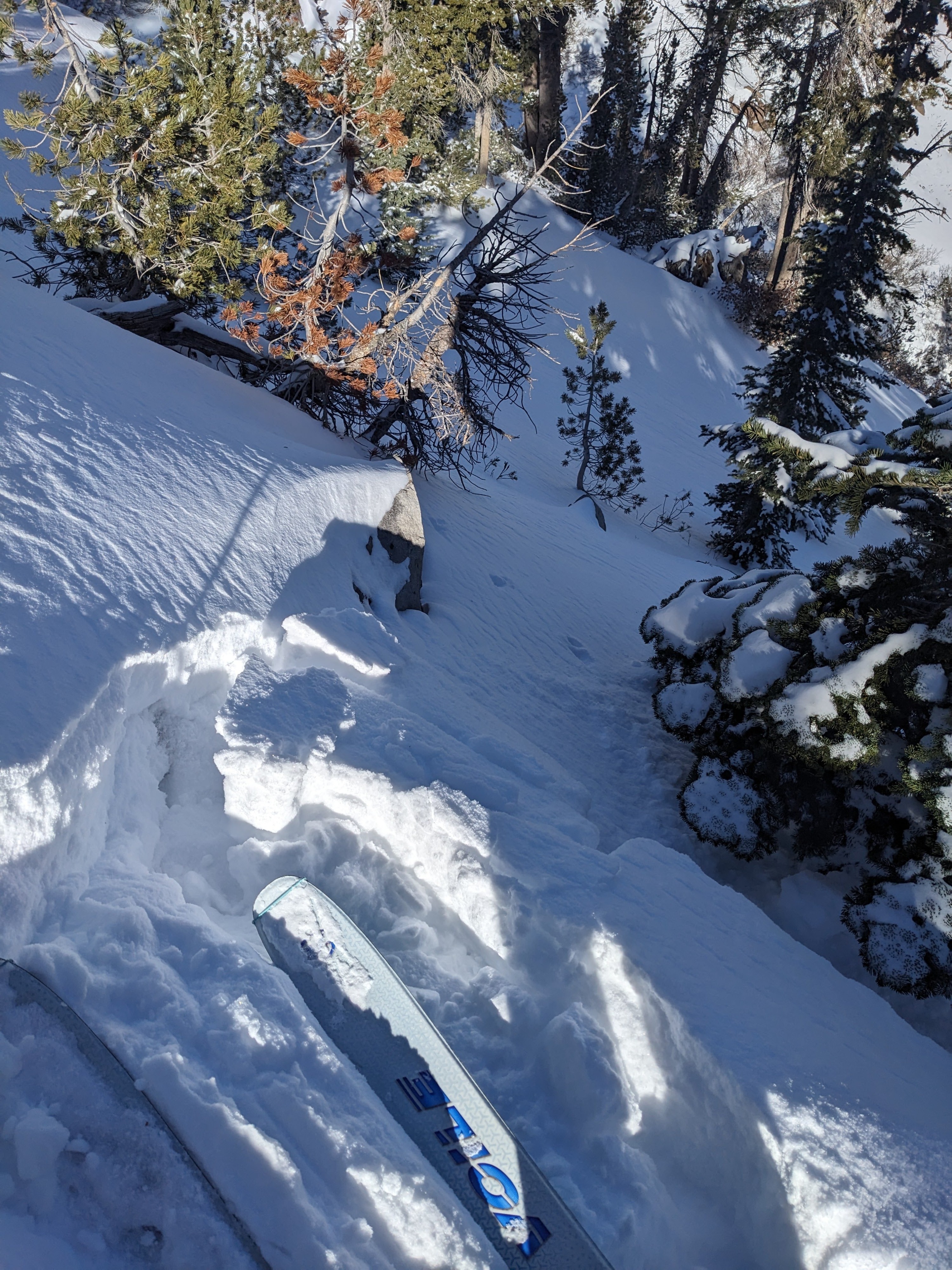
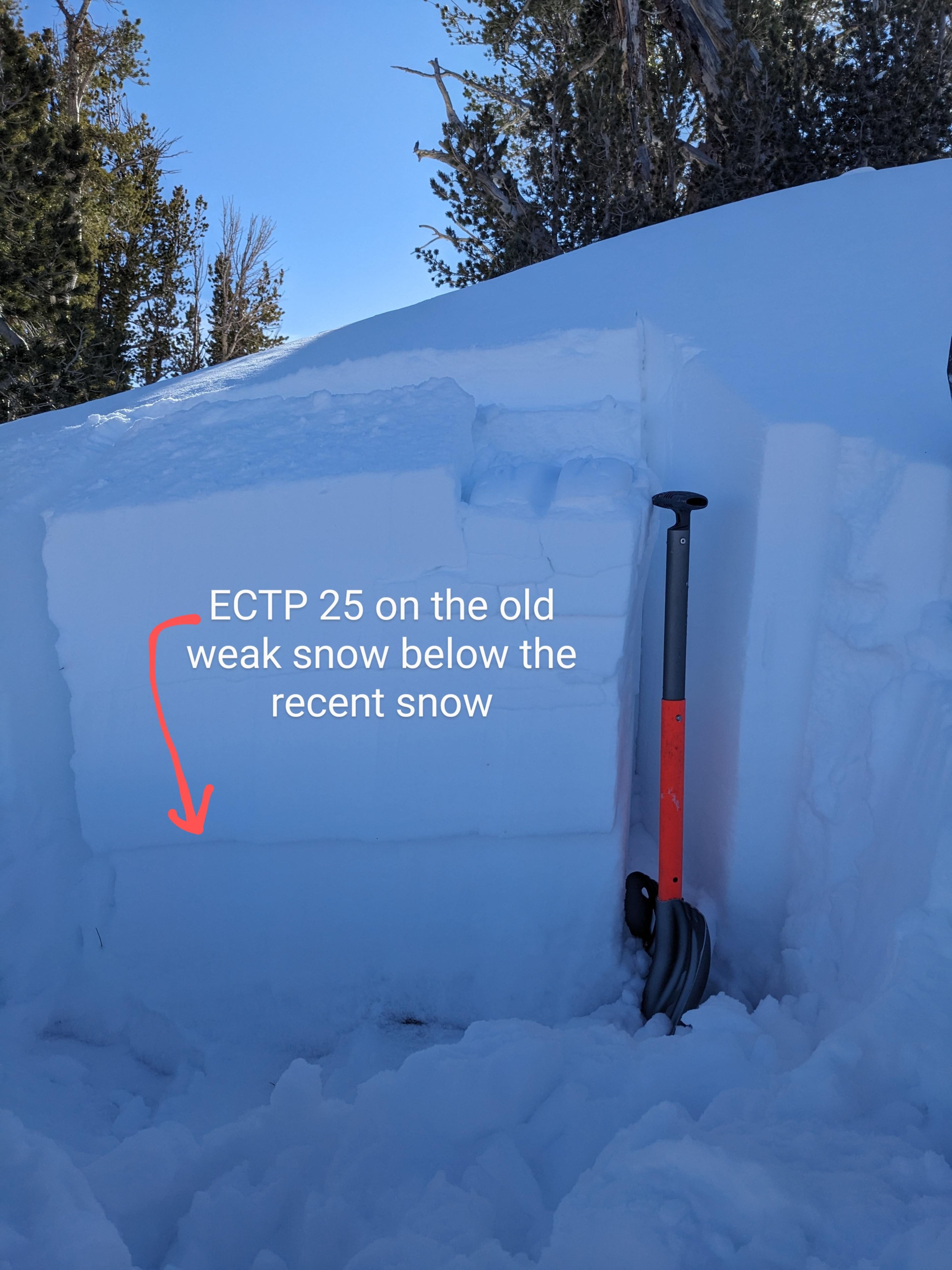
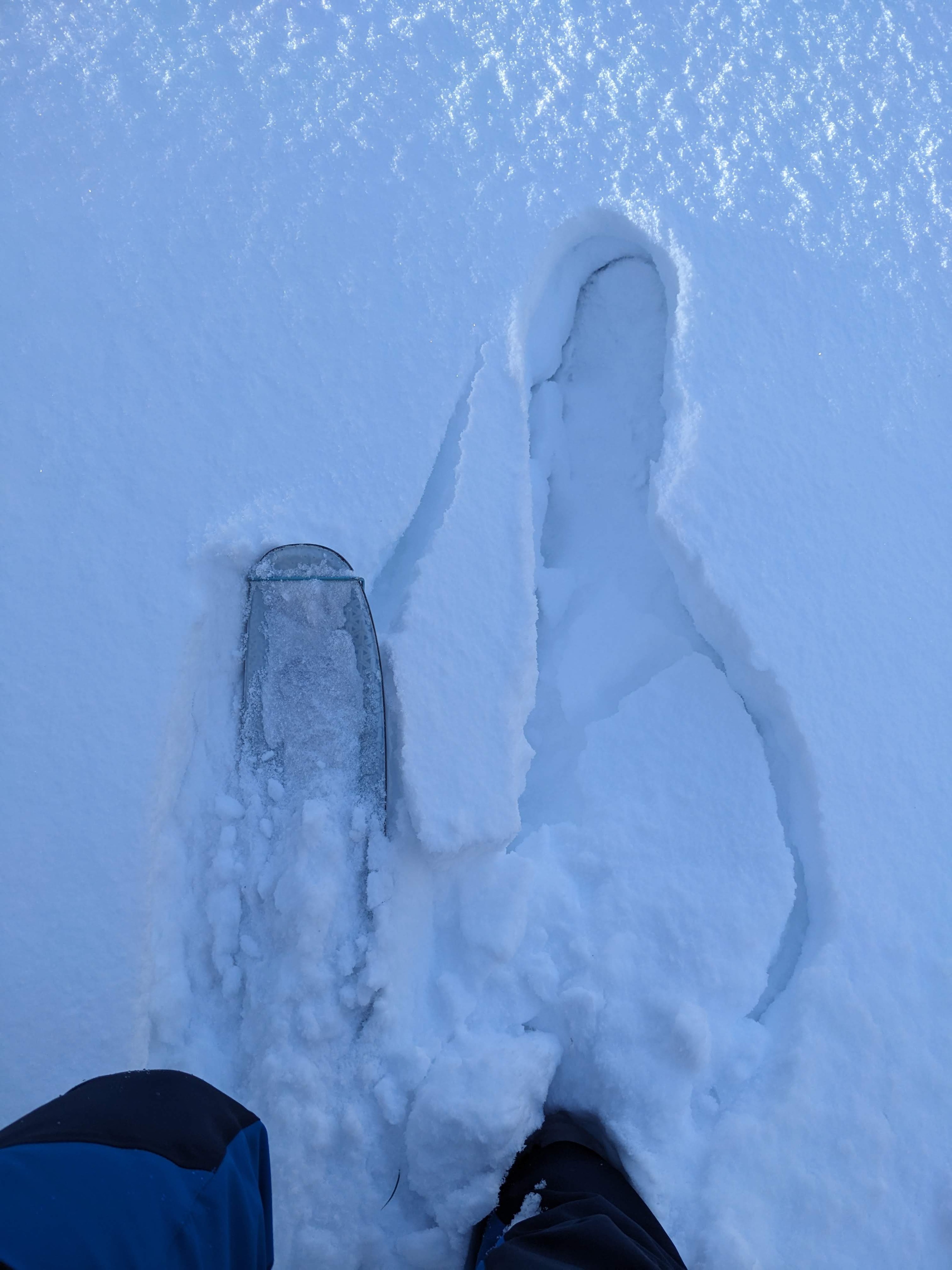
Overall, the snowpack remains weak and shallow. We encountered many barely covered rocks, logs, and other obstacles during our tour. The weak snowpack allowed us to sink through the new snow and into the old, weak snow below (see photos). We could also feel the weak snow at the bottom of the snowpack with almost every pole plant. We stopped several times to dig into the snow. The digging consistently revealed several inches of weak snow near the bottom of the snowpack. When we touched the weak snow, it sometimes fell out of the pit wall. The recent snow above this weak snow was slightly denser. Still, it remained mostly soft and unconsolidated in the sheltered areas. We did cause some small cracks in the snow as we traveled through N-NE aspects in sheltered terrain (see instability comments and photos).
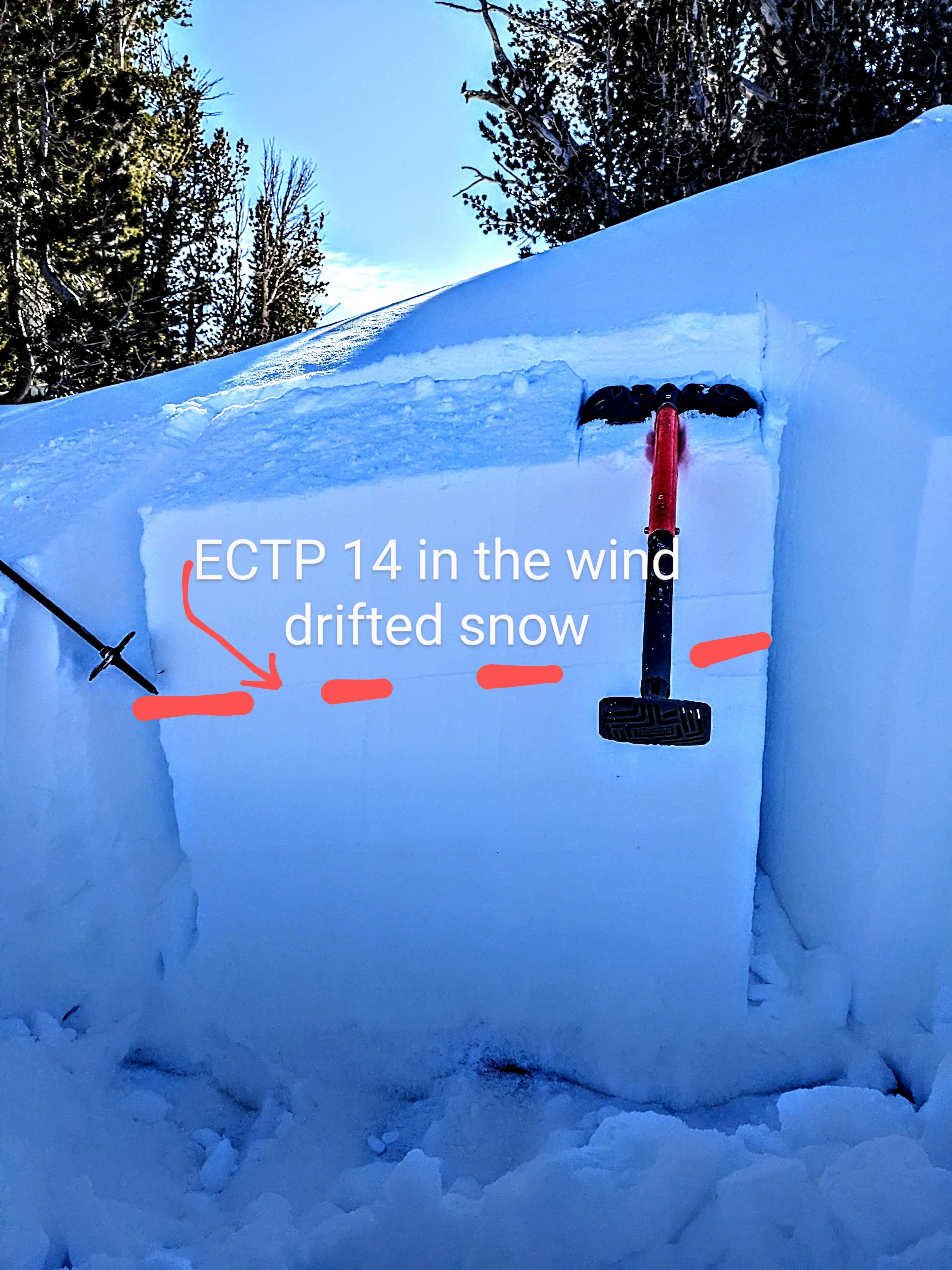
Once we moved into more wind-exposed terrain at higher elevations, we found wind slabs resting on the old, weak snow. Tests failed within the new snow on interfaces between wind slabs and recent snow and at the base of the fresh snow on the old facet layer (see photos).
We triggered small cracks that failed on the old, weak snow (facets) in a few areas in sheltered terrain. These cracks only extended 1-2 ft away from our skis. Some longer cracks occurred on previously undercut slopes.Weather
- Air Temp
- 24
- Cloud Cover
- clear
- Wind Loading
- previous
- Recent Snowfall
- 25
- Snow Avail For Transport
- moderate amounts
Today was sunny with cold temperatures and light NE winds along the ridges.
Snowpack
A layer of weak facetted snow exists below the most recent storm snow on northerly aspects in the Relay Peak area. On more sun exposed aspects we found a more supportable melt freeze crust under the recent snow. Northerly aspects hold both the weakest snow and most snow coverage.