
Quick report
- Cracking
- specific
- Collapsing
- specific
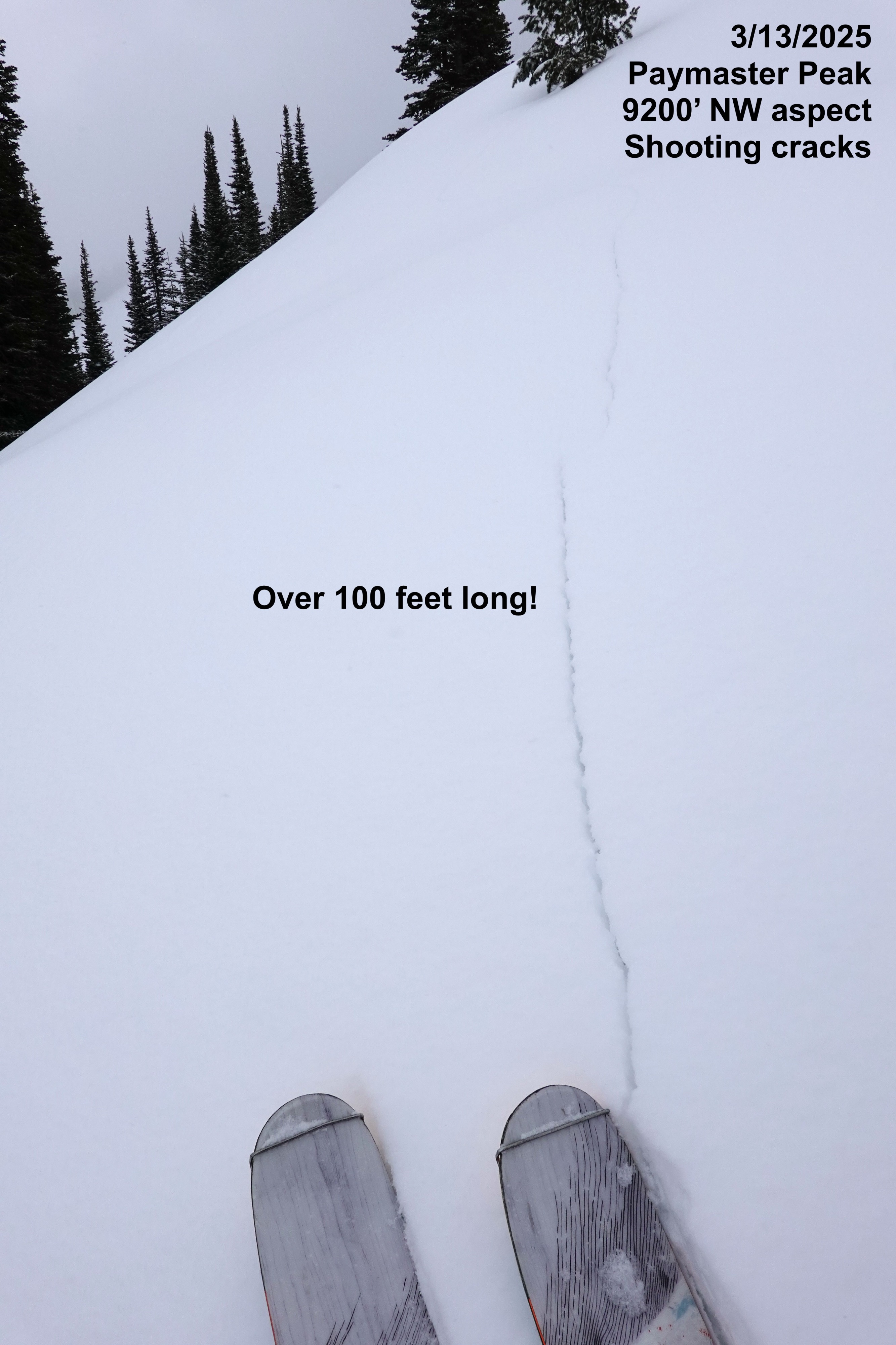
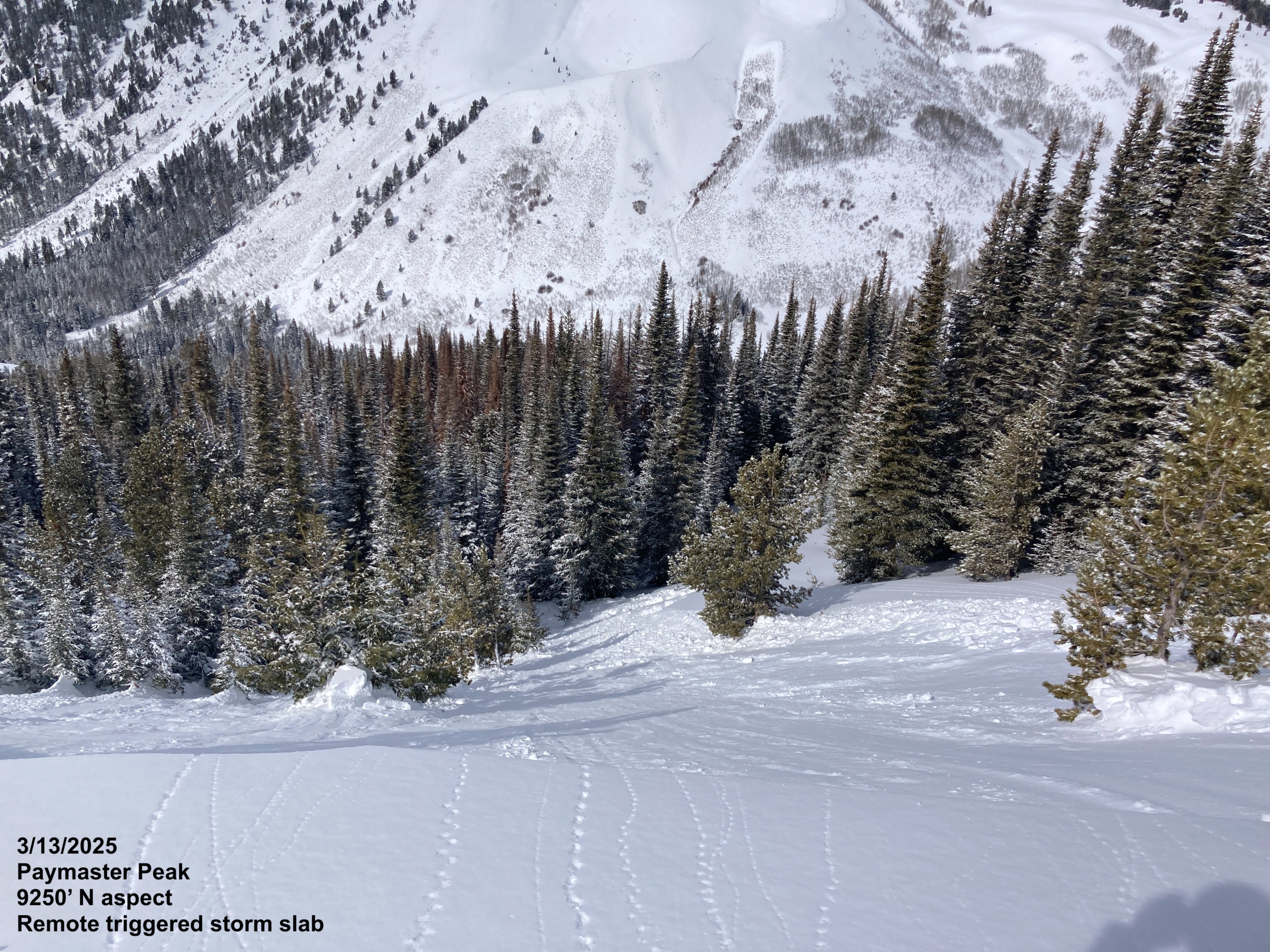
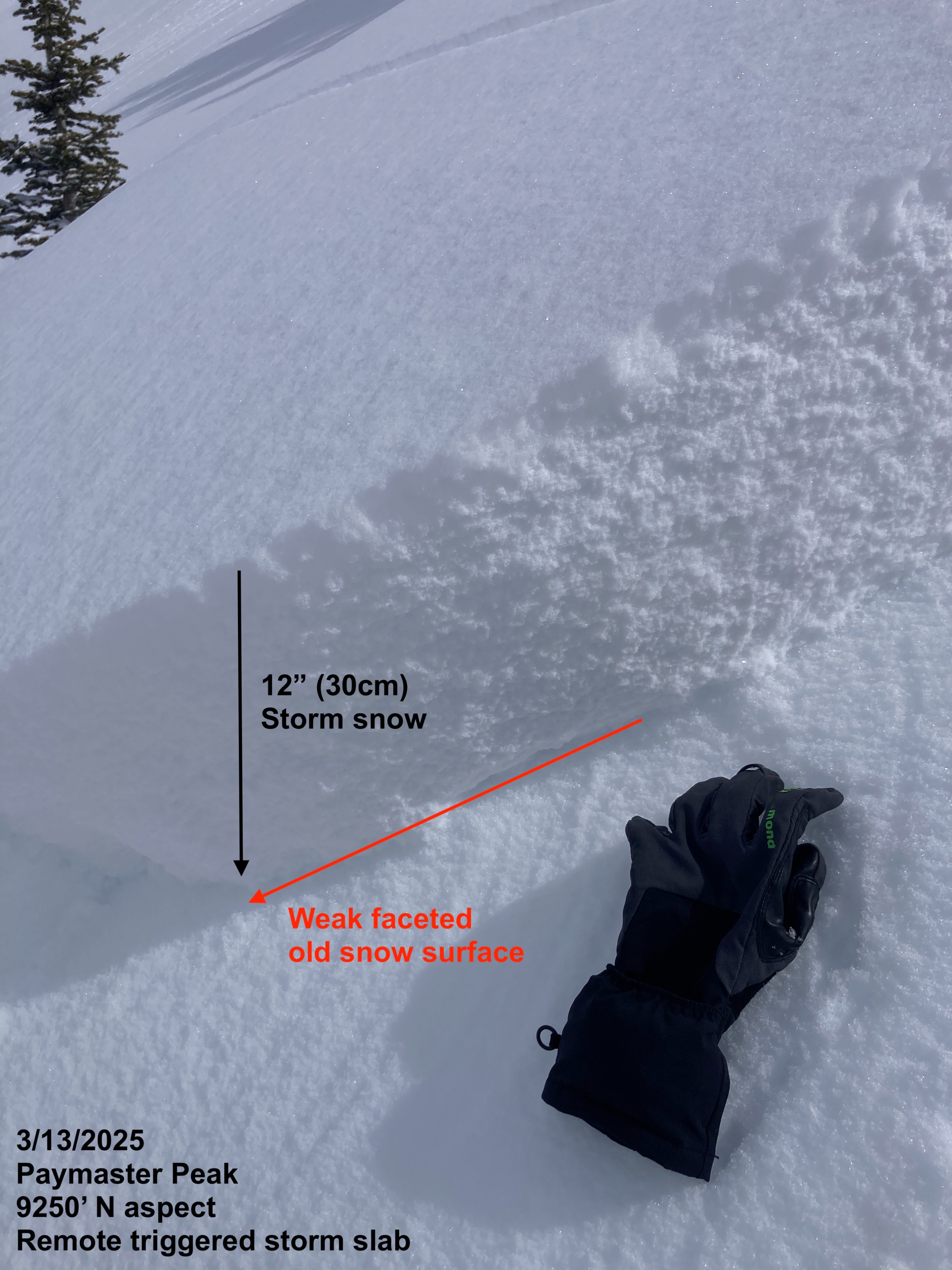
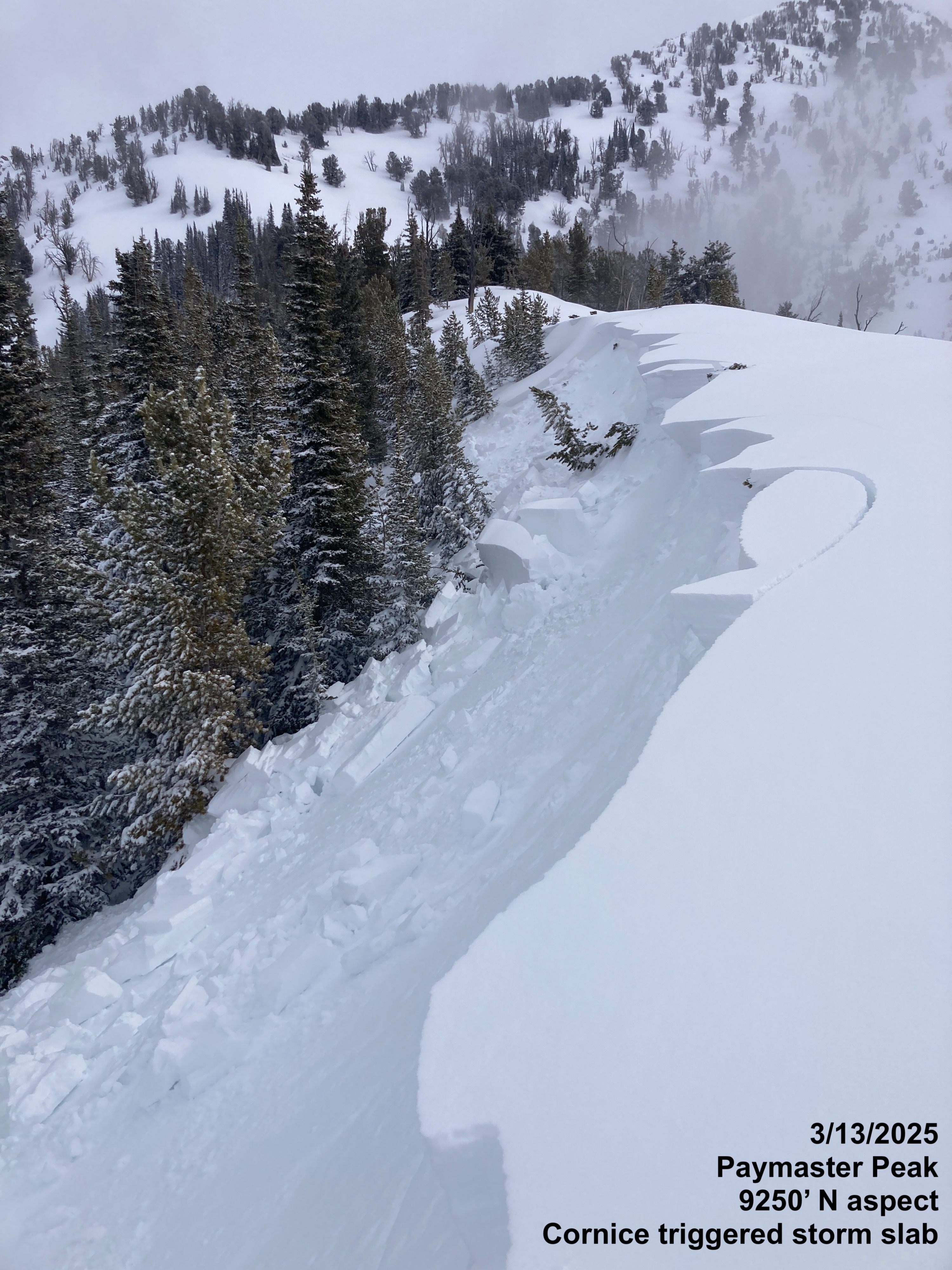
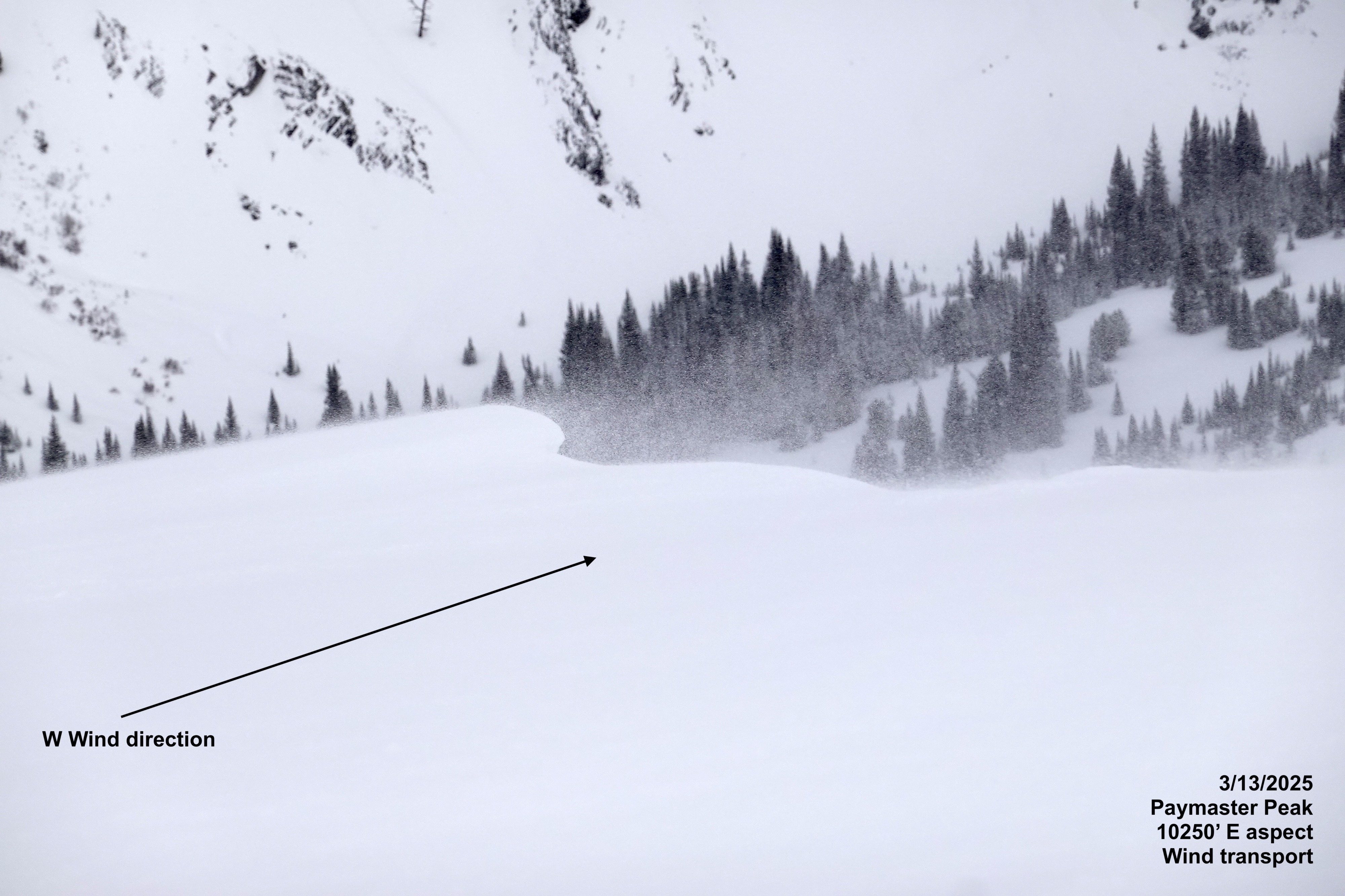
We found reactive storm slabs on wind-kissed ridgelines today on Paymaster Peak. 4 to 12 inches of new snow fell overnight and landed on a variety of weak (shaded) and crusty (solar) surfaces. Where the new snow was touched by wind, we found reactive storm slabs and cornices. We triggered numerous collapses and long-spanning shooting cracks along the ridgeline between 8850 and 10250 feet. One of these collapses resulted in a small remotely triggered storm slab avalanche over 100 feet away. Stomping on fresh cornices also triggered a small but wide-breaking (200 feet) storm slab avalanche. We enjoyed poking around on safe small test slopes, but were extra heads up and avoided larger terrain that appeared to have wind-affected start zones.
Generally, the new snow was mildly sluffy and not concerning in sheltered locations
Weather
- Cloud Cover
- overcast
- Wind Loading
- light
- Rain Elevation
- 6000
- Recent Snowfall
- 10-30
- Snow Avail For Transport
- moderate amounts
The overcast skies partially cleared between noon and 1pm, with subtle green-housing of the snow surface during that period. Winds were light from the west along ridgelines and transporting some snow. Temperatures increased during the day (especially with sunshine) but began to noticeably drop around 2pm.
Snowpack
4-12 inches (10-30cm) of new snow increasing with elevation from 6500' to 9000'. This new snow is most consolidated in the bottom 2 inches (5cm) of the slab at upper elevations, where it appears the new snow flakes are quite rimed and dense (F+). This new snow rests on moist rounding near-surface-facets on shaded northerly aspects and on well-developed crusts elsewhere. The new snow was only acting as a slab when additional wind-loading had consolidated it enough to propagate failure on the new/old interface. These slabs were very soft and specifically on the leeward side of ridgelines and open gullies.
We dug a quick pit after triggering a collapse at 8850' on a NW aspect (HS160cm) and testing the new storm snow resulted in ECTN9 30cm below the surface on the new/old interface. The structure of the snowpack in this location does raise concern even if it's unreactive in stability testing... there's still a whole heap of weak faceted snow in the bottom half of the snowpack (but it was moist and rounding).
Avalanche
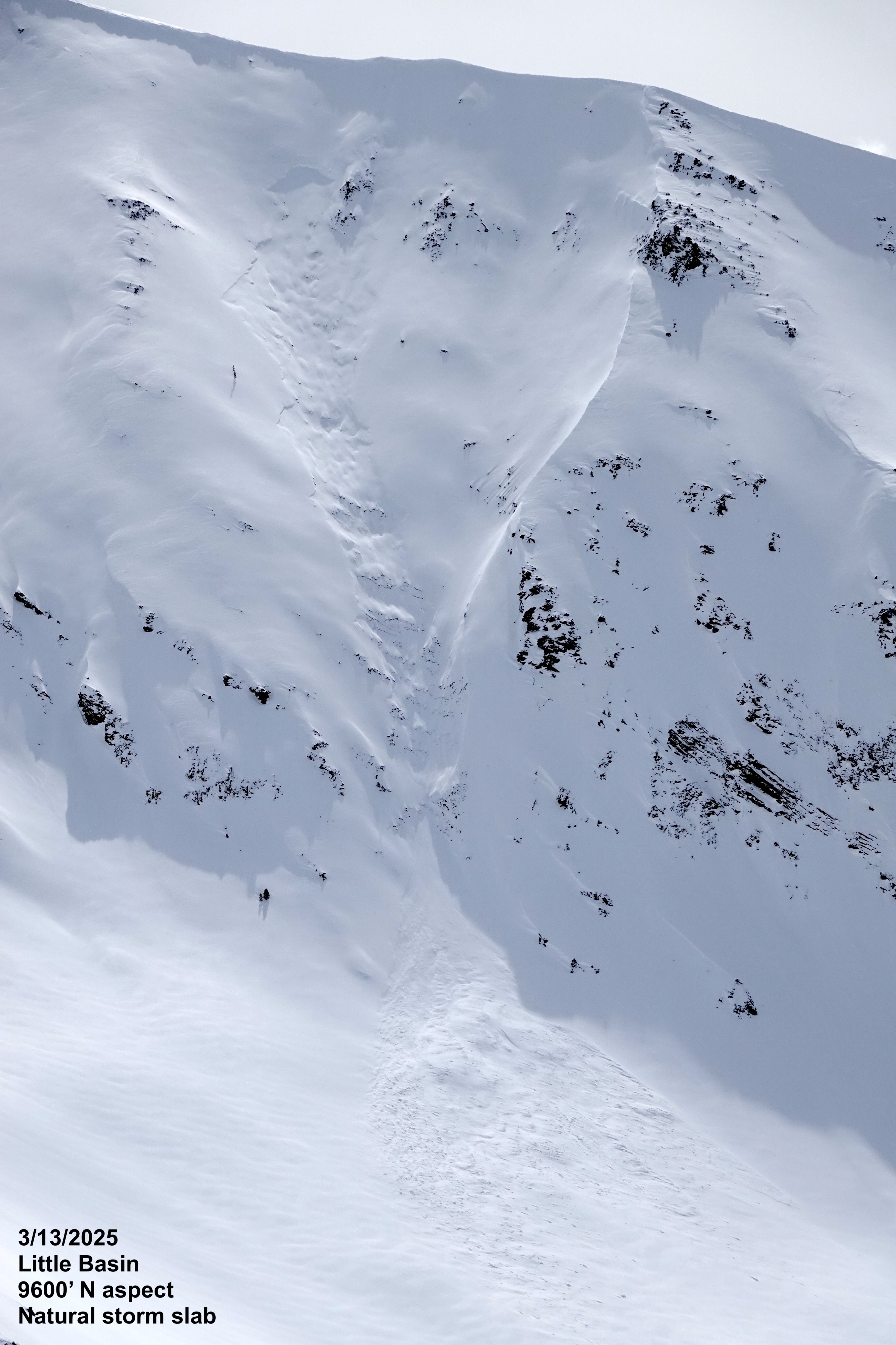
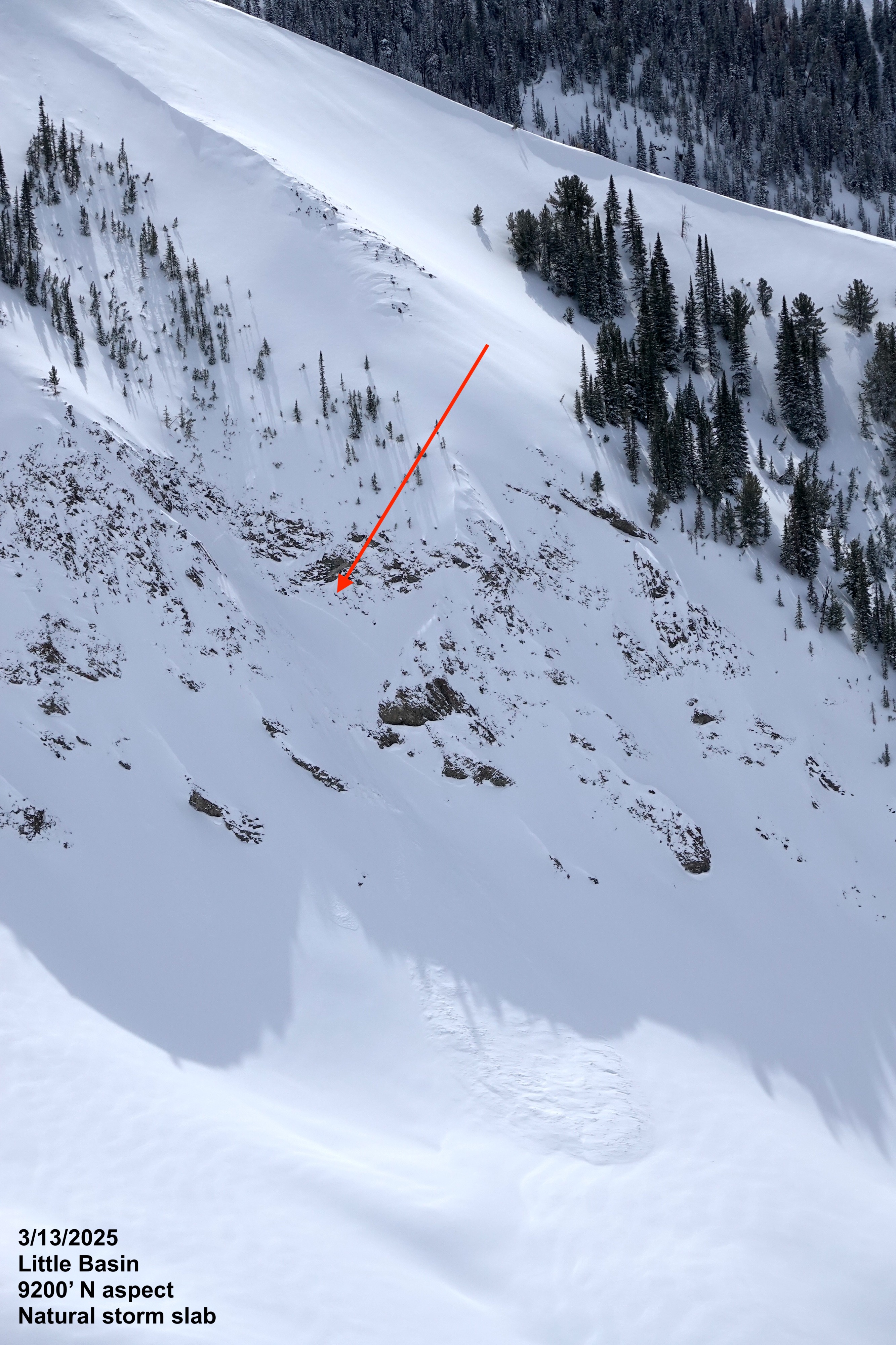
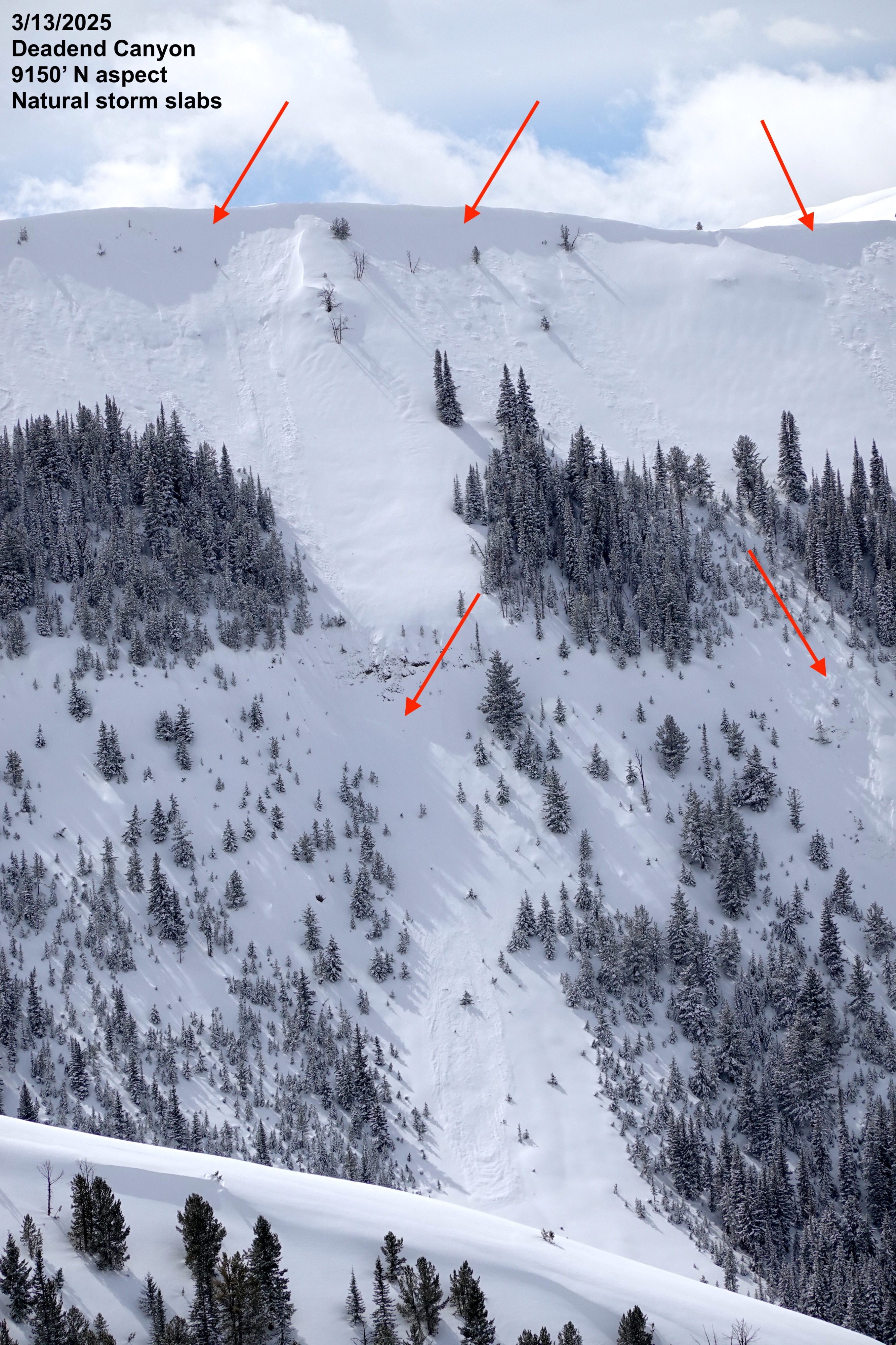
Triggered two small storm slab avalanches off of the ridgeline on NW and N aspects at 9200'. One was remotely triggered from ~100' away after we triggered collapse that sent shooting cracks out ~150' in front of and behind us. The second was triggered intentionally by stomping a cornice and the cornice drop triggered a slide that broke ~200' wide. Also observed a handful of D1.5 natural storm slab avalanches that appear to have all failed on N aspects between 9000 and 9600'. These were all, for the most part, in wind-loaded terrain, either just below a ridgeline or in cross-loaded gullies.