
Quick report
This felt like a classic spring day, with hard surfaces early in the morning, then slopes softened as they faced into the sun. Softened surfaces resulted in nice spring skiing conditions, with snow remaining supportable on the underlying crust. There were plenty of signs of old, wet avalanches that occurred during the atmospheric river 3/16-3/20, but there were no natural or human-trigger avalanche concerns where I traveled today.
Weather
- Cloud Cover
- scattered
- Wind Loading
- none
- Recent Snowfall
- 1
- Snow Avail For Transport
- none
Overnight frost. Clear early morning skies, then a slow, varying shift to high thin overcast into mid afternoon. 1cm of new snow was present on shady slopes above 4500ft. Wind was calm aside from a light variable breeze along ridgelines.
Snowpack
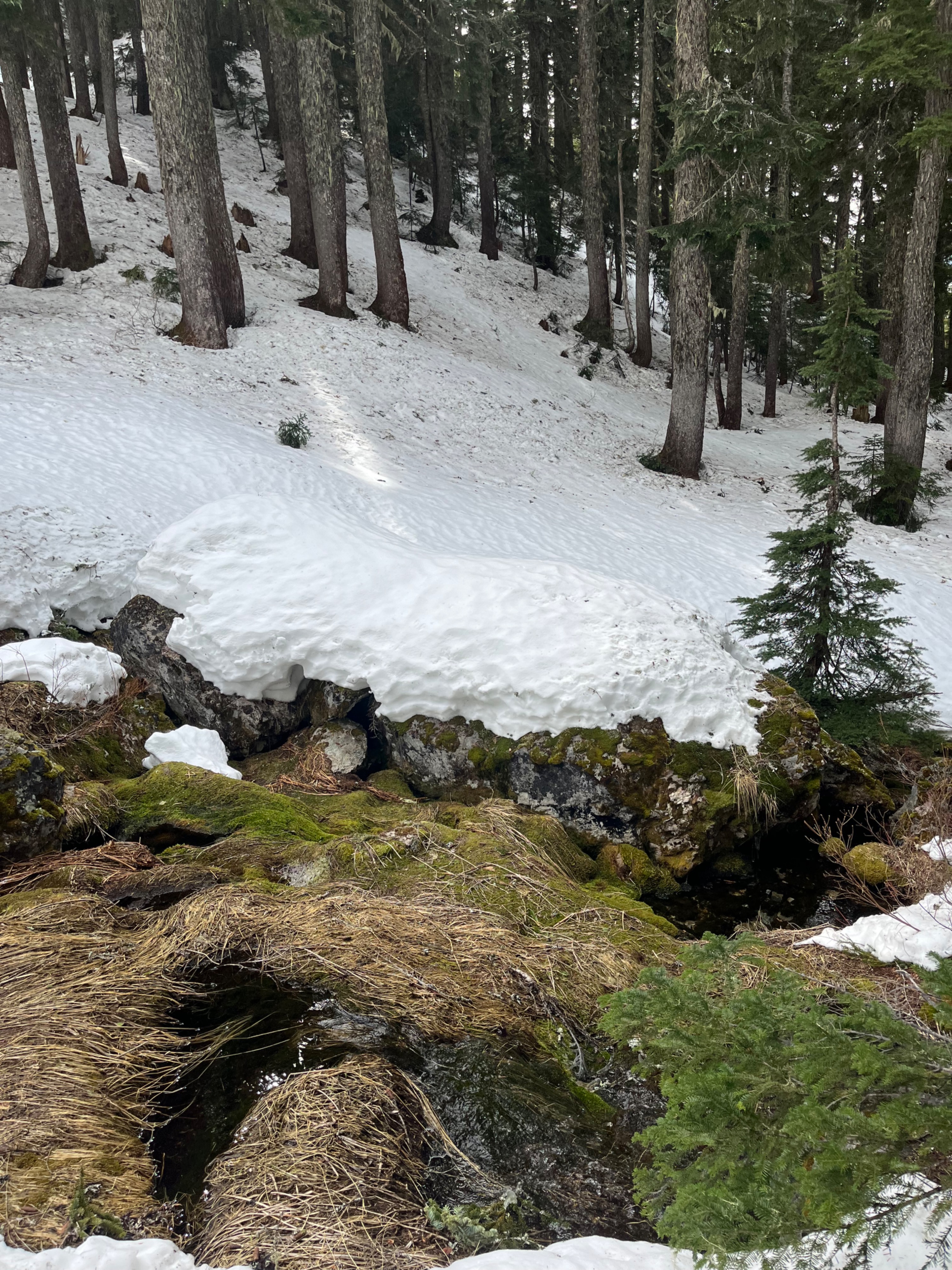
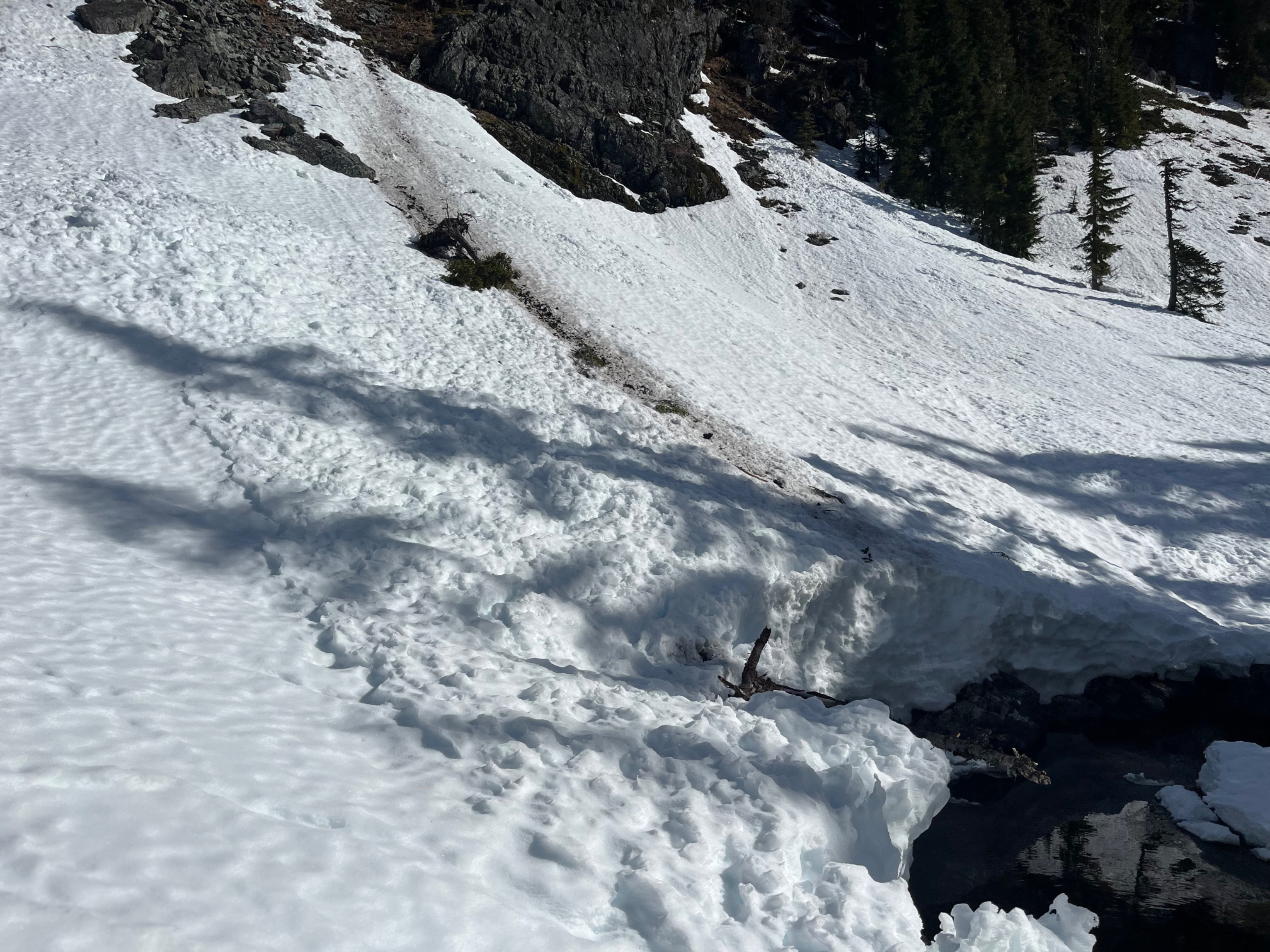
Snowline started at about 3500ft, where I put skis on. Steep south-facing aspects at lower elevations had patchy snow at best, and improved a little by mid elevations. In the morning, snow was hard. Slopes facing the sun softened fairly quickly, resulting in good spring skiing conditions, and remaining supportable over the crust that formed since the atmospheric river ended 3 days prior. At lower elevations and on steep, sunny slopes where snow was thin (less than about 1ft deep), snow softened all the way to the ground as the day progressed.
The supportable surface crust was 20-30cm (8-12") thick at mid elevations on all aspects. At noon, I ventured onto a steep, east-facing slope at just over 5000ft and found about 5cm of soft surface snow and good spring skiing conditions.
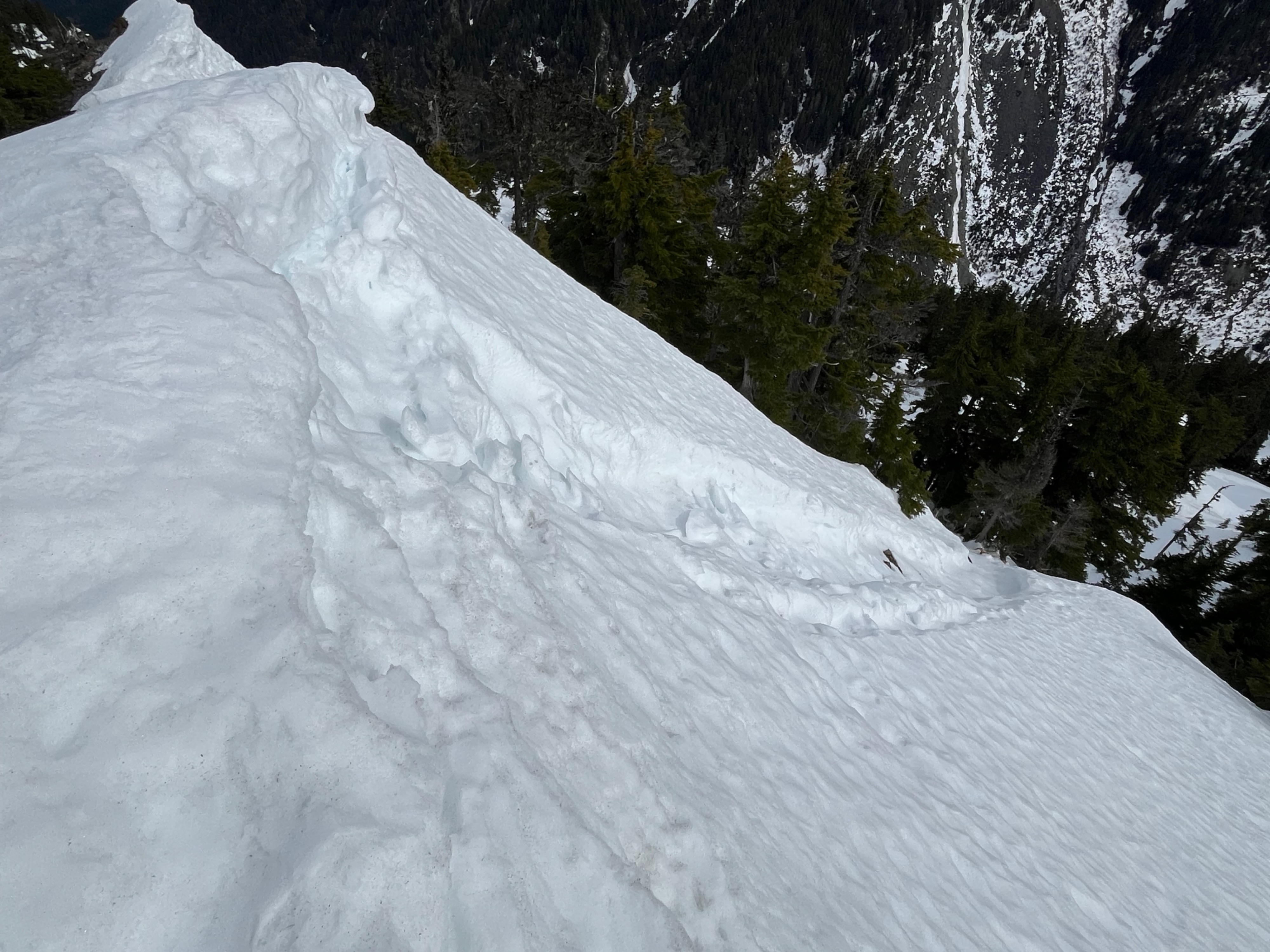
On steep north-facing slopes from 4500ft and up, I found 1cm of dry snow in the morning. It had subtle signs of faceting. I suspect that due to increasing cloud cover, even on steep north-facing terrain, the snow became moist by midday. Viewing elevations up to about 6000ft, I didn't see any signs of wind-transported snow or indicators of anything more than a very thin layer of new snow over the crust on shady slopes.
Beneath the surface crust, snow was all large-grained melt forms that were moist, but draining well.
Avalanche
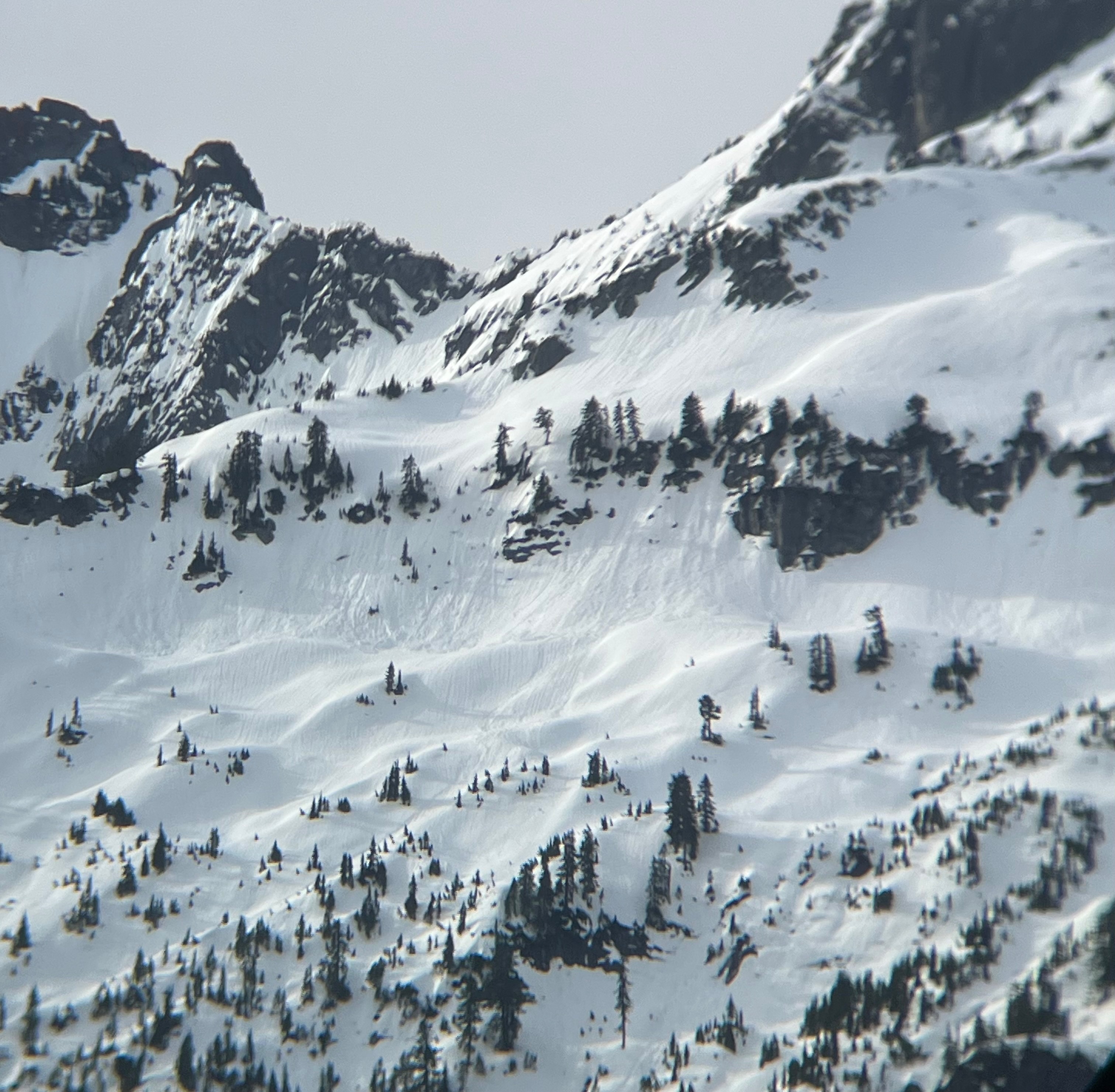
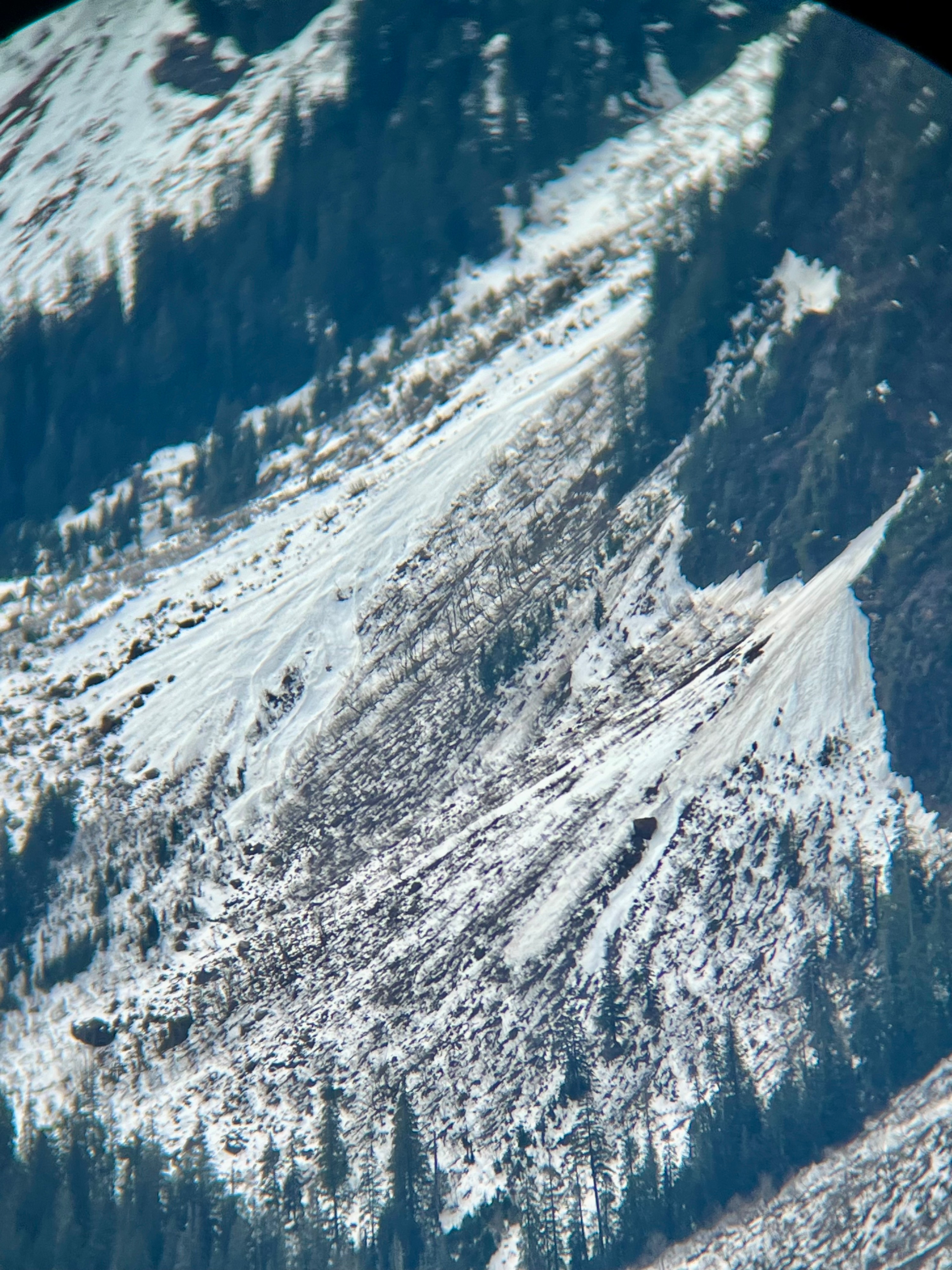
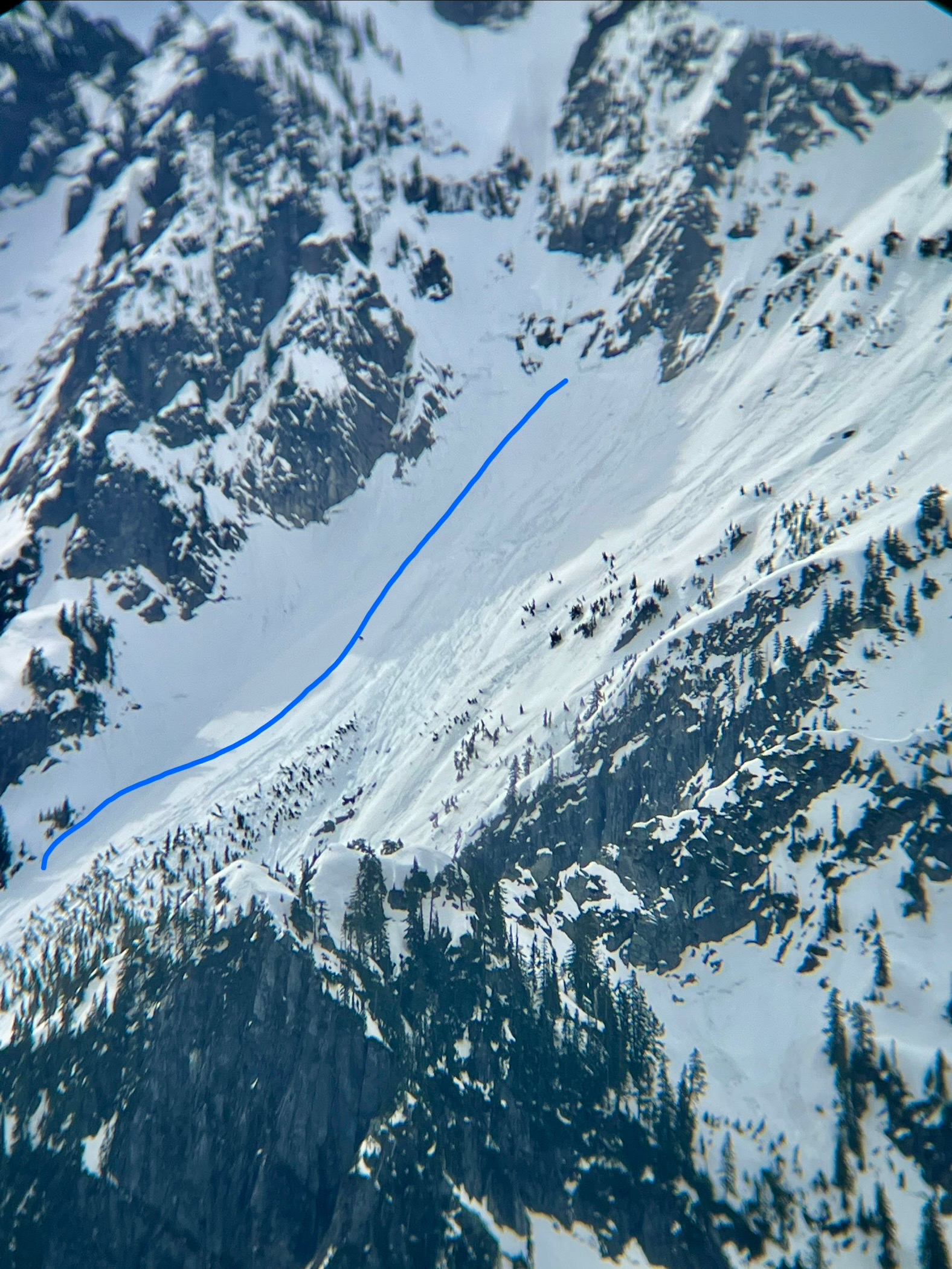
There were many signs of old avalanches, mainly debris piles, that happened during the atmospheric river 3/16-20. Most were small to large, D1-D2. Many were wet loose, but there may have been a few crowns just barely visible. There were a few glide cracks on steep, rocky slopes as well.