
Quick report
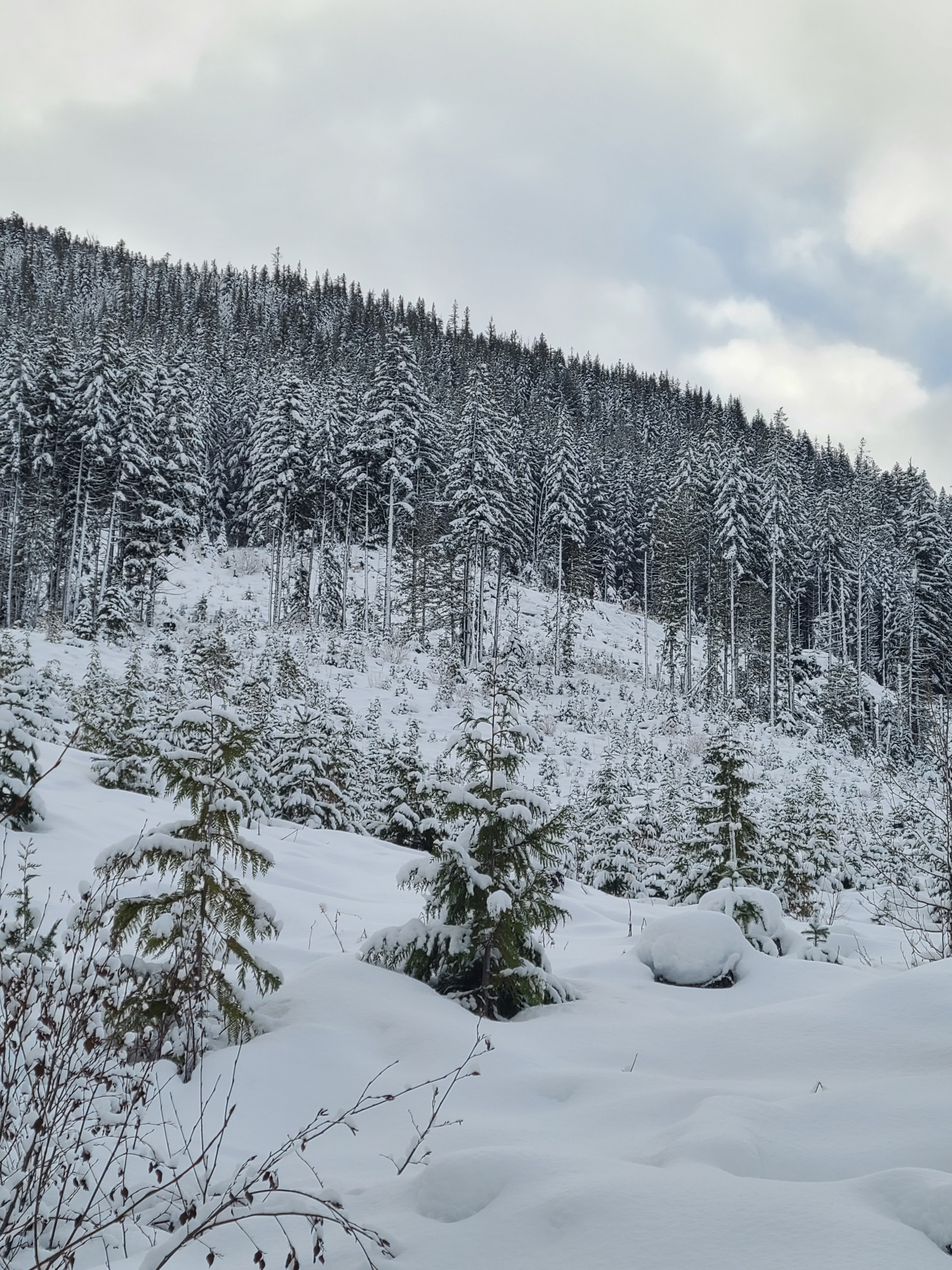
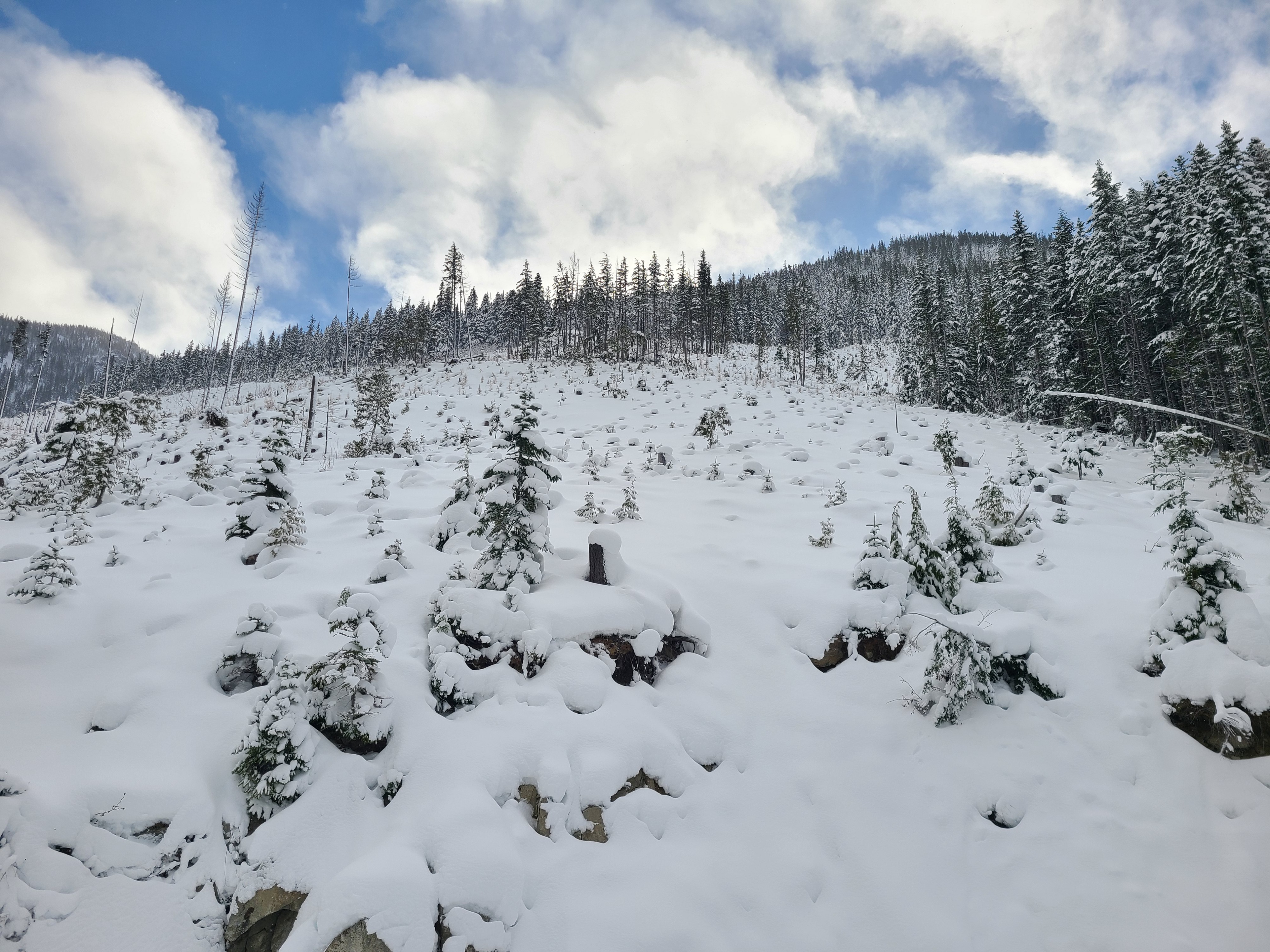
I took a walkabout on old forest roads in the Henry Creek drainage to observe the new snow depths and reactivity, as well as assess any lingering concerns with the 12/7 melt-freeze crust. While I didn't expect the snowpack to be deep, I was surprised by how shallow it actually was. I had planned to ski the lower elevation clear-cuts, but there was not enough snow to make that look like a safe plan, so I stuck to the roads instead. I found a favorable bond between the 12/7 melt-freeze crust and the new snow, which lacked much slab structure in these sheltered areas. While test slopes produced minimal cracking, they did show signs of reactive dry loose avalanches.
We could easily trigger dry loose avalanches on steep test slopes, but other signs of instability were few where we traveled in sheltered locations.Weather
- Cloud Cover
- broken
- Snow Avail For Transport
- large amounts
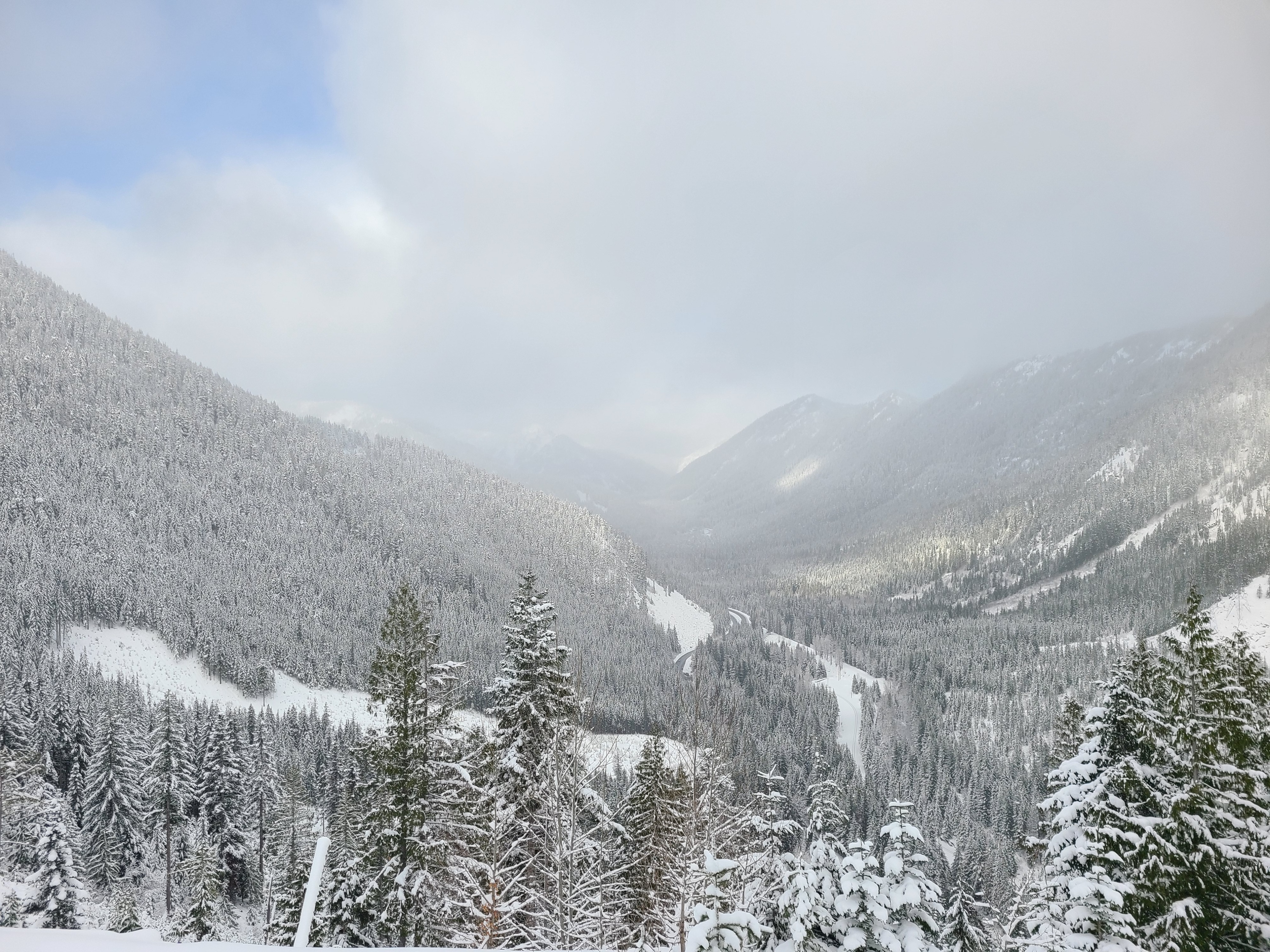
There were partly cloudy skies throughout the morning east of Stevens Pass. Nason Ridge stayed shrouded within the clouds, preventing me from getting a good look at the upper elevations. Winds were light and westerly at these lower elevations, and temperatures hovered just around freezing.
Snowpack
Below 3000 ft, a very thin snowpack exists, with total depths averaging 10-15 cm, including 5-8cm of new snow.
Snow depths increased dramatically with elevation, but even at 4000ft, I measured only 80cm of snow. Recent snow totals were between 35 and 40cm above 3500ft.
The bond with the 12/7 crust was favorable in the locations that I traveled. However, I identified a layer of buried surface hoar that failed easily with sudden planar shear quality in stability tests (CTE8 SP). This layer is buried around 40cm deep, is not very uniform, and is mixed with other grain types. I didn't observe any cracking or collapsing on this layer, but this may have been because the overlaying slab lacks enough cohesion to produce shooting cracks. Regardless, going forward, I'll keep this layer on my mind as I travel around on northerly, sheltered aspects.
The base of the snowpack consists of 20-30cm of moist melt forms below the 12/7 crust. Over this crust is 40-50cm of recent storm snow that increases in hardness with depth to the 12/7 crust.