
Quick report
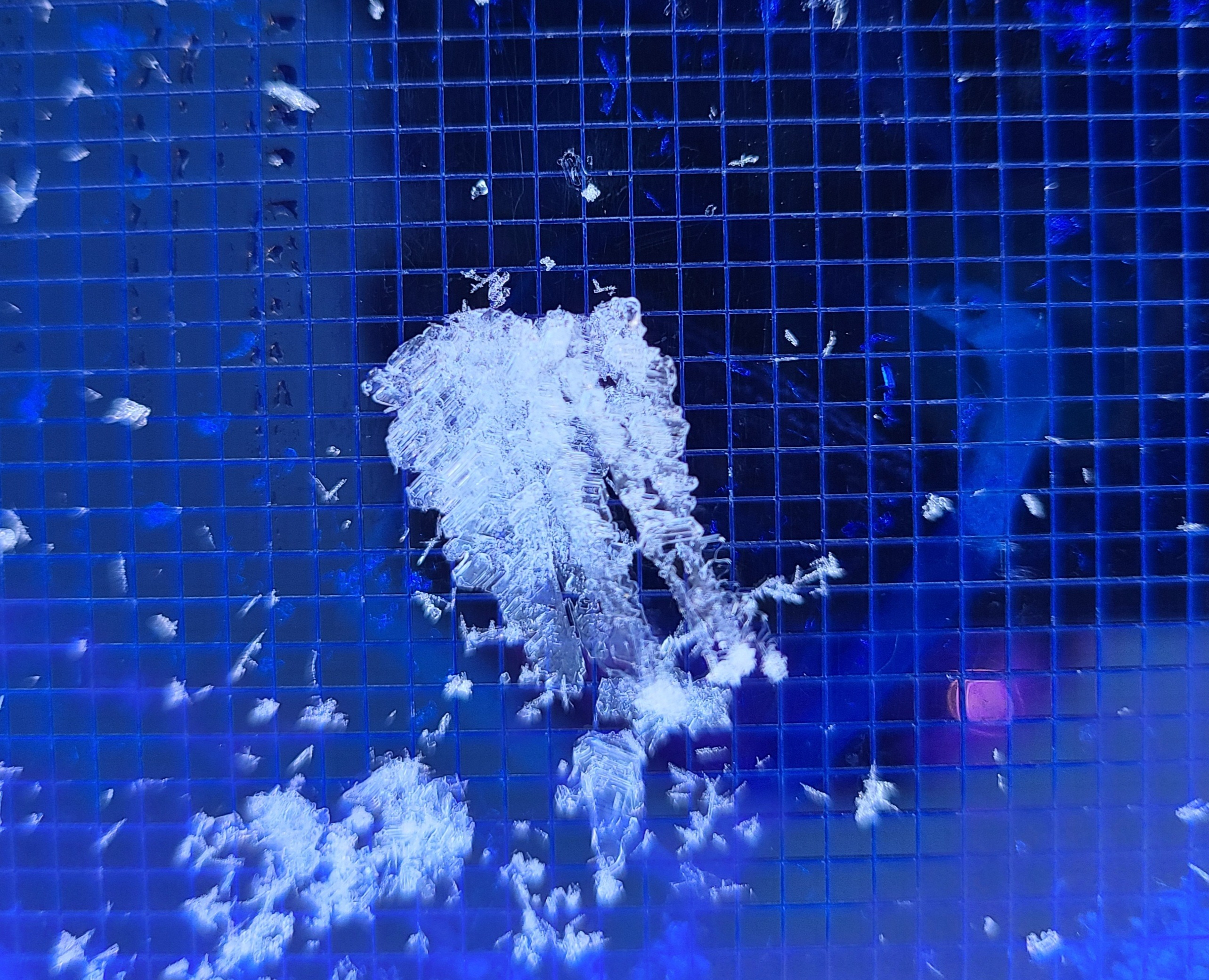
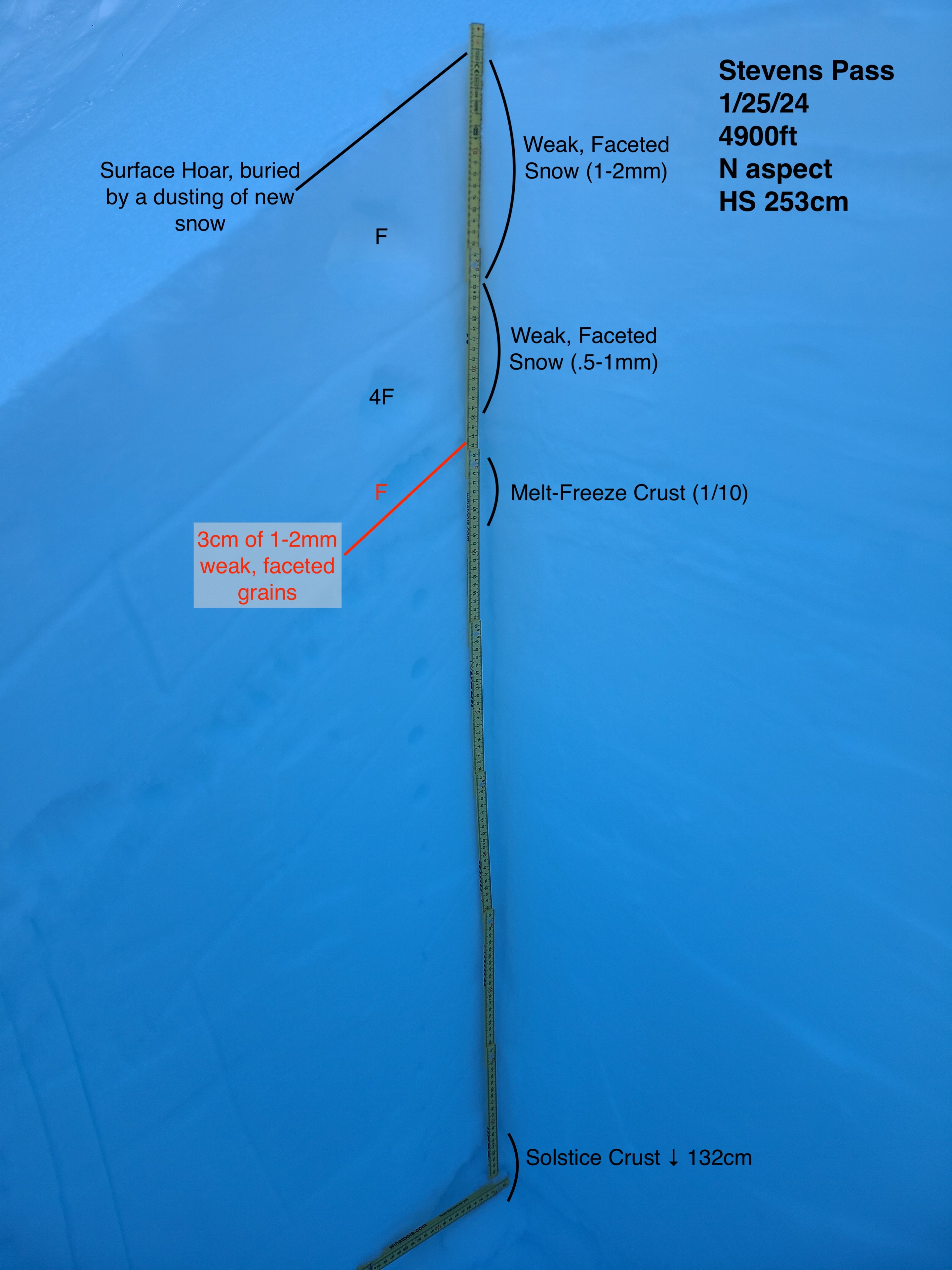
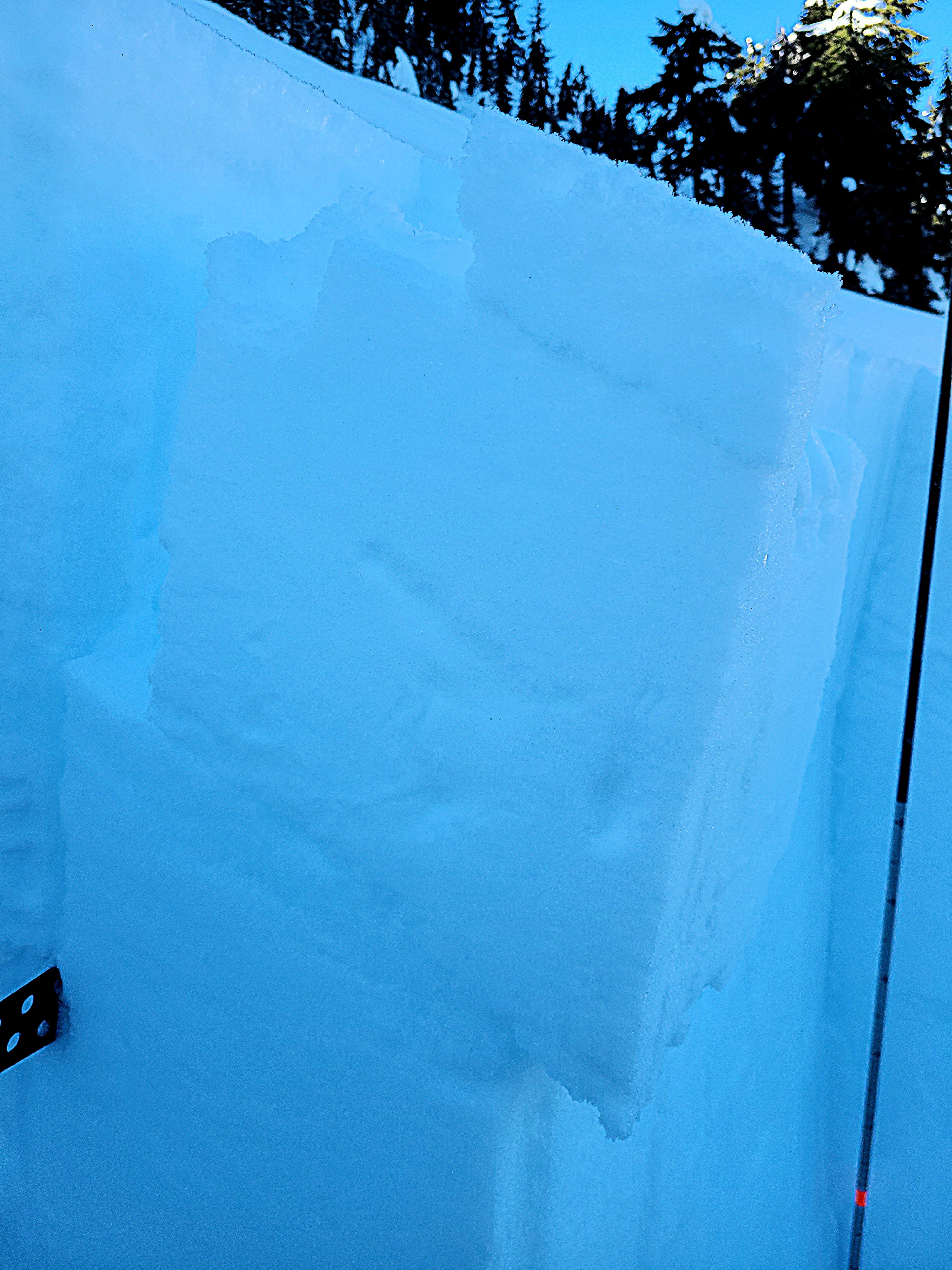
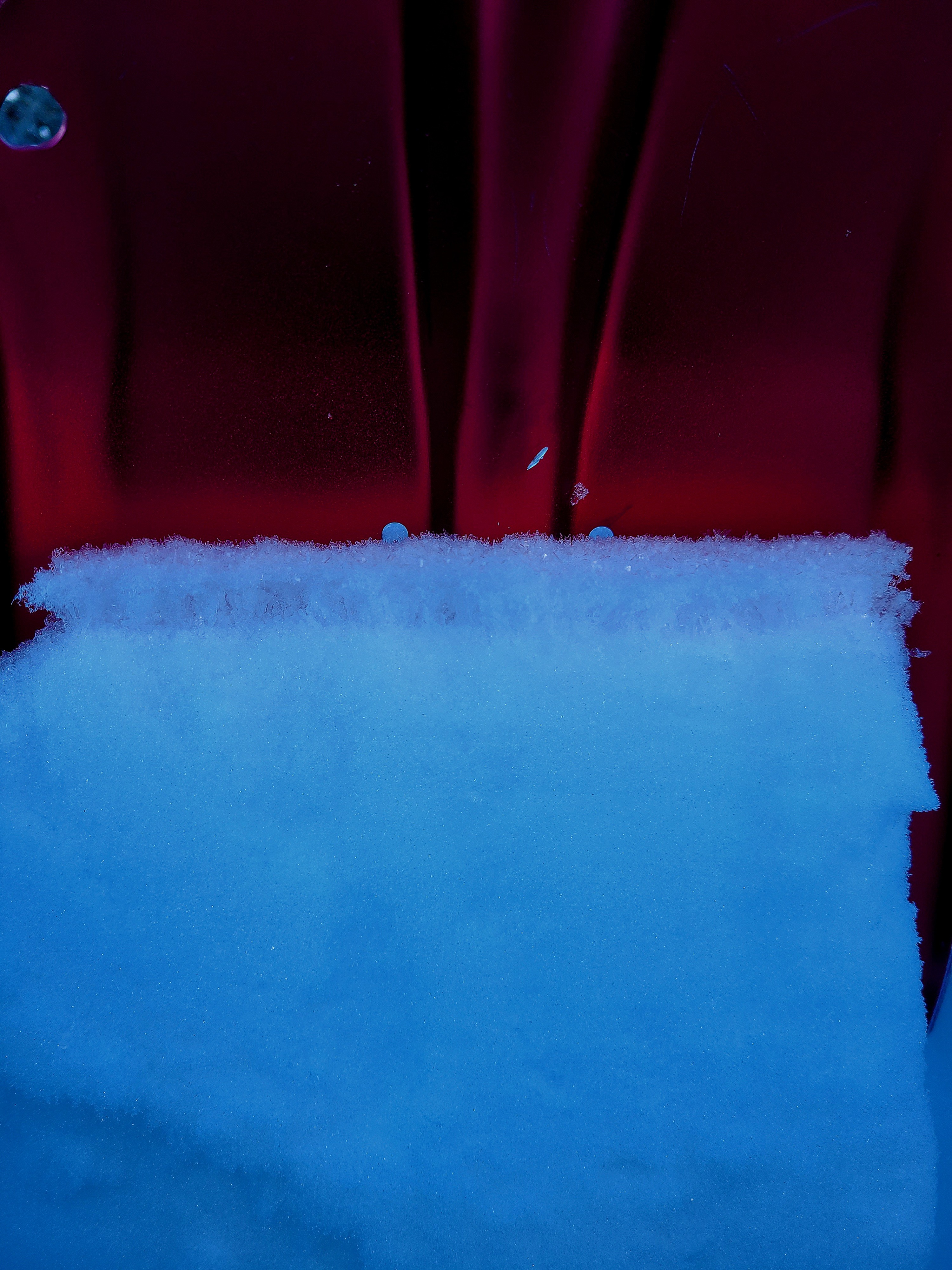
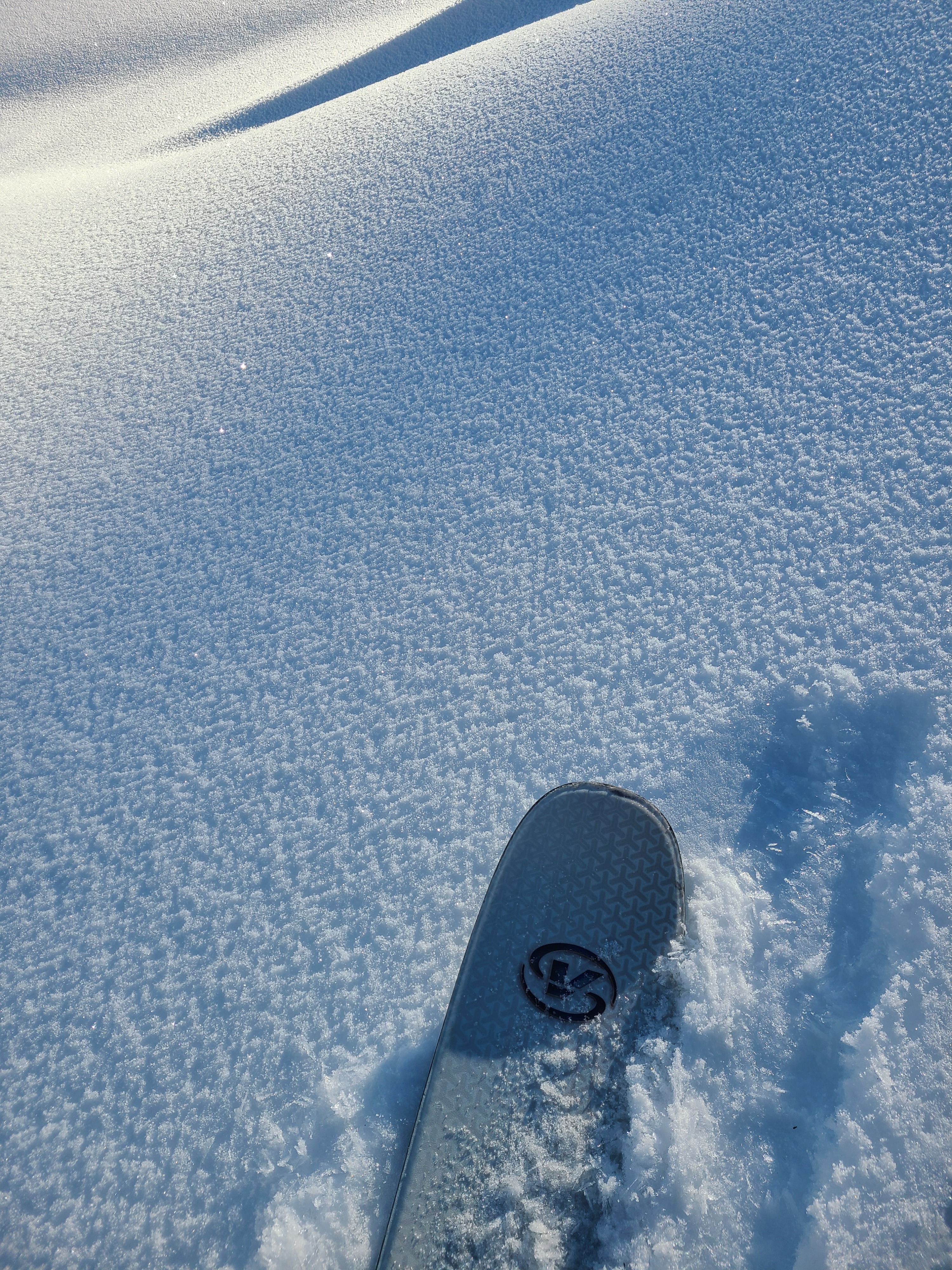
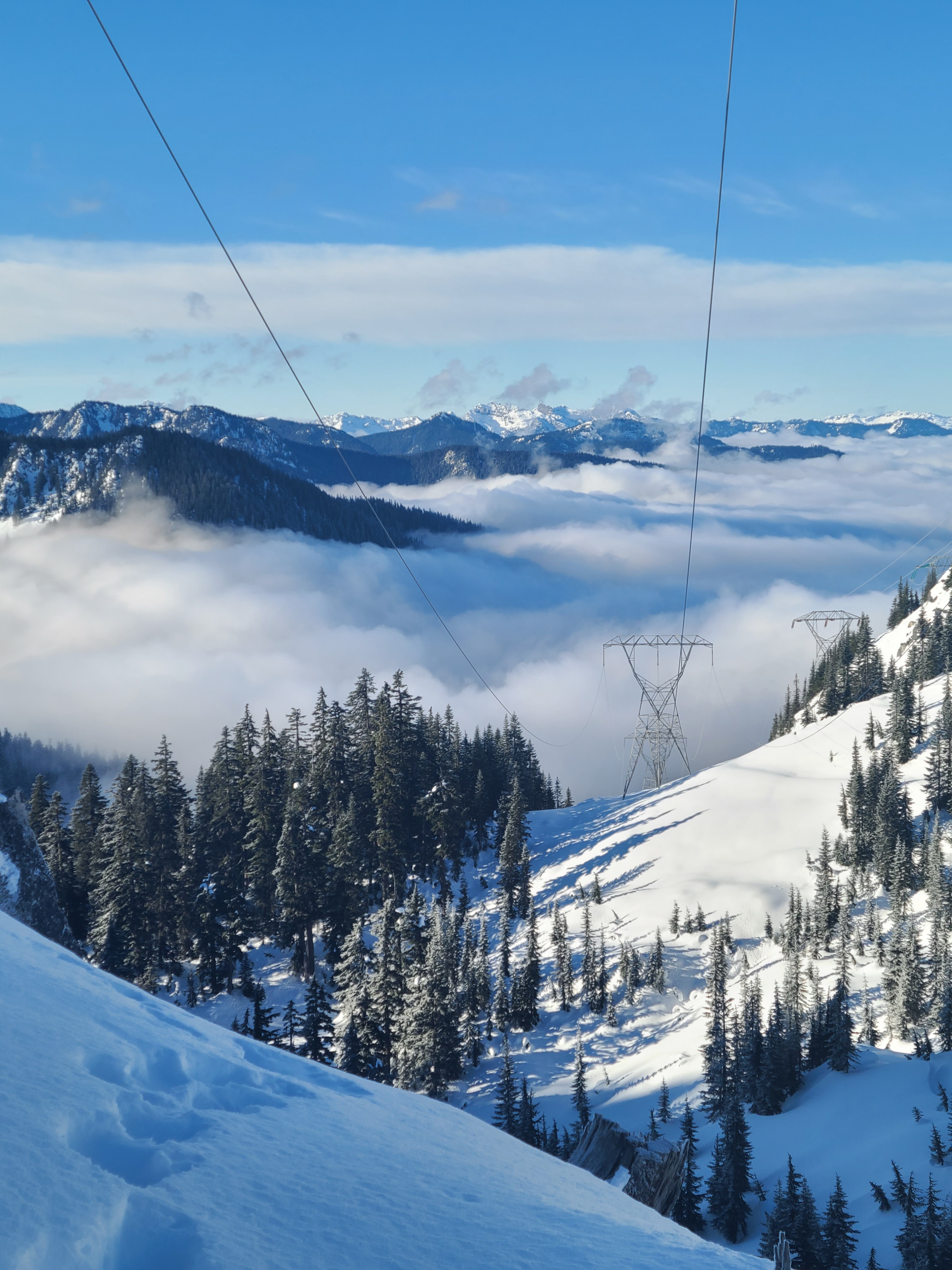
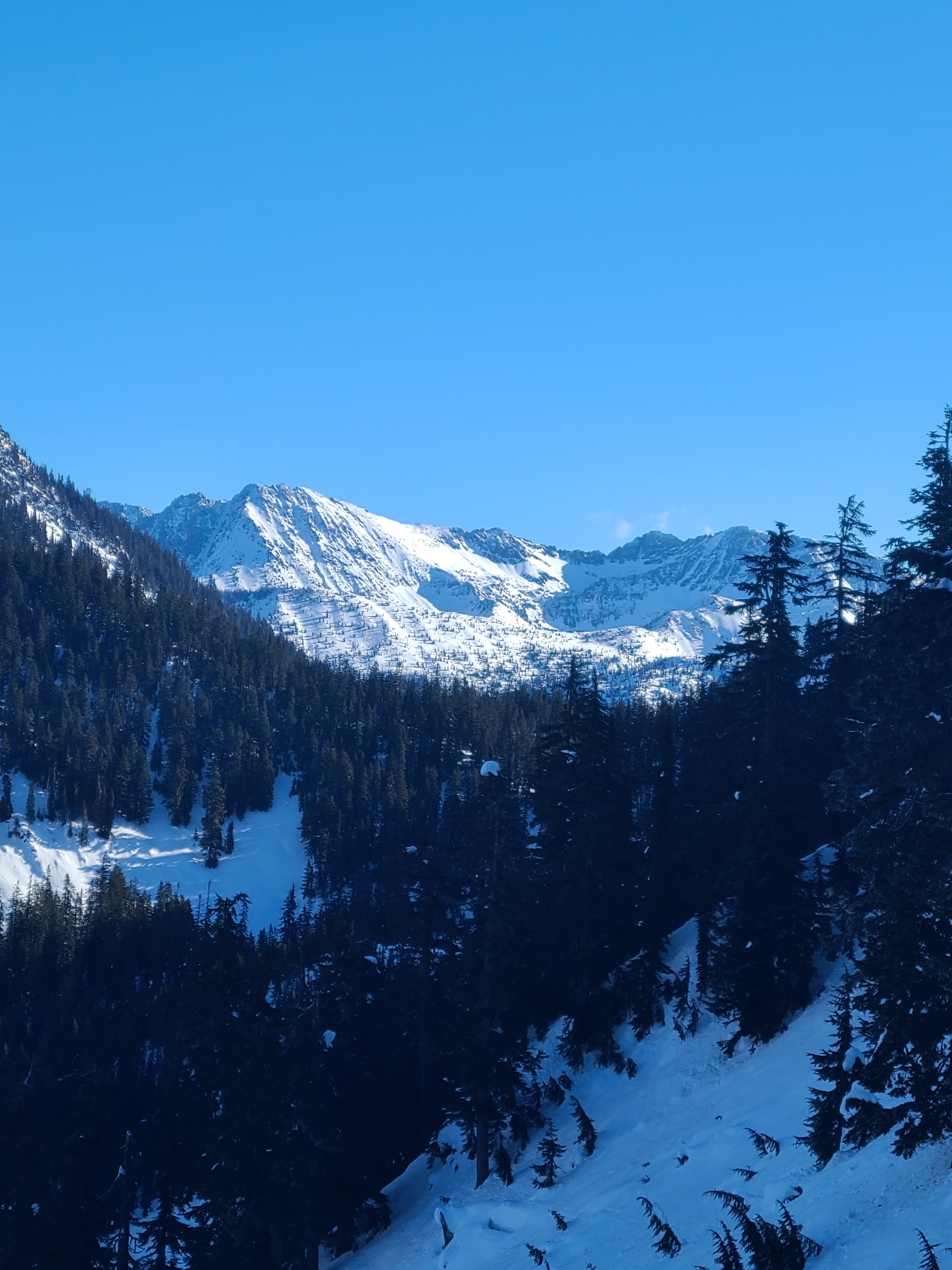
It had been a while since I'd had a chance to check on snow conditions at Stevens Pass, so we went out with the goals of checking on surface conditions, confirming a dusting of new snow overnight, and targeting the weakening snowpack on shady north-facing terrain for a snow profile and stability tests. We took advantage of the chairlift to help eliminate some of the challenging travel in forested lower-elevation areas. A trace of snow fell overnight but did nothing to improve the icy conditions on many slopes. This dusting of snow was enough to bury the large surface hoar that has been well documented throughout the zone. Ridgelines were wind-affected but chalky and made for decent booting conditions. We even managed to find nice, dry recycled powder on northern aspects. Avalanche hazard was low, but we also found some notably weaker layers within the upper snowpack. Southern aspects didn't get very soft with the cold temperatures and the most hazardous part of our day was getting through the forest and back to groomed trails.
Weather
- Recent Snowfall
- Trace
It was a clear morning driving up to Stevens from the east side of HWY 2. Clouds were banked up to the west of the pass in the morning but cleared throughout the day. Temperatures were quite cold in the low to mid 20°s and winds were light.
Snowpack
Snowpack depths at these mid-elevations average 250cm. The January 10th crust is buried 30-40cm, and the Solstice Crust is down 120-130cm. Surface conditions were quite variable, with plenty of icy crusts, the worst of which is, unsurprisingly, under the forest canopy. Exposed ridgelines had stiff, textured, wind-affected surfaces with some very minor recent drifting of a trace of new snow. Southern aspects had not softened much when we left the field at noon.