
Quick report
- Cracking
- isolated
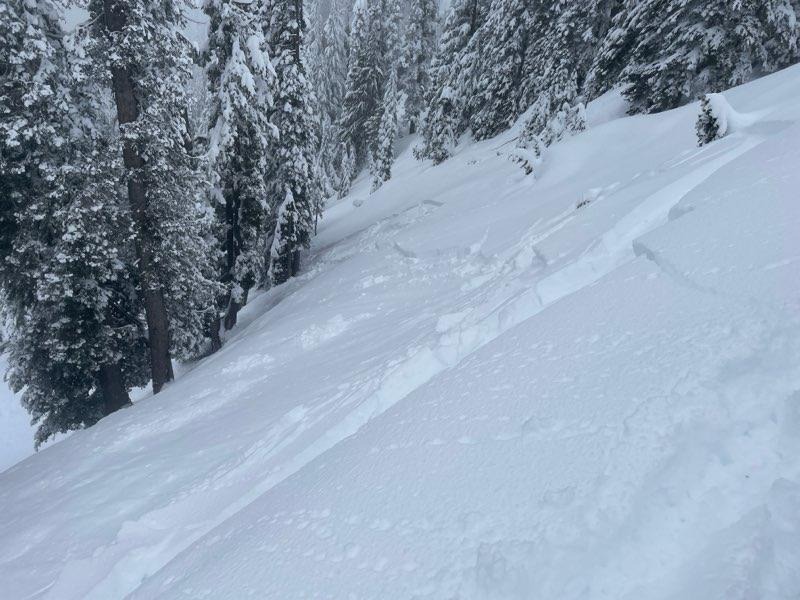
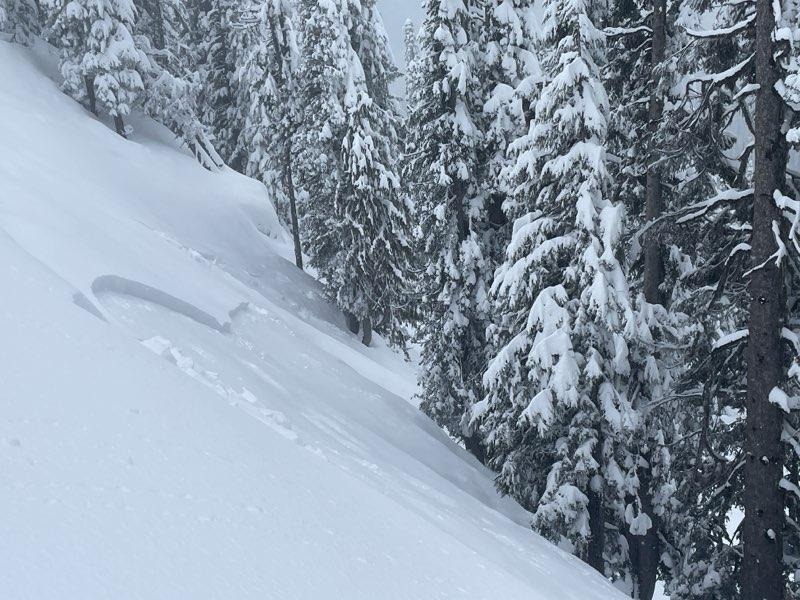
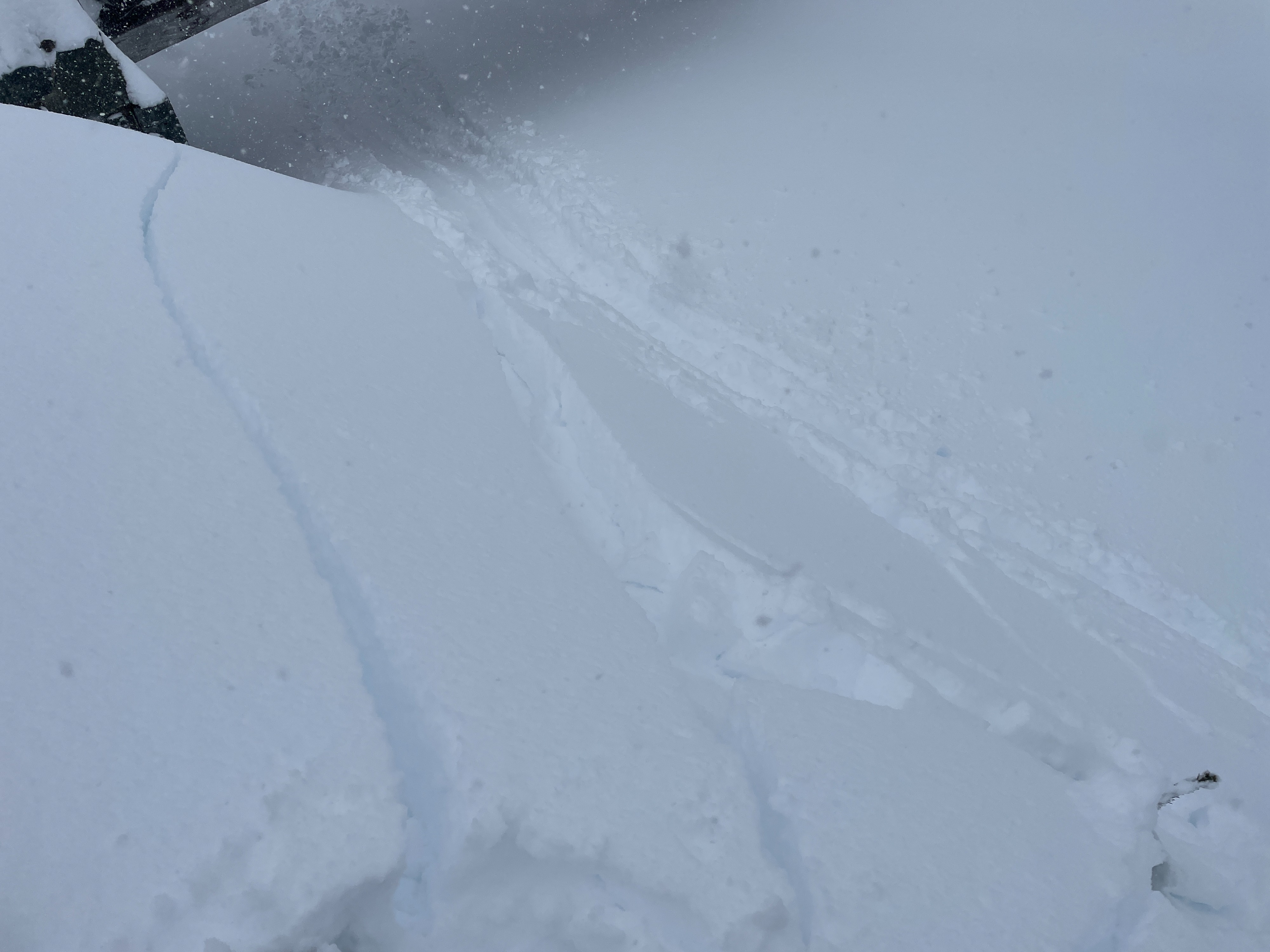
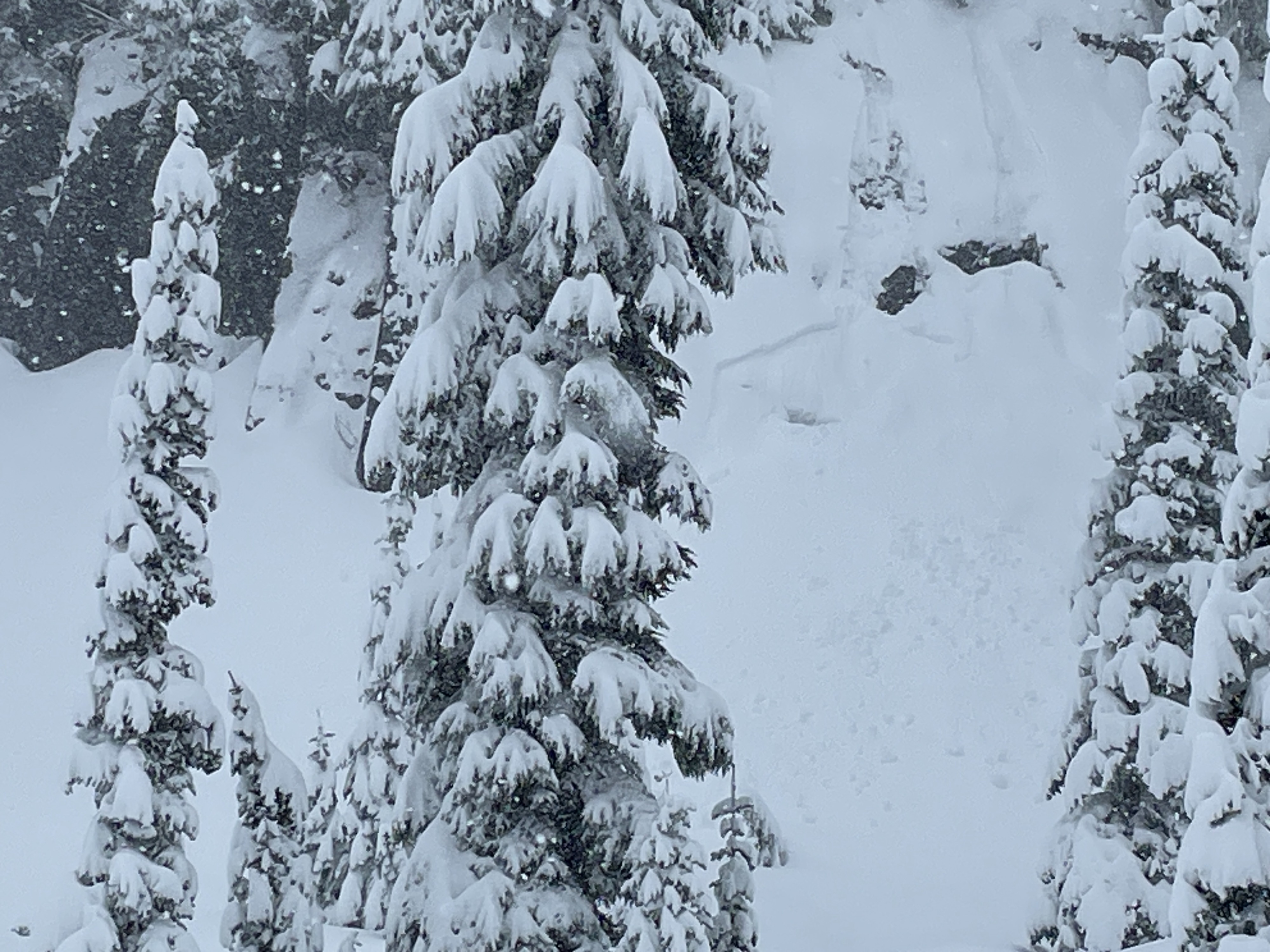
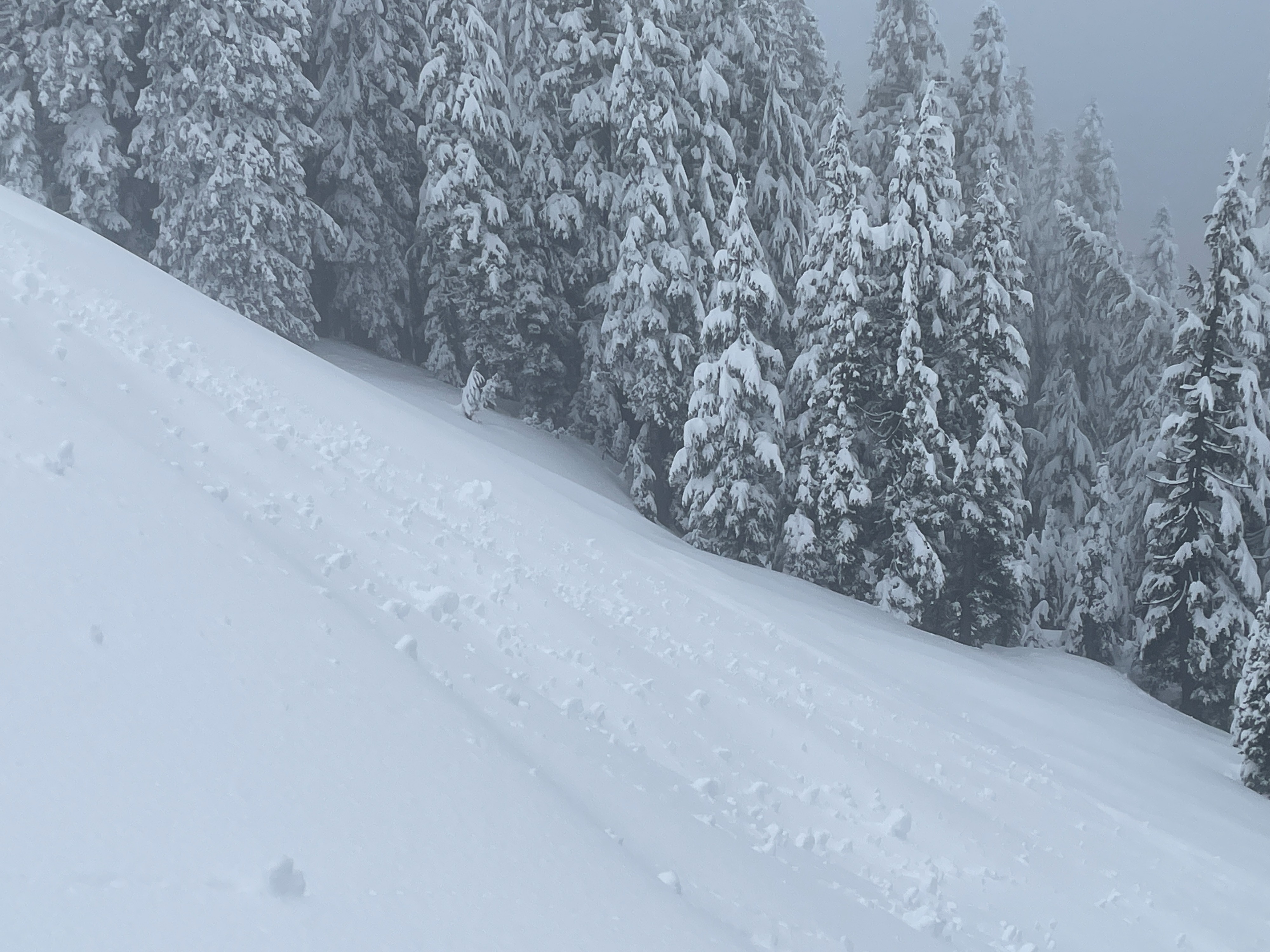
It felt very much like a return to winter today. The storm slab issue wasn't hiding. Small slopes and uptrack tests made it clear, you could trigger an avalanche. Indeed, that was the case. We were able to intentionally trigger several slopes. These slides were typically confined to convex rollovers. On more planar slopes, they would crack, but the heavy snow just couldn't get moving.
Breaking trail, short cracks would shoot off our skis for 1-2ft. Longer cracks were observed on convex rollovers and around tree wells.Weather
- Air Temp
- 31
- Cloud Cover
- obscured
- Wind Loading
- light
- Rain Elevation
- 4500
- Recent Snowfall
- 30
- Snow Avail For Transport
- moderate amounts
A stormy wintery day. Near constant snow fall with mild temperatures.
Snowpack
New snow totals: 4500ft 8in (20cm), 5000ft 12in (30cm), 5500ft 14in (35cm)
The new snow was considerably dryer above 5000ft, but still generally heavy. Small slopes and uptrack tests constantly highlighted a layer failing at the base of the recent snow. On shaded and northerly aspects nearly 2ft (60cm) of snow sat over a very weak and still wet crust. On south and west aspects, the new snow was poorly bonded to a firm crust.
We didn't inspect any of the layers below these crusts.
Winds: Winds were surprisingly light in the terrain we traveled. Snow still hung in the trees. However, as we returned to Cayuse at 4600ft, the winds began to increase and drift snow in open areas. This may have been due to the funneling affects of the pass area.
Wet Loose: We only observed one very small wet loose slide. However, rollerballs were common below ~5000ft
Avalanche
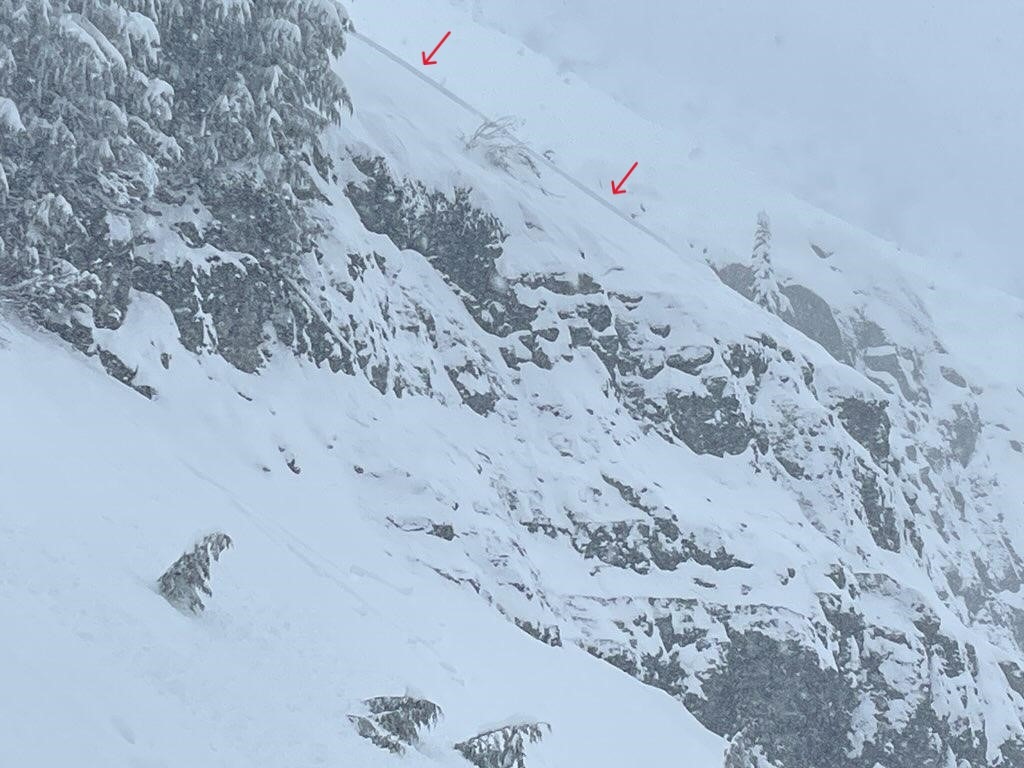
Natural: We observed several small (D1) natural storm slab avalanches. These were located on unsupported slopes and immediately below cliff faces. Crowns were generally 8in deep. Triggered: We were able to trigger storm slabs up to size 2 (large) on convex rollovers and very steep slopes.