
Quick report
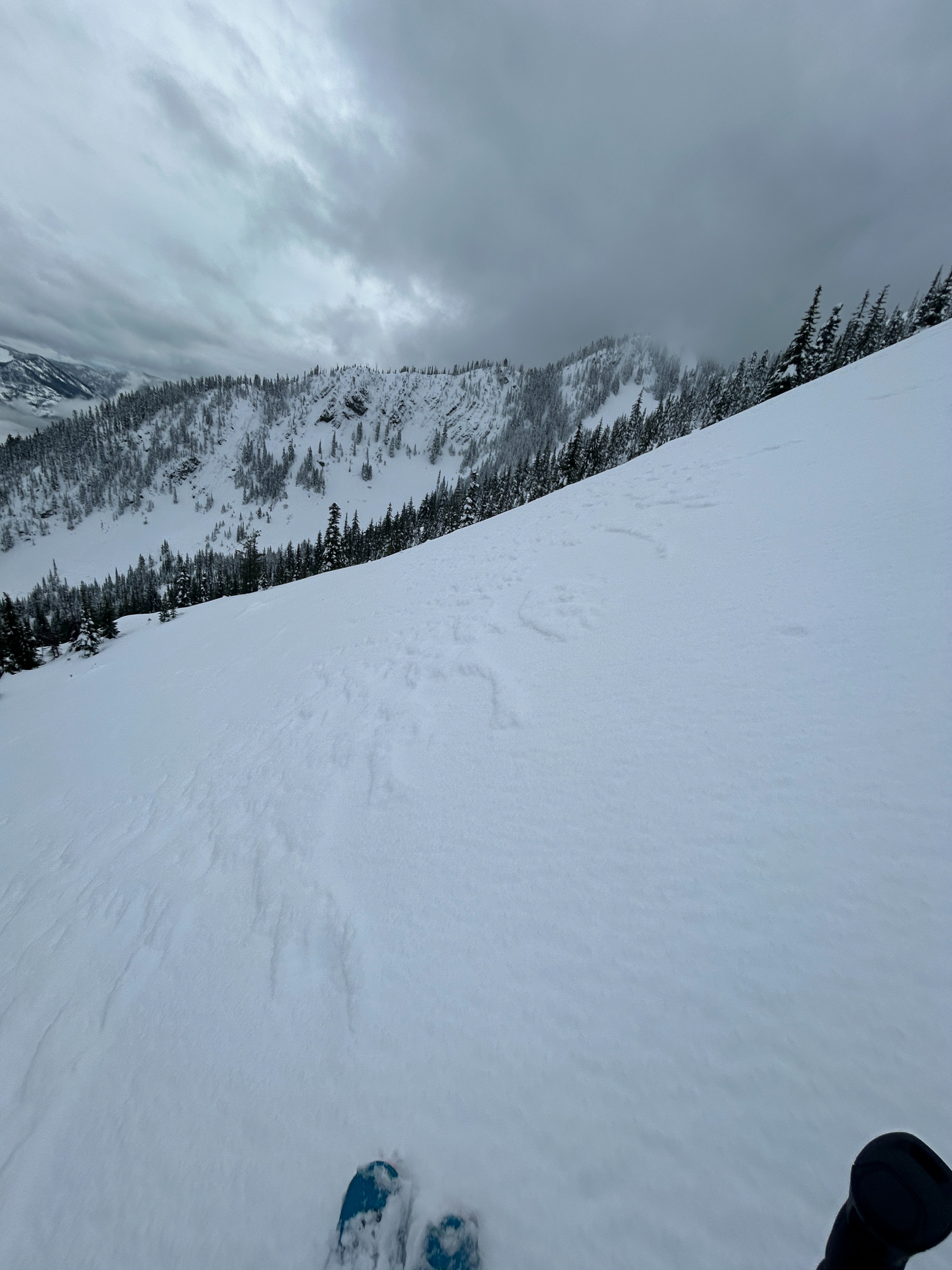
We went out expecting a lot of wind and henceforth wind slabs, and ended up not experiencing very much wind and only finding signs of warming snow. Our goal had been to reach the top of Red Mountain, but an overheating sled and then tricky lower elevation maneuvering through numerous trees slowed our ascent too much. The snowpack was obviously drying out as we gained elevation, and I'm very suspicious that we might've found some evidence of unstable wind drifted snow at the ridge.
Overall, the snowpack is right side up and bonding well to the 12/18 crust in this area.
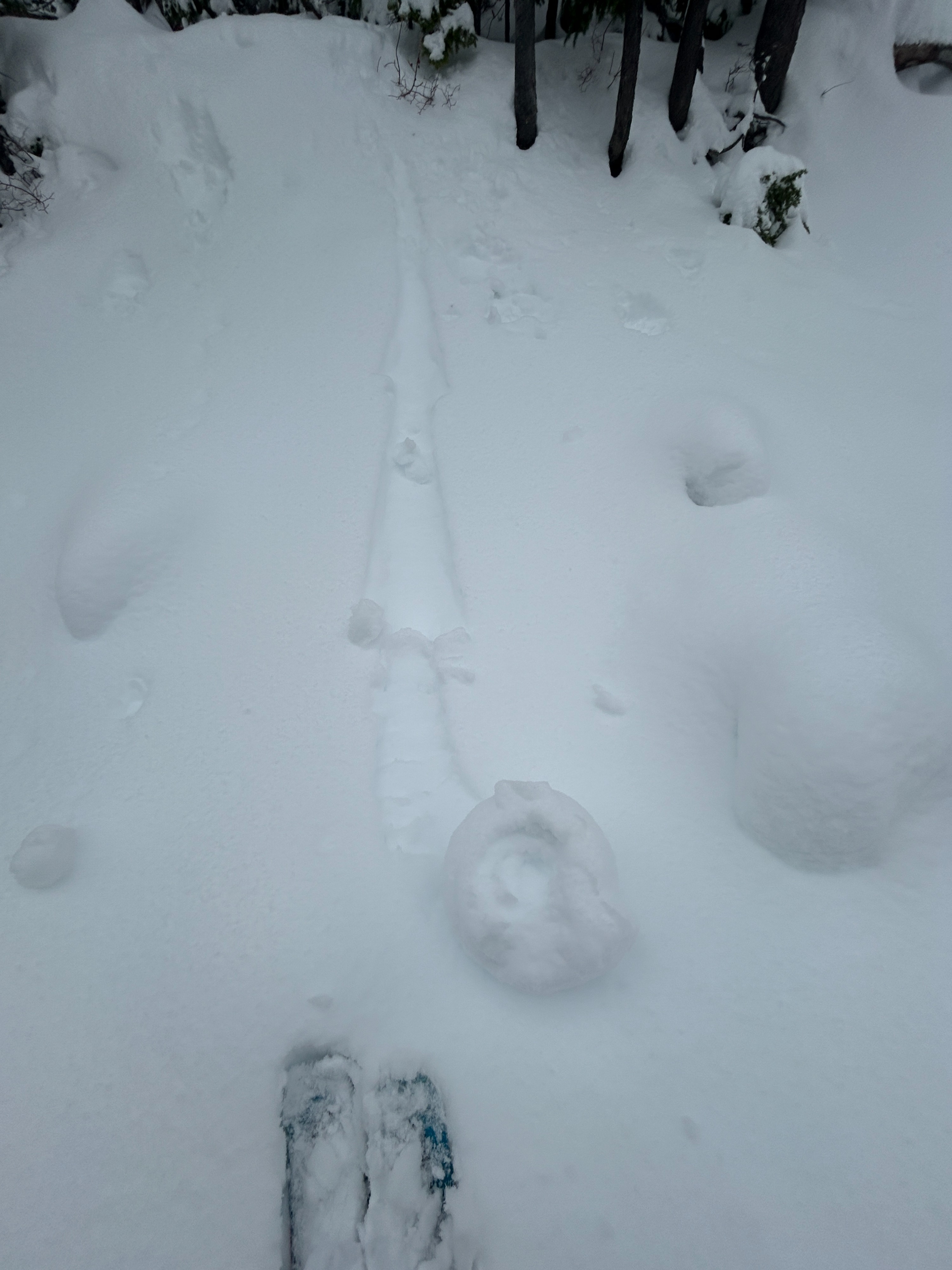
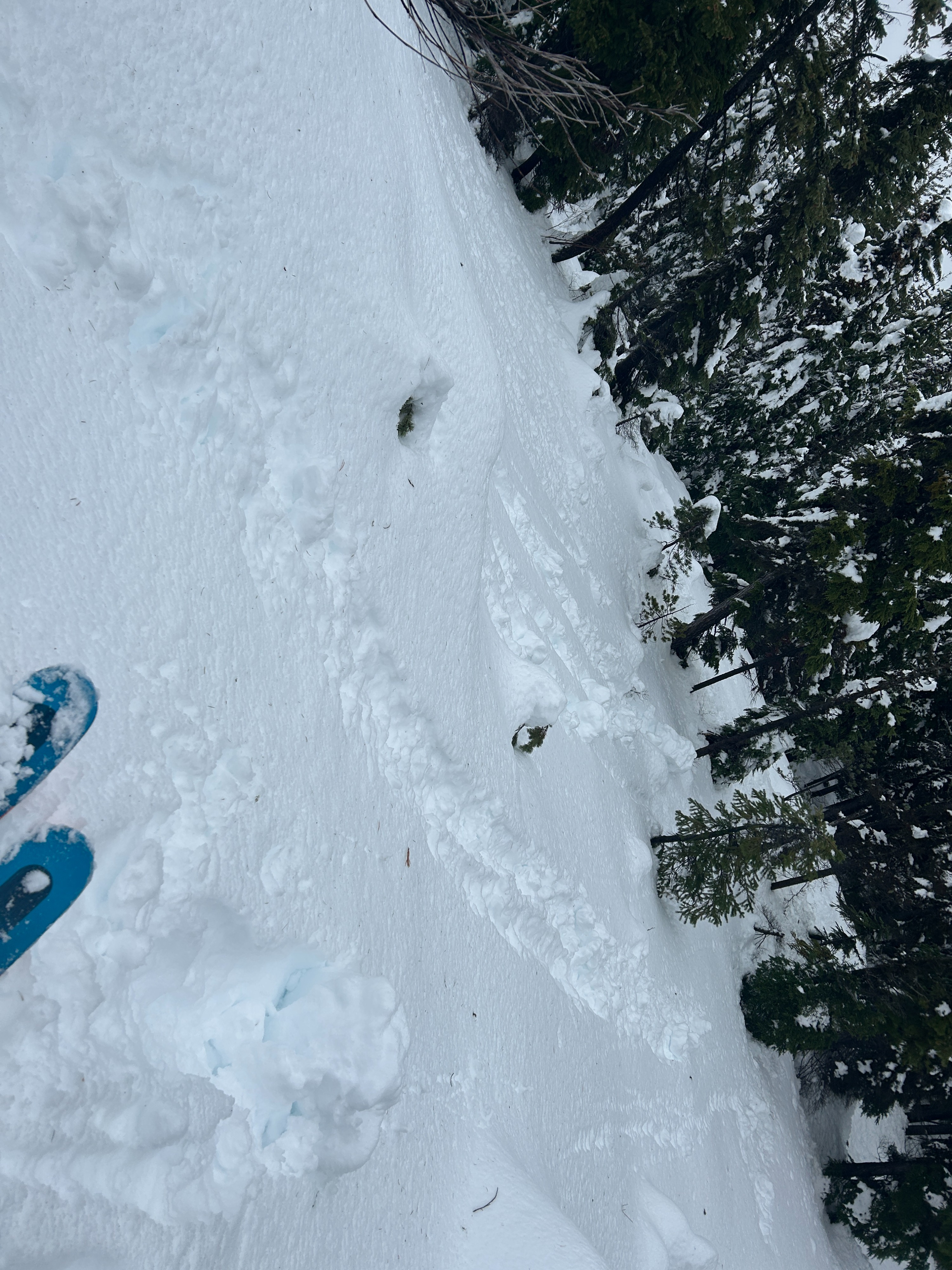
The snow was too dense and sticky to get any cracking in wind affected areas. We did observed many a rollerball and tree bomb throughout the day indicating warming.Weather
- Air Temp
- 27
- Cloud Cover
- overcast
- Wind Loading
- previous
- Rain Elevation
- 3500-4000
- Recent Snowfall
- 49-78
- Snow Avail For Transport
- small smounts
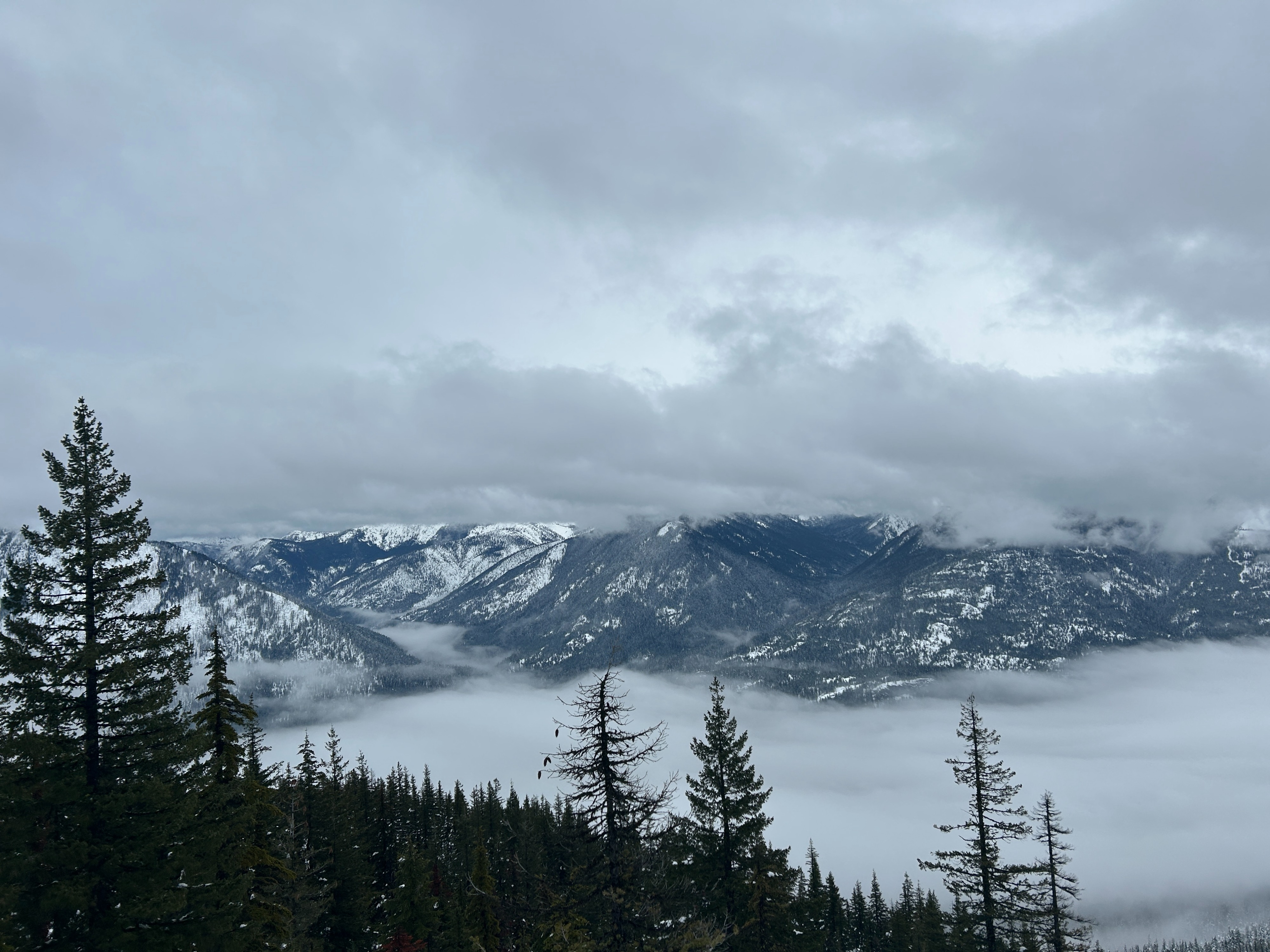
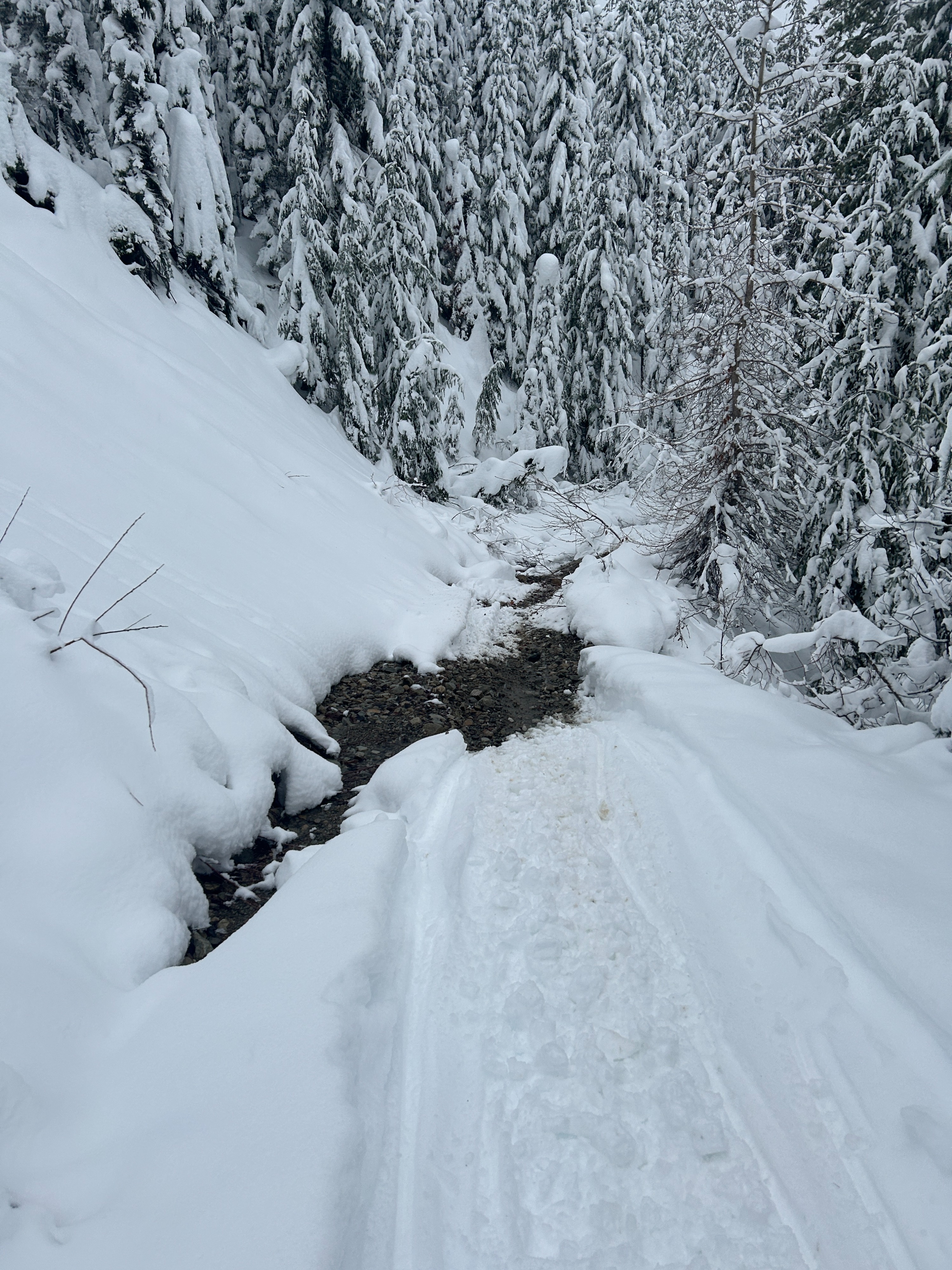
What was expected to be a harsh day in the mountains ended up being not too bad other than a bit of rain to start the day out. We were lightly rained on up to 3500 ft as we snowmobiled up. The rain transitioned to snow, then back to rain when we were traveling around 4000 ft. Precipitation shut off completely around 10:00a. The sky remained overcast all day and a fog layer moved in around 12:00p. We experienced no wind until we started to break out of the trees around 5000 ft. Even then, the wind was light with some moderate gusts from the east. I recorded a temperature of 27F at my snowpit around 5500 ft at 12:00p.
Snowpack
As is expected, the snowpack builds as you gain elevation. I recorded a depth of 23in (60cm) at 3700 ft, 27in (69cm) at 4300 ft, and 76in (194cm) at 5500 ft.
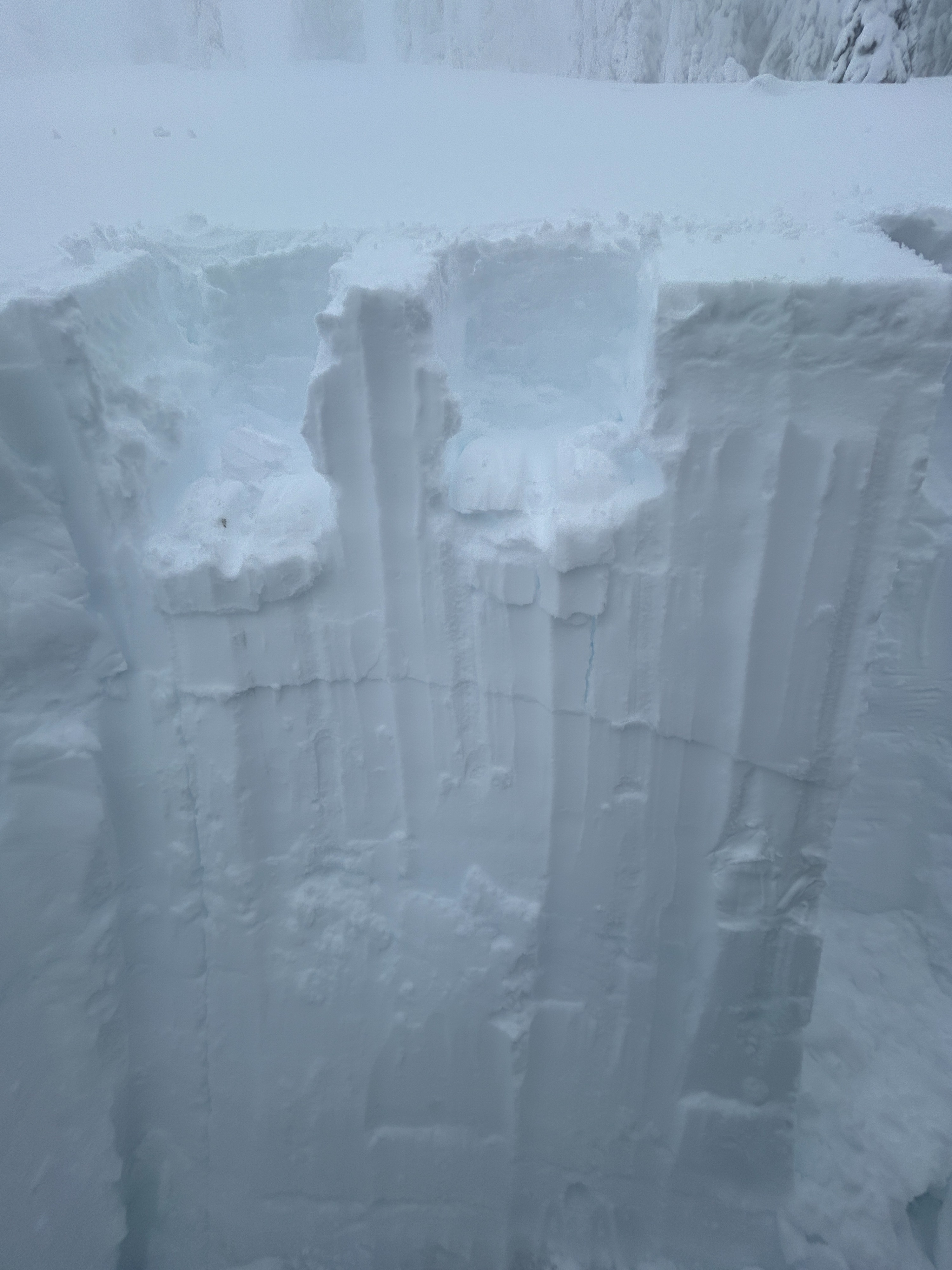
My hasty pit at 3700 ft that was 60cm deep had 19in (49cm) of right side up decomposing fragments overlaying a knife (K) ice lense. Below this was a few cm of melt freeze crust, and one finger (1F) hard rounded grains below making an overall good snowpack set up. I performed two compression tests and got a moderate, then hard resistant planar result within the slab of decomposing fragments (CT11 RP down 15cm and CT22 RP down 30cm respectively).
I dug a fuller pit at 5500 ft with the depth of 76in (194cm). This pit had a thick right side up slab (four finger (4F) to one finger (1F) hard) of decomposing fragments overlaying a knife (K) hard rain crust from the 12/18 warm up. All of this snow was dry, but just barely. Below this pit were harder rounded grains, then moist rounded polycrystals to the ground (increasing hardness from one finger (1F) to pencil (P)). I performed compression tests and got a moderate break within the slab of decomposing fragments (CT12 BRK down 22cm) then a hard sudden collapse above the rain crust (CT22 SC down 78cm). I performed an extended column test and got a hard non-propagating result within the slab as well (ECTN24 down 49cm). I kept whacking on my extended column slab and got a propagation even lower within the slab, however this is a very unoffical test and no bonafide conclusions can be made from this.