
Quick report
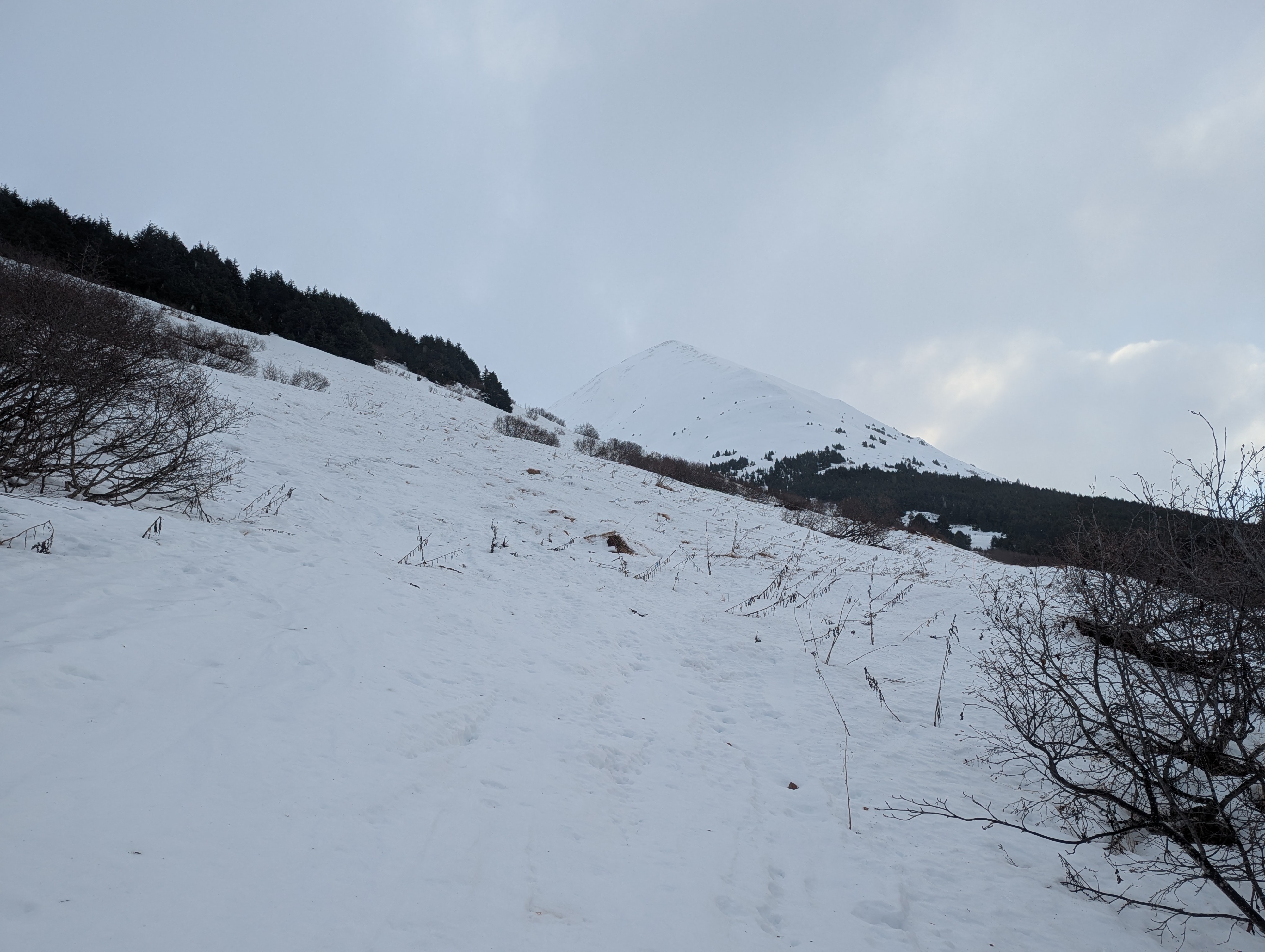
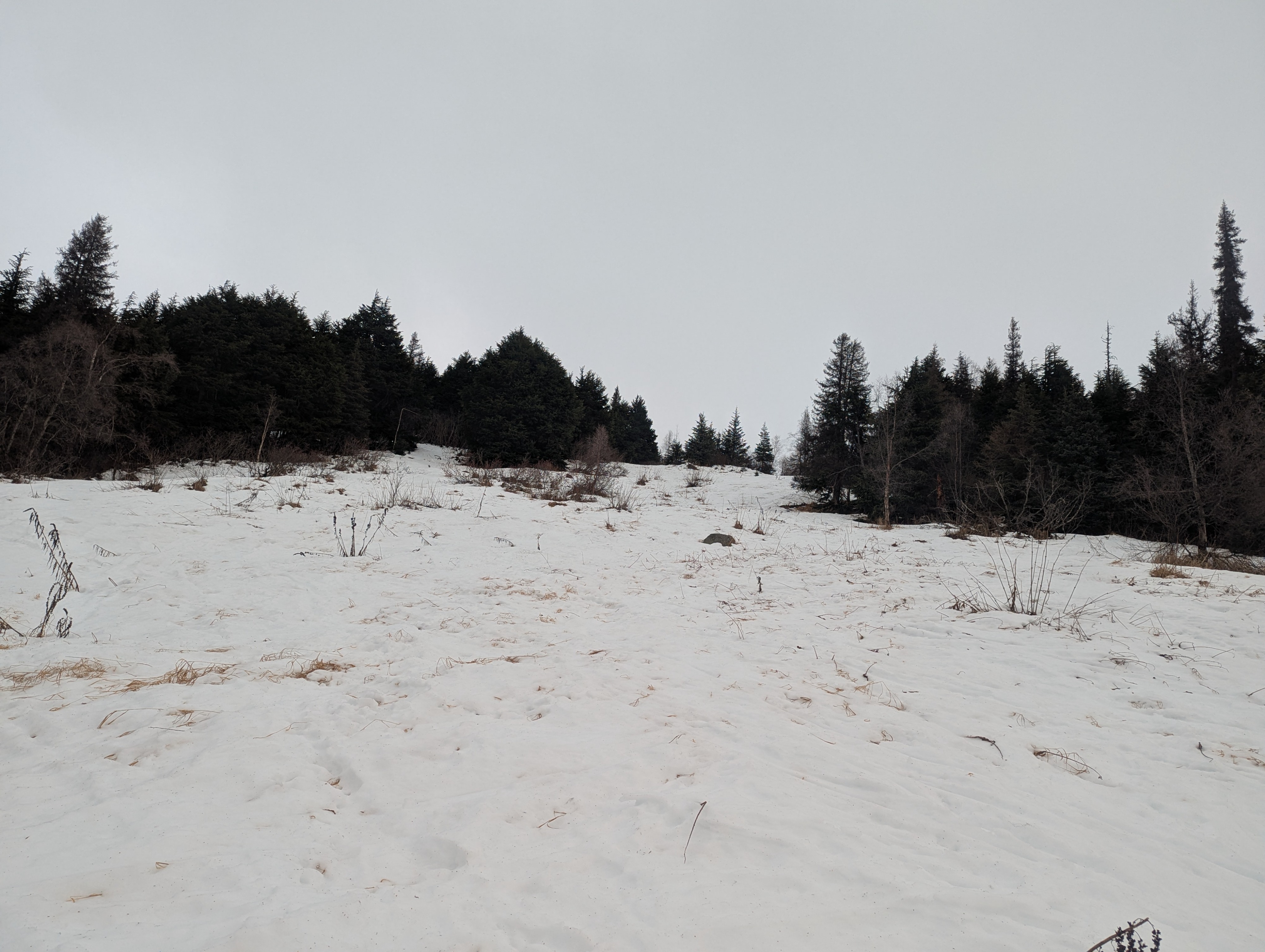
Snow coverage is looking pretty dire at low elevations but there is still enough snow to travel with skis on from the car. Below 2000' the snowpack was thin and wet. Multiple spots barely had enough snow left to cross small creeks. Above 2000' the recent storms were alternating between rain and snow with a mix of icy crust layers and wet snow in the top foot of the snowpack. At 2500' we dug a pit and found a thick melt freeze crust buried about 4" below the surface which will add a lot of strength to the snowpack once temperatures drop back below freezing. Our stability tests and general observations revealed no obvious signs of instability where we traveled. However, we could see a lot of active wind loading going on along the surrounding ridgelines.
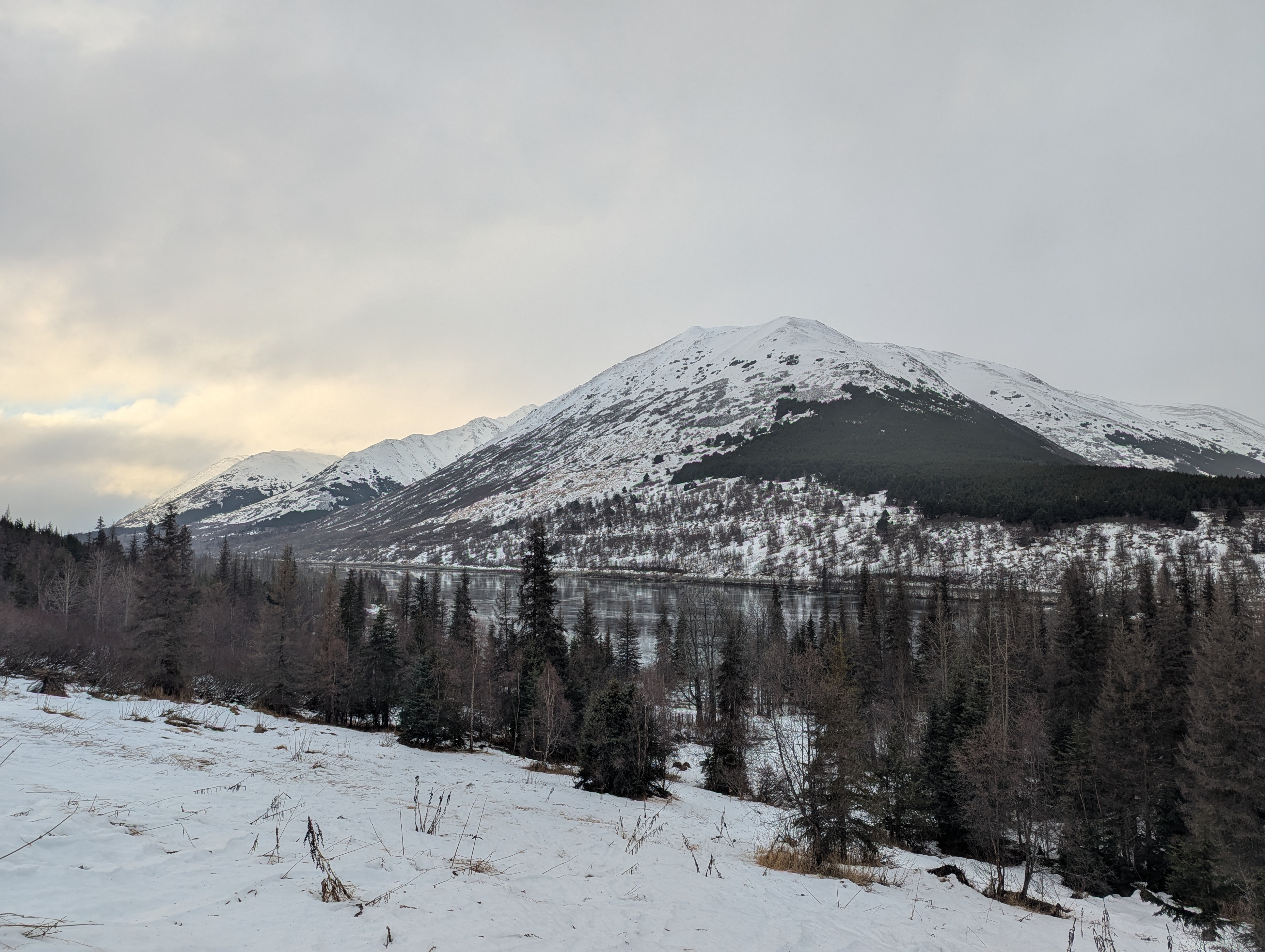
We saw active wind loading at upper elevations along ridgelines.Weather
- Air Temp
- low 30s
- Cloud Cover
- overcast
- Wind Loading
- none
- Rain Elevation
- 2200'
- Recent Snowfall
- 3
- Snow Avail For Transport
- none
Overcast to obscured cloud cover with light rain at low elevations and light snow above ~2200'. Winds were light where we traveled, but we could see active wind transport on ridgelines.
Snowpack
The snow surface was wet, with a slight breakable crust forming on the surface above 2000'. In areas with prior tracks, the wet snow down low was supportable but in untracked snow, the wet snow was deeper and we sunk in while skiing down. Above roughly 2200' there was about 1-2" of freshly fallen wet snow on the surface with a breakable ice crust on top.
We dug a pit at 2500' on a N aspect and found no concerning test results. There was a melt freeze crust that was partially frozen about 10 cm (4") below the surface that was about 10 cm (4") thick. Once this crust freezes it will add a lot of strength to the upper snowpack. We did find the basal facets on the ground (70 cm deep or ~2.5') and they looked like they were rounding and moist. Our extended column test produced results that did not propagate across the column (ECT N 12 down 10cm, ECT N 24 down 25 cm). These failures occurred below melt freeze crusts and were not concerning. We did not find any layers of buried surface hoar, but at this elevation the whole snowpack felt moist so it is possible that those layers could exist up higher where the snow remained dry throughout the recent storms.
Avalanche
- Size
- D2
- Type
- WS
- Aspect
- NE
- Trigger
- N
- Elevation
- 2000 ft
We saw a few fresh looking avalanche crowns just above the alder line on the NE aspect of twin peaks at about 2000'. Based on the recent rain lines I am guessing they were wet slabs but it is possible that these are older avalanches that we didn't notice prior to the storm.