
Quick report
- Cracking
- isolated
The last 2 weeks of cold, dry weather turned the corner to more winter-like weather today. Small amounts of snowfall and light winds added a thin blanket of snow cover over a concerning layer of surface hoar sitting directly on a crust. Light winds at the onset of snowfall helped preserve the surface hoar and was easily visible in snowpit walls. Small facets under the crust add to the recipe of our newly emerging snowpack problem and a number of upcoming weather factors will heavily influence future avalanche conditions and danger.
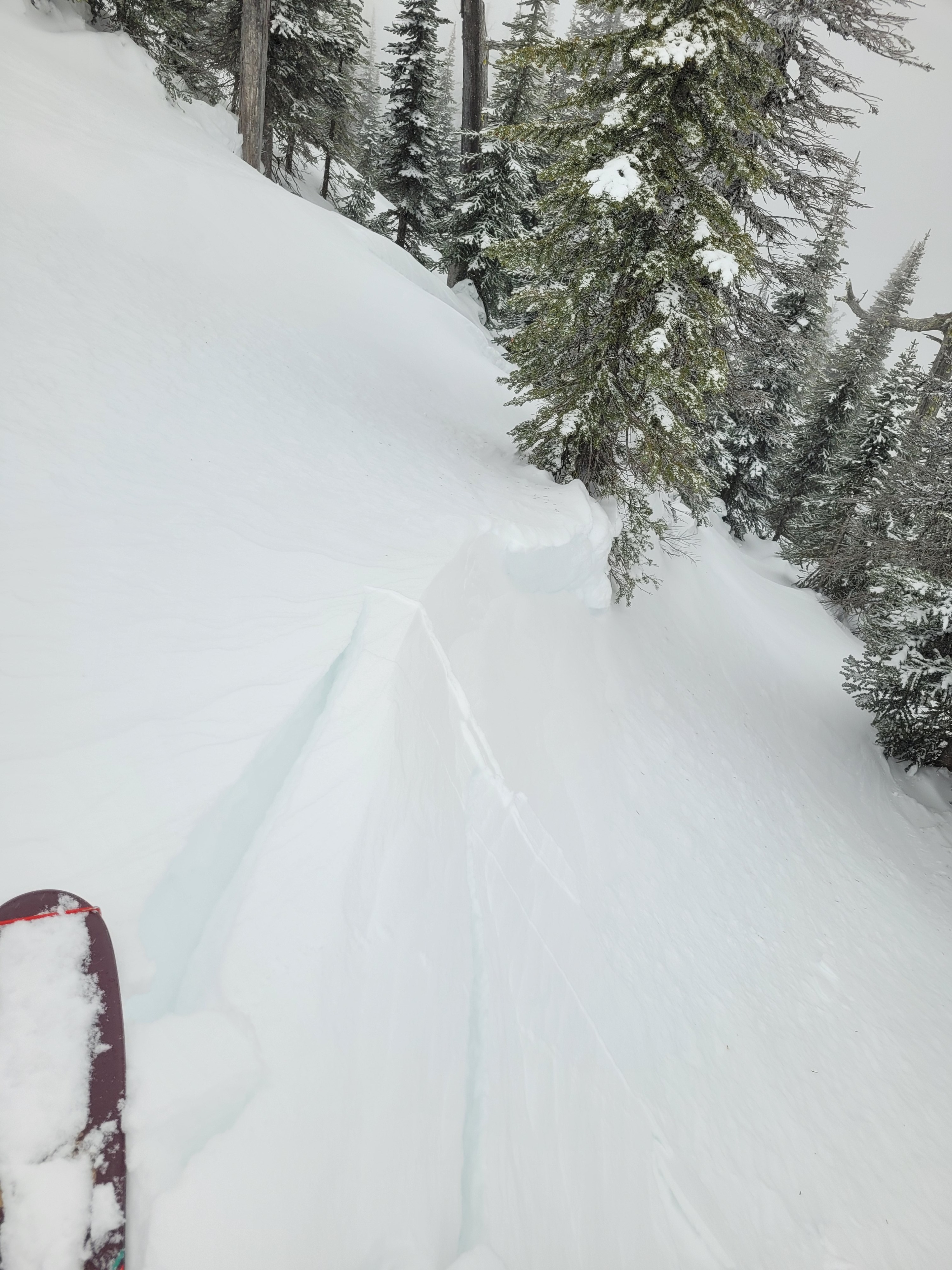
Storm slab started cracking along skin track once new snow amounts hit about 3 inches.Weather
- Cloud Cover
- obscured
- Wind Loading
- light
- Recent Snowfall
- 8 cm by 1pm today at 6,300 feet
- Snow Avail For Transport
- small smounts
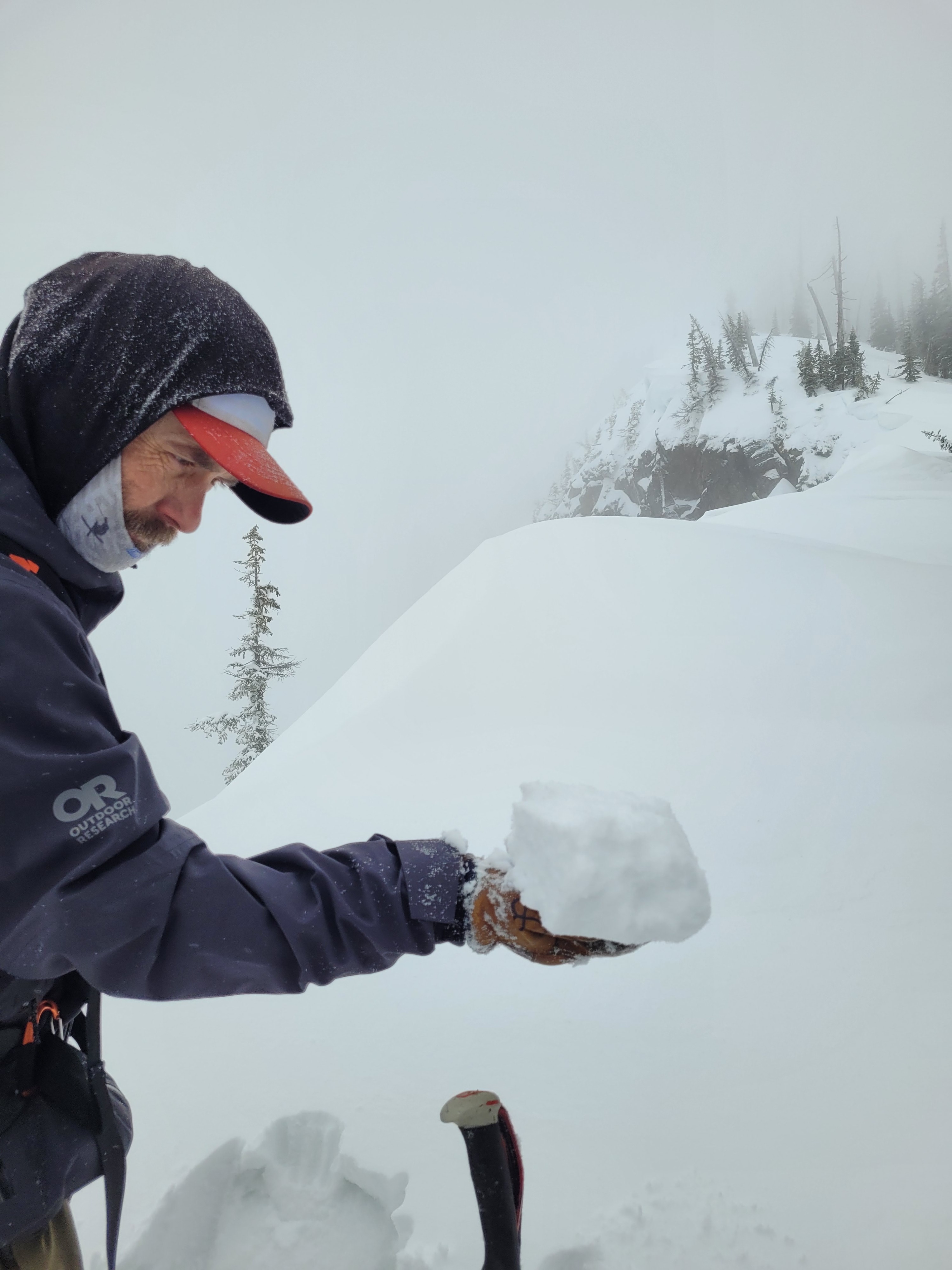
Very light, S-1, snowfall throughout the day. Winds were calm below ridgelines. Light westerly winds at 6,400 feet ridgetop contributed to light transport onto leeward slopes.
Snowpack
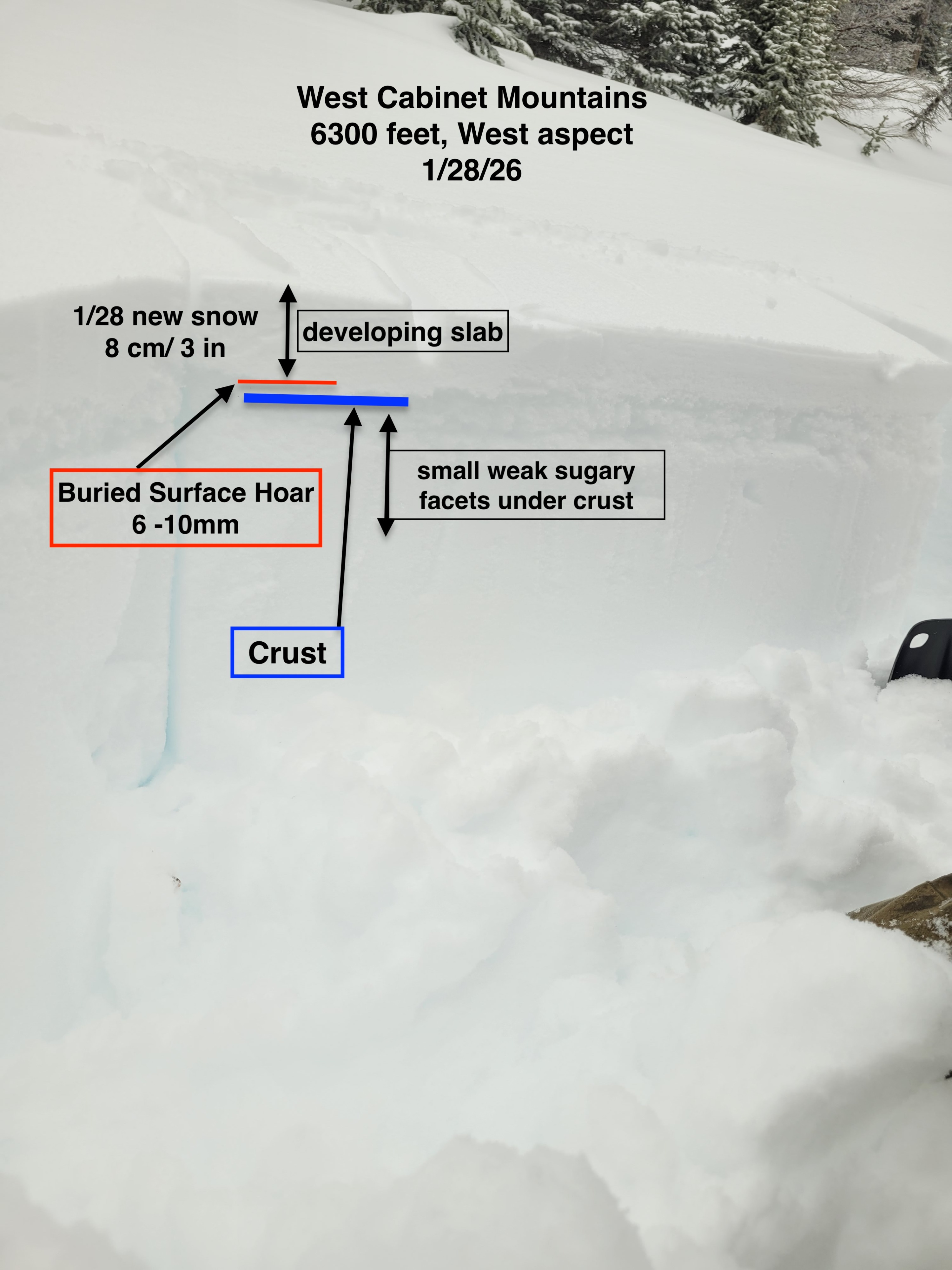
We observed isolated cracking between our tracks within the new snow that fell today. At 6,300 feet on a west-facing slope, we found around 8 cm (~3 in) of new snow sitting on top of well-preserved surface hoar (6 - 10mm in size). The surface hoar is sitting on top of a rain crust (1 cm thick, P- hard). Small faceted grains (F to 4F-) reside below the decomposing crust, creating a worrisome trap door setup for future slabs to stack above. Snowpack tests yielded easy Compression Test results on the 1/28 Surface Hoar and under the crust: 2x CT1 SC and ECTN 3 down 8 cm on SH, and CT 2 SC down 9 cm underneath the P- decomposing crust siting on near surface facets below the crust. The depth of facets below the crust was around 15 cm thick.