
Quick report
Key takeaways:
- Depths of the wind drifted snow are highly variable
- As winds increase through the night these isolated wind slabs may become stiffer and more reactive, if there are shooting cracks in the snow surface that have energy, this is a concerning instability to lookout for
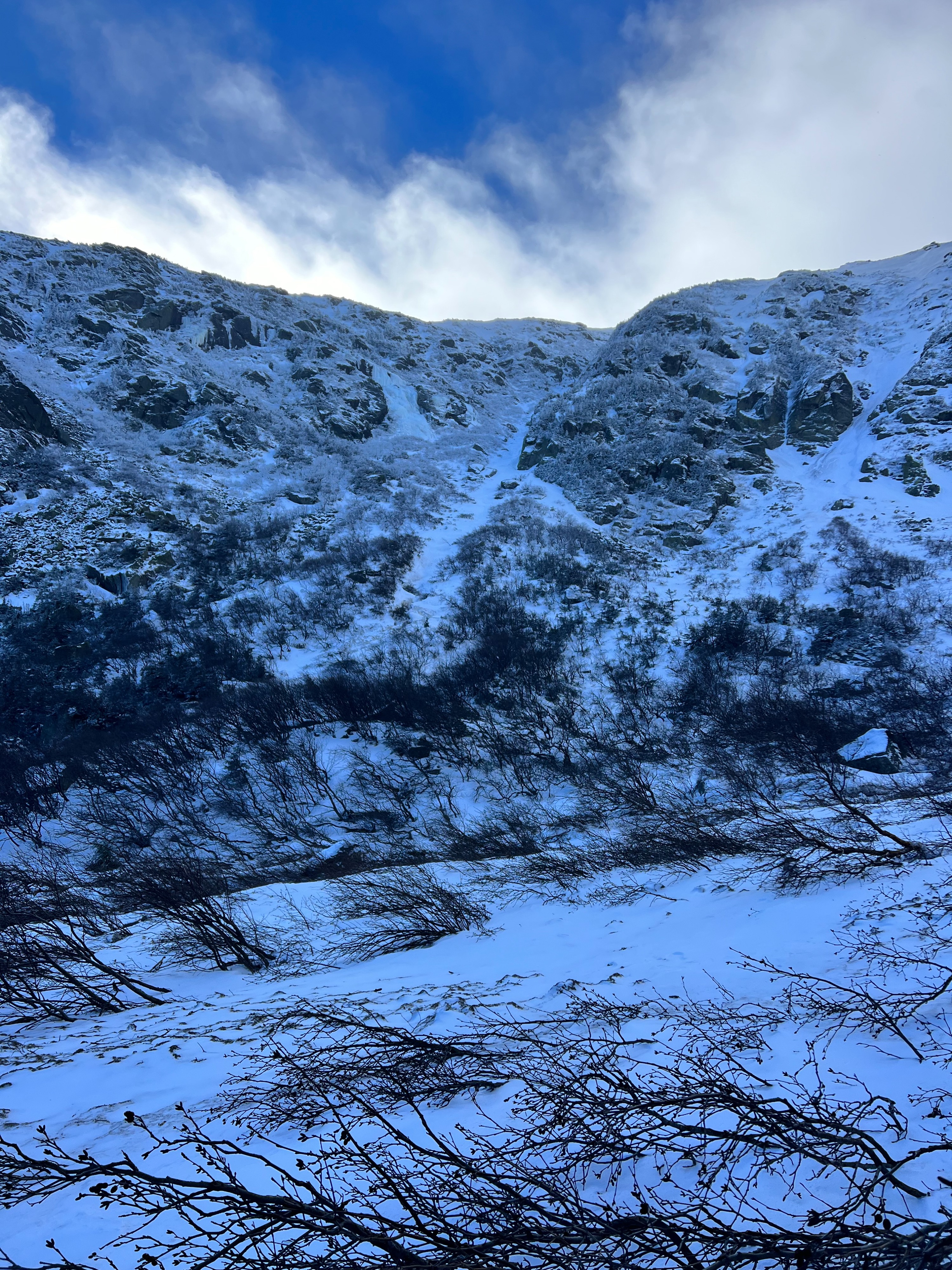
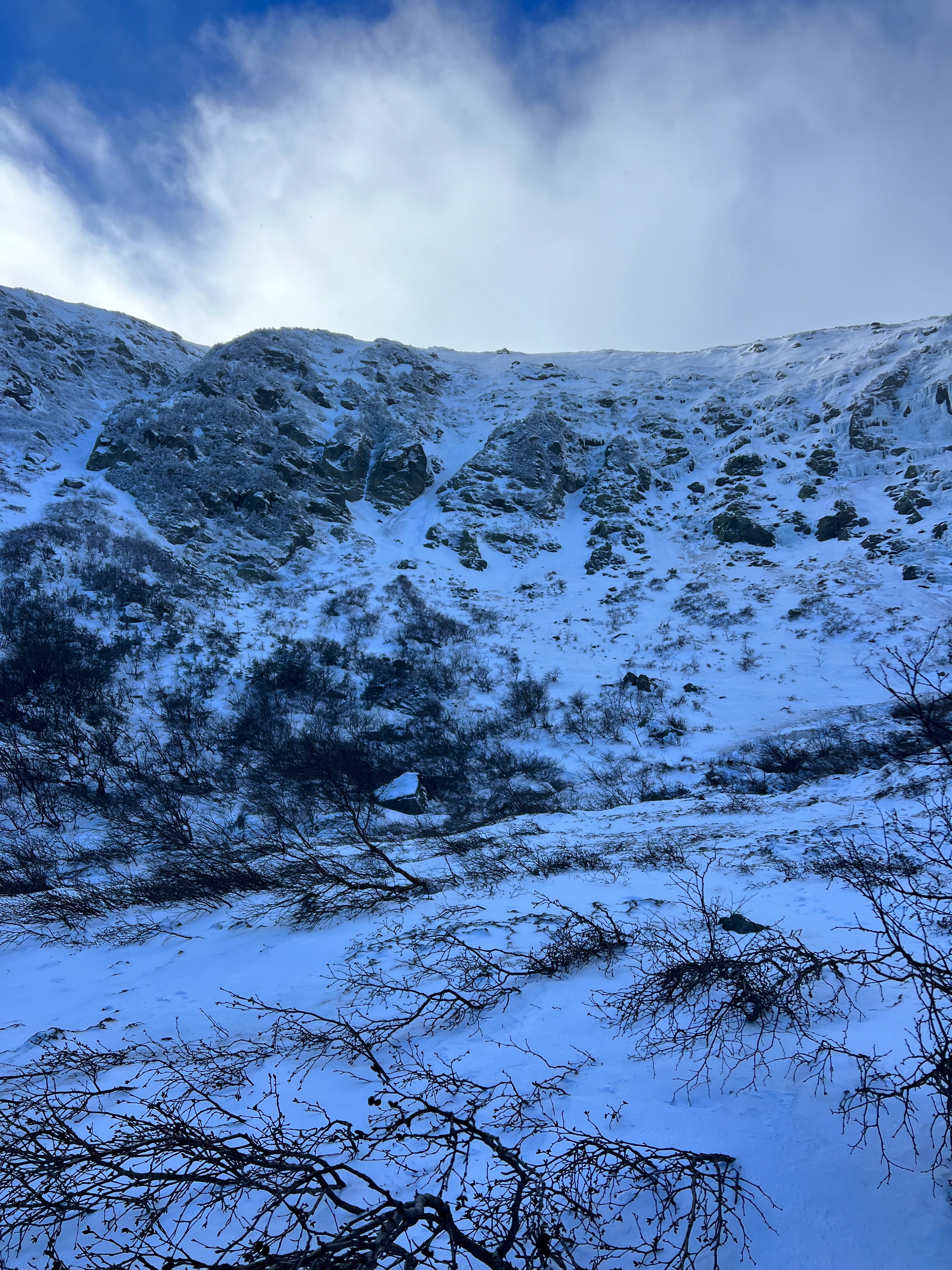
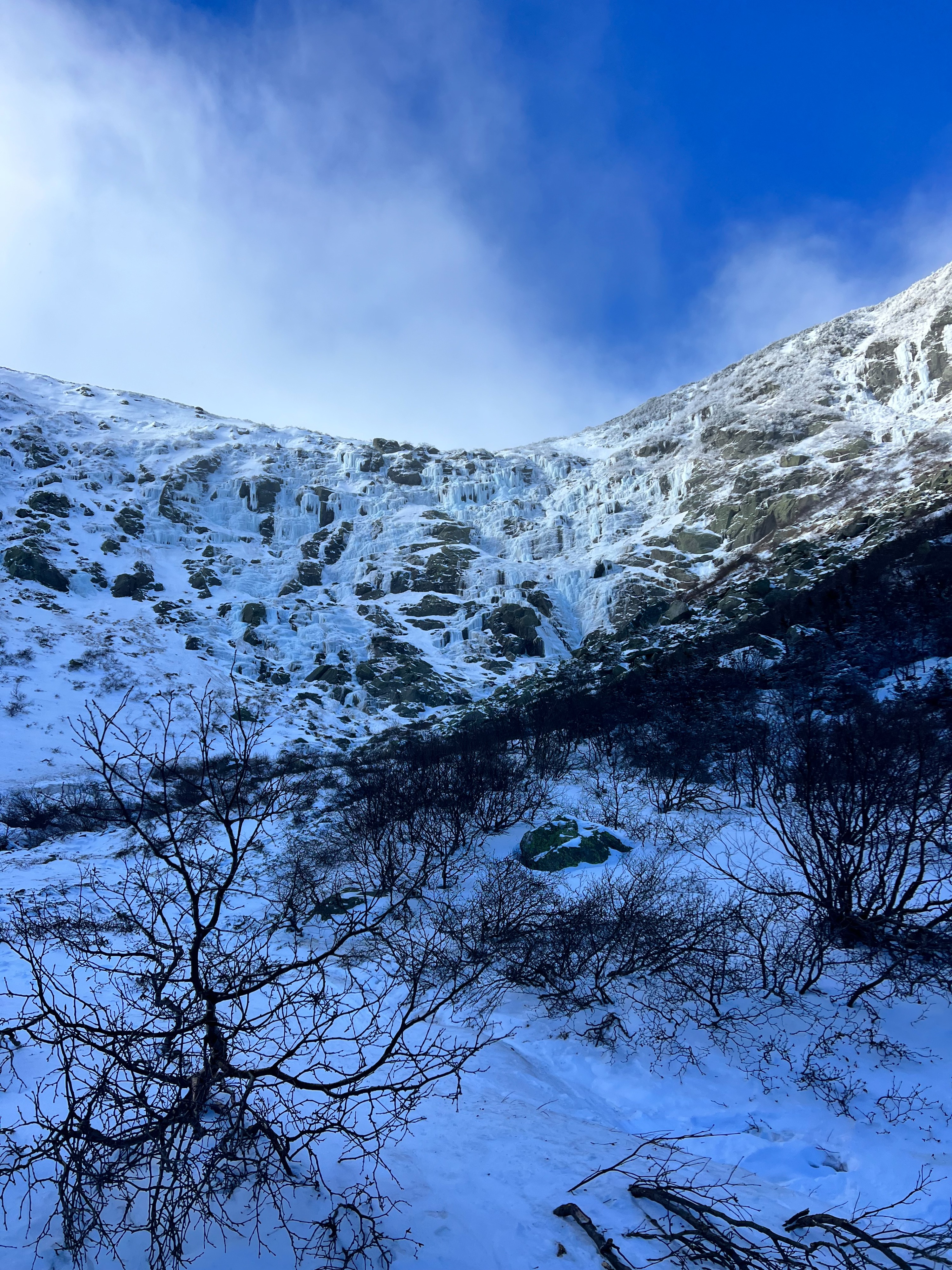
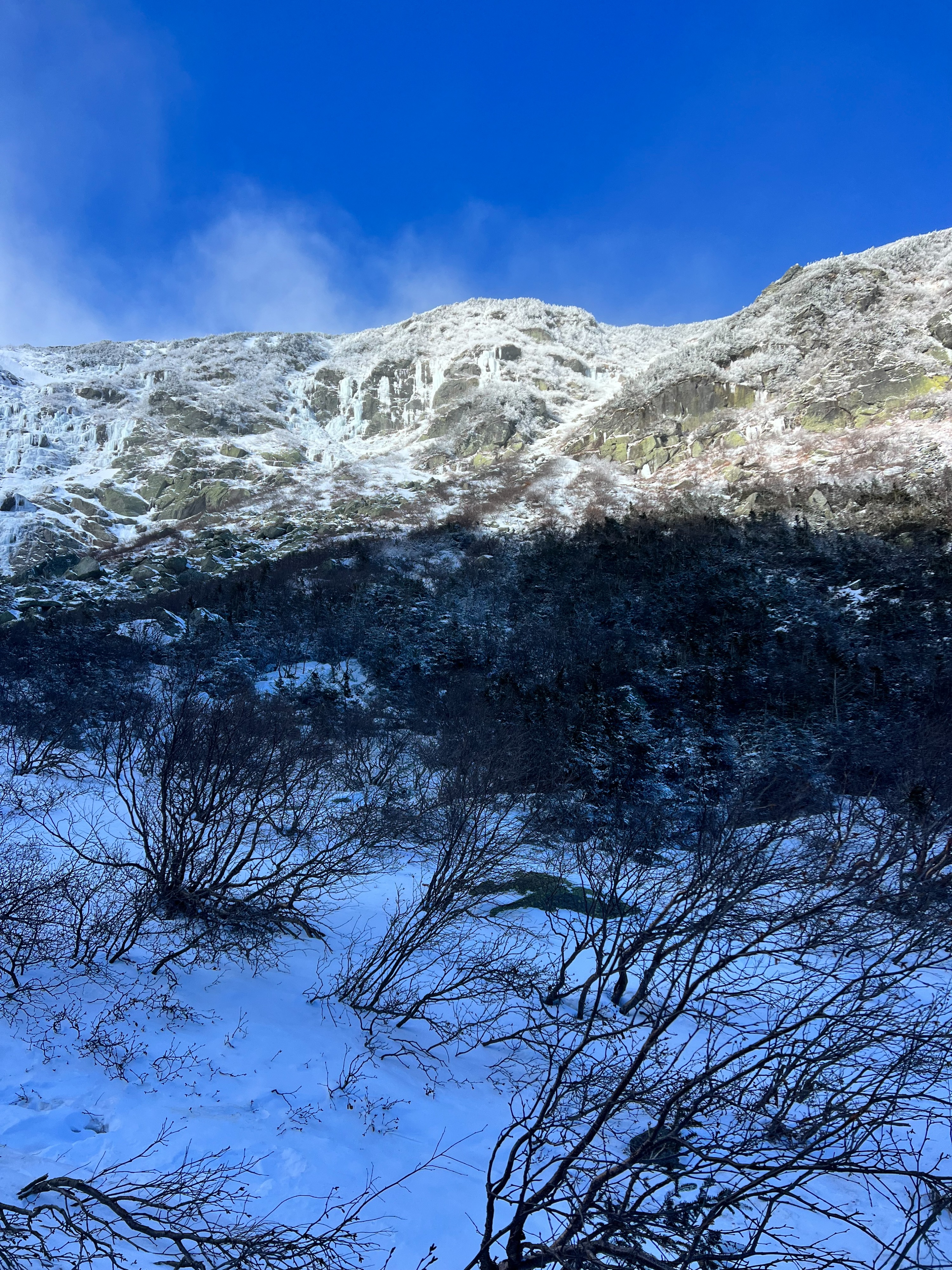
- Identifying this hazard is easy at the moment due to the mosaic of snow surfaces in the Ravine
- There is limited skiable terrain as a lot of the surface is icy, you should evaluate surfaces cautiously as there is exposure to rocks and trees below
Weather
- Air Temp
- 4
- Cloud Cover
- broken
- Wind Loading
- light
- Recent Snowfall
- 1
- Snow Avail For Transport
- small smounts
The Ravine was in and out of the clouds with windows of full visibility. Northwest winds were increasing in speed throught the afternoon and time spent in the Ravine. Observed some snow being transported, but it was only small amounts of snow.
Snowpack
As winds continue to increase tonight and into the early hours tomorrow, instabilities may increase as the wind continues to affect the surface snow and stiffen it. It seemed that most of the available snow for transport has moved as new snowfall has been on the low end of what was forecasted for yesterday.
Isolated cracking observed. This was a small surface instability only found in the top 2 cm of softer wind affected snow. This was a thin wind skin that was on top of fist hard snow. The depth of the fist hard layer of snow was highly variable and ranged from 4 cm to knee deep in sheltered places. The surface crack was limited to just beneath your feet and did not have energy or tendency to propagate at this time.
Hand shears produced stubborn results at the interface of the new snow and old snow and are failing on a slick, frozen surface.
Identification of the new snow is easy when there is clear visibility as there are distinct visible differences in the snow surfaces. The old snow surface is dull, gray, and slick, frozen debris is also dirty and chunky, the new snow is bright white, and other snow is very textured and clearly wind affected with graupel visible. Travel on the dirty firm surface where it is not icy is currently the easiest way to move in the terrain.
As we walked higher in the terrain, hand shears became more sensitive. This was likely due to the steeper pitch and icier surface found. Higher in the terrain, the observed areas were less sheltered so the depth of the snow was 4-7 cm. Lower and in more wind sheltered areas we observed depths of this snow to our knees. Higher in the terrain in Left Gully and Chute there are sheltered places where snow accumulates deeper, and these would be the more concerning pockets. They will not be large laterally as the terrain is not connected.