
Quick report
- Cracking
- Observed
- Collapsing
- Observed
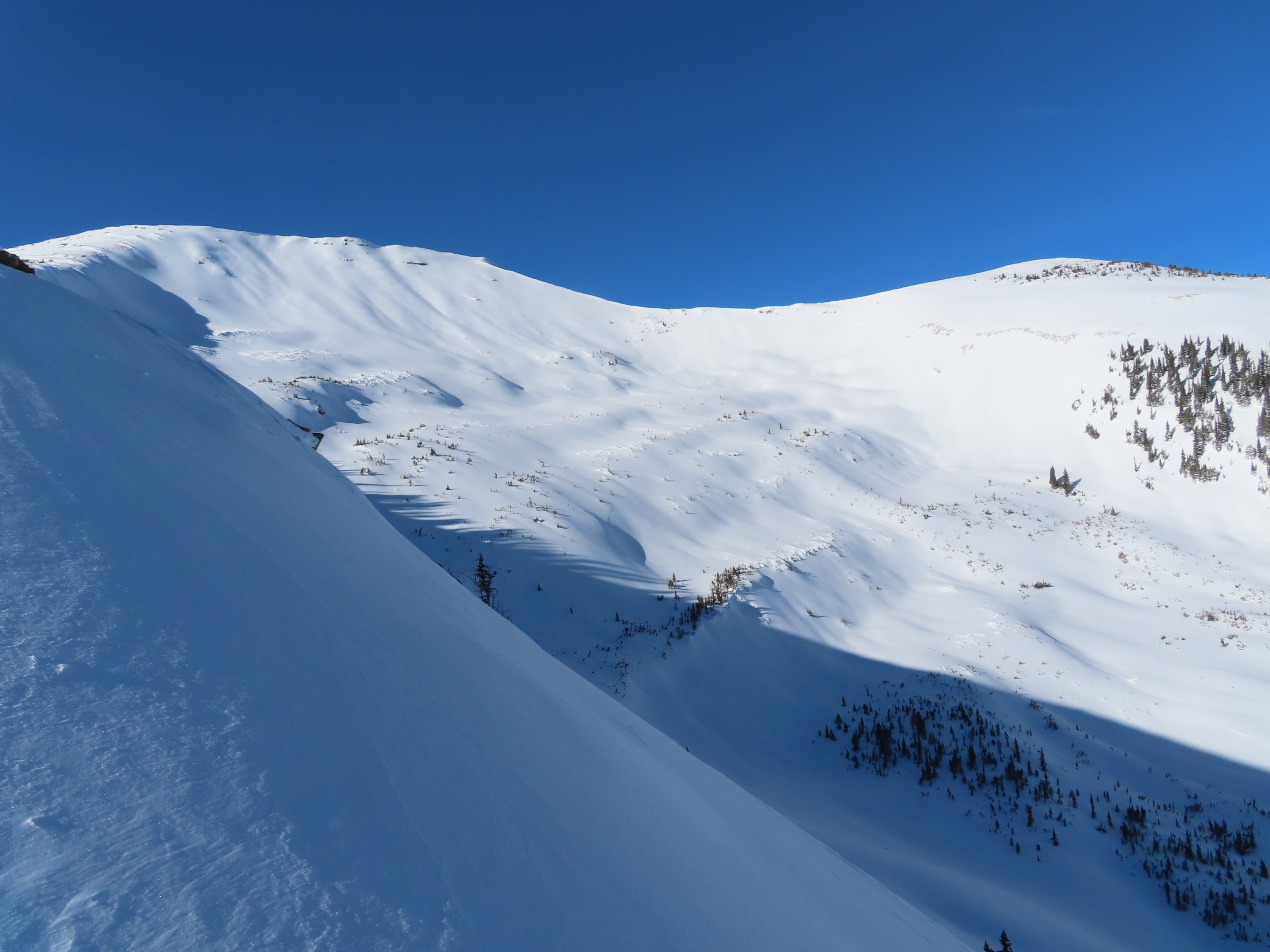
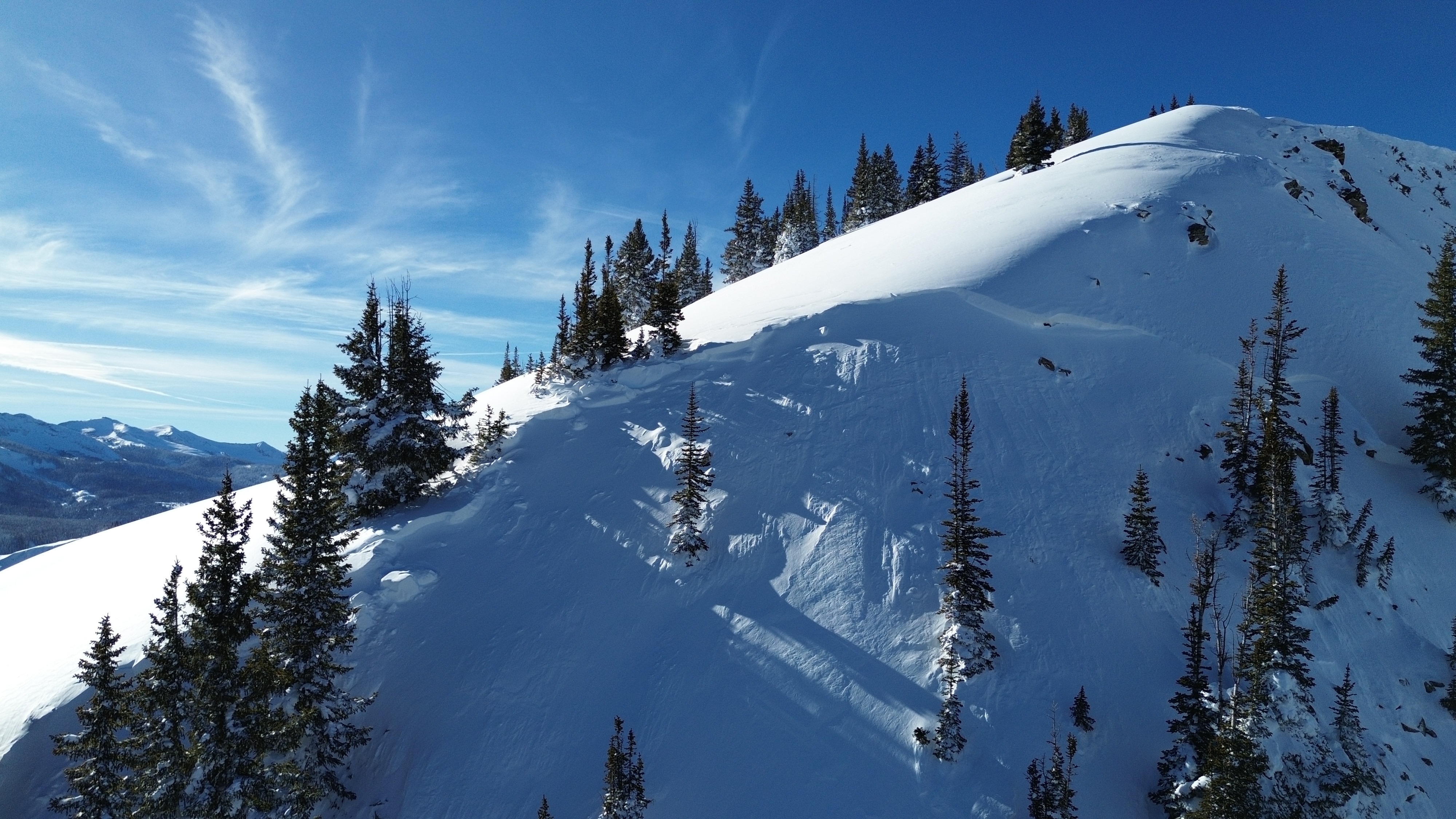
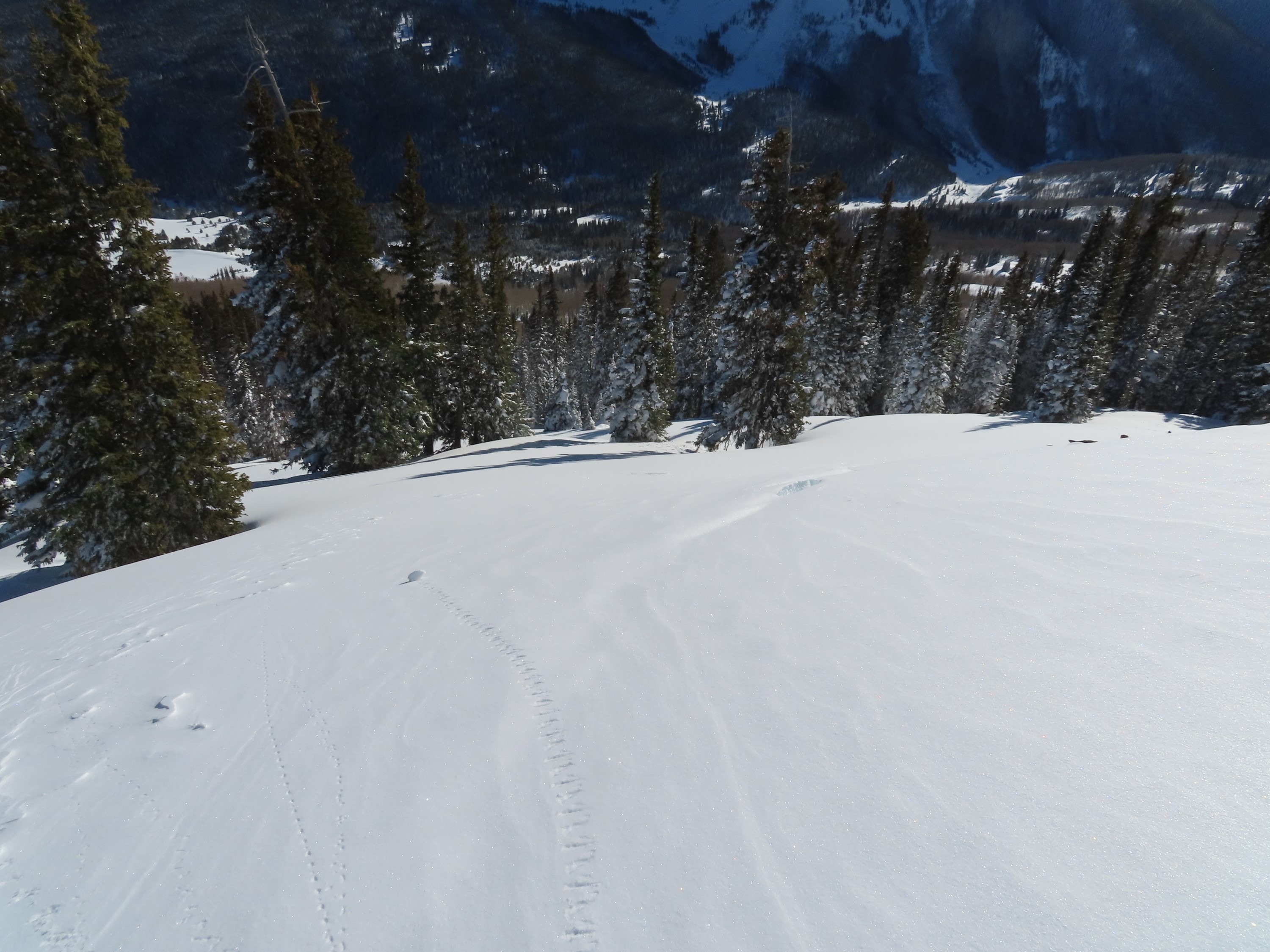
Extensive avalanche cycle removed the hazard on many slopes. The snowpack is significantly quieter than the last two days underfoot, but we could still produce numerous rumbling collapses with ski stomps or in thick to thin terrain features. Of the steep slopes that remained intact, many had large cracks across them and wouldn't collapse like the lower-angle terrain despite our best efforts to remote trigger them from above.
Extensive recent cycle. Slabs are thick enough now that collapses in wind-sheltered terrain required medium to hard stomping. These would rumble across entire terrain features...scary! Near treeline and in wind exposed terrain, we got a few collapses while just skinning along from thicker to thinner parts of the slabs.Weather
- Cloud Cover
- few
- Wind Loading
- previous
- Snow Avail For Transport
- small smounts
Light transport in general, some larger plumes off of a few peaks through the day.
Snowpack
Settlement cones are about 6". In windsheltered terrain, ski pen is about shin deep and the weak layer is about 80 cm deep. The snow surface is stiffer at higher elevations from previous drifting. The bottom of the slab is often stiffer (4F to 1F +) from the wind event earlier this week.
Avalanche
- Size
- D2 R1
- Count
- 12
- Aspect
- N
- Trigger
- N
- Elevation
- 11800 ft
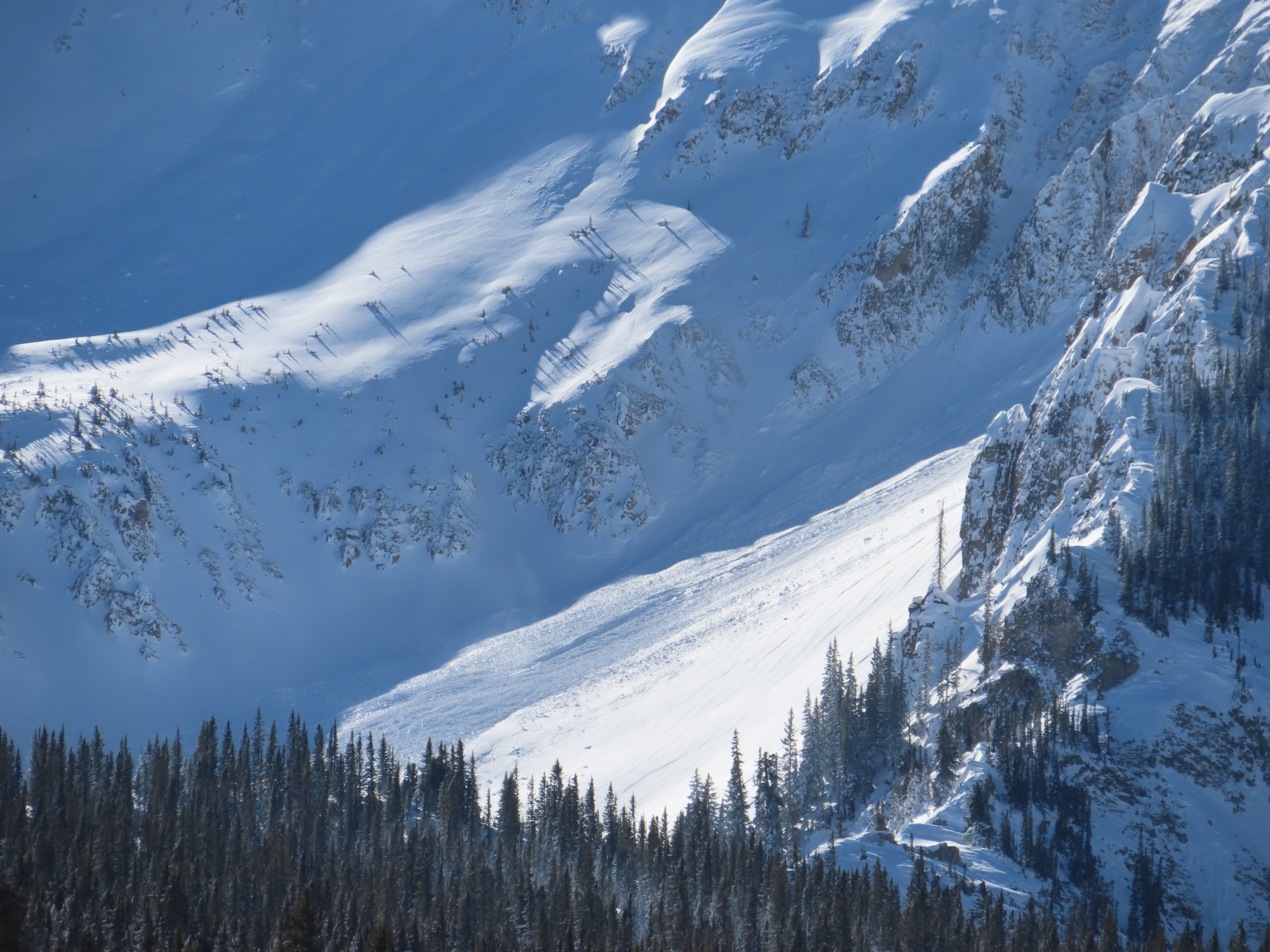
Widespread cycle of D1 to D3 persistent slab avalanches in the past few days, one large avalanche that I believe ran mid-morning today on Axtell. The recent activity was largest and most extensive on leeward terrain. Windward alpine aspects and low-elevation south-facing terrain weren't as active but still produced avalanches in some areas. Crowns appeared to be 2 to 4 feet thick on the early January weak layers.