
Quick report
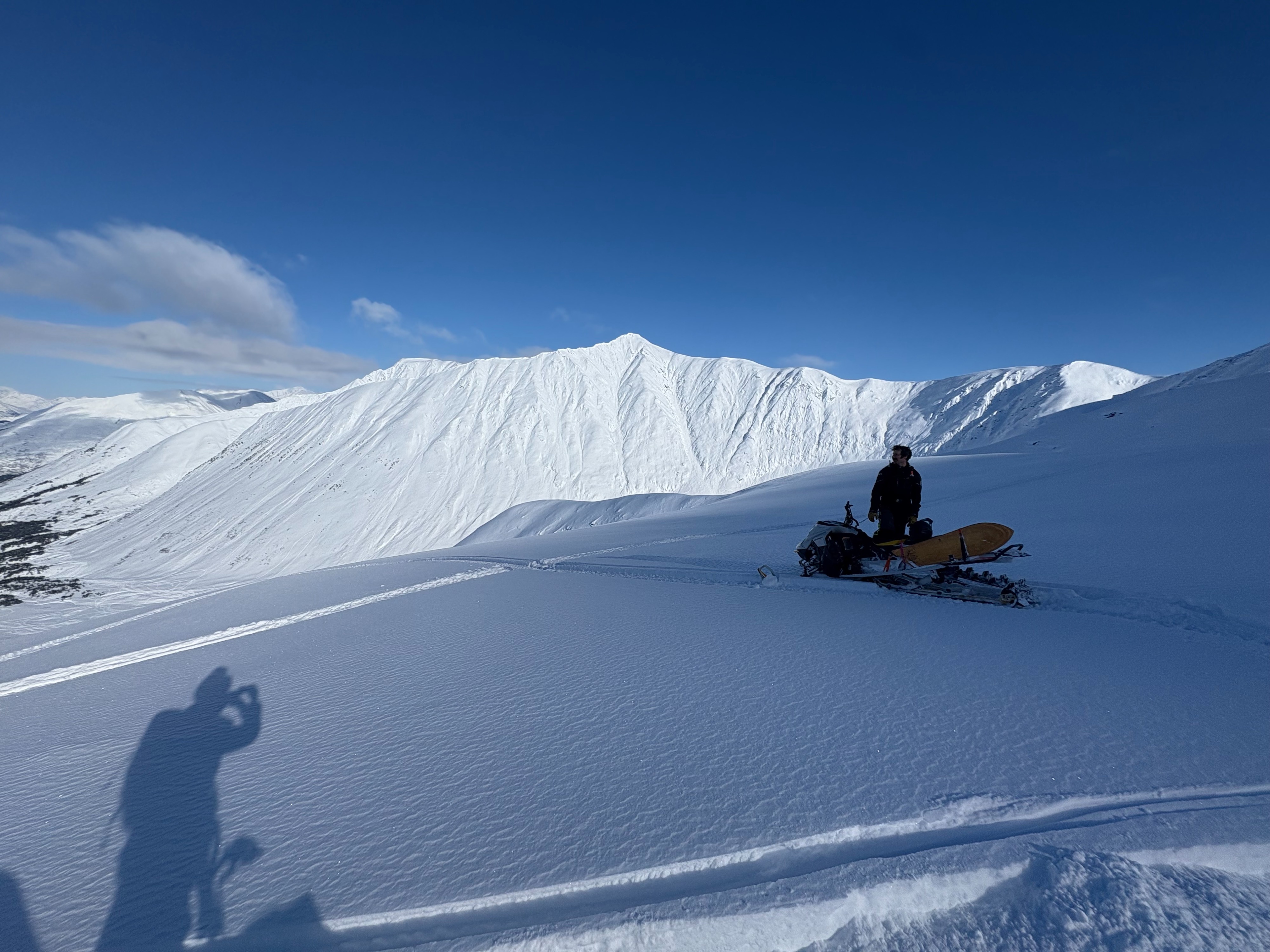
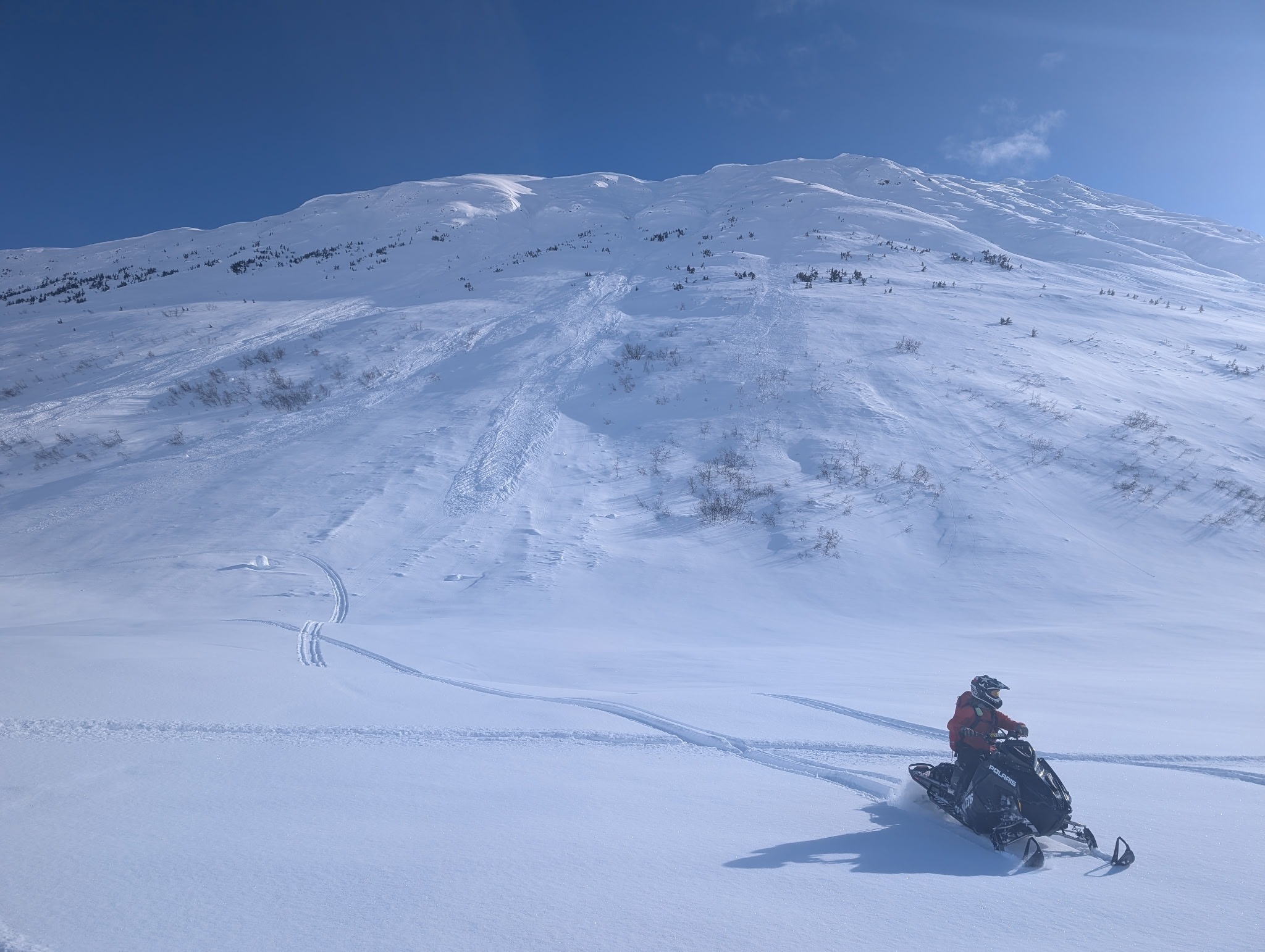
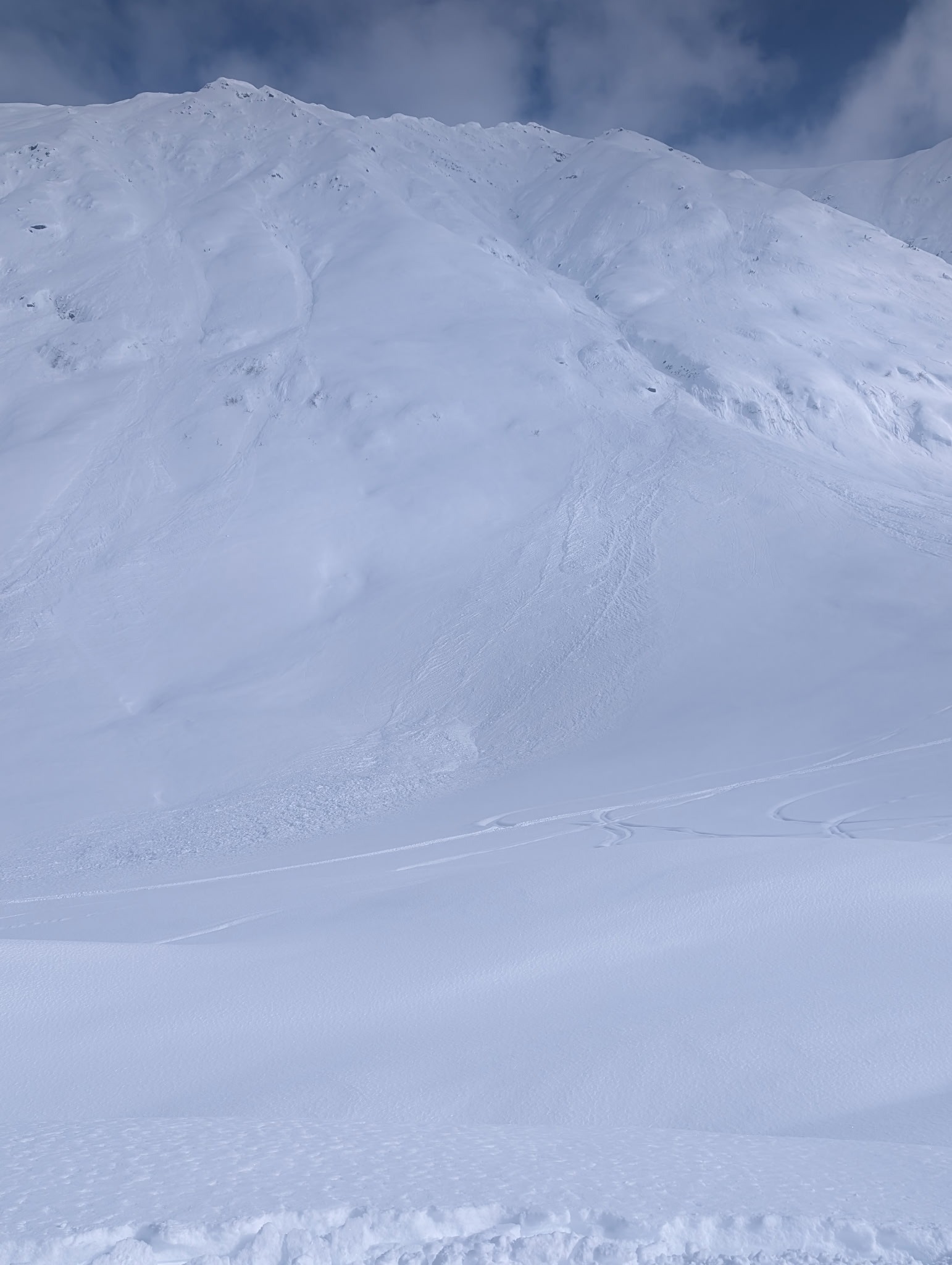
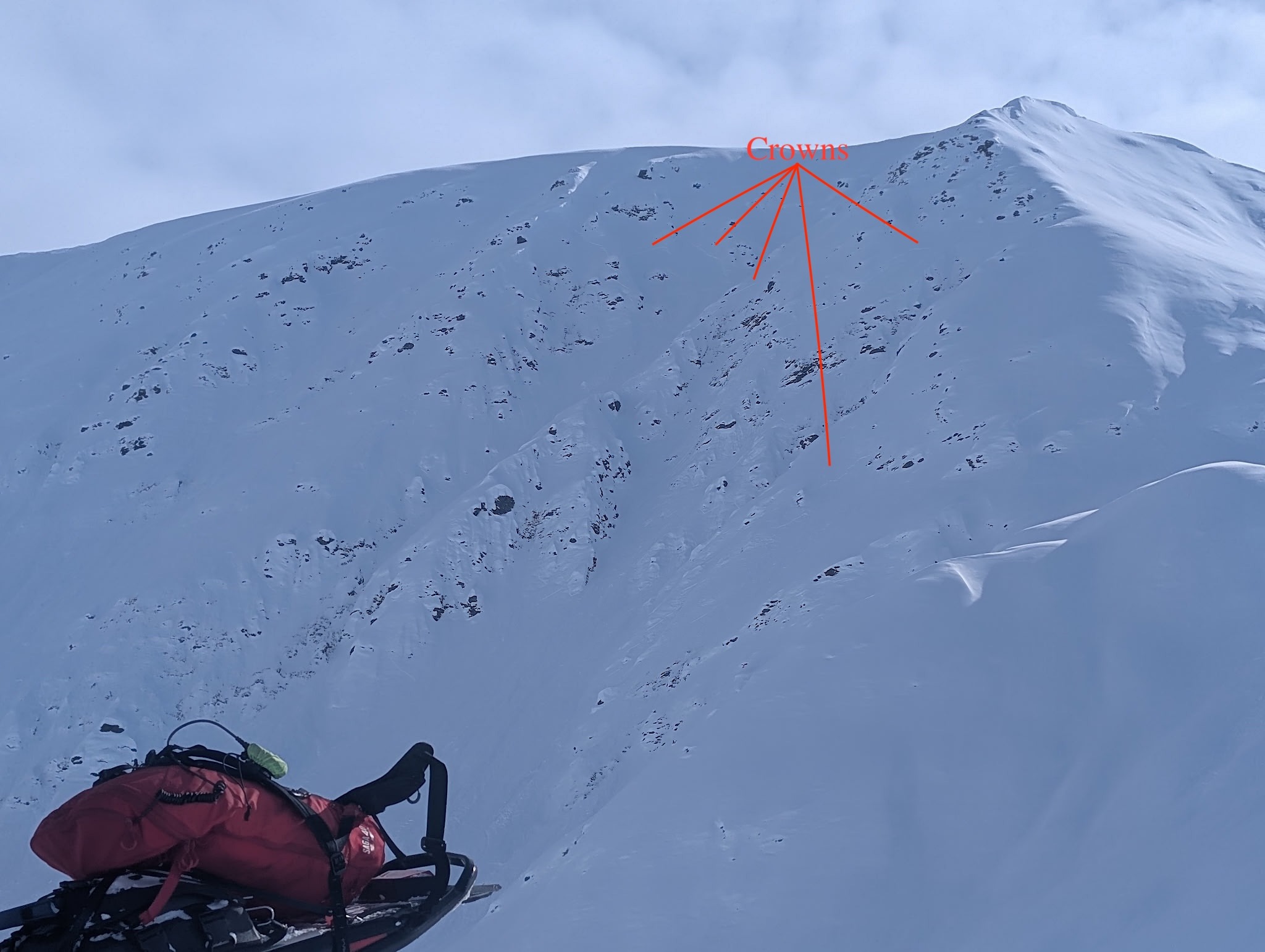
We found 8 to 10 inches of snow from last week’s storm in Lynx Creek, which made for an enjoyable day, especially given that the valley receives some sun this time of year. There was quite a bit of natural avalanche activity from the storm but most of it appeared to have occurred at the new snow old snow interface, producing primarily D1 to D1.5 avalanches with 0.5 to 1.5 ft crowns at elevations above 2500 ft, with debris reaching as low as 1900 ft in some areas. We did not find instability during our riding today, and looking at tracks from the weekend, there were no visible human triggered avalanches from skiers or snowmachiners.
That said, the snowpack in Lynx contains weak layers in the upper few feet, formed during recent cold and dry spells prior to the last storm although from riding around the area these weak layers have quite a bit of variability in in depth below the surface. While we did not observe instability in our tests, the uppermost storm snow was very low density, faceting, and generally lacked cohesion at our pit locations. However, near ridgelines where wind effect is more pronounced, and on southerly aspects where solar radiation has played a role, conditions may be more reactive.
Although none of our test slopes showed signs of instability today, we did not treat conditions as open season given the poor underlying structure and recent natural avalanche cycle in the area.
Weather
- Cloud Cover
- scattered
- Wind Loading
- none
- Recent Snowfall
- 8-10 inches
- Snow Avail For Transport
- large amounts
Partly cloudy and calm winds
Snowpack
We dug two snowpits in Lynx Creek at 2700 ft and 3800 ft. At 2700 ft on a westerly aspect, we found 8 to 10 inches of soft snow sitting atop a semi breakable 2 inch crust, with two facet layers surrounding another crust below (see photos of pit wall structure). While this structure does not constitute a strong snowpack, and there was evidence of recent avalanches failing at the new snow old snow interface, we observed stable Extended Column Test results (ECTN down 8 inches). At this location, the surface snow was very low density, lacked slab characteristics, and was beginning to facet.
In our higher elevation pit on a southeasterly aspect at 3800 ft, the snowpack was similar to what we observed at lower elevations, except less recent snowfall had accumulated. Only a few inches of soft snow overlaid the same weak facet layers. Old tracks were visible near this pit, indicating some scouring in the area and a generally thinner snowpack.