

Quick report
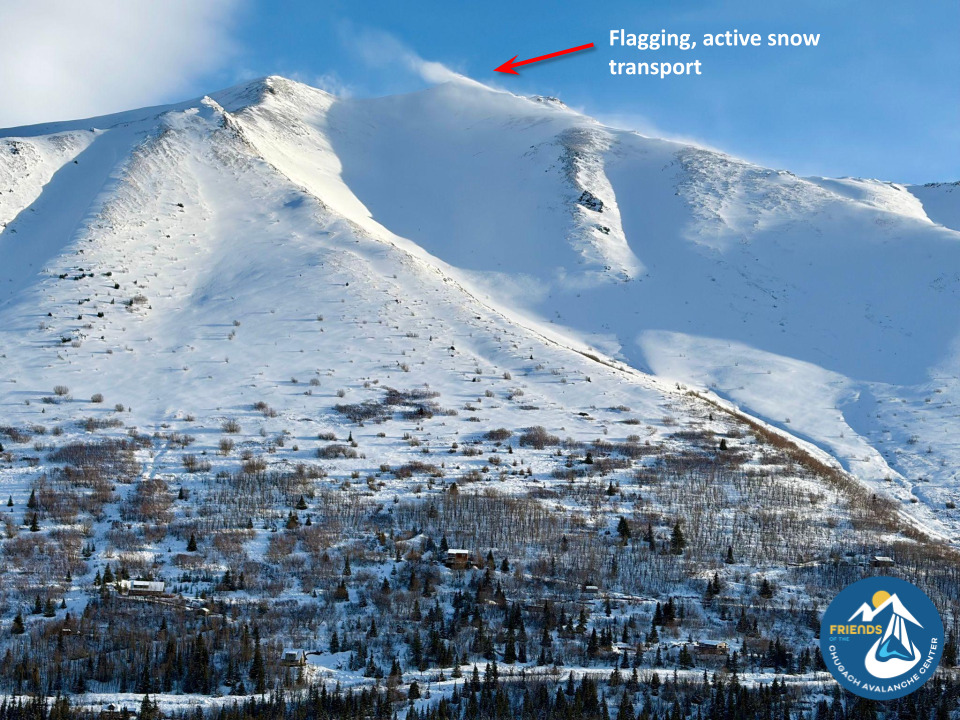
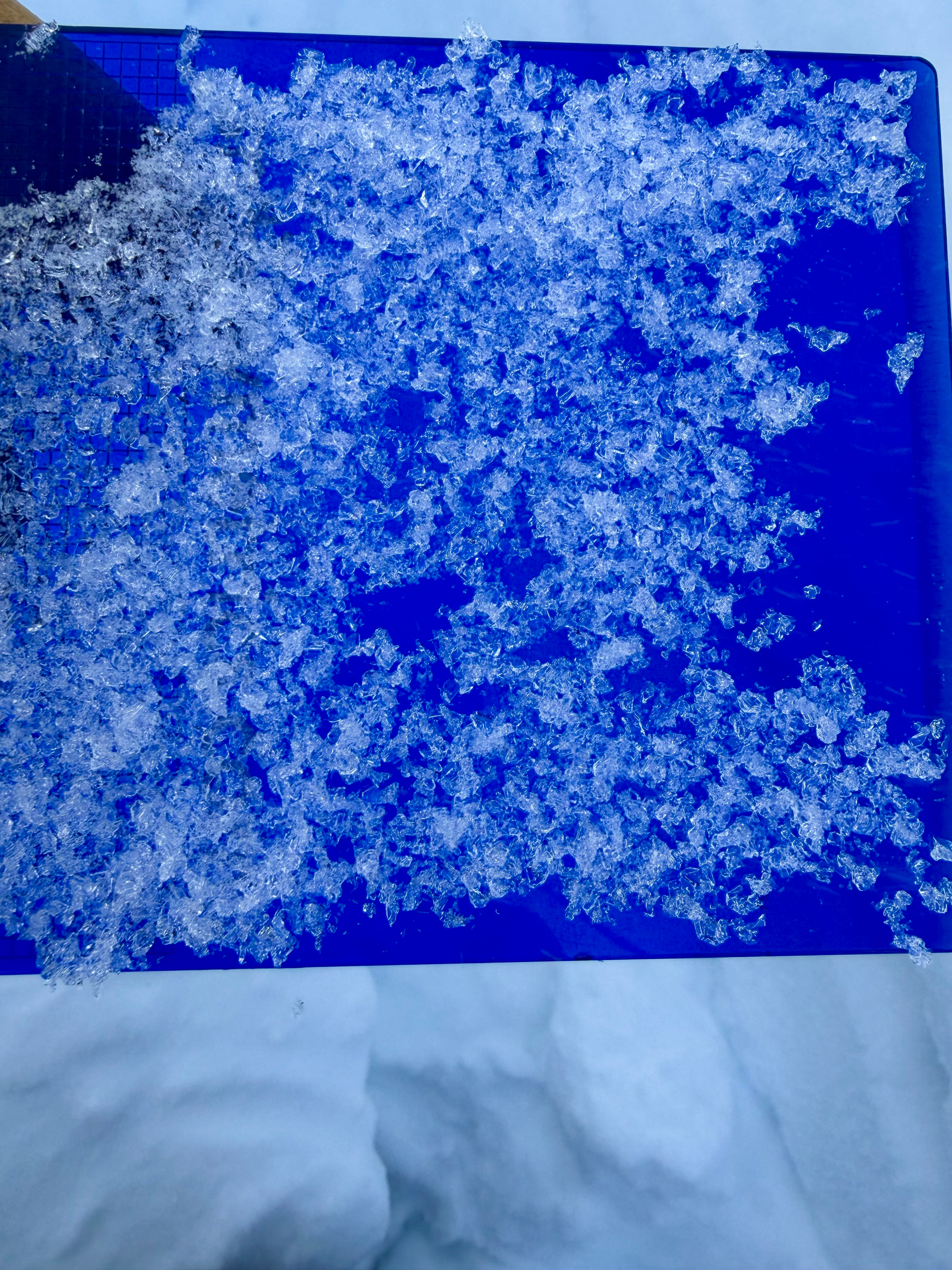
Active snow transport and moderate winds were observed early in the day, tapering by the afternoon. We found 2–4" of fresh snow near the parking lot and in wind-sheltered, low-elevation terrain. Beneath the new snow was a melt-freeze crust up to 2700'. While not currently a concern, this crust will be worth monitoring once buried, especially if faceting develops around it.
At higher elevations (above Hunter Pass), wind effects were pronounced. Snow was either stripped to bare ground or drifted up to 1' deep in isolated areas. Ridgelines held firmer wind-affected snow, while the snow in slightly more sheltered terrain (North Bowl) remained mostly soft.
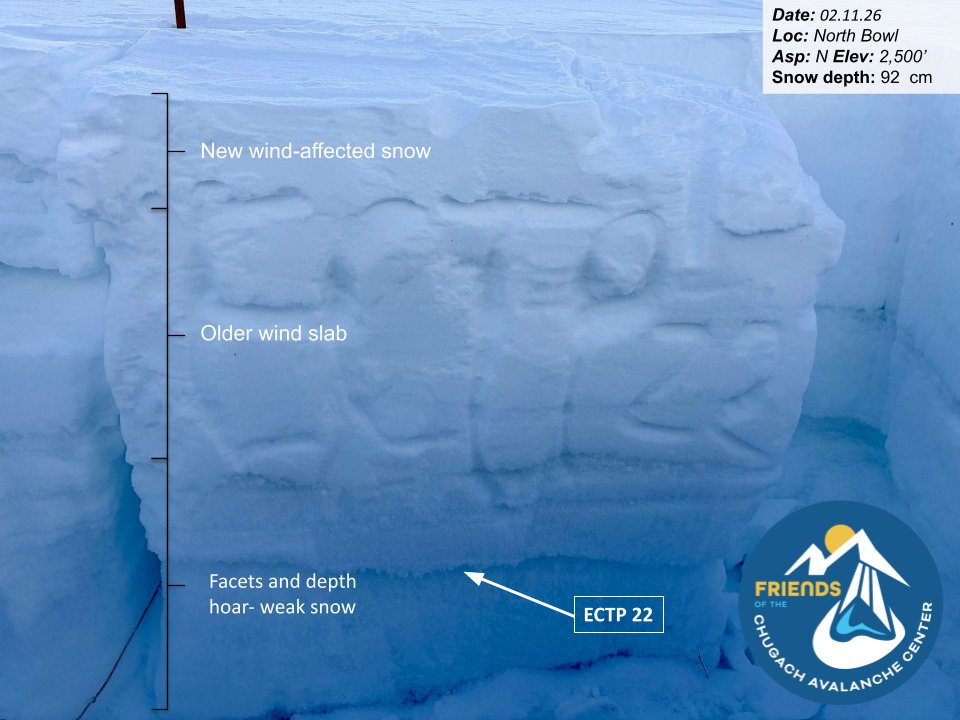
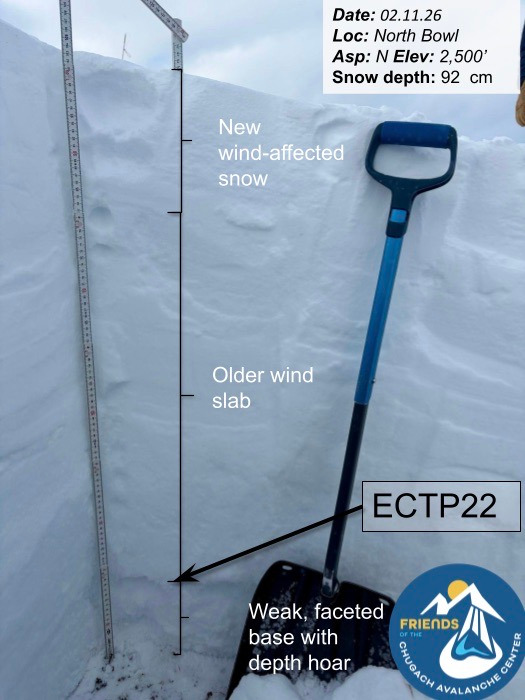
We dug two snowpits along the east ridge near North Bowl in low-angle terrain representative of a higher elevation wind-loaded start zone. No avalanches have been documented failing on old weak layers since the January 27–28 wind event (over two weeks ago), and recent warm weather has promoted healing. However, the poor overall structure remains. In a shallower test location, we were able to produce one propagating result (ECTP22 on basal facets). Triggering an avalanche on these basal facets would be difficult, but it is not completely off the table.
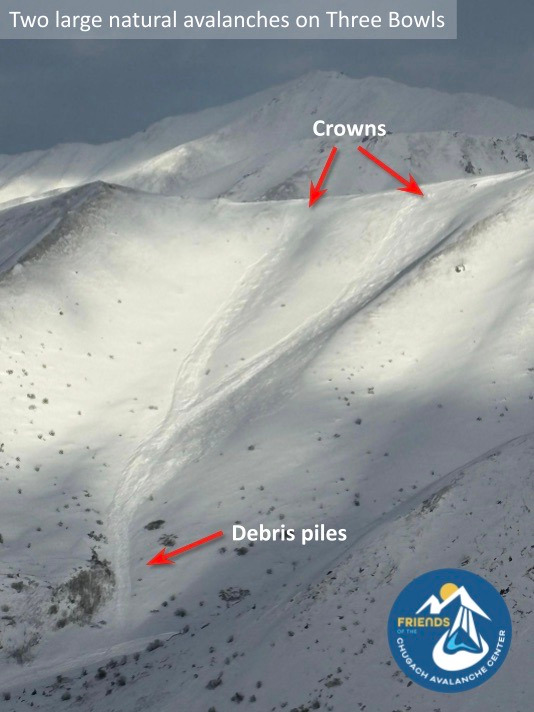
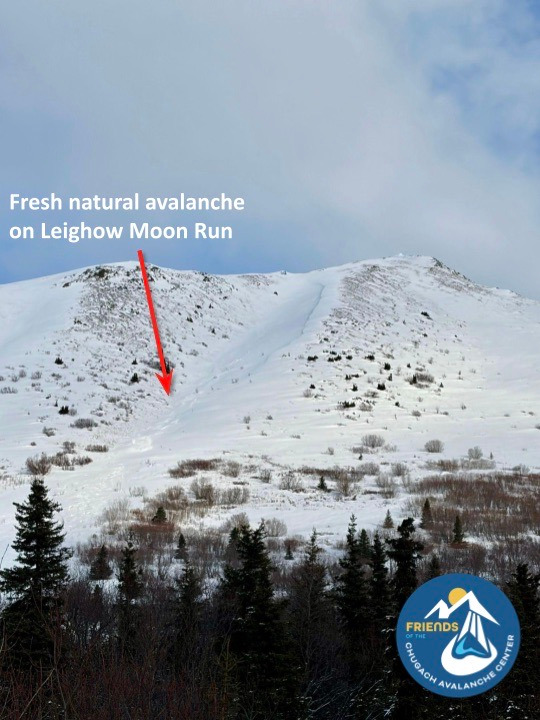
We observed several small to large natural wind slab avalanches that likely occurred during the snow and wind loading eventWeather
- Air Temp
- 20
- Cloud Cover
- broken
- Wind Loading
- moderate
- Rain Elevation
- Not observed
- Recent Snowfall
- 8
- Snow Avail For Transport
- moderate amounts
Moderate winds from the SE in the morning that tapered by early afternoon, broken skies, no precipitation
Avalanche
- Size
- D1.5 R2
- Type
- SS
- Count
- 2
- Aspect
- SW
- Trigger
- N
- Elevation
- 4200 ft