
Quick report
- Cracking
- specific
- Collapsing
- specific
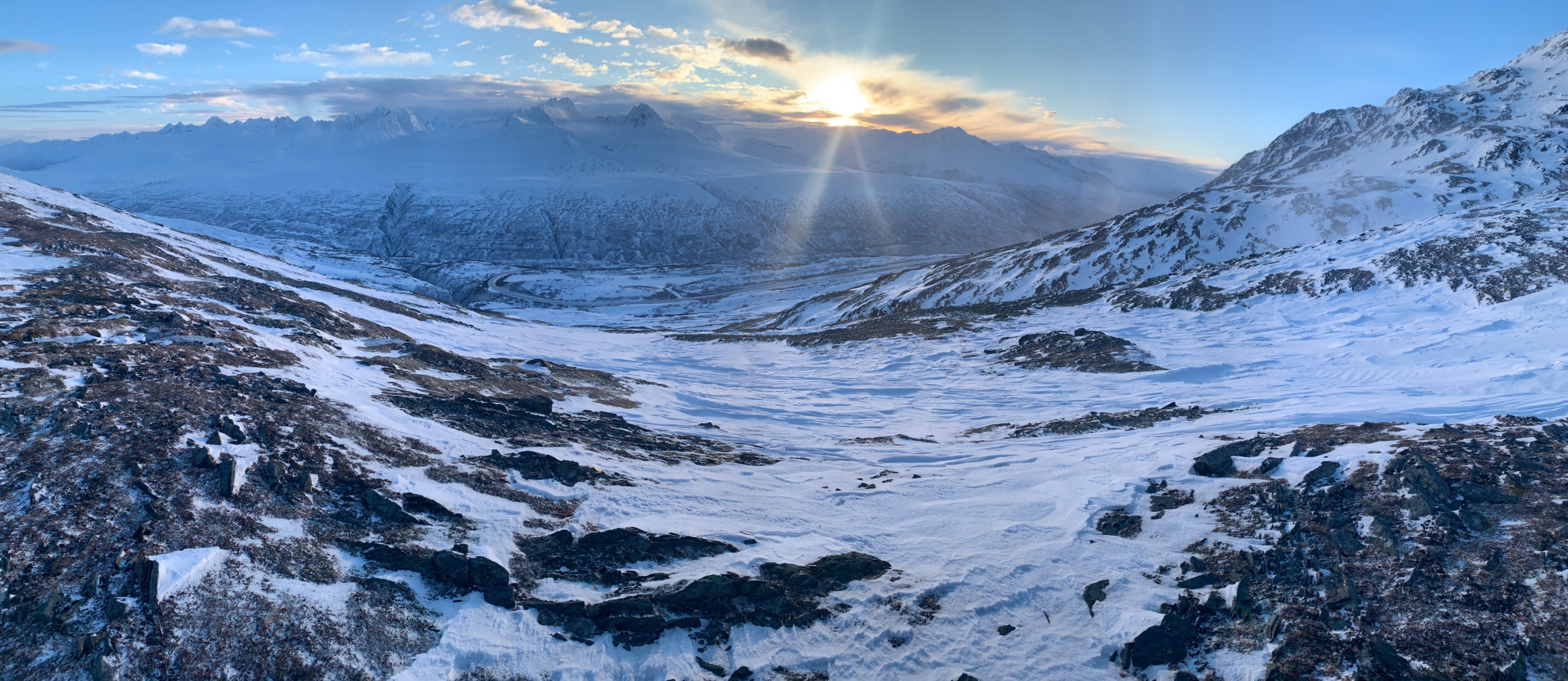
Conditions below 3000' were more consistent and better for travel than above 3k. Winds below 3k were not able to strip deeper into the snowpack than the 12/1 rain crust. This provided no signs of instability and reasonable ski and travel conditions that were at least consistent. Above 3k it was very apparent there had been a great deal more snow redistribution, wind slab formation, and stripping of the snowpack due to the lack of the rain crust. Signs of instability were observed above 3k. New wind slabs were gaining strength; however, signs of instability still point to the dangerous potential of triggering a hard slab avalanche
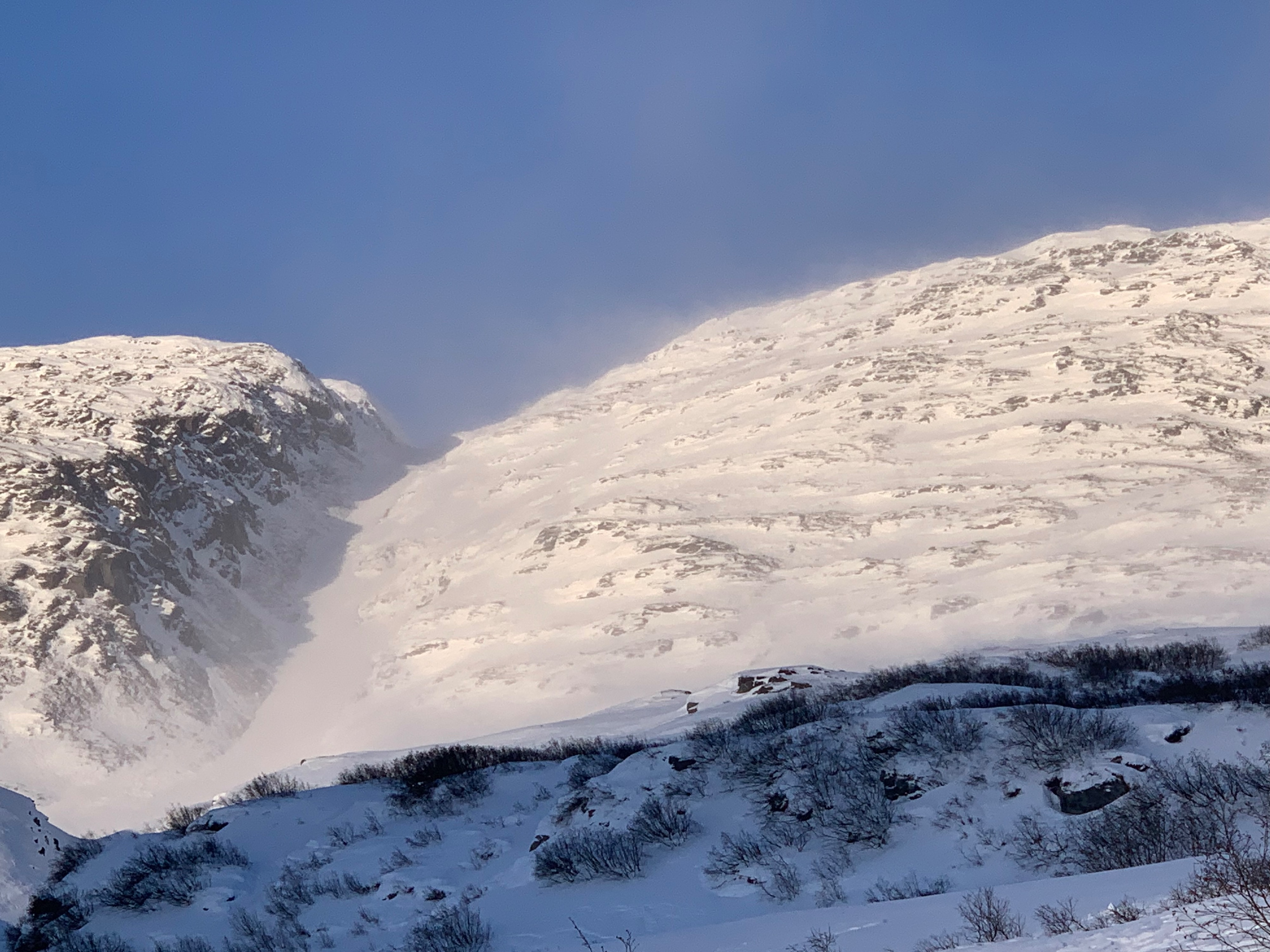
Many natural avalanches were observed on the north side of Thompson Pass. A few very large collapses were observed travelling over large patches of wind slab with shooting cracks involved along the periphery of the slab.Weather
- Cloud Cover
- few
- Wind Loading
- previous
- Rain Elevation
- 3000
- Snow Avail For Transport
- small smounts
Mostly clear and cold with light to moderate North wind below 3200'. Above 3200' winds were very strong with occasional ground blizzards.
Snowpack
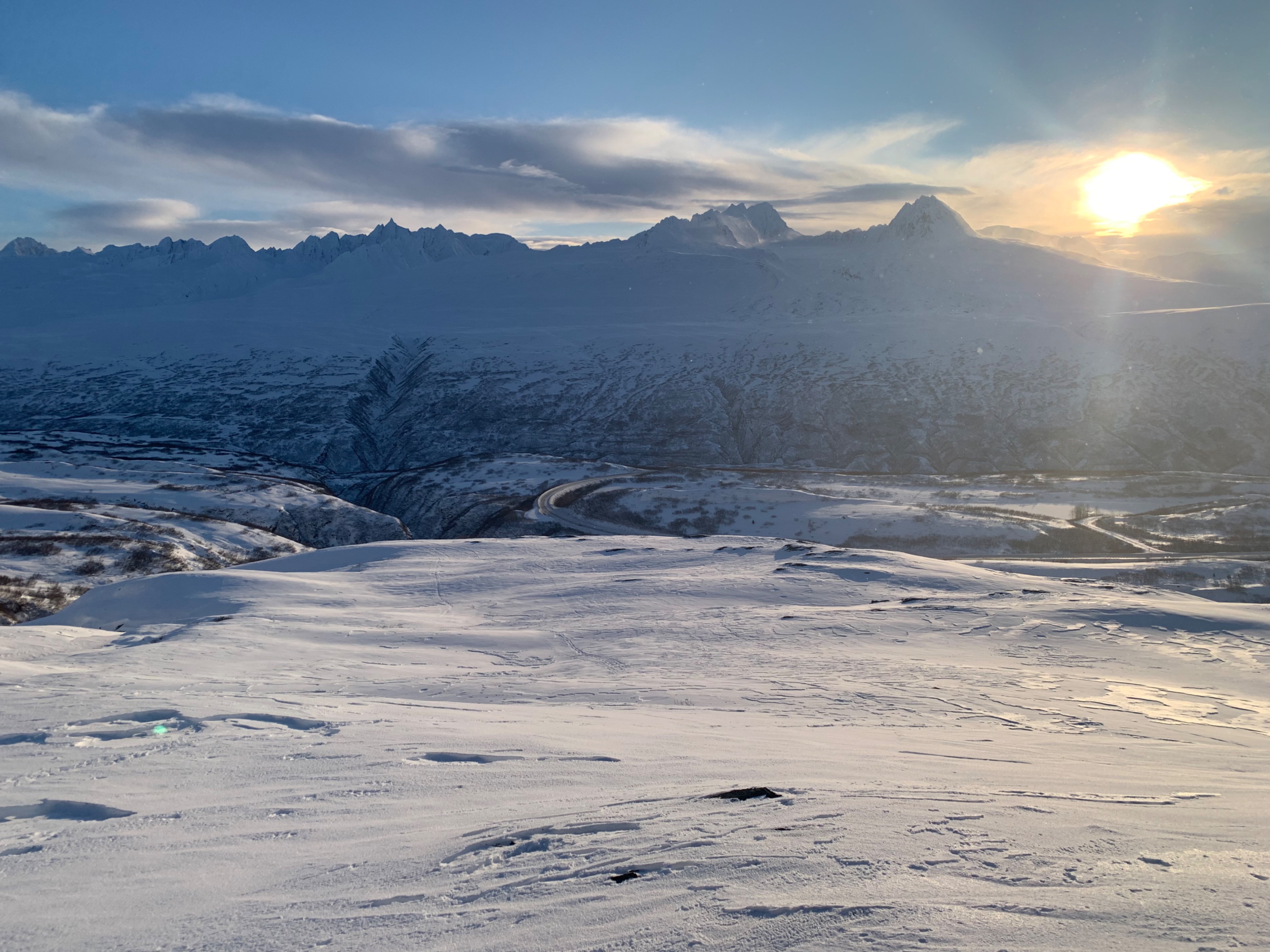
Surface conditions are dominated by wind effect. Below 3000' winds had stripped snow down to the 12/1 rain crust but not below the crust. Wind slabs were thin, small, and isolated in this elevation band. This was likely due to a combination of the slick surface of the rain crust along with the strength of the wind not allowing slabs to stick in this location, rather it was stripped. snow coverage remained good below 3k.
Above 3000 the rain crust went away and the surface snow became a variety of pencil hard wind slabs 2-3' thick, sastrugi, and bare ground. Once wind slabs became deeper and much larger spatially several large collapses were observed with shooting cracks along the edge of the slab. Did not travel on slopes >30°.
Avalanche
Will publish photos and description of naturals under the avalanche tab next to observations.