
Quick report
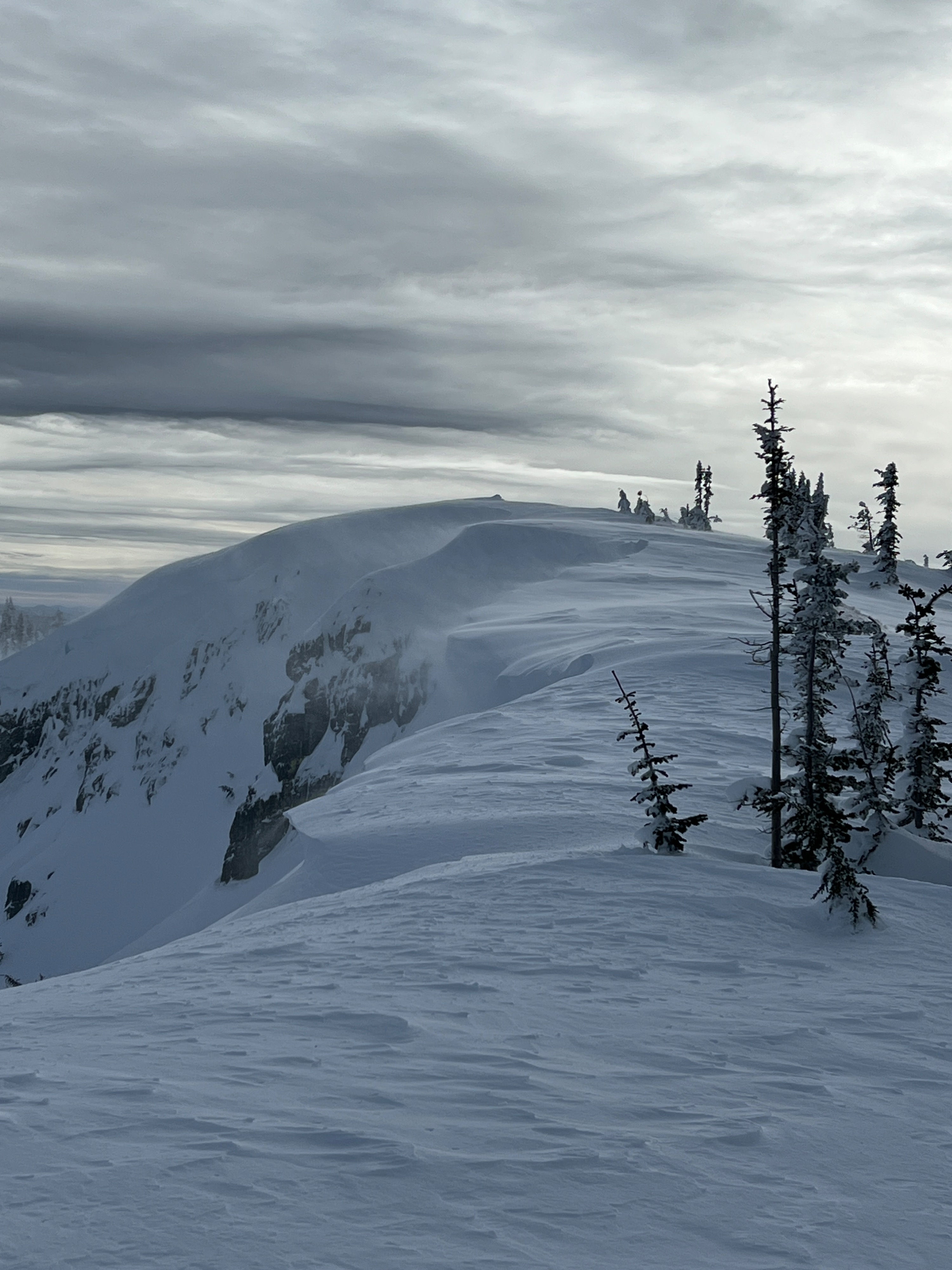
We observed lots of evidence of wind loading, both below the ridge line and on steep mid-slope terrain features like gully walls and rocky outcrops. Snow was being transported throughout the duration of our time in the field. Northerly and easterly facing slopes were getting the most loading from southwest-west winds. We travelled on a primarily east-facing slope and experienced a dense snow surface all the way down to about 6300' with a textured surface from wind effect. Protected, lower-angle slopes offered the best and safest conditions.
Limited signs of instability. Cracking between skis on slopes with dense wind-drifted snow, but no shooting cracks.Weather
- Cloud Cover
- broken
- Wind Loading
- moderate
- Rain Elevation
- Not observed
- Recent Snowfall
- Not observed
- Snow Avail For Transport
- moderate amounts
Mostly broken skies and mild temperatures. Moderate winds from the southwest/west with strong gusts and snow transporting at the ridgeline. Intermittent and very light snowfall came through in the evening, but did not amount to anything.
Snowpack
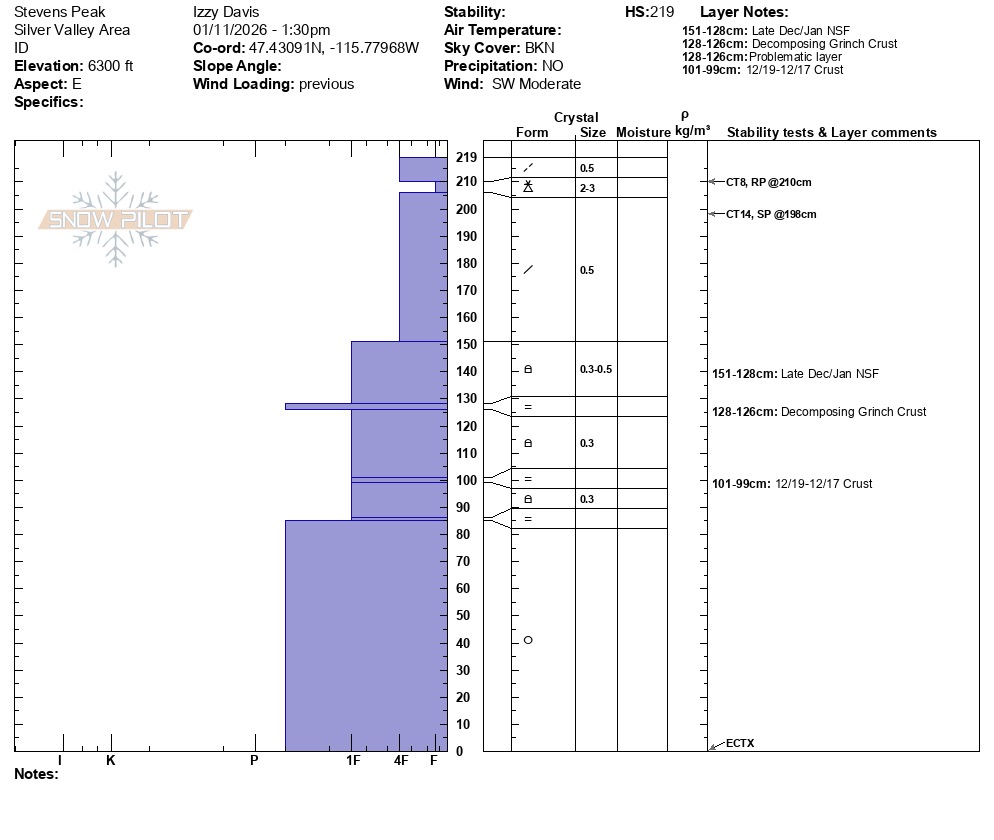
The newer snow from the potent winter storm at the end of the first week in January fell mostly right side up, and previously weak interfaces within the storm snow are mending and consolidating. Snowpack tests revealed that the storm interfaces are more resistant to fail now that we are several days out from snowfall, and we did not get propagation in our extended column test. The late December/early January near-surface facets are on their way to rounding, but did fail with moderate force in a compression test. The Christmas "Grinch" crust was buried 3 feet deep and had small rounding facets both above and below that proved to be stubborn. We did not find any evidence of surface hoar.
Avalanche
- Size
- D1 R1
- Type
- SS
- Count
- 2
- Aspect
- NW
- Trigger
- N
- Elevation
- 6300 ft
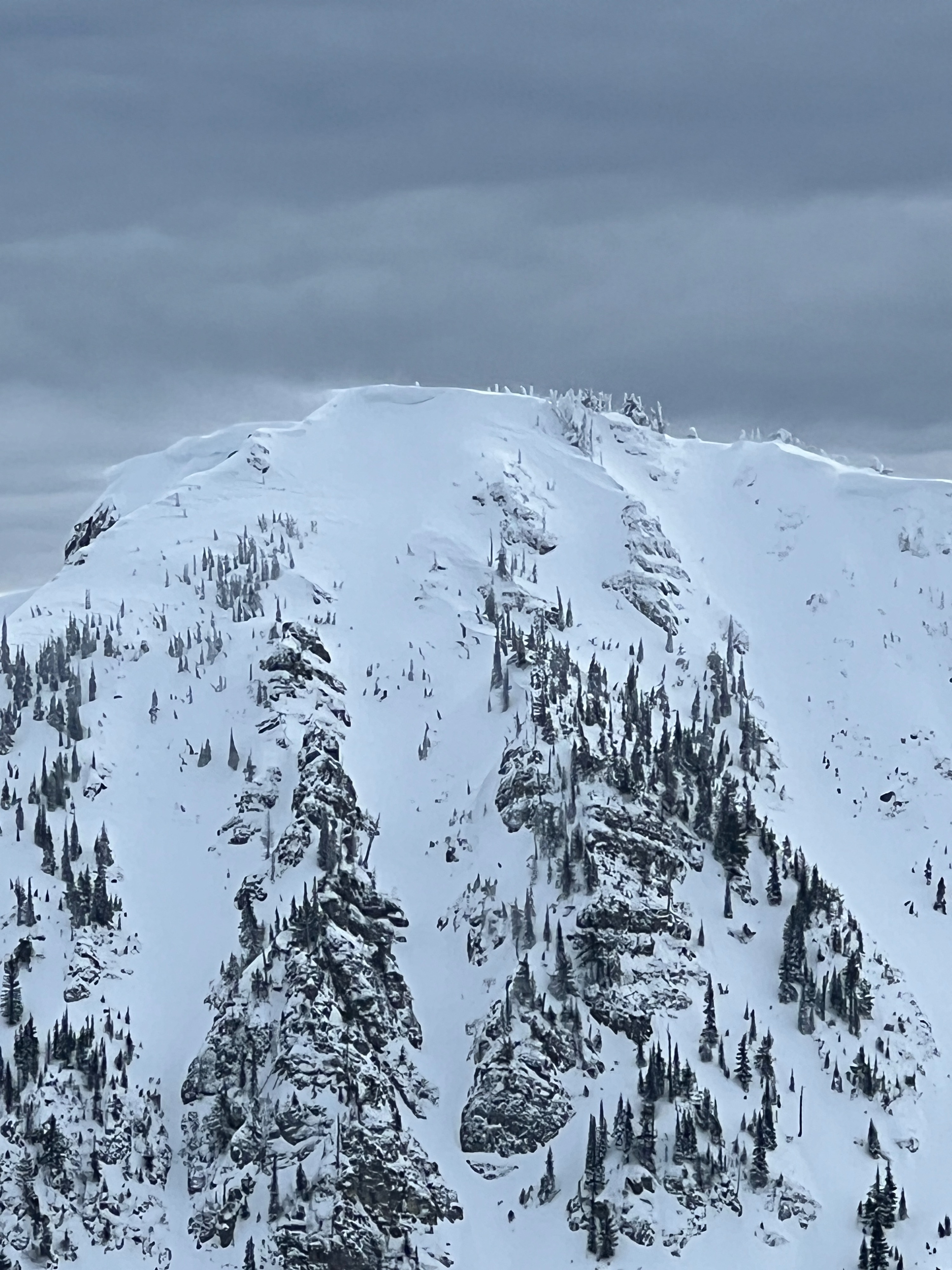
Several old crowns were observed on NE-N-NW facing slopes in steep wind-loaded terrain. All slides likely ran around the 1/7-1/8 cycle.