
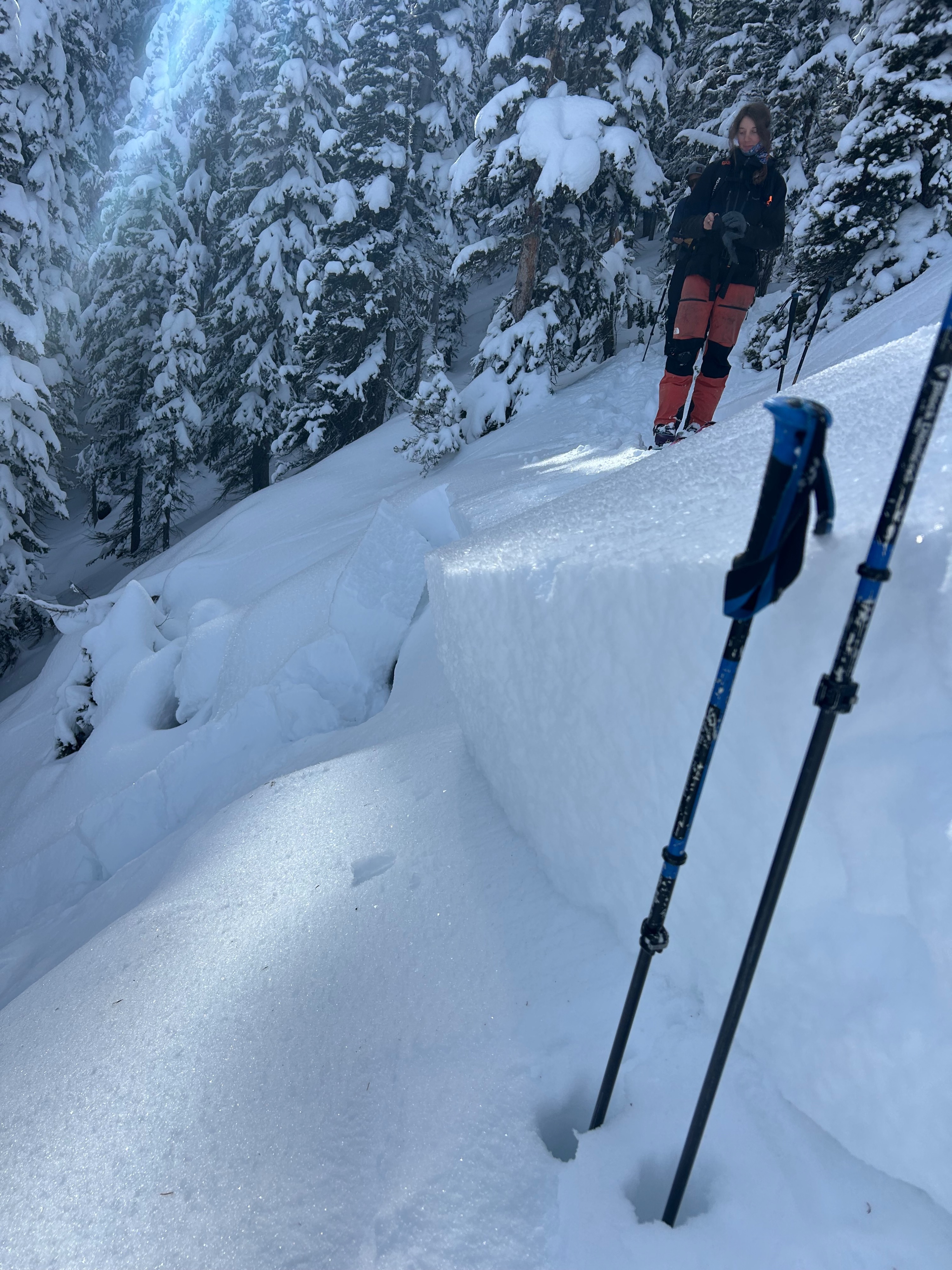
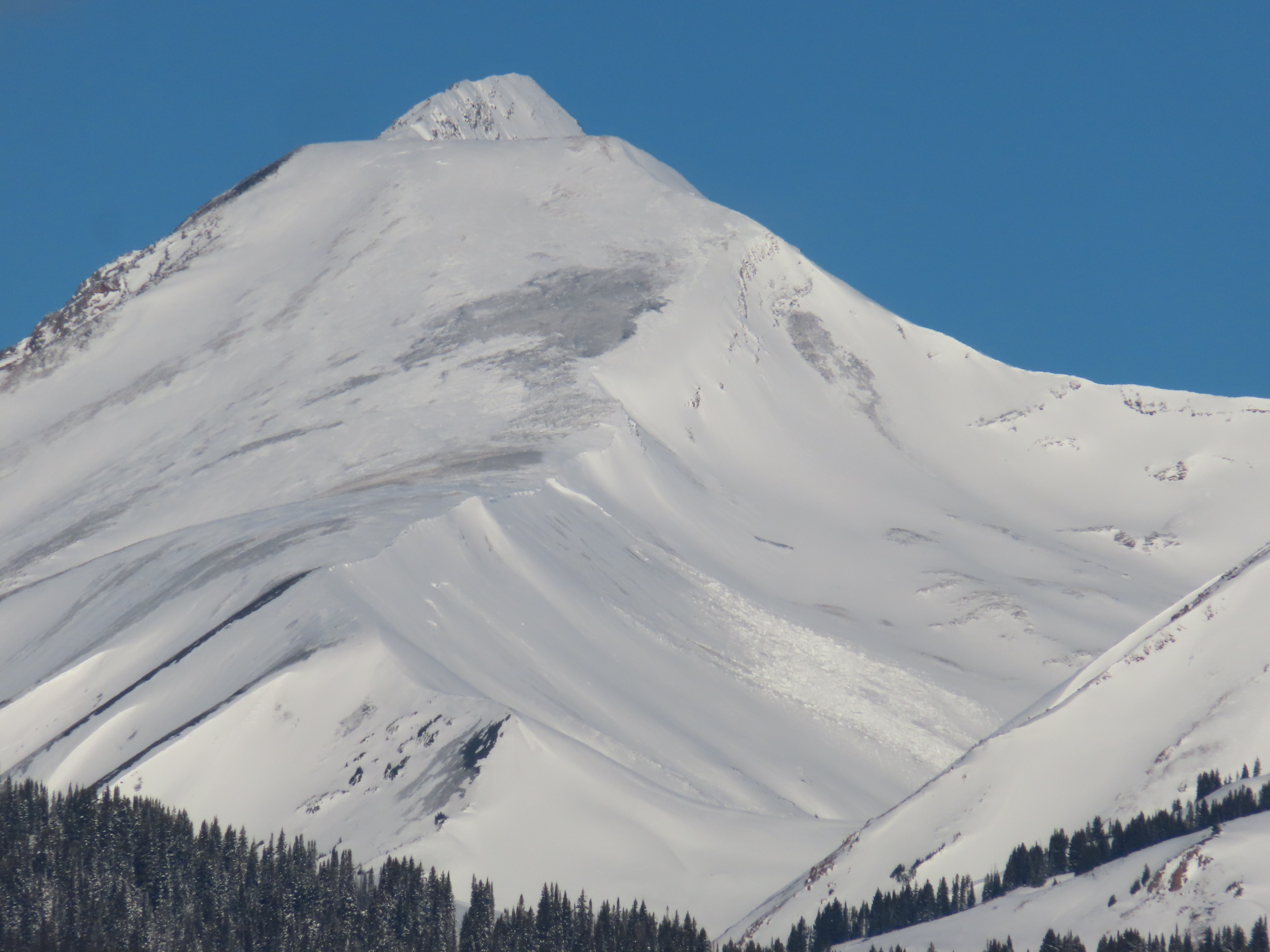
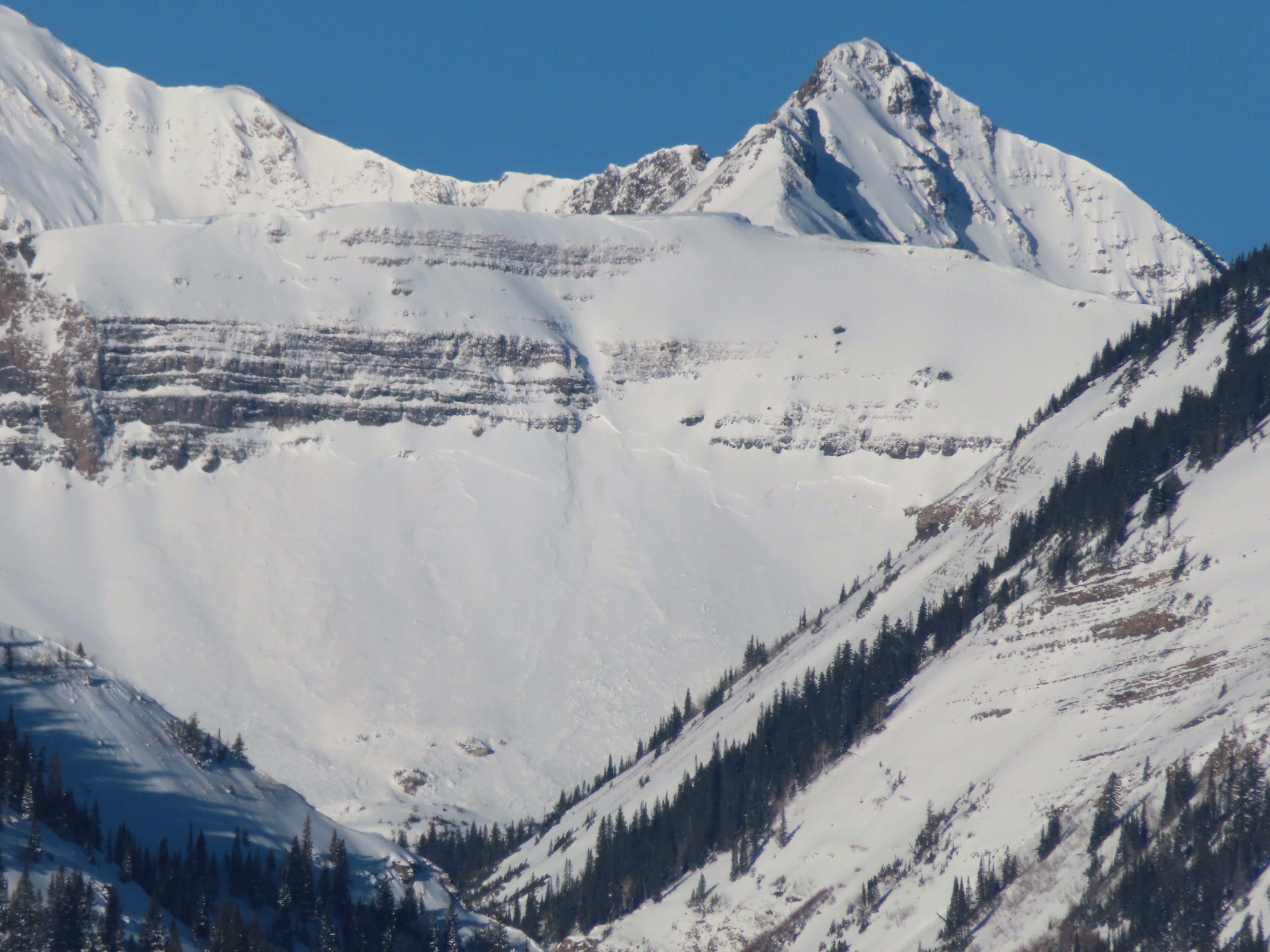
Quick report
- Cracking
- Observed
- Collapsing
- specific
We found sensitive remote triggering conditions once we reached open slopes around 11,000'. Feedback was variable, with non-propagating test results and collapses only occurring on some terrain features and not others.
Numerous large collapses once we emerged out of dense forest onto open, low angle slopes.Weather
- Cloud Cover
- scattered
- Wind Loading
- none
- Snow Avail For Transport
- moderate amounts
Increasing clouds, light summit winds.
Snowpack
Large-grained surface hoar event on open slopes at all elevations (up to our high point at 12,000'). Persistent slabs are 50 to 55 cm in wind sheltered terrain (F to 4F). A pit on a low-angle slope produced ECTN results on the Xmas facets (1mm, rounding, F+ hard). The slopes we triggered appeared to have a thinner pre-Christmas snowpack, likely due to early December avalanche activity.
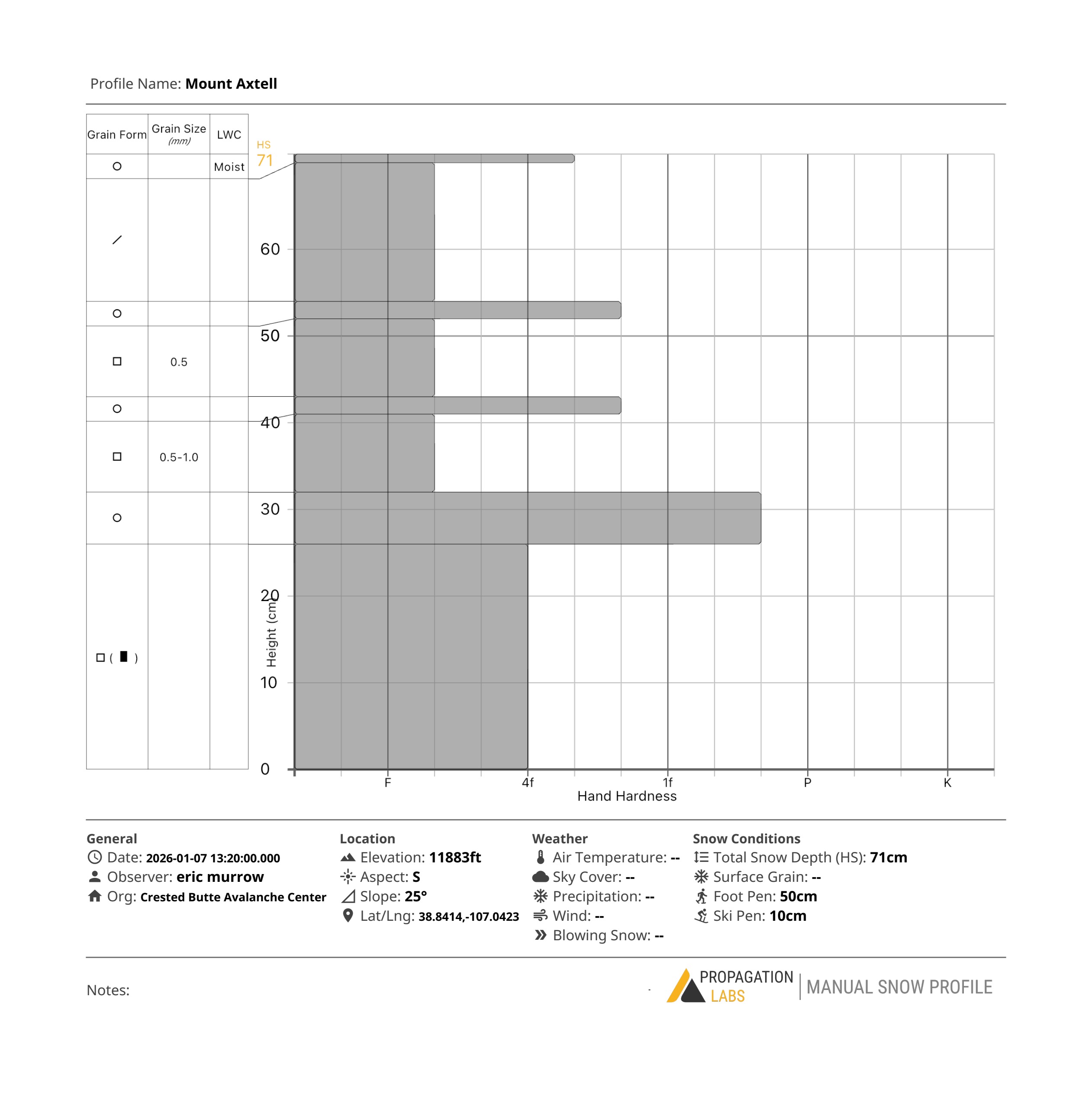
A quick profile on a southerly slope at 11,800 feet without windloading showed a weak stack of crusts and facets, but no slab present. This structure poses no threat unless you encounter a wind-drifted feature (see profile).
Avalanche
- Size
- D1.5
- Type
- SS
- Count
- 6
- Aspect
- E
- Trigger
- AS
- Elevation
- 11000 ft
Remotely triggered three persistent slab avalanches, which all failed just under 2 feet thick on our Christmas dryspell facets. These were on E and NE aspects, 11,000' and 11,400', D1.5 and D2s. The first avalanche in Corner Pocket was interesting because I stomped across the start zone attempting to trigger it without any feedback (ski pen was reaching the weak layer). Then I stepped further from the slope, started digging a pit (with skis on), and got the collapse and remote trigger by sticking my shovel into the snow.