
Quick report
- Cracking
- specific
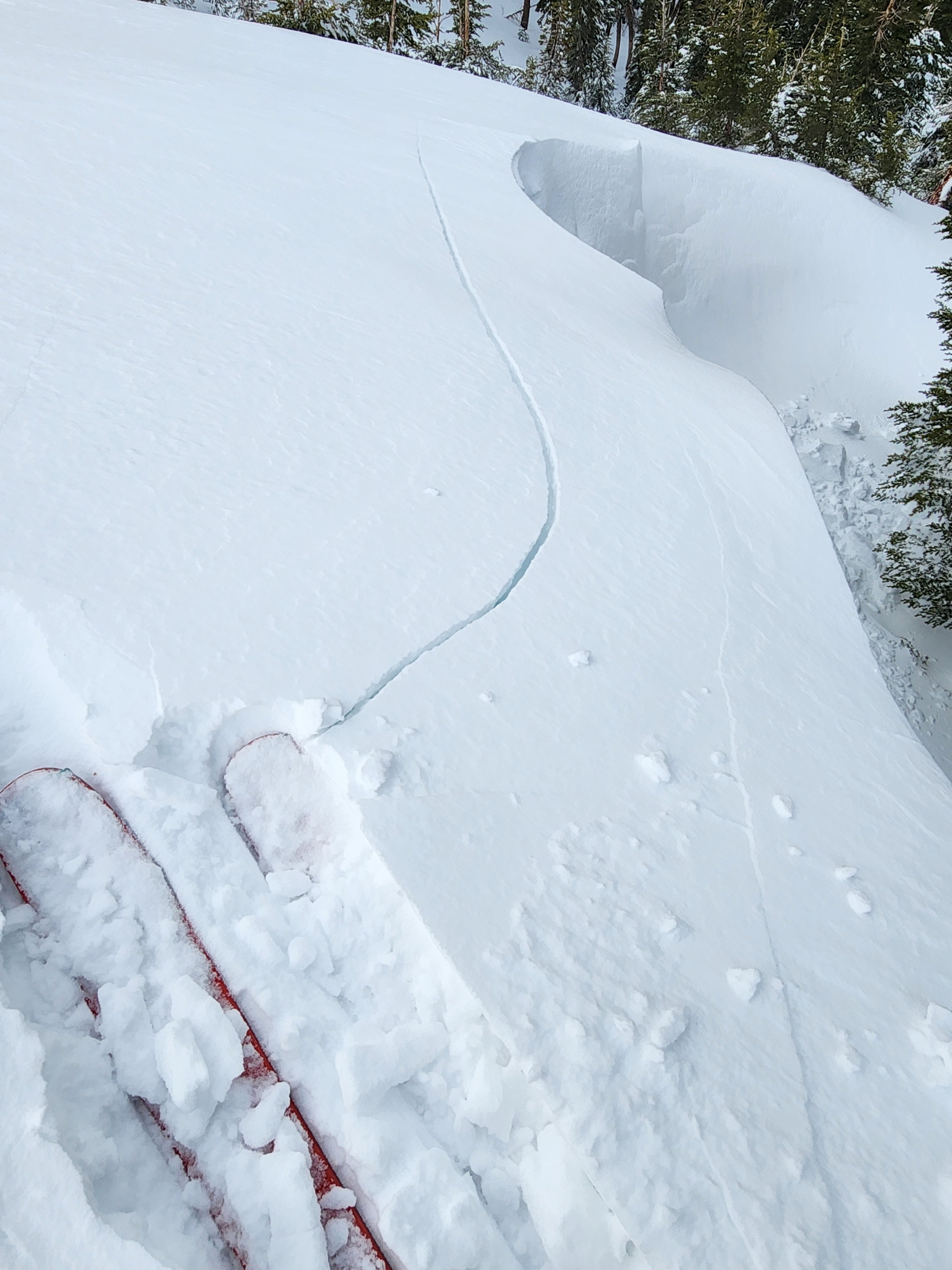
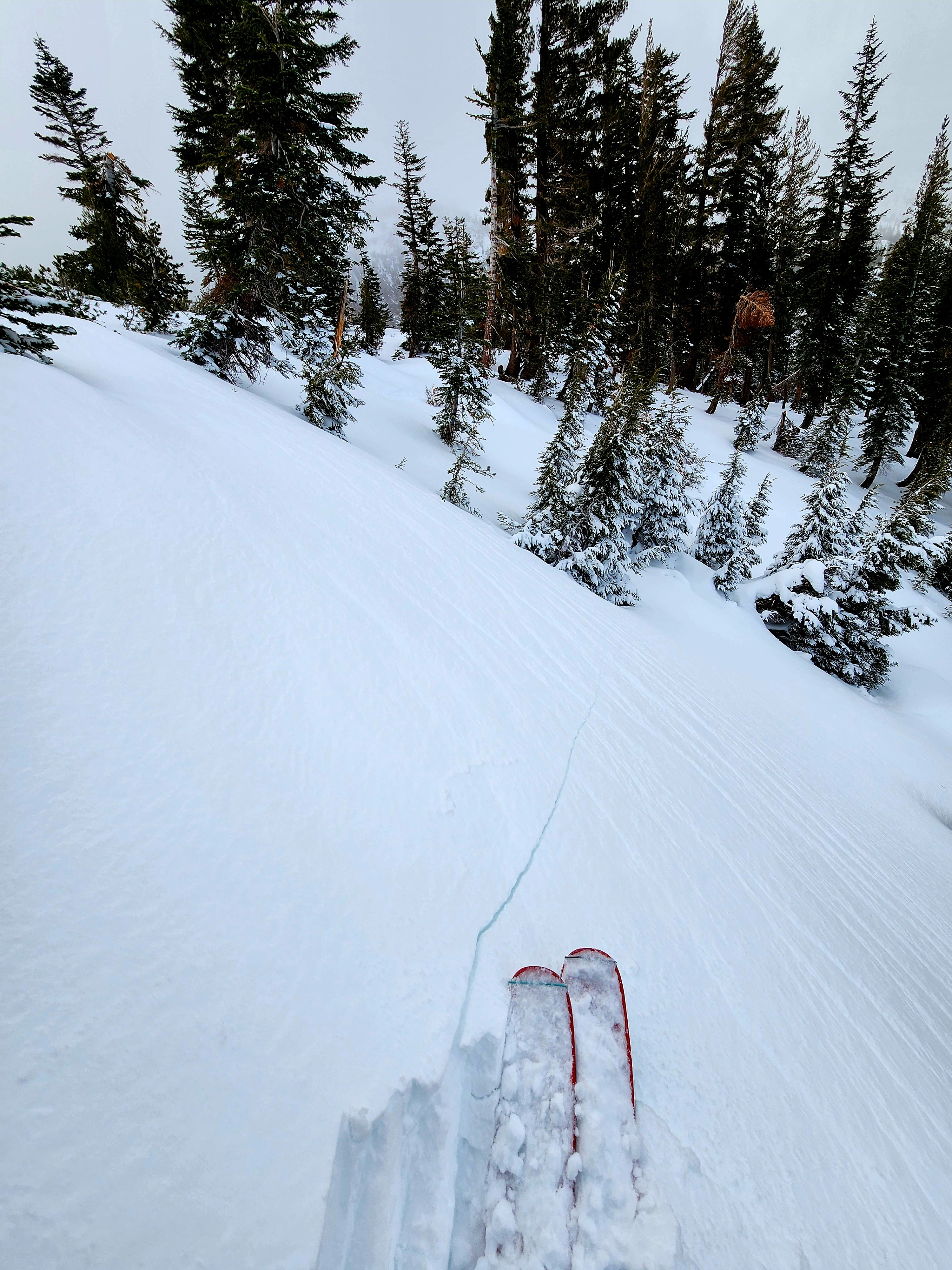
On a short tour in the Lakes Basin, we found the weak layers at the bottom of the snowpack could still propagate in snowpack tests, though we did not get any collapsing or shooting cracks on those layers. We did get plenty of shooting cracks in fresh wind slabs on leeward test slopes.
After a break in the storm midday, a second round moved in by late afternoon.
We only made it up to 9600 feet. Most of our travel was below treeline, except for the use of an open, near treeline-like feature we used to test wind slabs. We avoided sizeable slopes steeper than about 30 degrees and the tracks and runouts of avalanche paths.
Reactive wind slabs on north and east test slopes in near treeline terrain.
Weather
- Air Temp
- 27
- Cloud Cover
- broken
- Wind Loading
- moderate
- Recent Snowfall
- 7
- Snow Avail For Transport
- moderate amounts
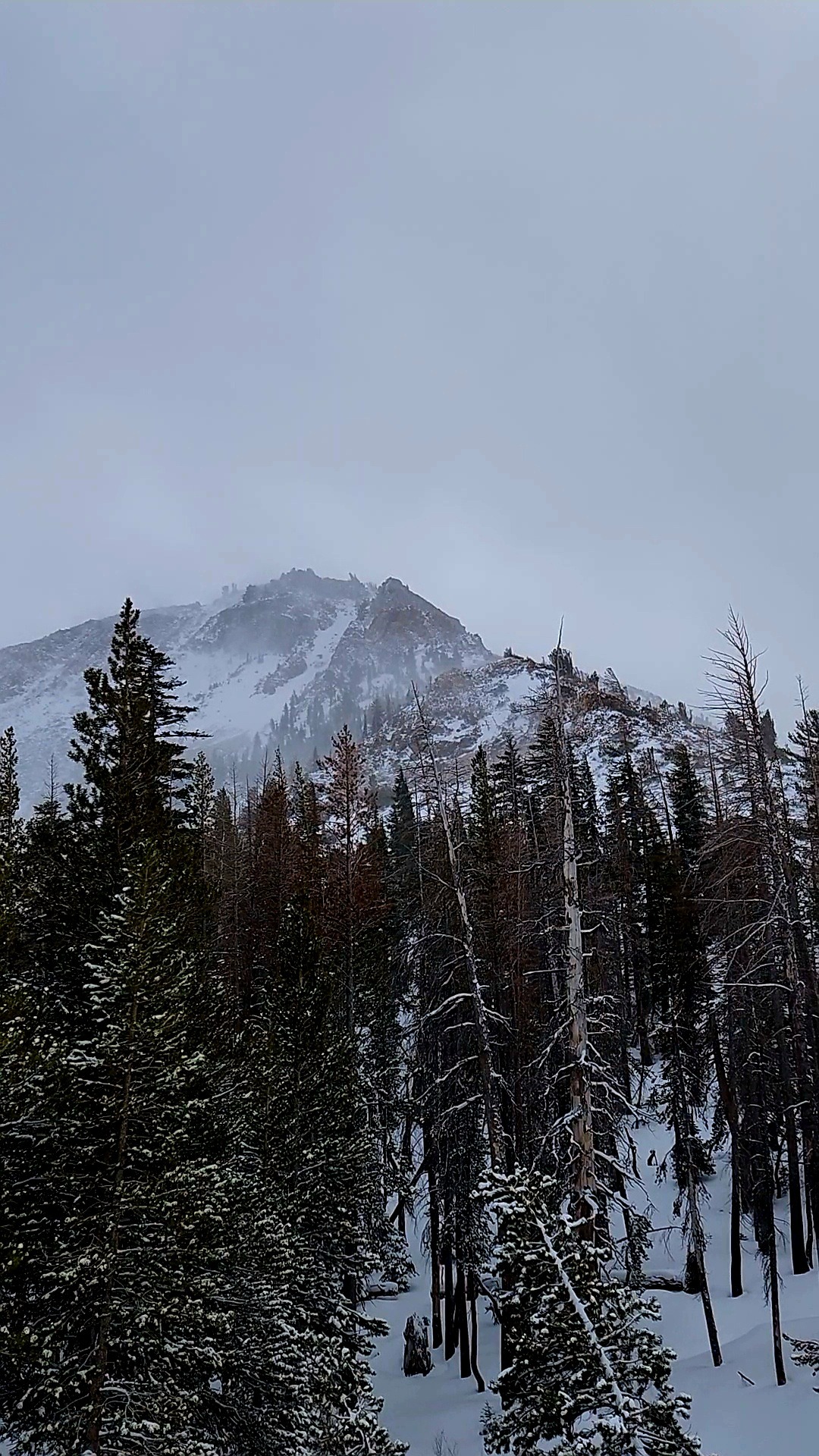
Snow showers varying in intensity in the morning and afternoon, with a break midday. Skies cleared briefly midday as well. It was warm and humid during the morning snowfall, though temps fell later in the day. A second round of snow and clouds came in, socking in terrain above about 10,000 ft. after 2pm.
Snowpack
We dug to look at the persistent weak layers in a large opening in the trees where winds were cross-loading the slope. At 9600 ft, on a northeast aspect, we got propagation on 29 taps in our extended column test 2.5 feet down on the December depth hoar. We got no direct feedback from the persistent slab problem in our limited travels near and below treeline.
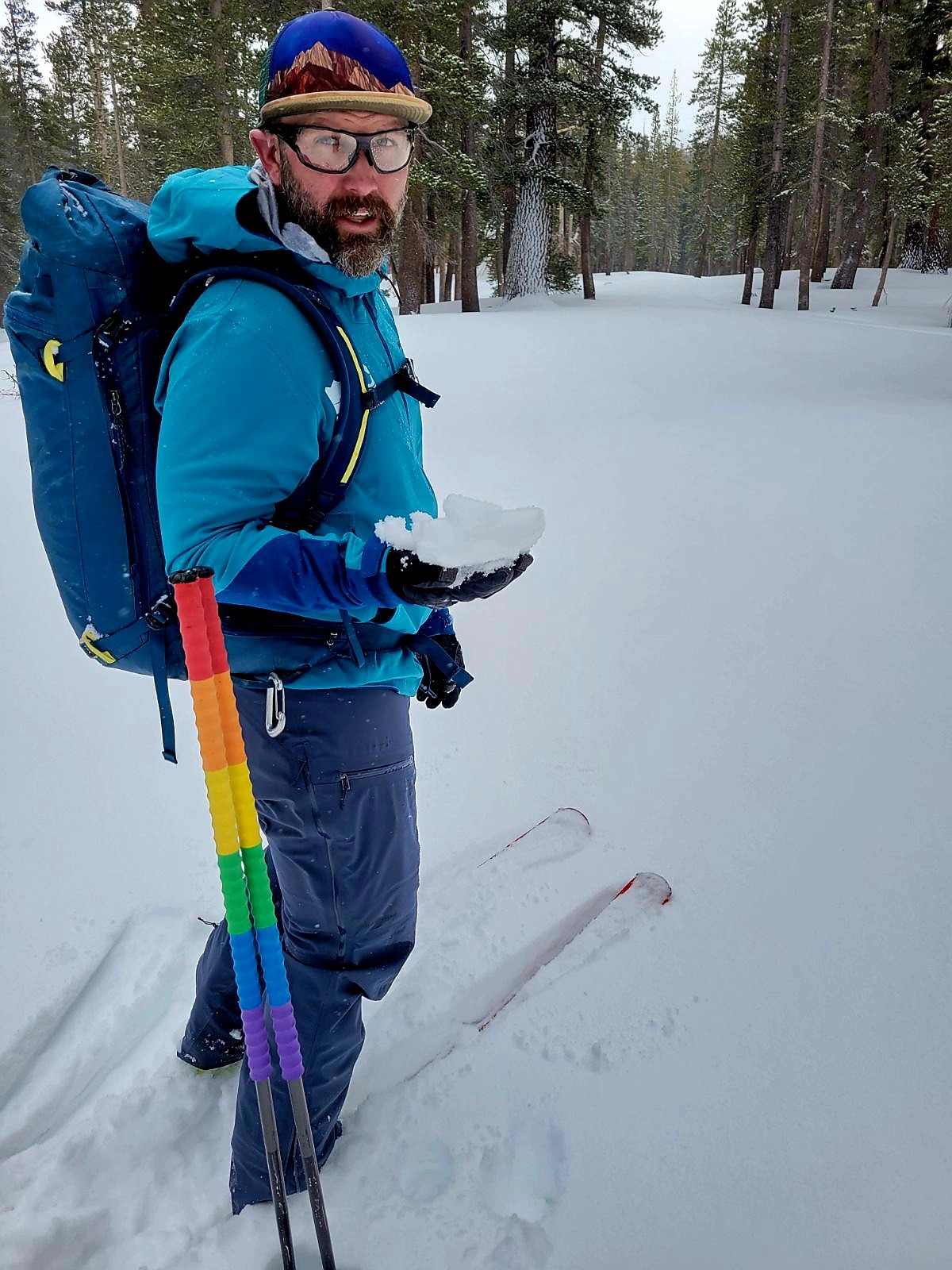
Wind slabs were soft (4F+) over Fist-hard fragmented grains atop old, 1-Finger hard wind deposits. They broke easily on leeward test slopes near treeline. They ranged from 2 inches thick to over a foot.
There was some settlement in the top 2 inches of the new snow from last night and this morning. There's a very thin zipper crust under the new snow below treeline.