
Quick report
Traveled to a drainage with some of the larger slide paths in the southern Whitefish Range to look for evidence of a persistent slab avalanche problem involving the mid-January crust/ ice. The steep, rocky paths in this terrain don't appear to have produced natural avalanches during the February cycle. We did find rounding facets under the mid-January ice layer in a mid-elevation profile on a southeast facing slope. Tests resulted in no propagation or sudden failures on this layer, or storm interfaces above.
We triggered one wet loose sluff on a very steep convexity. No other signs of instability.
Weather
- Air Temp
- 20s
- Cloud Cover
- scattered
- Wind Loading
- previous
- Recent Snowfall
- 4-7"
- Snow Avail For Transport
- moderate amounts
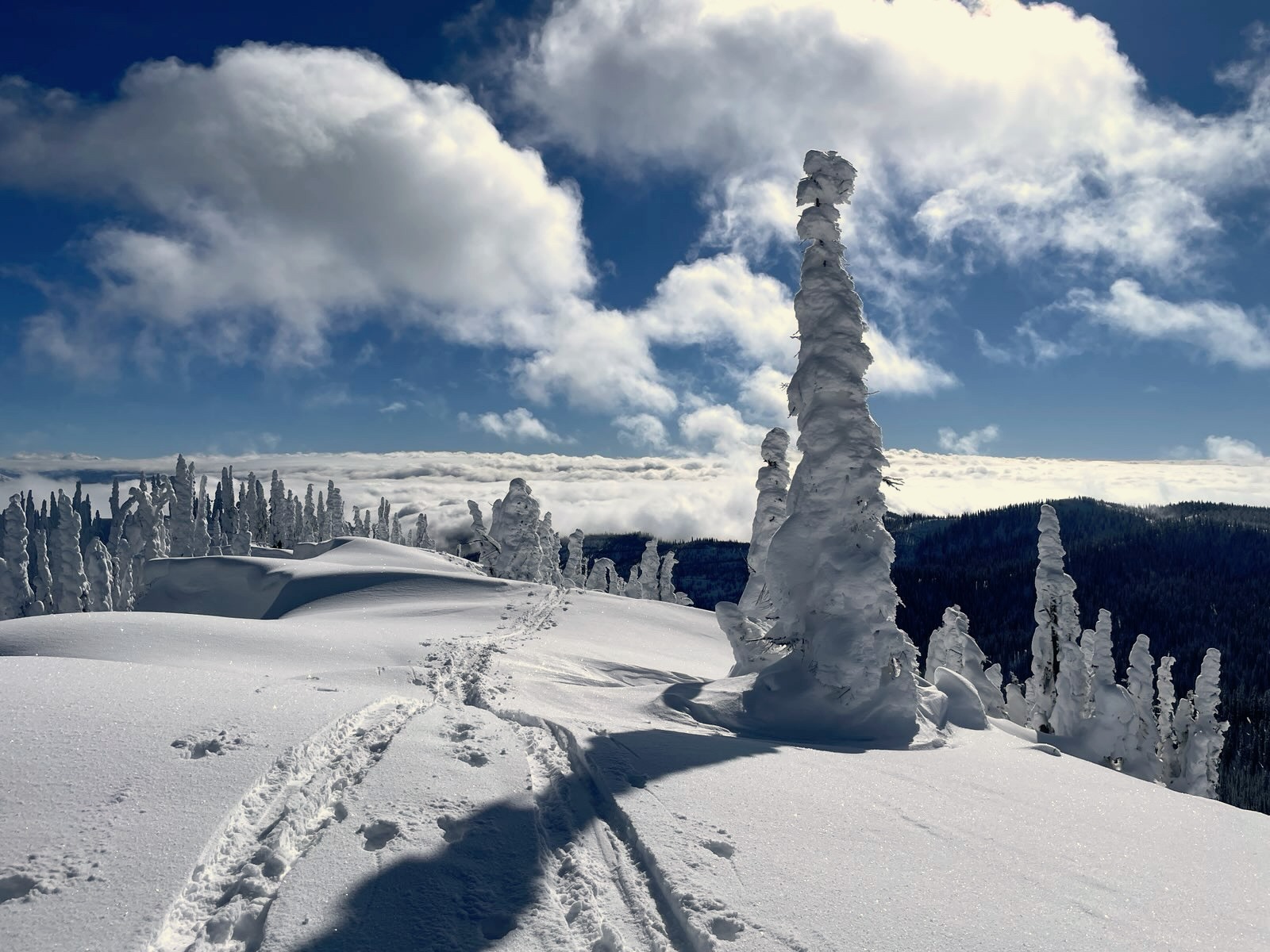
Blue sky morning, with mid-day inversions, then late afternoon stratus. Winds light and variable, with hints of fresh wind transport on exposed ridgeline. Cold in the shadows, warm in the sun.
Snowpack
The 2/28 snow is low-density, large-grained, and cohesionless. Despite cold temperatures, it quickly became moist or wet on steep, mid-elevation slopes exposed to the sun. This snow quickly refroze when the slopes went back into the shade, though the crust was thin and not icy. The 2/28 snow remained dry on lower-angled and shaded slopes.
Profile at 5550 ft, SE aspect. HS 180 cm. Upper snowpack progressively harder with depth, to mid-January facets and ice. 1mm rounding FC under ice, 4F+ hard. Unreactive in tests (ECTX, DTX x2). Several failures without propagation (ECTN 12, 15) at storm interfaces in top 40 cm of snowpack.
Dunes and drifts widespread near N-S running ridgelines, though often further downslope than usual. Some of these dunes very hard. Less widespread on E-W running ridgeline. Evidence of crossloading and scouring mid slope on S'erly slopes.
Avalanche
- Size
- D1.5 R2
- Type
- WL
- Trigger
- AS
- Elevation
- 6200 ft
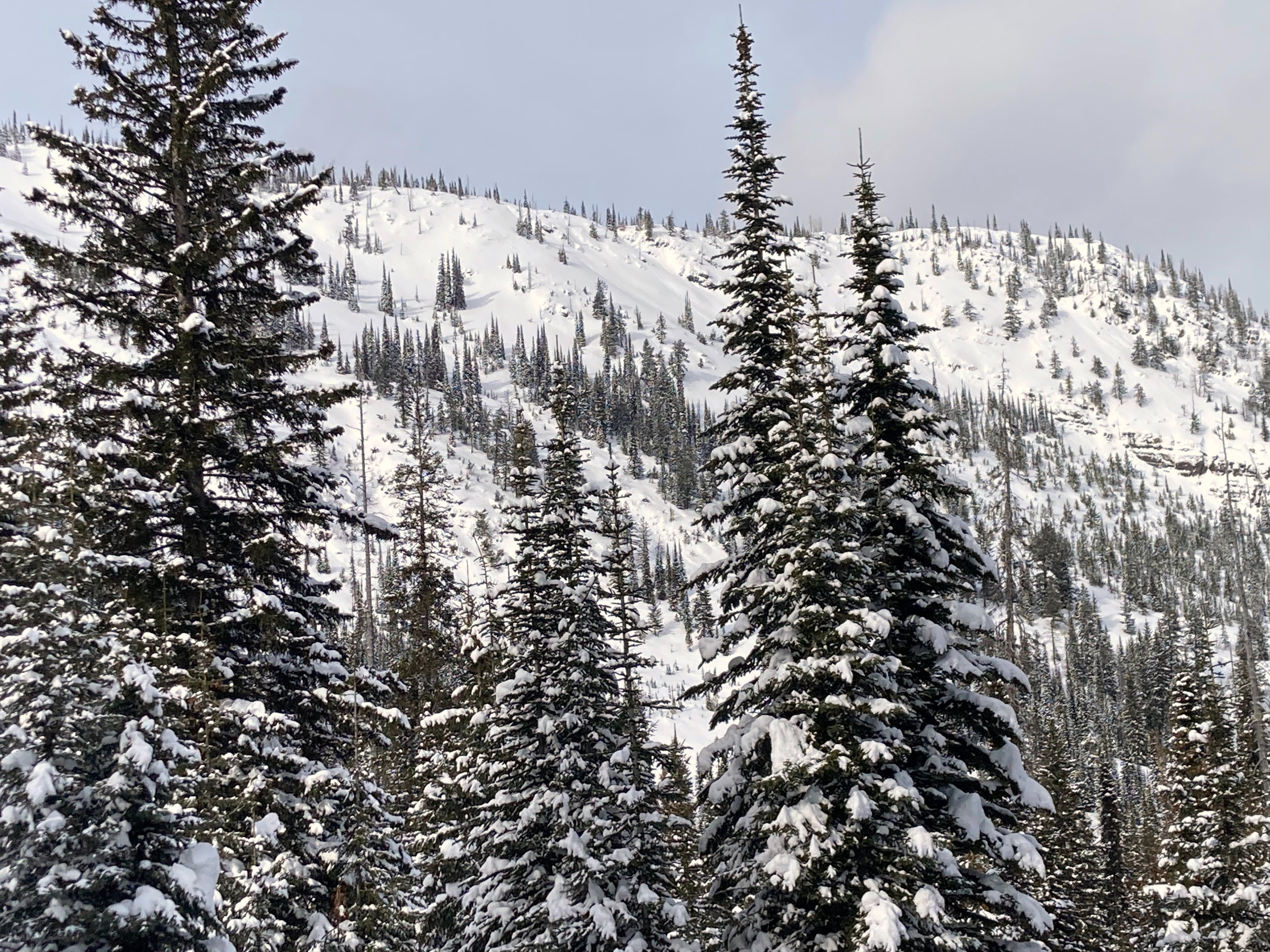
No crowns or debris visible in large SE or W facing paths, as would be expected if the mid-February storms had produced a cycle of large natural avalanches. Some harmless, shallow sluffs with turns on steep, shaded slopes.