
Quick report
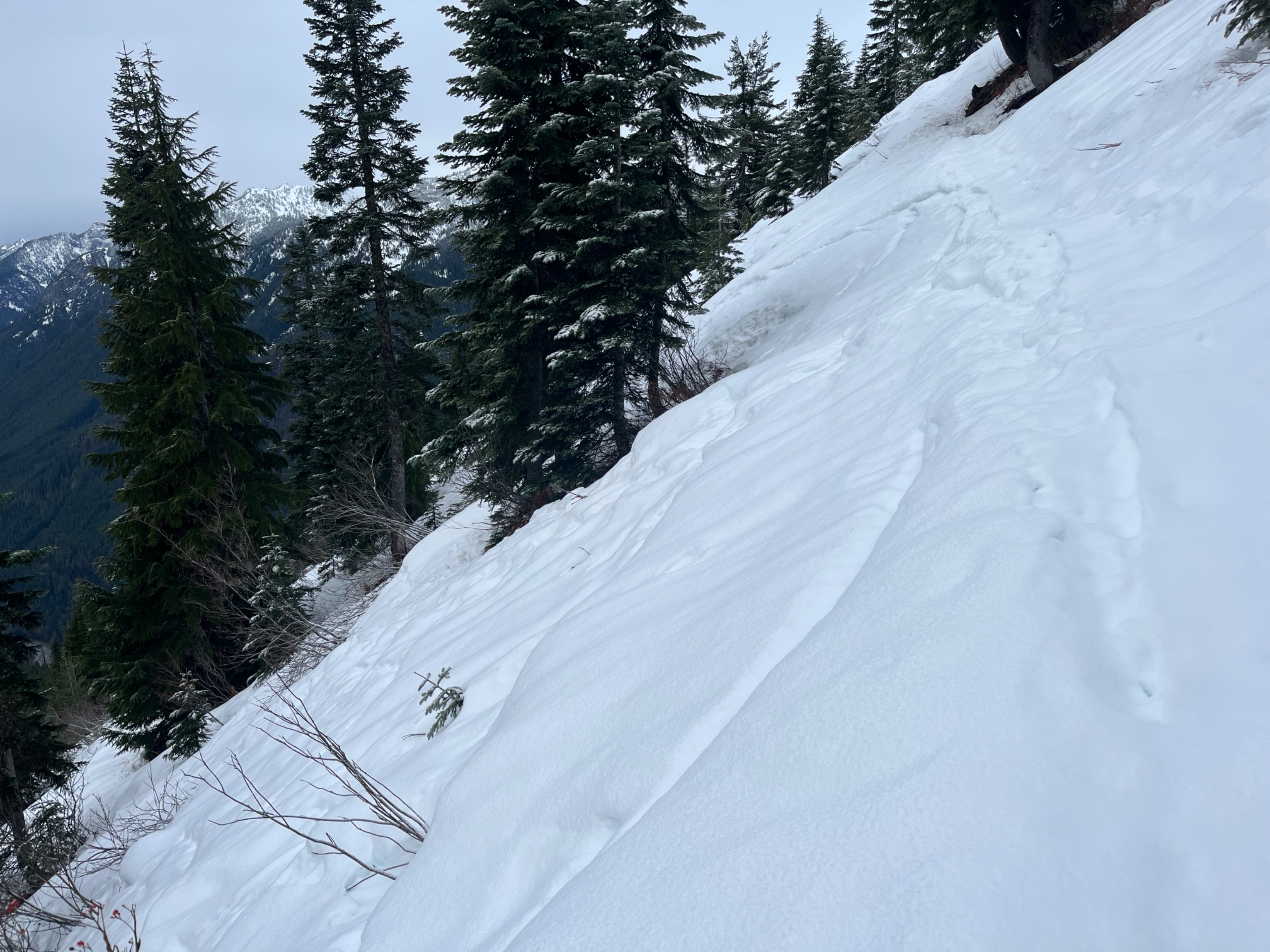
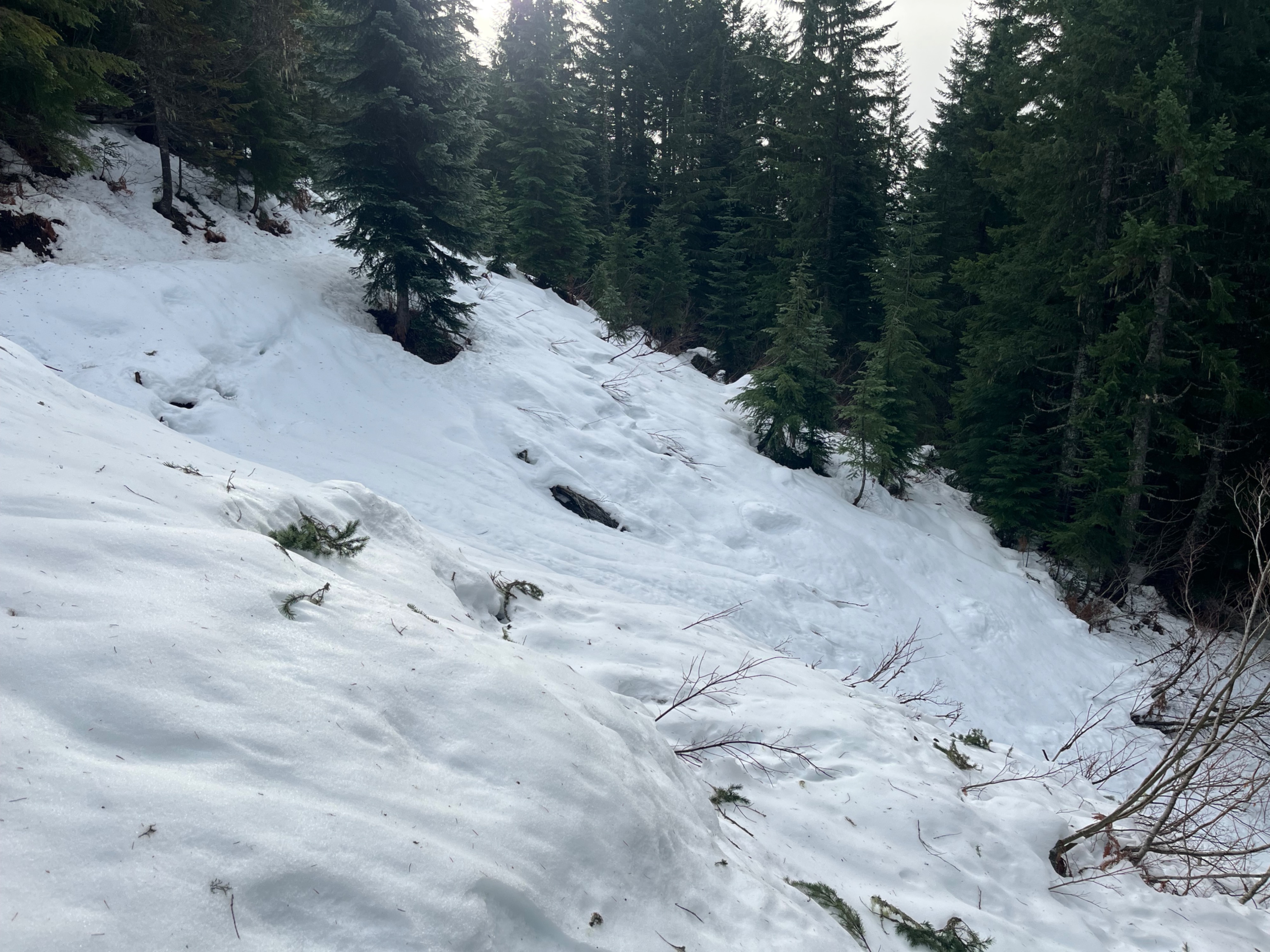
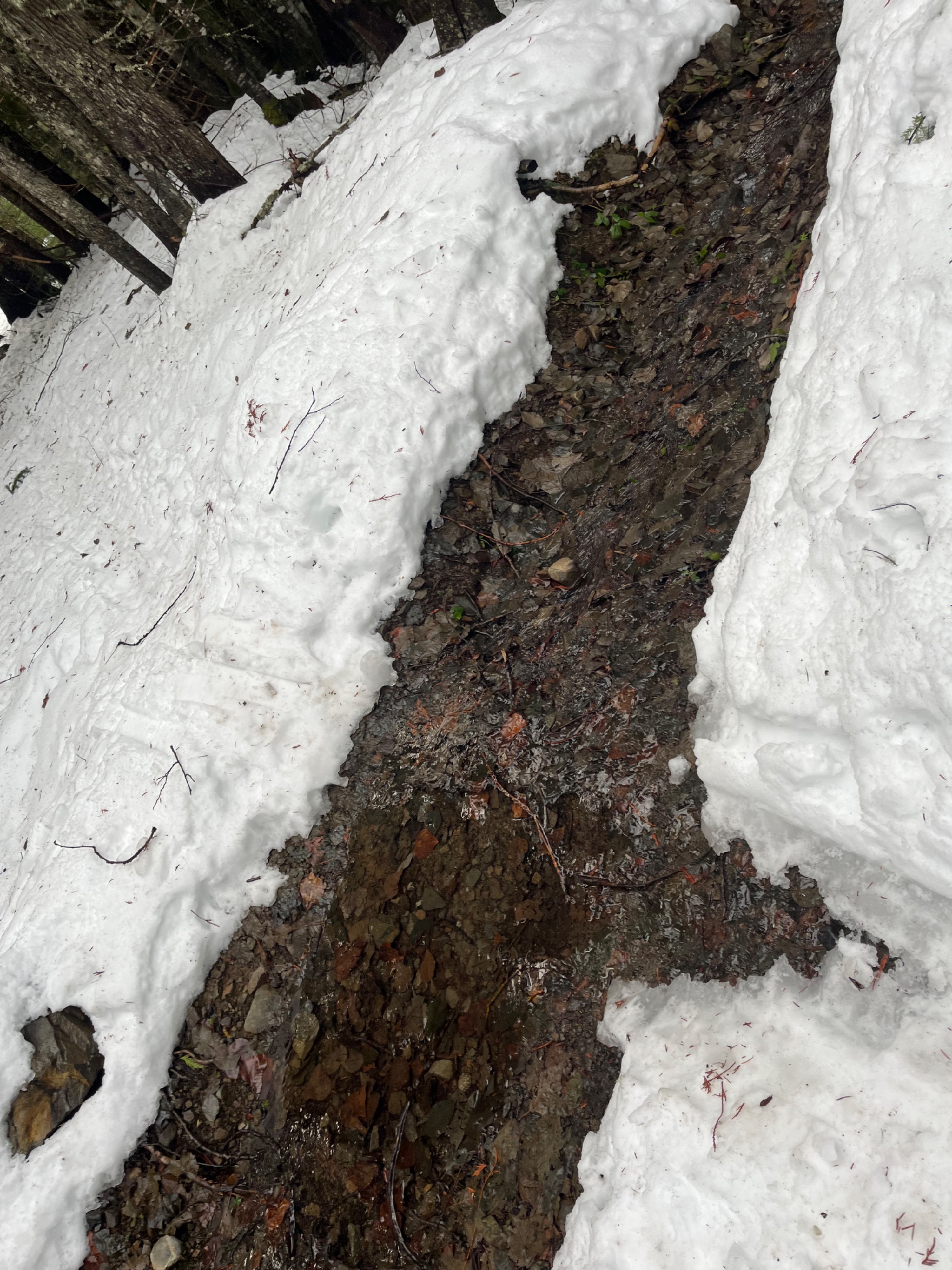
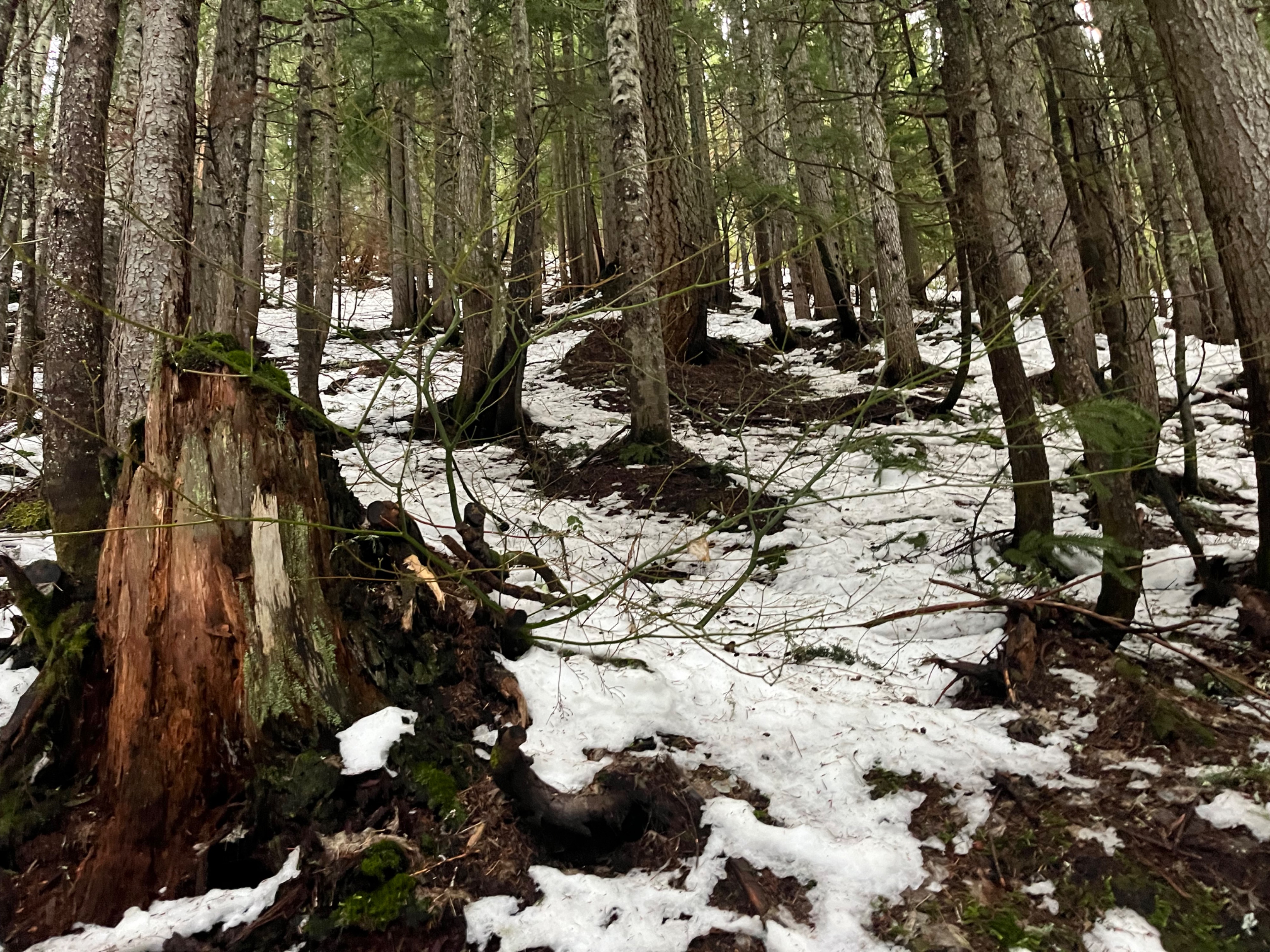
Signs were everywhere that we just came out of a very warm, wet period. There were an abundance of small cracks, wrinkles and creep in the snowpack on any steep features, surfaces were wet and refrozen, and creeks were blown out but had since receded. Wet avalanche activity and creep had slowed and there wasn't enough new snow where I traveled for any dry snow avalanche problem. The uphill skiing was enjoyable, but I cut that travel short due to my uncertainty with how treacherous going downhill would be. I was surprised that the skiing wasn't as terrible as I thought. Nevertheless, downhill travel was the worst at elevations below 4000ft when breaking through the Solstice Crust increased in frequency. I was glad for the sticky snow below 3500 to slow my downhill speeds. Creek drainages below 3500ft were very exposed from the intense rain earlier in the week, adding a little waterskiing to my trip.
Weather
- Cloud Cover
- overcast
- Wind Loading
- none
- Rain Elevation
- 4000ft
- Recent Snowfall
- 2
- Snow Avail For Transport
- none
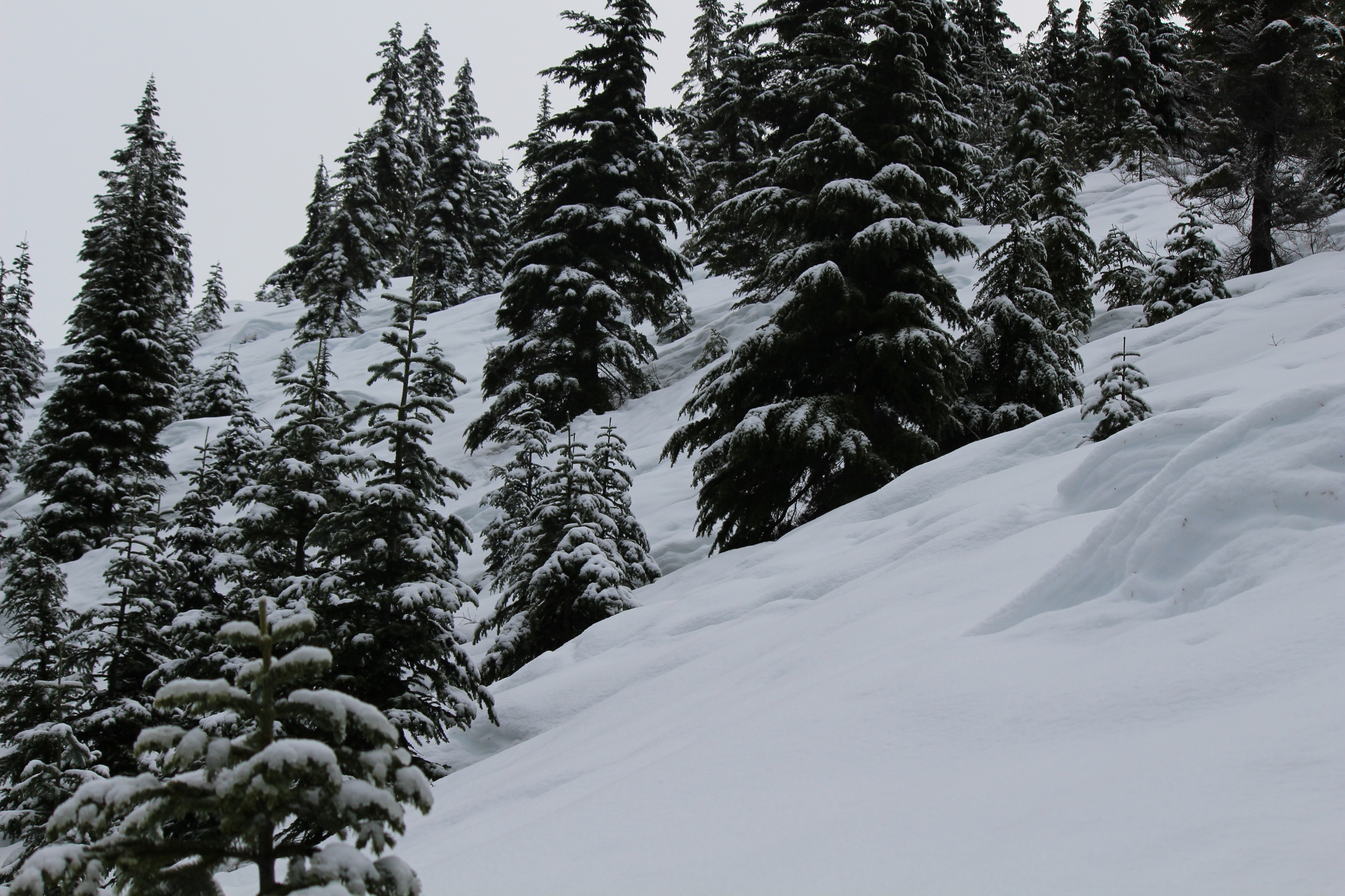
Overcast, calm. New snow over crust began at about 4000ft, but amounts didn't increase much as I gained elevation past that point. Cloud level decreased to about 3000ft and it began raining (snowing higher?) at 1130.
Snowpack
Consistent snow cover on roads without tree cover began at about 2500ft, lower than I expected. Snow surfaces were moist and soft up to 3500ft, where the snowpack was about 2ft deep. Above that, I found a semi-supportable surface crust (the Solstice Crust) in open, untreed areas. At 4000ft the crust became a bit more supportable and a dusting of snow from the previous night became evident on the surface. I hopped off my skis at 4500ft to dig a pit, which was almost 4ft deep. My feet broke through the crust and I sunk down to my knees on most steps, but occassionally the crust held. There was about 2cm of dry snow over the Solstice Crust at 4500ft. The crust and all layers beneath it were moist. The softest layer I found was at the ground, with 4 finger hardness and wetter snow than the rest of the snowpack.
Avalanche
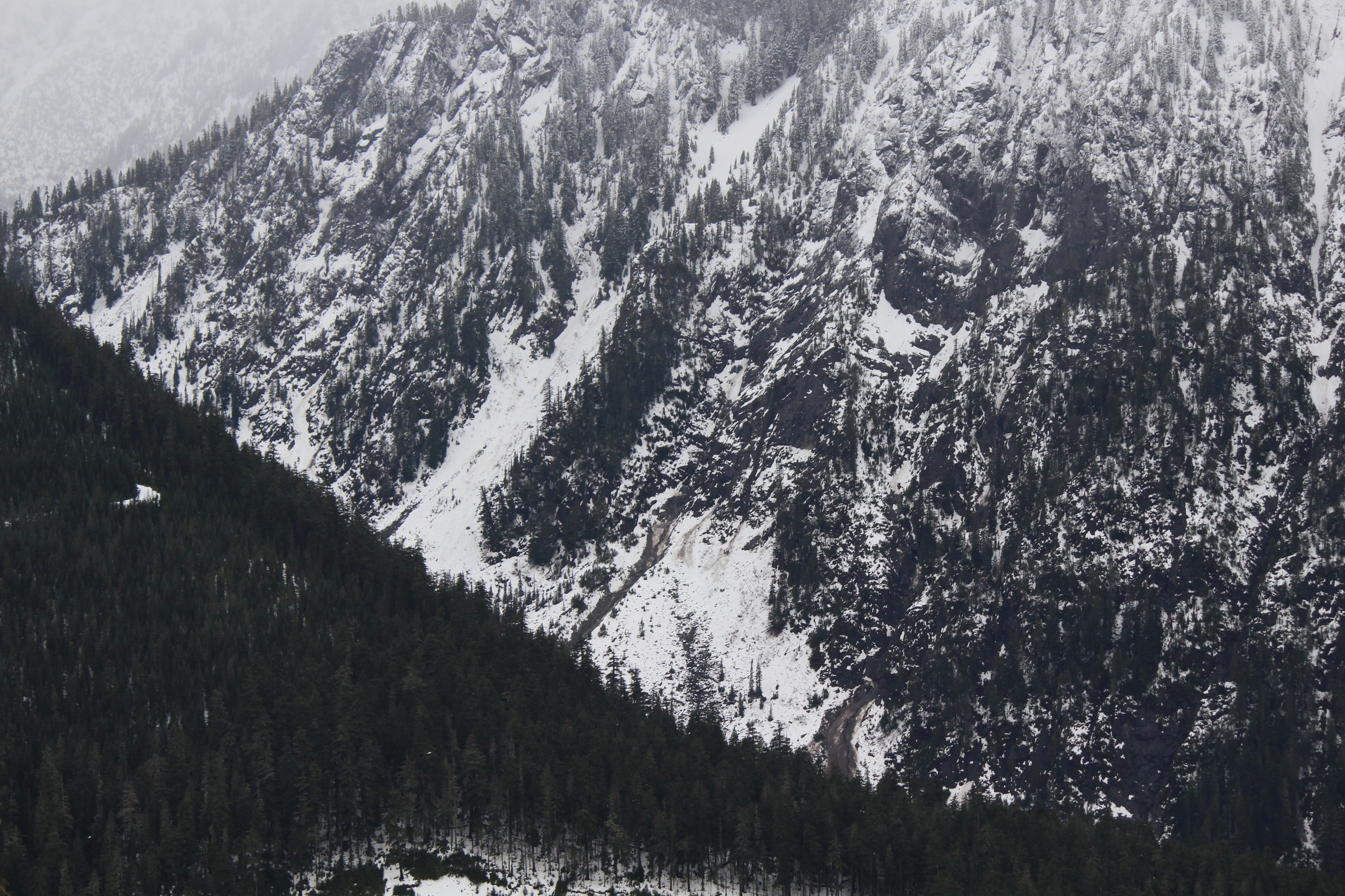
A few distant old wet slides were visible, which likely occurred Tuesday night during the intense rain and wind event. I never had very good views or traveled close to large avalanche-prone slopes so didn't see much for activity from earlier in the week.