
Quick report
- Cracking
- isolated
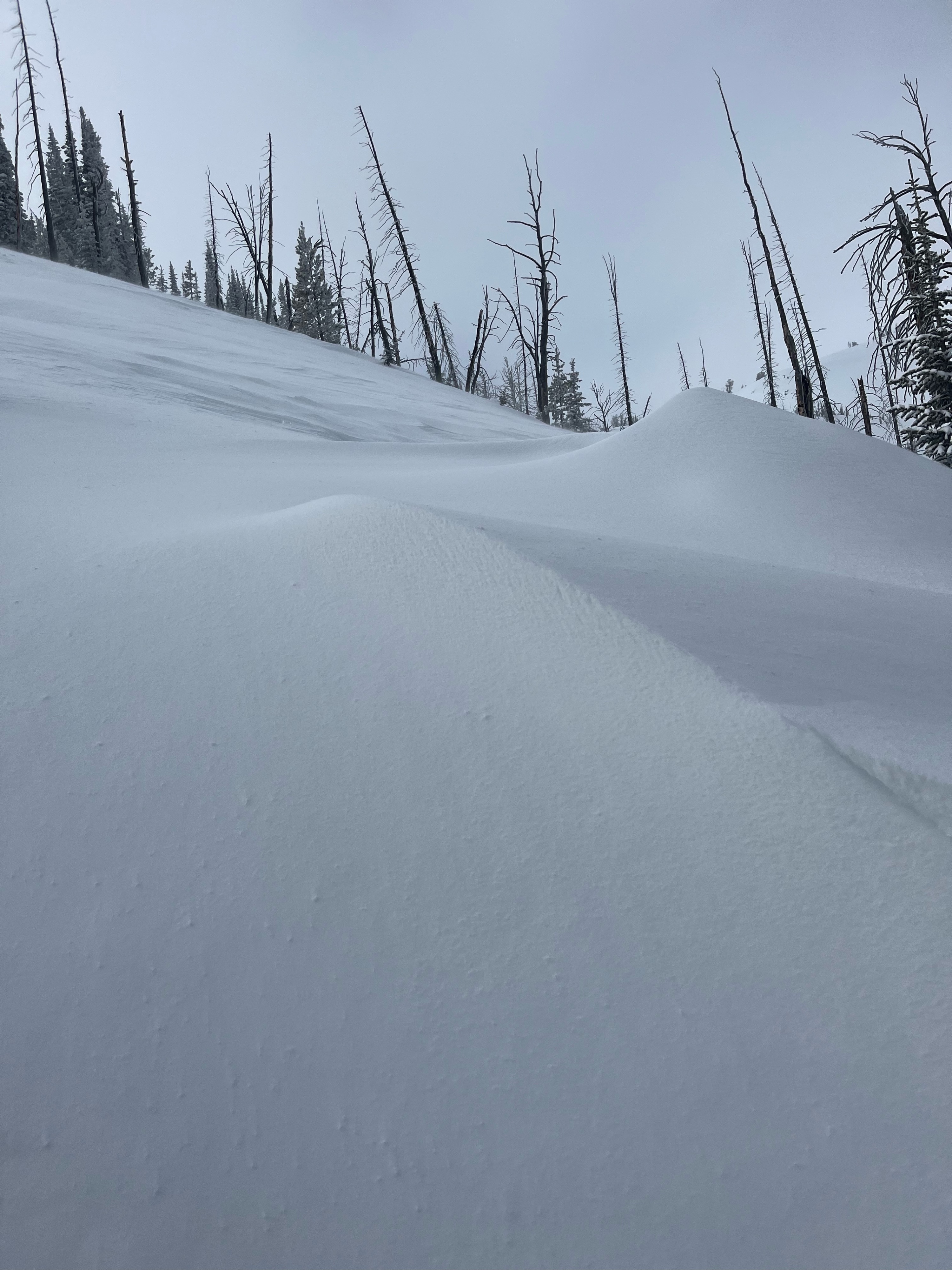
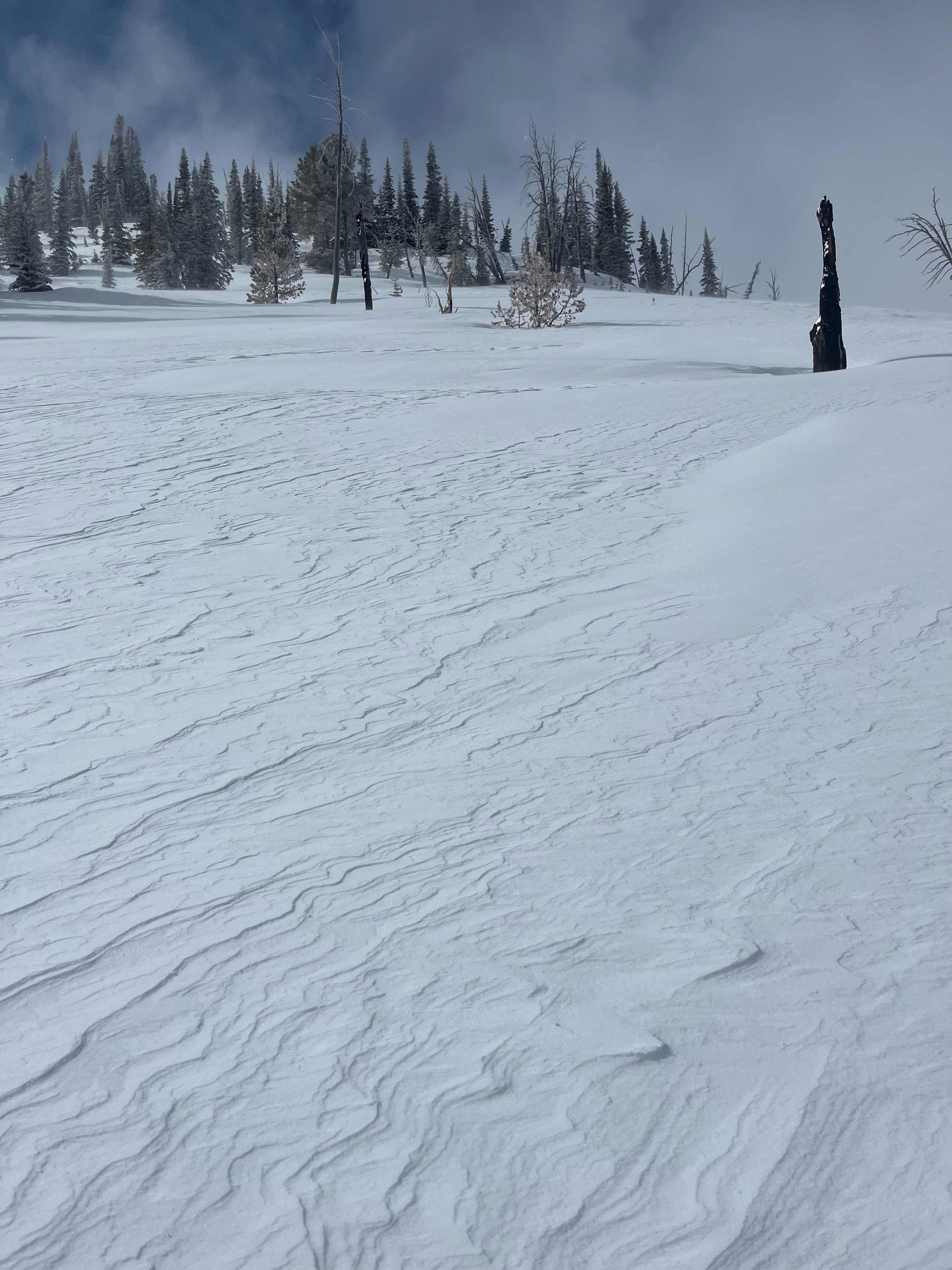
After this weekend's storm brought new snow and southerly winds, the north wind has shown up and is wreaking havoc. In my travels in this zone Saturday, Sunday and Monday, I was surprised by the lack of wind slab. Today, the snow surface was quickly changing during the course of my tour, becoming more punchy and developing a thicker wind crust. Cornices and drifts created by the southerly winds were being eroded and the previously soft snow was being blown away and becoming stiff. When I traveled on South facing aspects near and above treeline, they were scoured or had only trace amounts of fresh snow on them. The best snow was below treeline in protected areas.
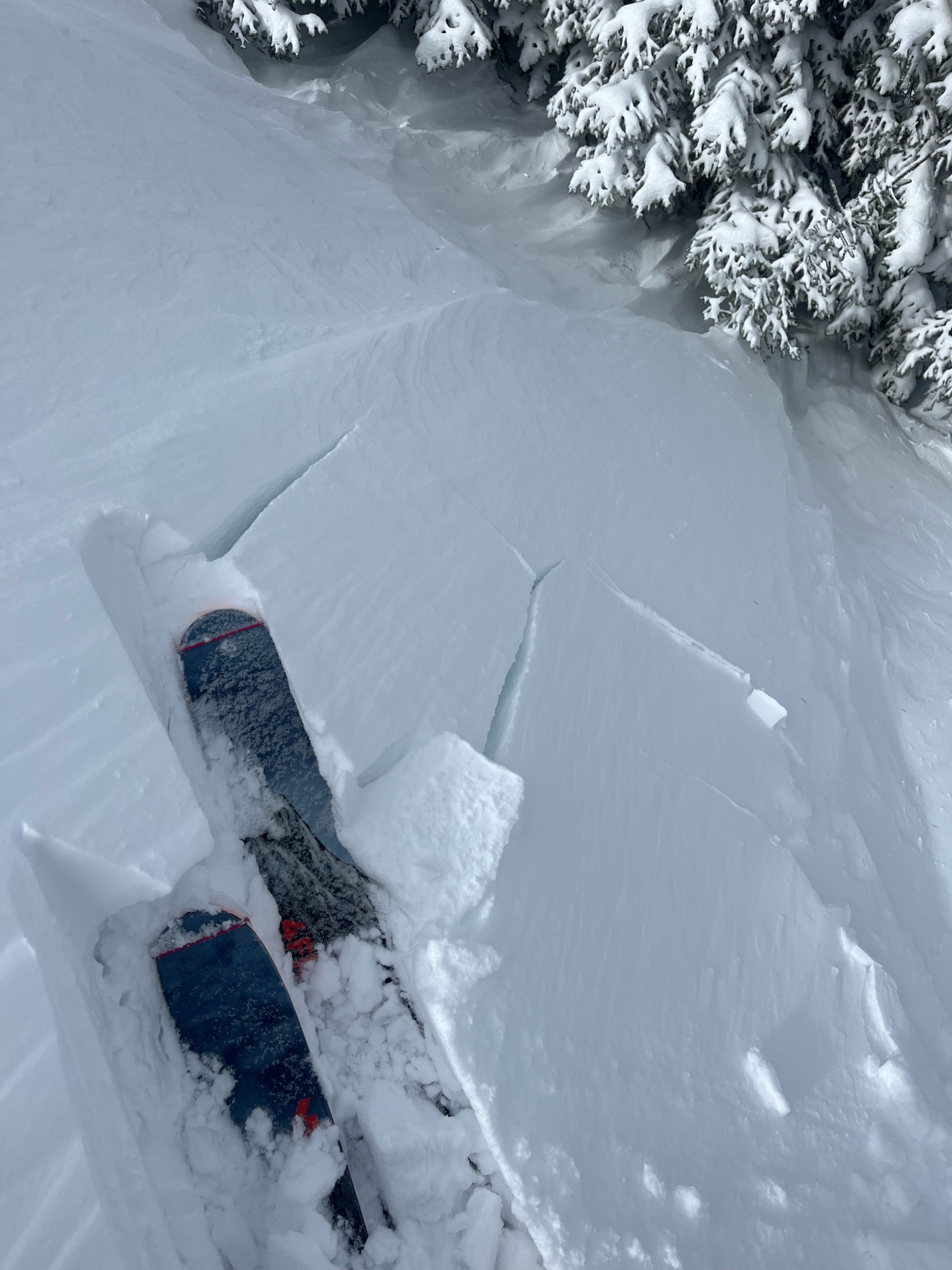
I observed cracking on isolated test slopes. I kicked several cornices, the cornice fall did not trigger a slab avalanches. Northwest winds were quickly building a wind crust and wind slabs.Weather
- Cloud Cover
- overcast
- Wind Loading
- moderate
- Recent Snowfall
- 15cm
- Snow Avail For Transport
- moderate amounts
Overcast skies with occasional sun breaks. Moderate north wind.
Snowpack
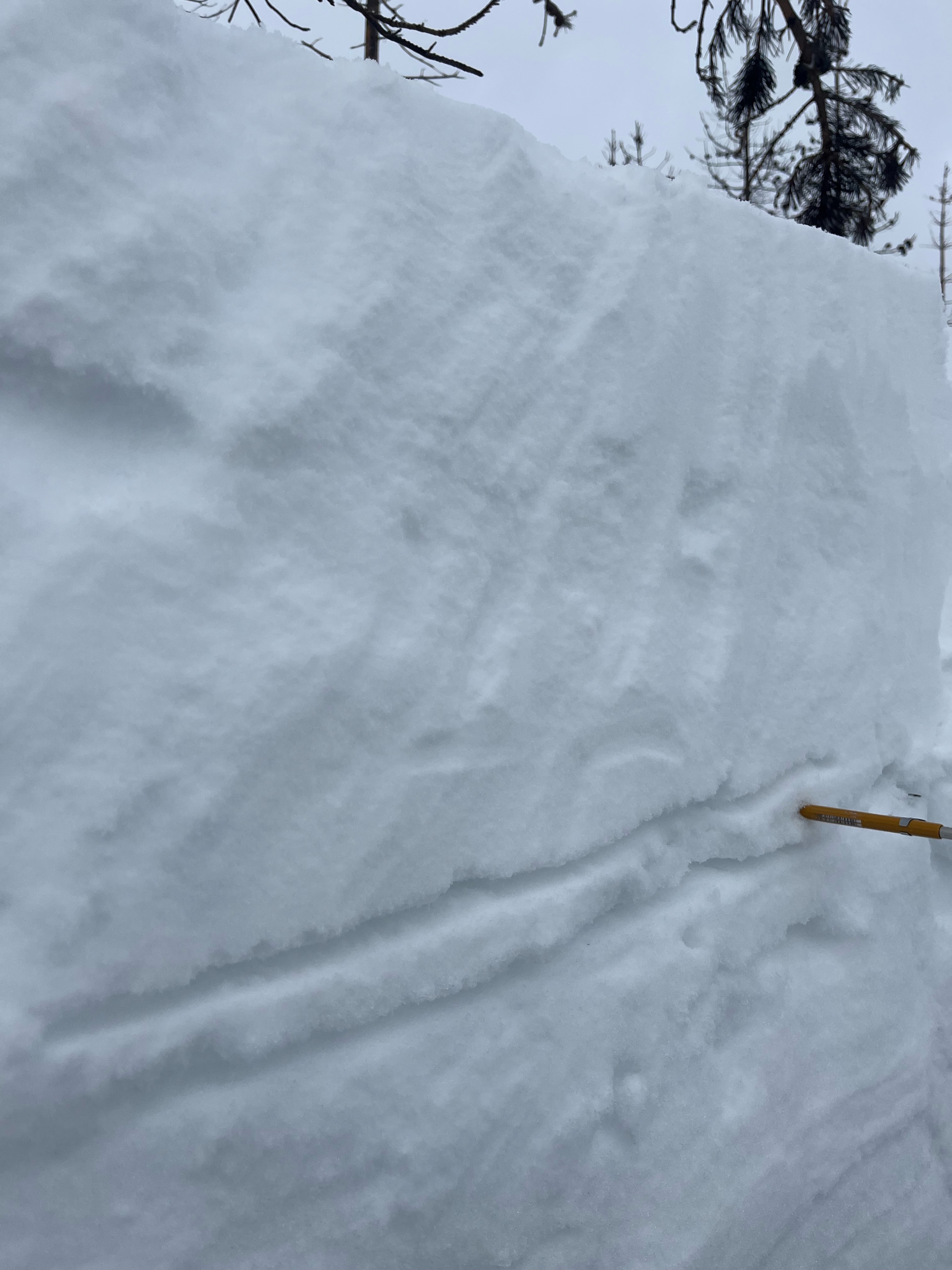
At 6100' I measured 15cm of new snow. At 6500' on a SE aspect, I found 15cm of snow well bonded to this weekend's sun crust. As I traveled uphill, I found 30cm of new snow on a NE aspect at 7000'.
I dug a pit on an E aspect at 7200'. The total snow depth was 130cm. I conducted a Compression Test (CT) and found the following: CT7RP down 25cm, and CT11RP down 30cm, these results were all within the new storm snow. I continued loading the column and eventually got CT23RP down 40cm, this result occurred on the first crust/facet combo in the snowpack. Next, I performed an Extended Column Test (ECT), the ECT results were: ECTN6 down 10cm and ECTN16 down 40cm.
After completing these tests I concluded that the new snow is bonding well with the old snow and that while the structure exists to have a Persistent Slab problem, the layer in question is unreactive. Caution around the persistent slab problem is warranted on steep unsupported terrain features with a thin snowpack and a slab on top.