
Quick report
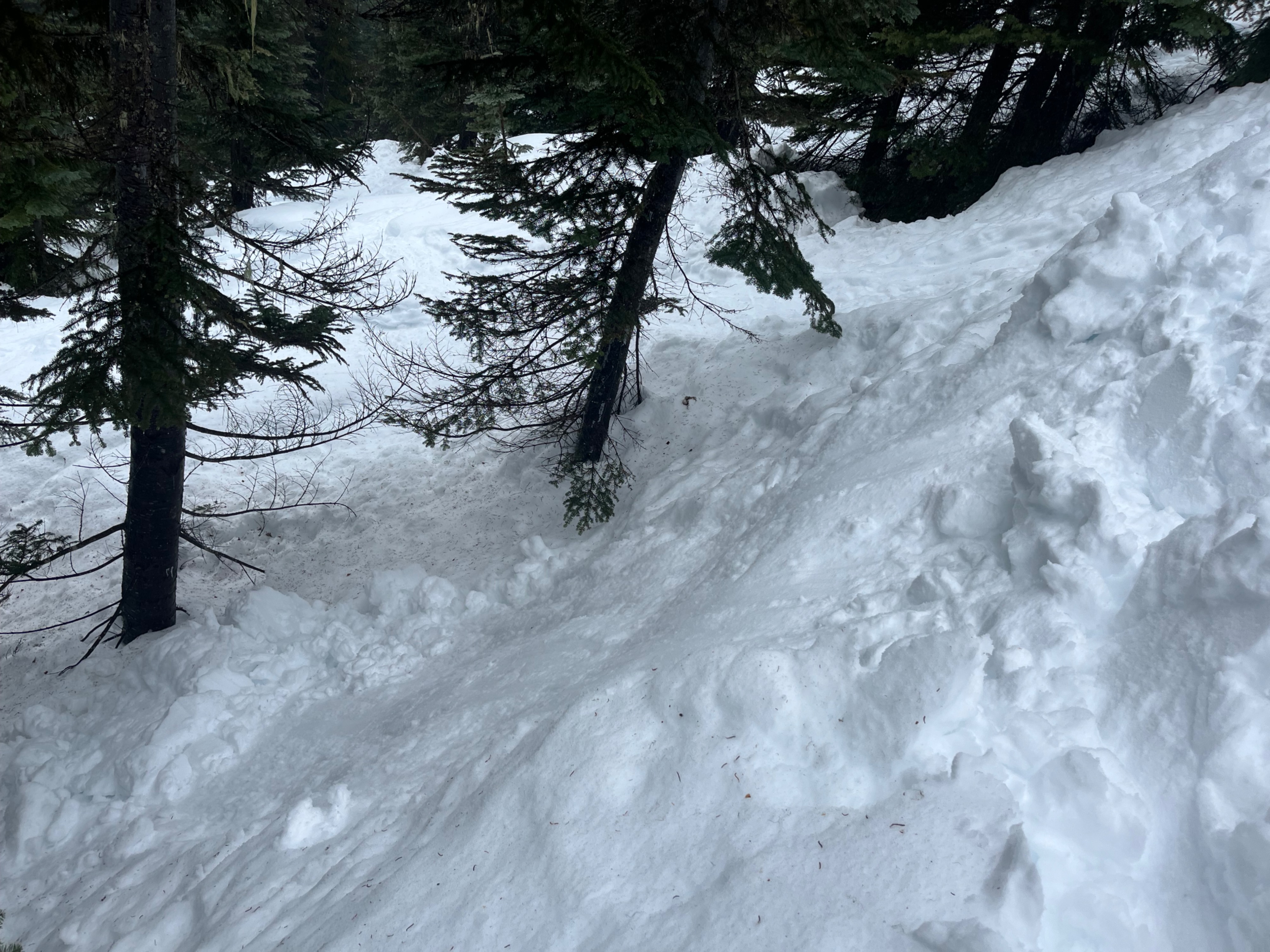
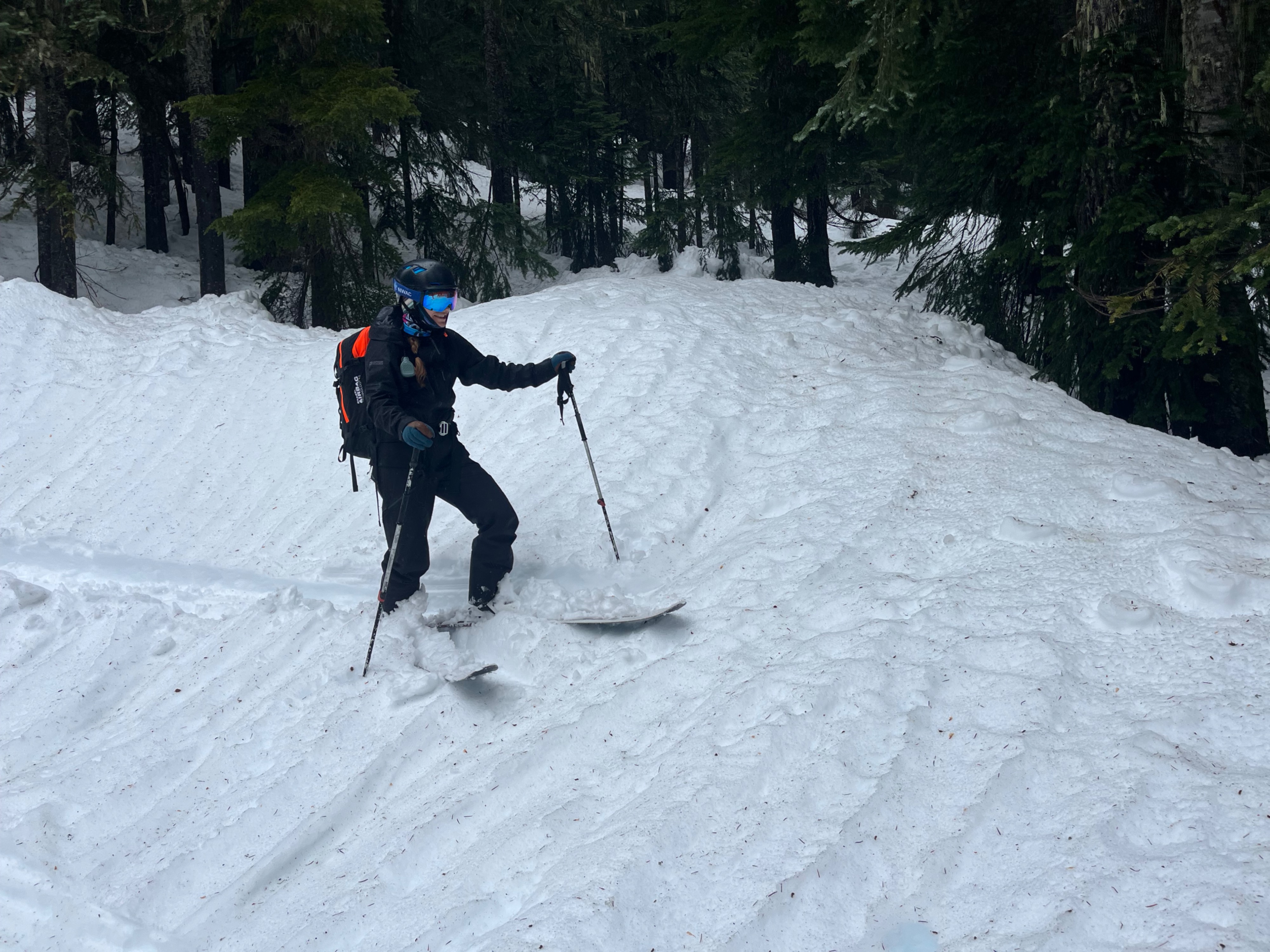
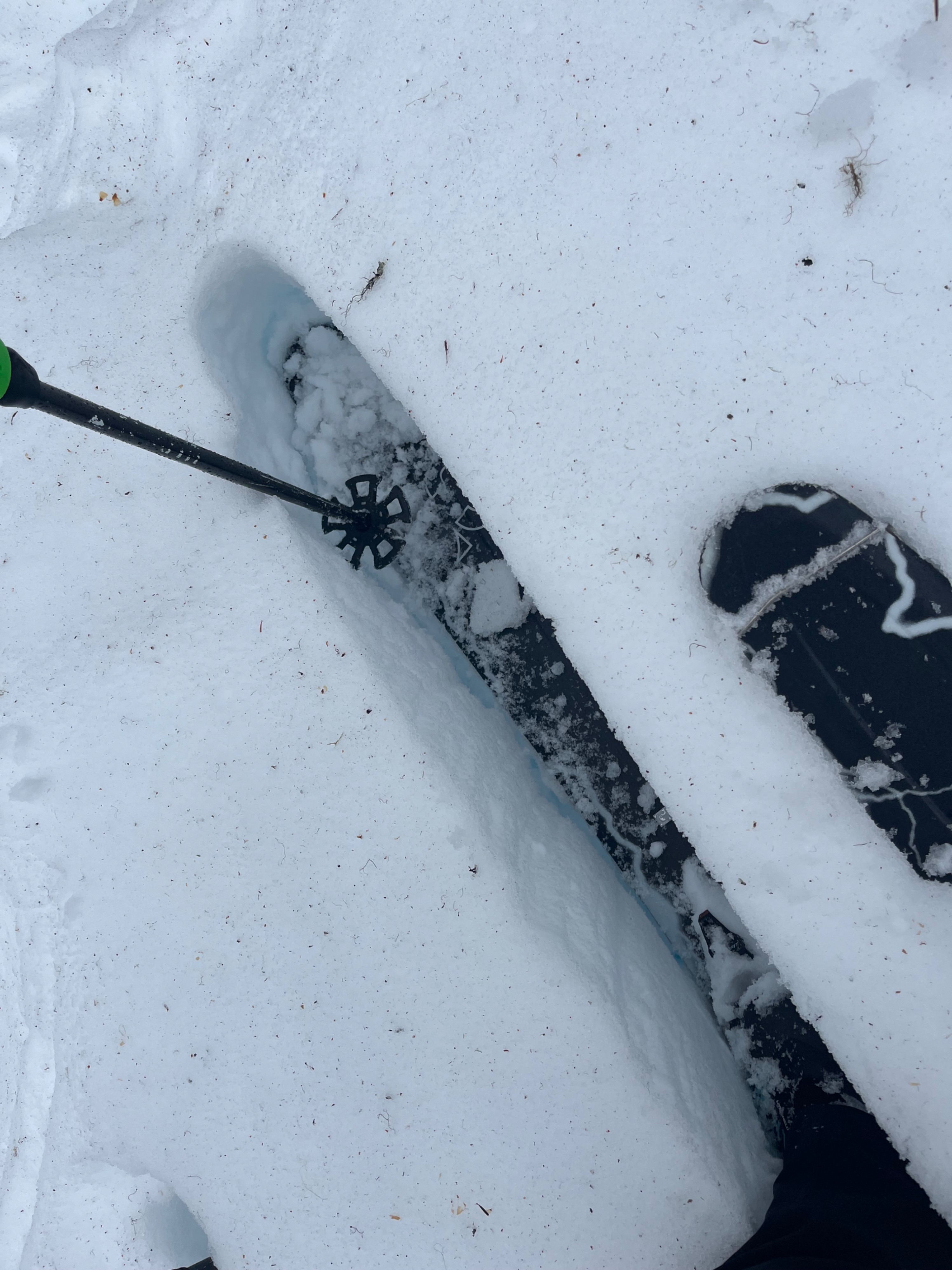
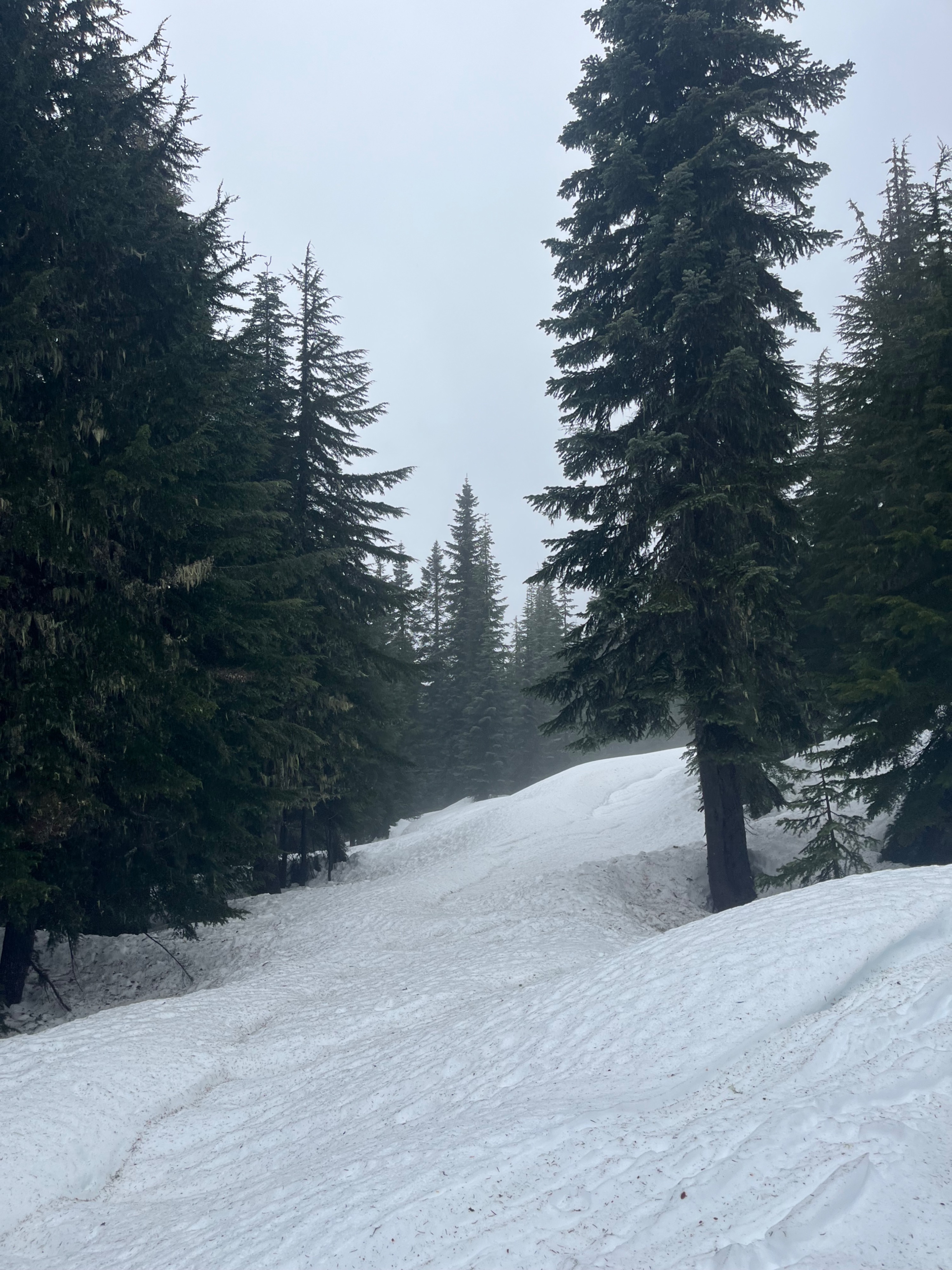
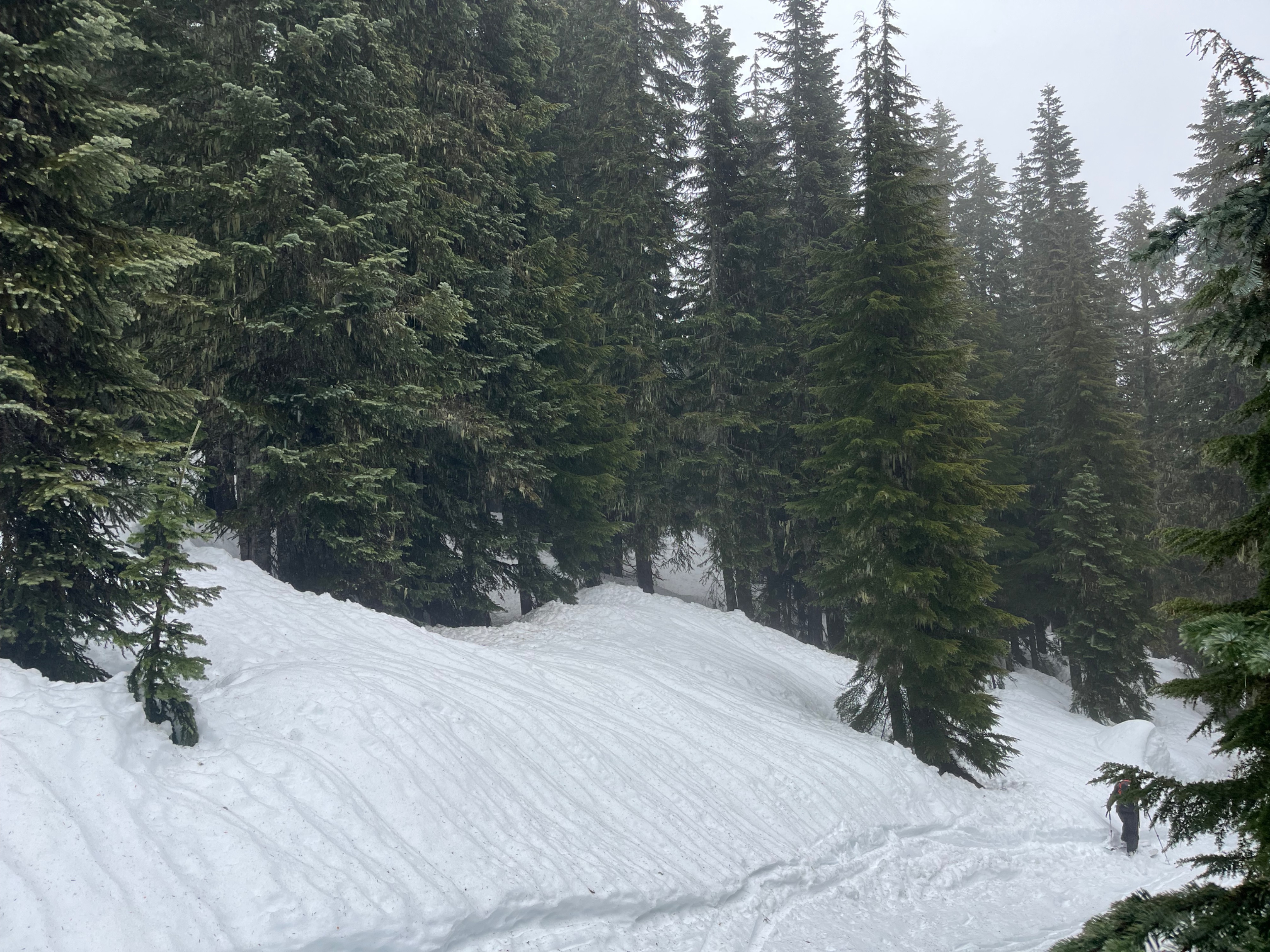
Heavy wet snow, consistent light rain, and warm temperatures made us glad to have the rubber fishing gloves for today. We went out to see how the snowpack is responding to all the rain. The snowpack is very wet and weak, and boot penetration was thigh-deep even on previously compacted surfaces. There was evidence of water pooling in layers within the upper snowpack, and we could trigger small, wet loose avalanches on steep test slopes.
In the upper 10-20cm of wet snow, it was easy to push wet loose avalanches on steep test slopes.Weather
- Cloud Cover
- overcast
- Snow Avail For Transport
- none
It was a soggy day. Temperatures were well into the 40°F's with light to moderate rain throughout the day and winds were light.
Snowpack
Snow Surface Summary
Snow surfaces were saturated at all elevations we traveled. While we found some areas where the surface was more supportable than others, the general trend was deep, wet, and unsupportable.
Snowpack Summary
There is plenty of liquid water throughout the snowpack. The upper 10-20cm is wet and saturated, below that there is moist snow of increasing hardness down to the 3/12 crust. Water could be seen pooling in some subtle density changes in the upper snowpack. This crust is buried around 60cm deep and is 6-8cm thick. Below the crust is more consolidated moist snow down to the older crusts from early March and February. These crusts are now compressed together as a thick layer of moist, large-grain melt forms buried just over 100cm deep. Snowpack tests were unremarkable, but that is not uncommon with wet snow problems.
Snow Profile
5100ft, E aspect
Height of Snow: 360cm
Notable Layers
3/12 melt-freeze crust ↓61cm
3/8 melt-freeze crust ↓105cm
Stability Test Results
CT17 ↓28cm
ECTX
Avalanche
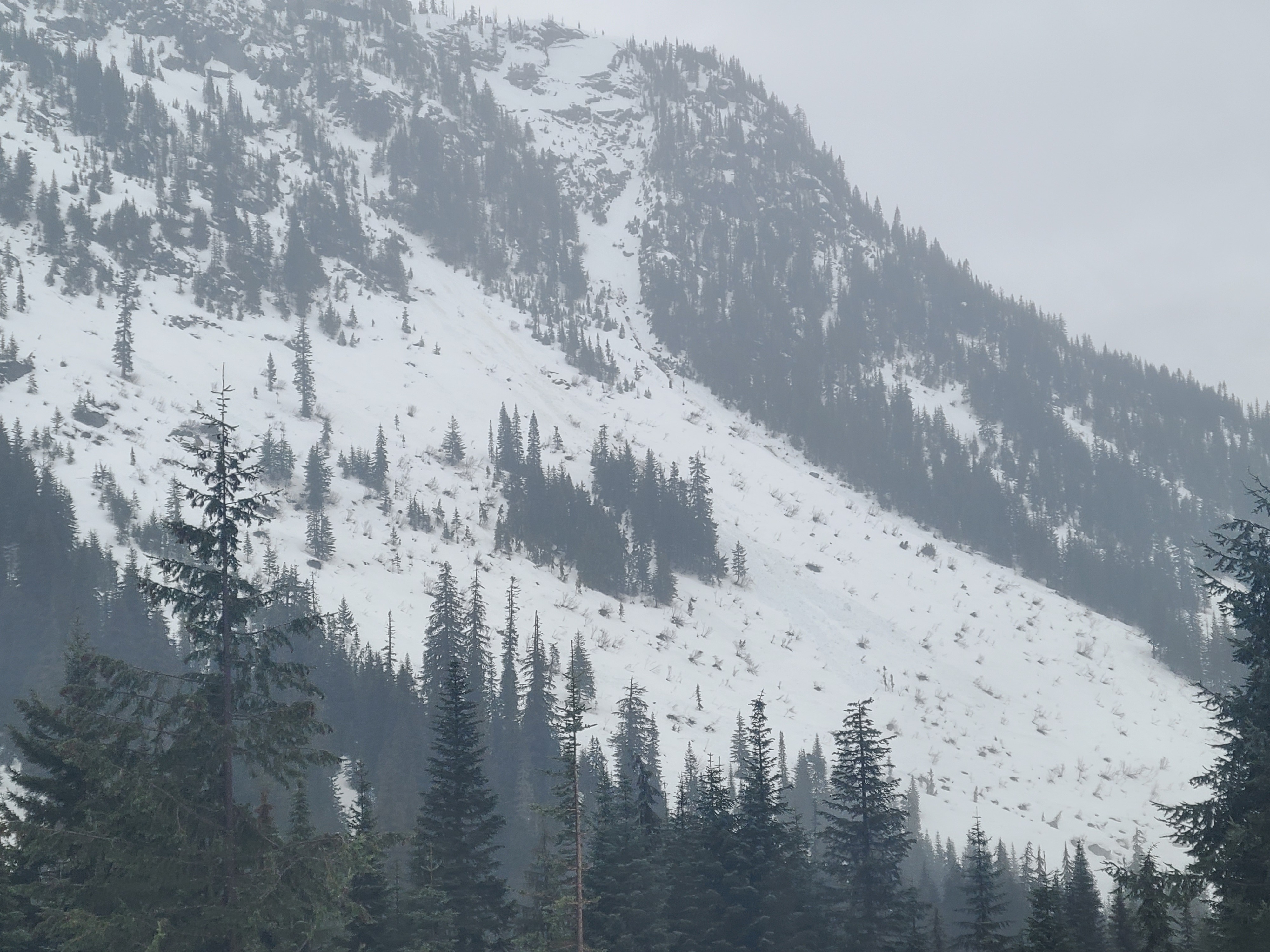
We observed numerous small to large wet loose avalanches in steep terrain.