
Quick report
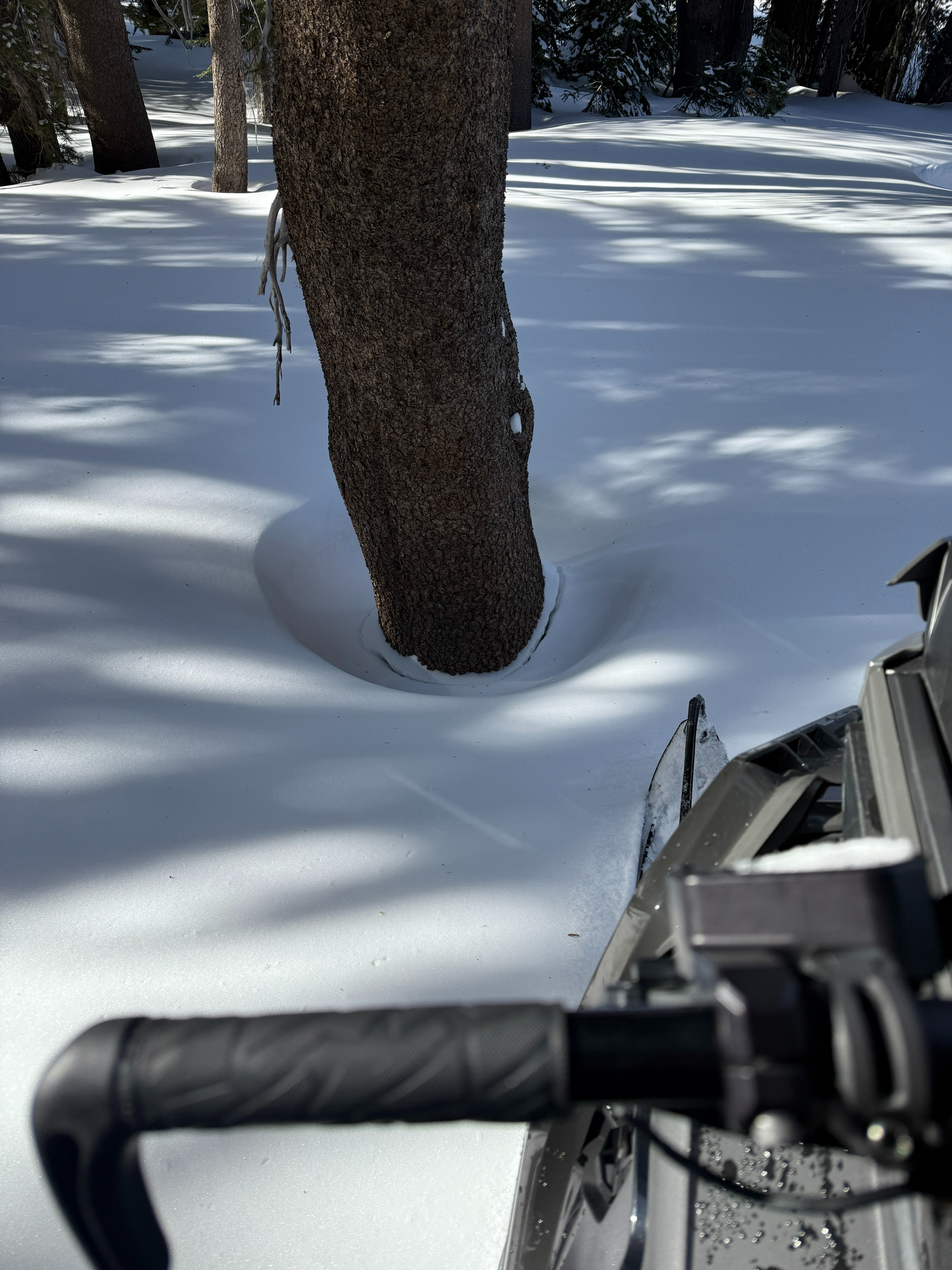
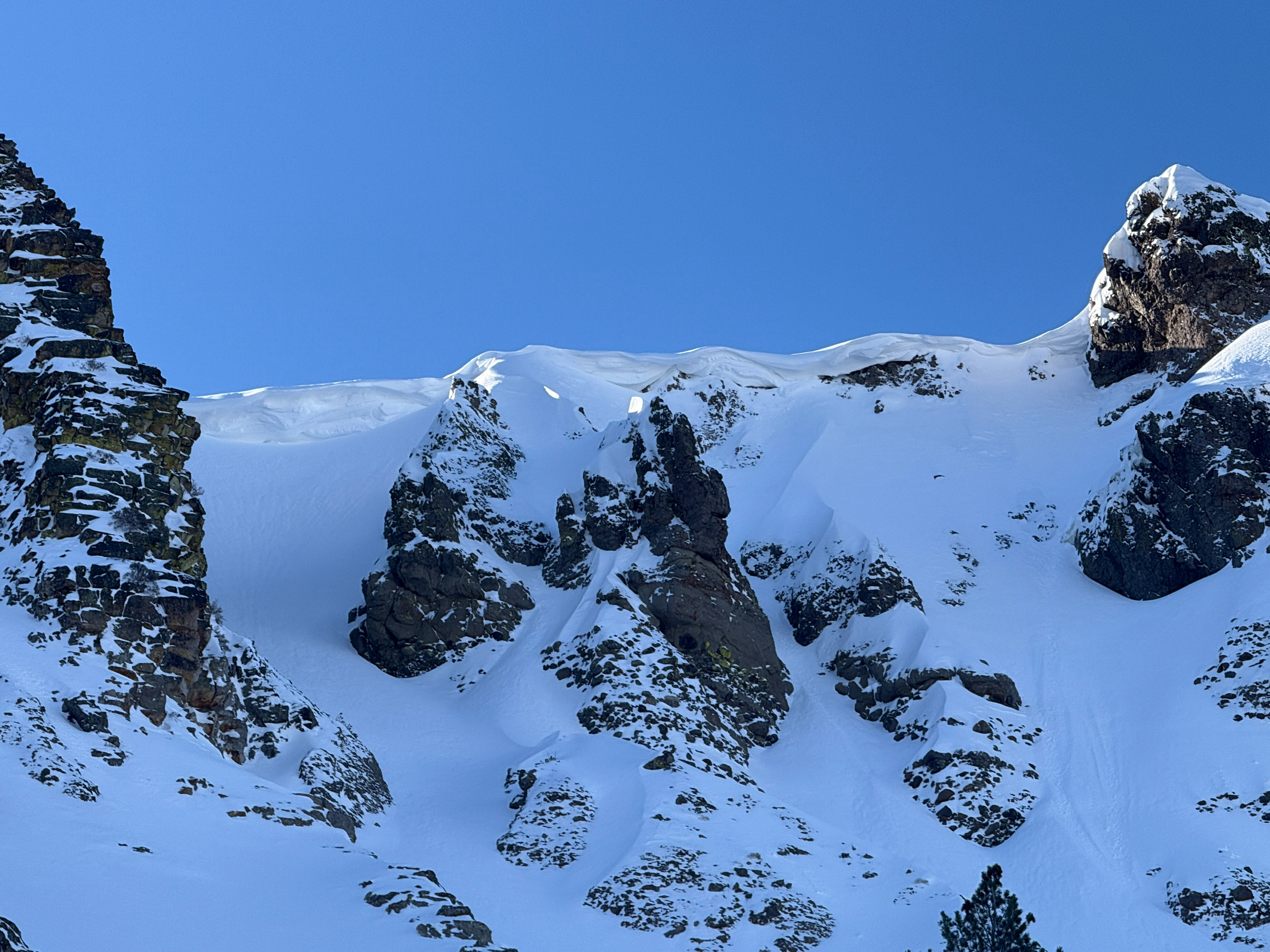
After a little more pavement riding than we wanted leaving the parking area, we went to multiple drainages between 8300ft and 8900ft at Ebbetts Pass today. We rode several wind loaded test slopes with no cracking observed within the recent snow, and many trees had settlement cracks/cones around them. Surface snow remained cold, light, and available for wind transport (where it hadn't already been scoured back to the rain crust), and light, very localized wind transport was observed today. I looked at the Dec 12th facets in two locations and they were hardly facets anymore. We inconsistently found small facets under the two recent rain crusts, but neither produced unstable Extended Column Tests.
Weather
- Cloud Cover
- few
- Wind Loading
- light
- Snow Avail For Transport
- moderate amounts
Cool and sunny, with a light breeze that shifted mid-day from the NE to the W
Snowpack
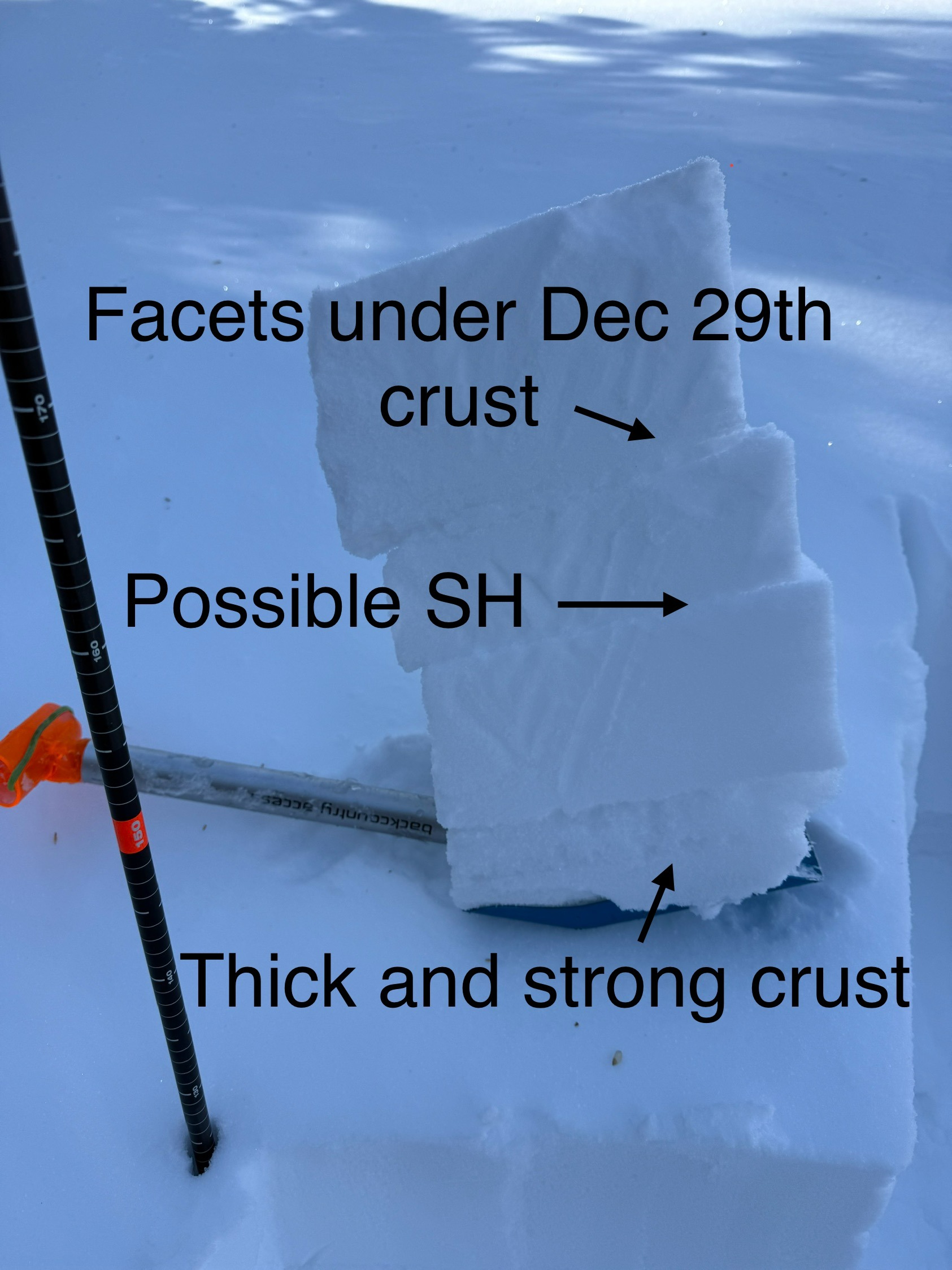
At 8700ft on a N aspect with steep terrain above blocking any direct sunlight, the upper rain crust was thick and strong, with percolation tubes under it and no faceting, but the lower rain crust was thin, weak, and faceted. Neither was reactive to an ECT, but a CT produced sudden planar results on the facets just under the lower crust. On a nearby E aspect slope at 8400ft, crust characteristics were reversed and still no propagation with an ECT. At the second location, I also got sudden planar CT results and an easy and planar STT on a thin weak layer in between the two crusts. It looked like a possible surface hoar layer, but I didn't find this elsewhere today and don't know if there was a long enough pause in precip for SH to form. This second location was both a little warmer and had two creeks nearby, so it would be a place I'd go to look for surface hoar (SH was on the surface today at this location). In both test profiles, the Dec 12th facets were hardly facets anymore, and without context I would simply identify them as small melt forms - still moist and with very few angular faces.