
Quick report
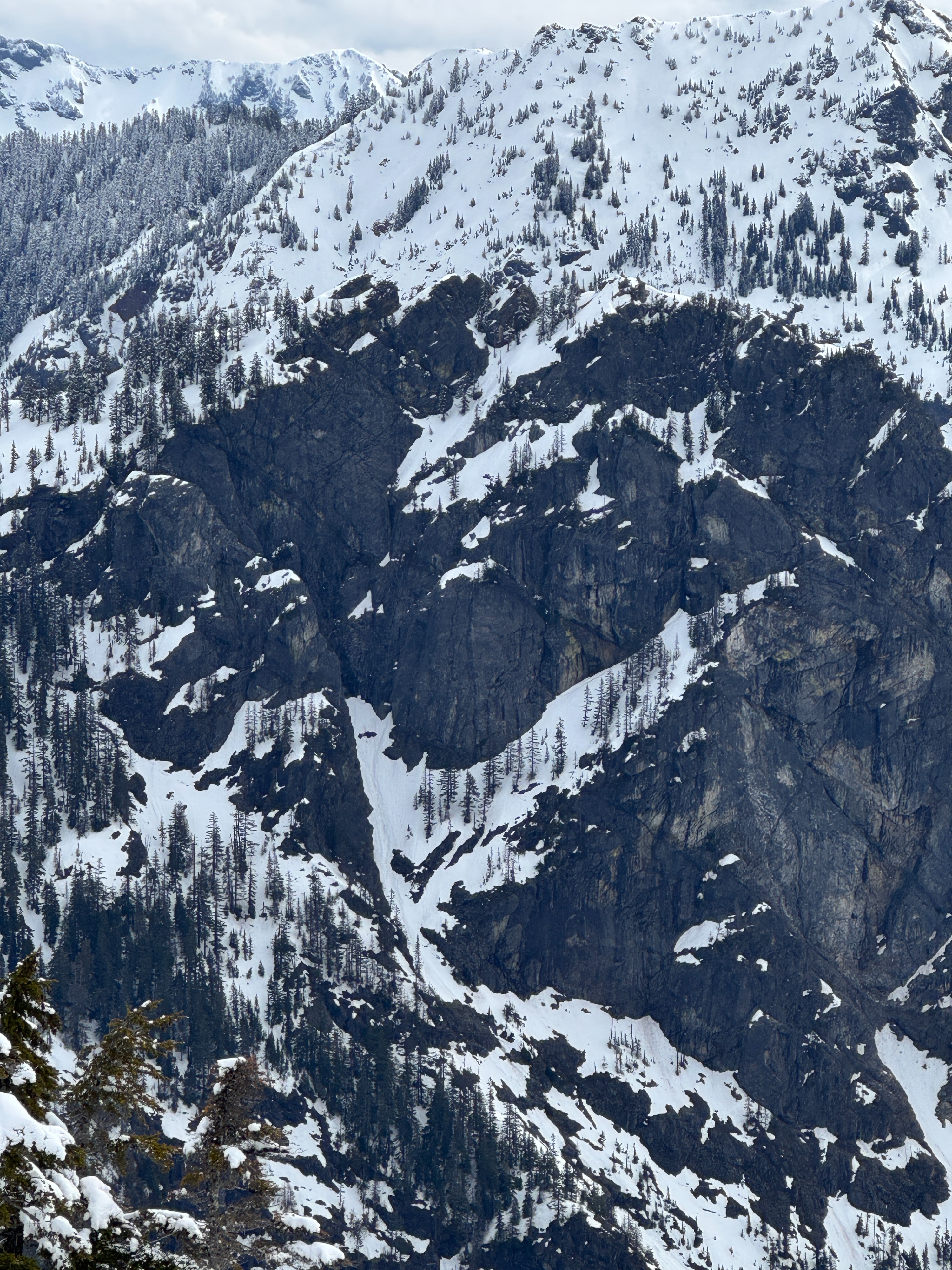
While there's several inches of recent snow above 5000ft, we didn't find any real avalanche concerns in this new snow. Instead, our biggest worry was still about the water working through the snowpack. We mainly paid attention to the potential for blobs of snow to shed off rocks and very steep faces. The new (March) atmospheric river (AR) crust is gaining strength, but wasn't quite "new ground" where we traveled. We still punched right through it with our boots.
No cracking or collapsing.Weather
- Cloud Cover
- overcast
- Wind Loading
- light
- Rain Elevation
- 5000
- Recent Snowfall
- 1
- Snow Avail For Transport
- small smounts
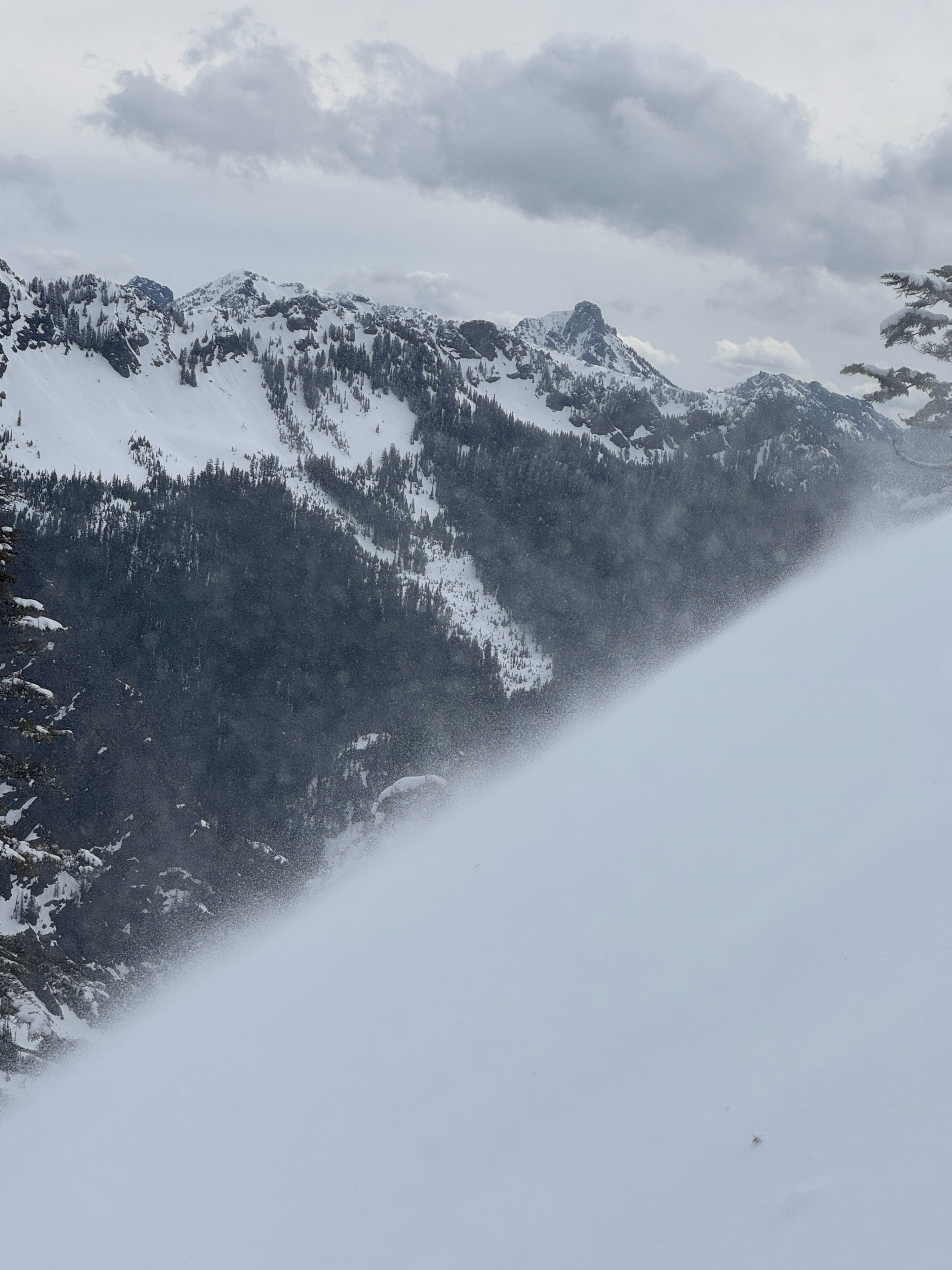
Colder and cloudier than we anticipated. Moderate SE winds at ridgeline with activity blowing snow.
Snowpack
New Snow: Above 5000ft, there's been 4-8 inches (10-20cm) of snow over the past several days. The wind was blowing this little bit of snow around, scouring some slopes, and piling it up on others. Even still, we didn't find any real wind slabs. A very thin and breakable crust from Saturday was found within the new snow and capped by a dusting (1/2in, 1 cm) of new snow.
March Atmospheric River (AR) Crust: Below the recent snow, the March AR crust continues to form. Where we looked, it was about 3 in (7-8cm) thick. It was generally not boot supportable and we punched through to our knees or even deeper. Under this forming crust, there was another 12 in (30cm) of wet weak snow from the AR.
Other than the AR layer, the upper snowpack continues to be dry and strong. Snowpack test showed a very well settled snowpack.
February AR Crust: This layer was just over a 3 ft (1m) below the snow surface. The most concerning thing we saw was snowpack test failing suddenly and cleanly at the top of this layer. However, it took extra effort (more very hard hits) to make the layer fail. Upon inspection we found old facets that had become wet from water moving through the snowpack.
What does all this mean? Ultimately, strengthening AR crust seemed to be limiting wet issues deeper in the snowpack like those we saw on the Feb AR crust. However, water was still working its way through the snowpack and where we traveled the snowpack wasn't quite "locked up."
Avalanche
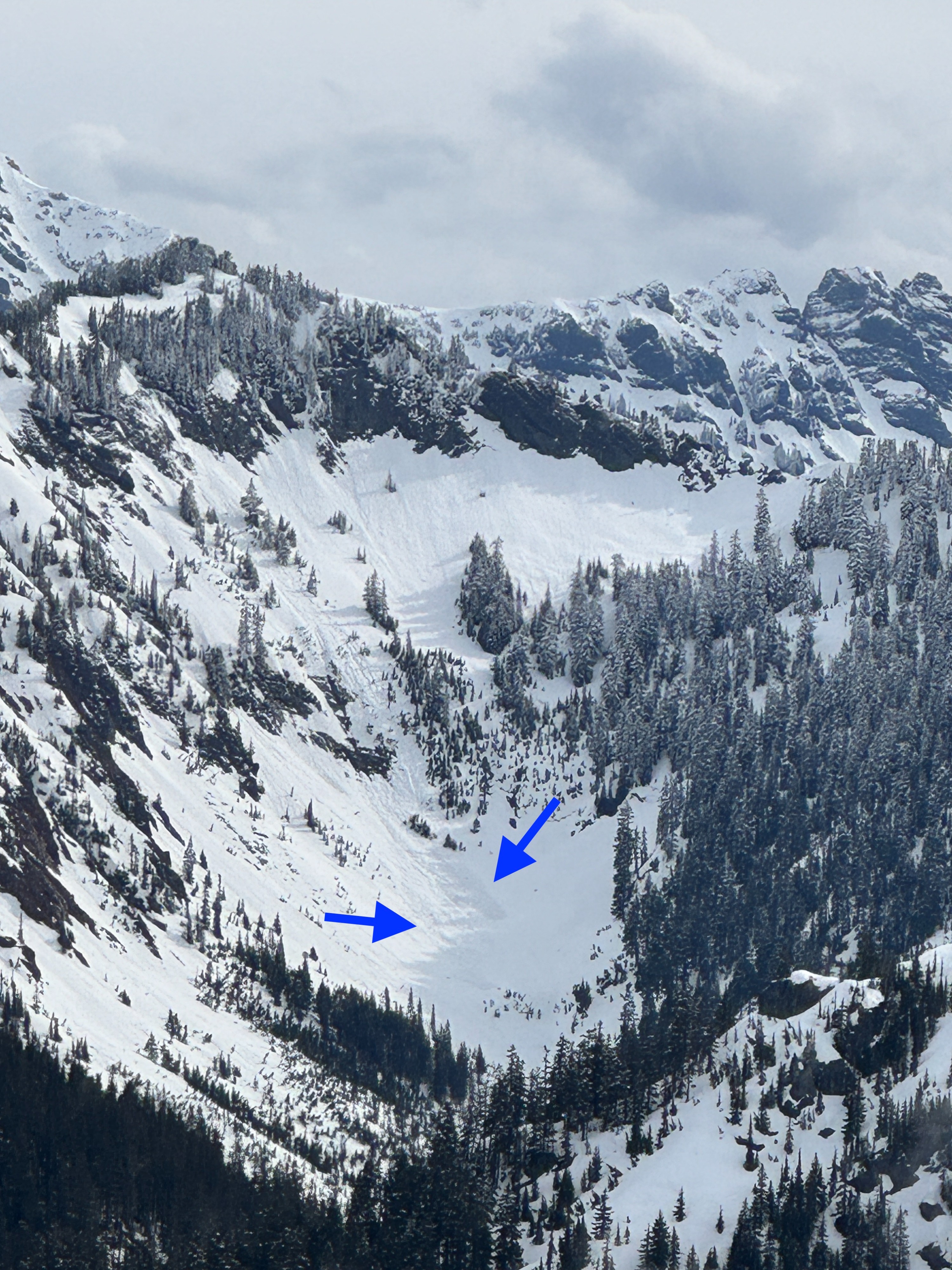
We only spotted two newer wet avalanche in the upper Commonwealth Basin. Both looked like D1-1.5. Numerous older piles of debris were covered by recent snow.