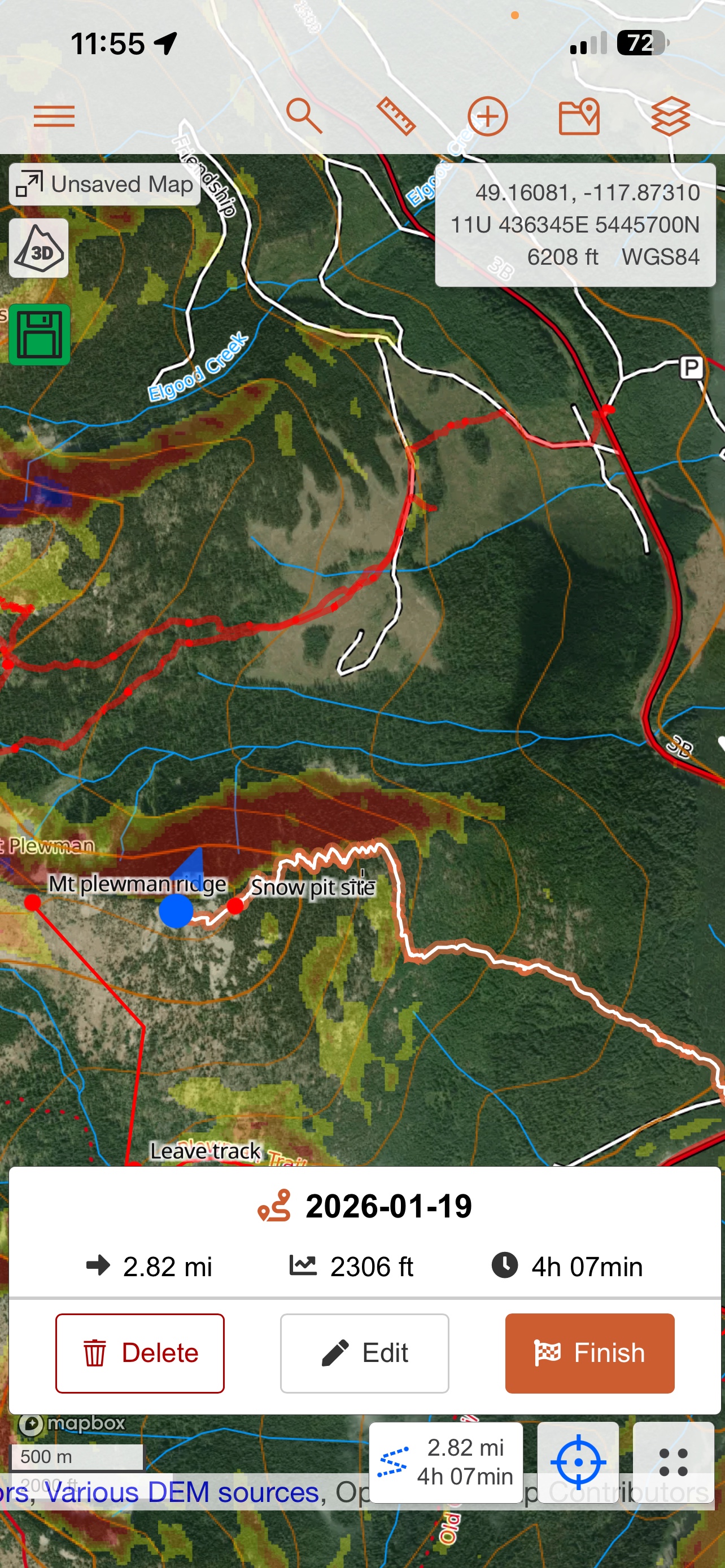
Plewman Mountain East
Jan 19th, 2026 11:00 AM
haydan_fetterly
Rossland
Details
Type
quick
Coordinates
49.160120, -117.880920
Quick Observation
Cold morning conditions promoted the formation of large surface hoar at lower elevations, while higher elevations showed a surface of rounded grains. A temperature inversion was observed, with warmer temperatures at higher elevations. The snow surface was predominantly a firm crust, with slight warming and surface softening on solar aspects later in the afternoon.
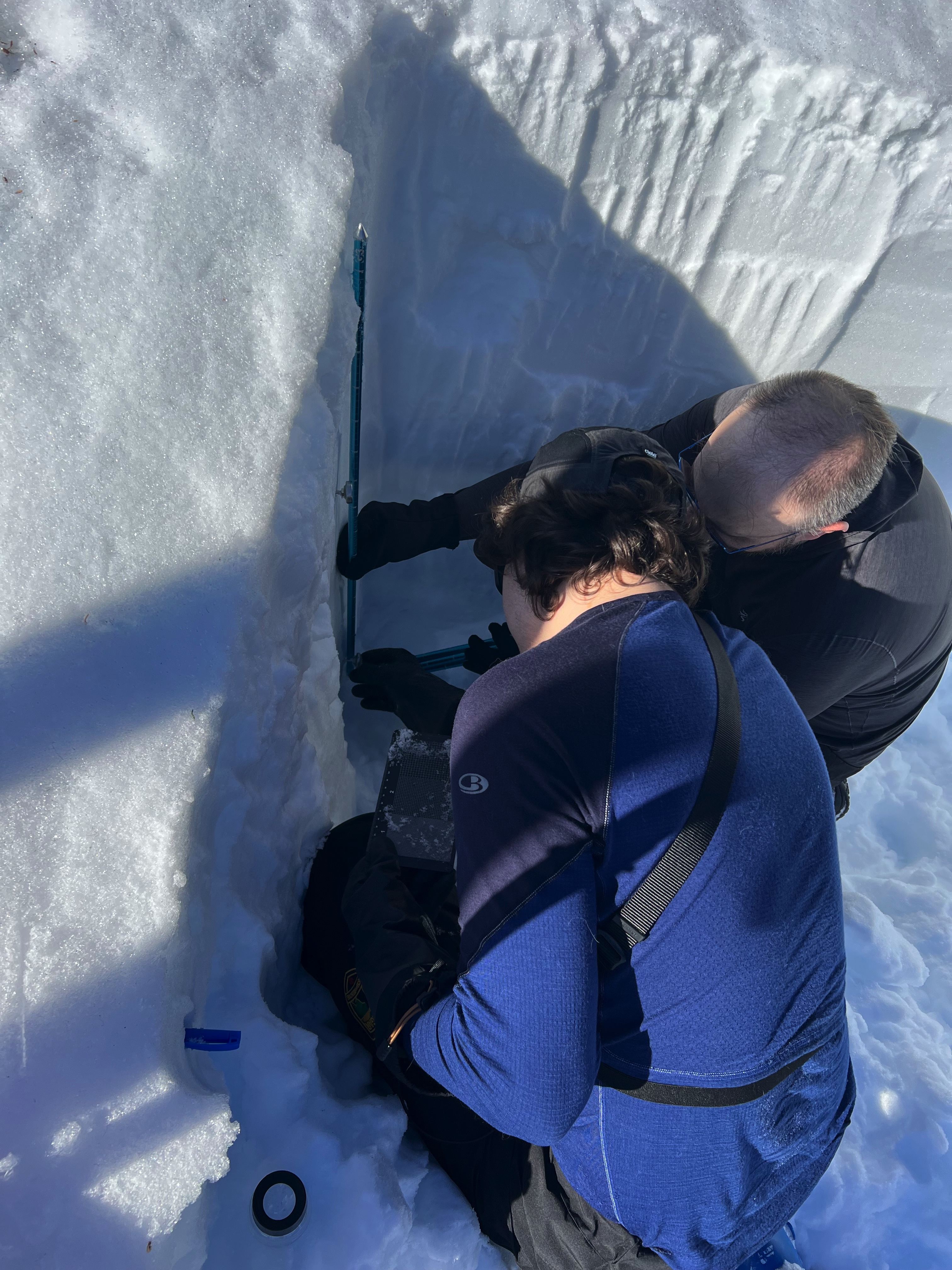
A 115 cm snowpit was excavated. Primary layers of interest were identified at 10 cm and 70 cm. The 10 cm layer consisted of a thin crust (<1 cm) with rounded grains (<1 mm). The 70 cm layer was approximately 2 cm thick and composed of rounded grains (<2 mm). Below 70 cm, the snowpack transitioned to faceted (“sugary”) grains with 1F hardness.
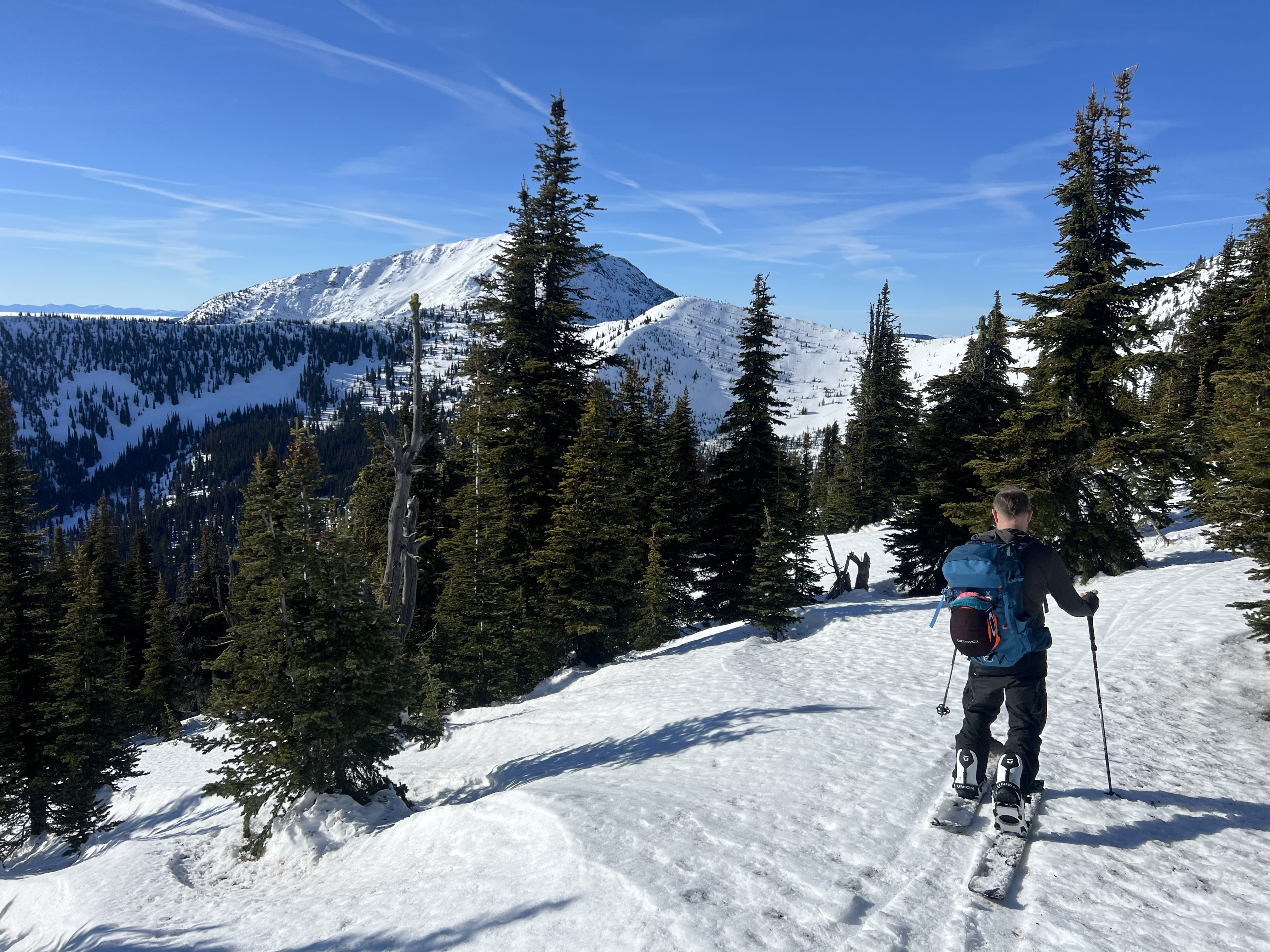
Travel uphill was on a very hard crust. Conditions were windy near ridge features but calm in treed areas. Ambient temperature near the summit was approximately 0 °C. Ski penetration on descent was minimal, with skiing primarily on a hard crust surface.
Photos (3)