
Quick report
- Cracking
- isolated
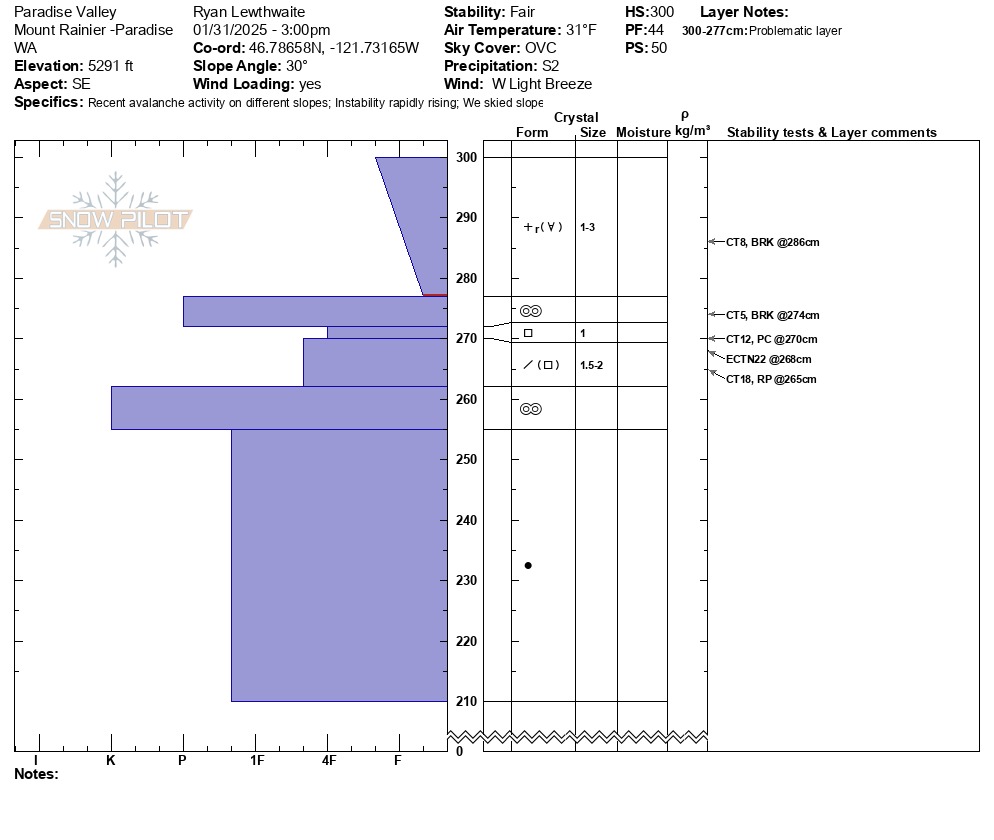
Small natural avalanches on slopes steeper than 35 degrees. Stability on our 30 degree slope was fair with boot penetration down 50cm to the old crust, ski pen was 44cm. Temperature fluctuations were changing the snow characteristics and the increased winds were consolidating the surface accumulations, preserving the loose dry snow just above the older crust. Above our location winds were redistributing the new snow forming thick slabs. The snowpack is very deep (+300cm) at around 5300'. Stability results were not alarming yet, but we did find facets below the old surface crust and facets around the next lower crust from late December. Surface instability was most pronounced with the potential for small to large avalanches in the uppermost 11" of new snow. There is a chance that the added weight and poor structure of the upper 50cm of snow could cause avalanches to step down into weak facet layers causing larger and more destructive avalanches in some steep locations.
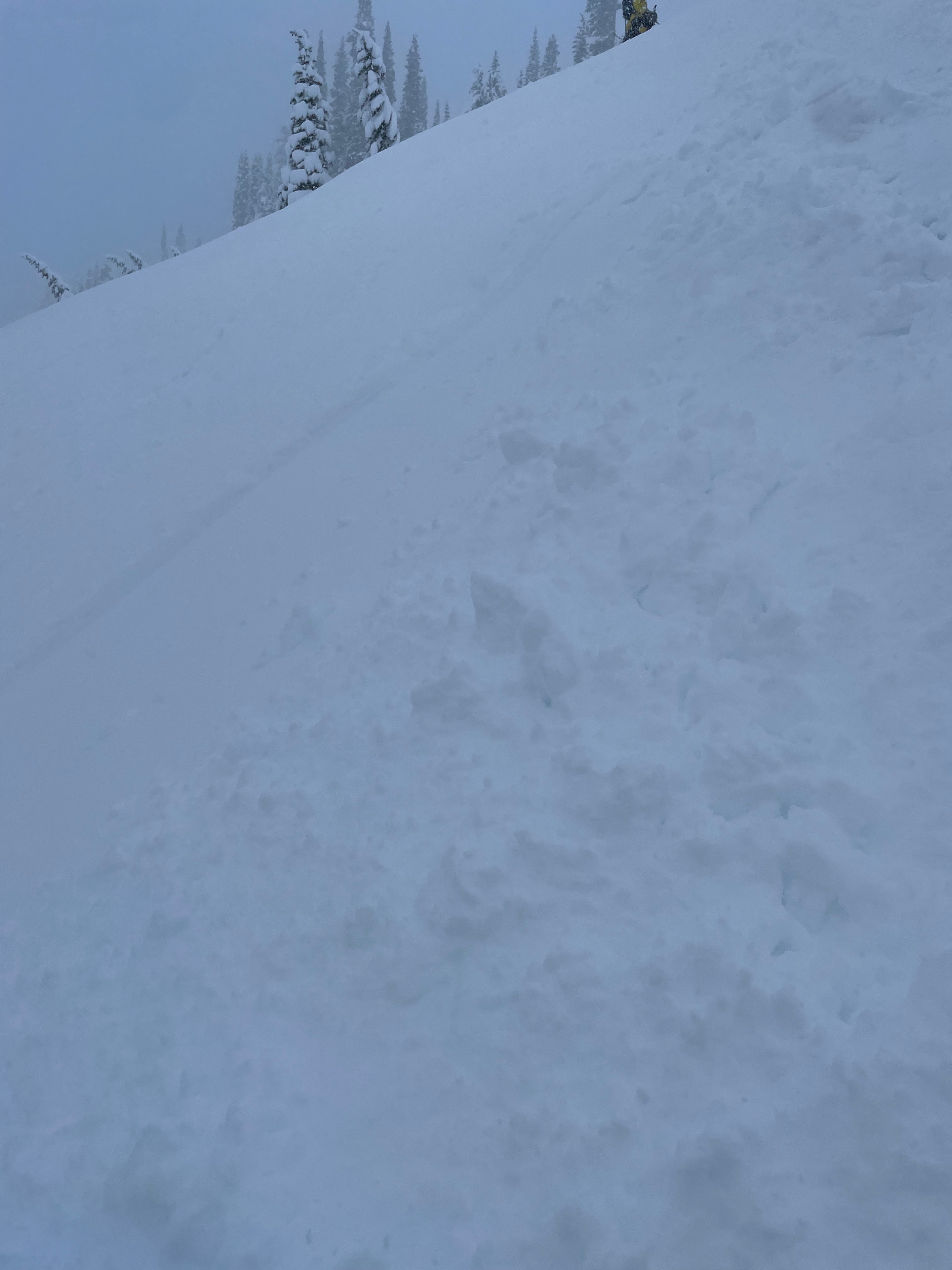
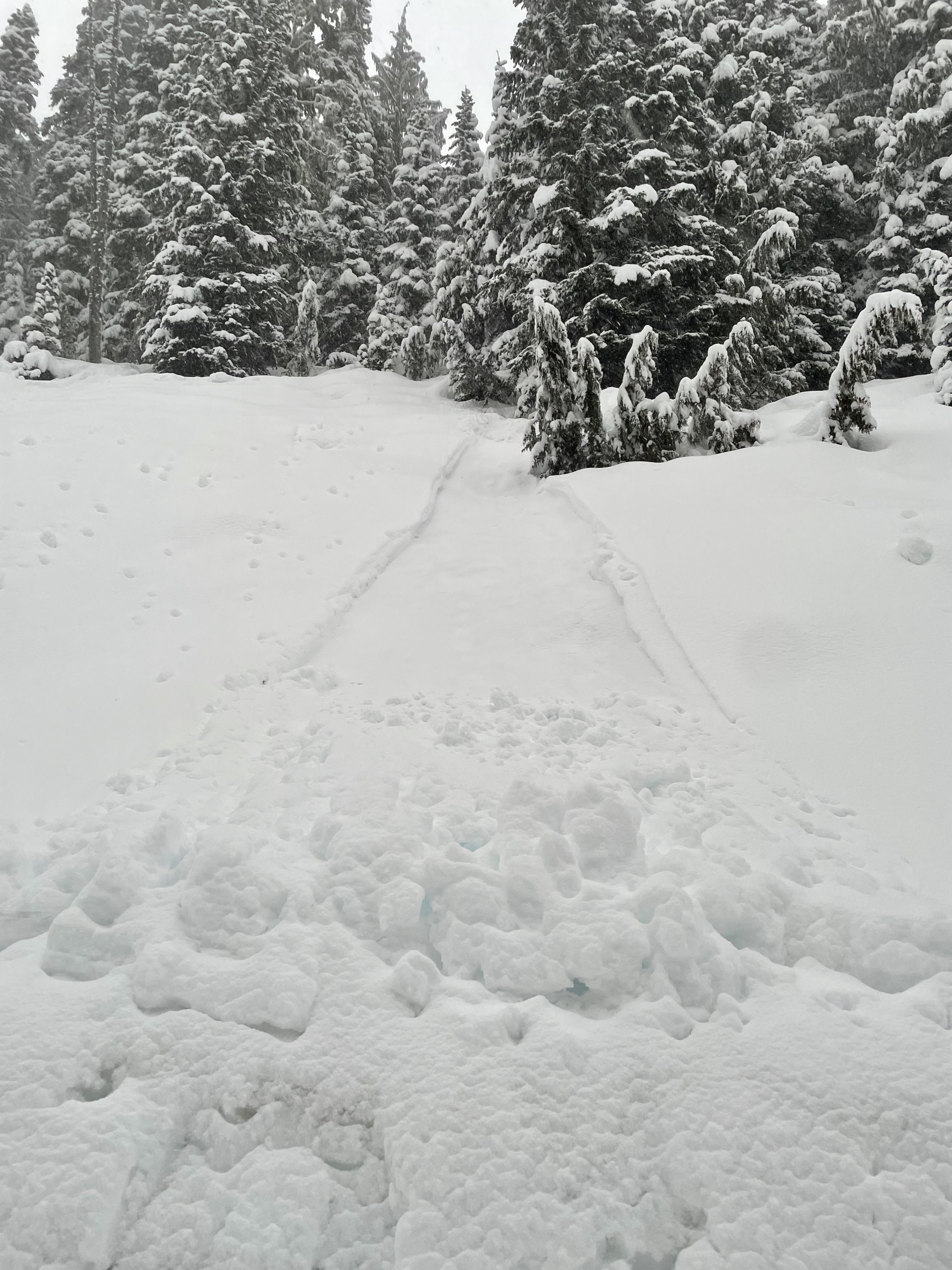
Avalanche
Around 11 inches of new snow fell throughout the day. On a 36 degree test slope I was able to trigger a small storm slab avalanche in the recent surface layer of snow. A mid storm density change revealed a layer of dry snow early on in the storm and heavier more cohesive snow layer which fell later in the afternoon. The dry snow was about 3-4 inches thick and rested above the exposed melt/freeze crust from the past couple weeks. At the surface 3-5 inches of new snow was denser and was getting more affect from the winds which were increasing throughout the afternoon. This snow was rimed and showed signs of localized cracking around skis but felt moister than the loose dry snow below it.