
Quick report
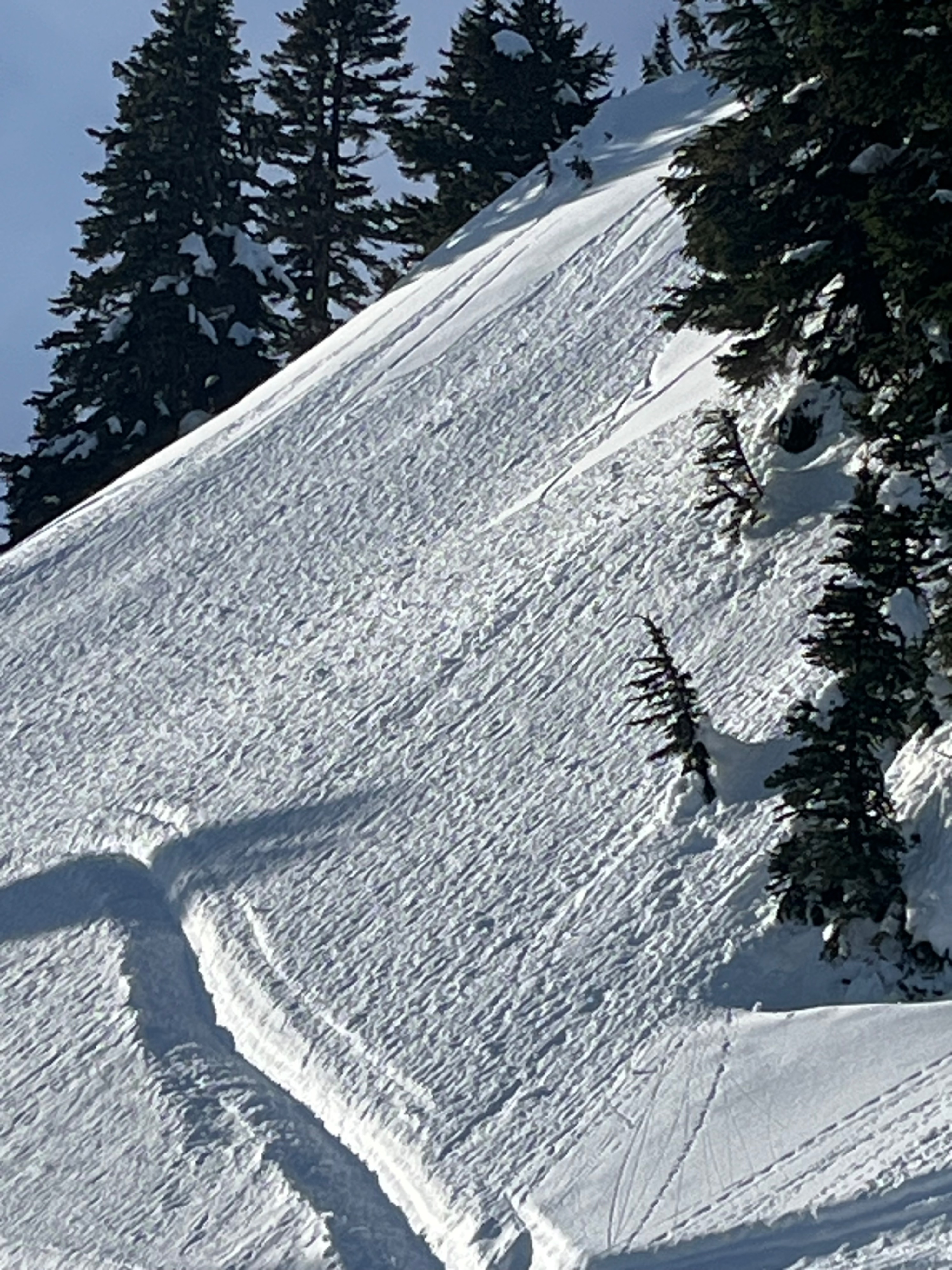
A glorious New Year's Eve in the backcountry. We wanted to investigate snow surfaces, any layers of concern, and snow depths in an area we hadn't made it out to yet this year. Now that there's been a few days of high pressure, the most notable information is that snow varies based on aspect: steep south-facing slopes have a melt-freeze surface and are littered with rollerballs (very few wet loose avalanches). Shady slopes still harbor low-density dry snow. Only one new distant wet loose avalanche was observed- in Canada, actually- an otherwise no notable instabilities were found, aside from the shallow layers of moist snow on the steep, sunny slopes.
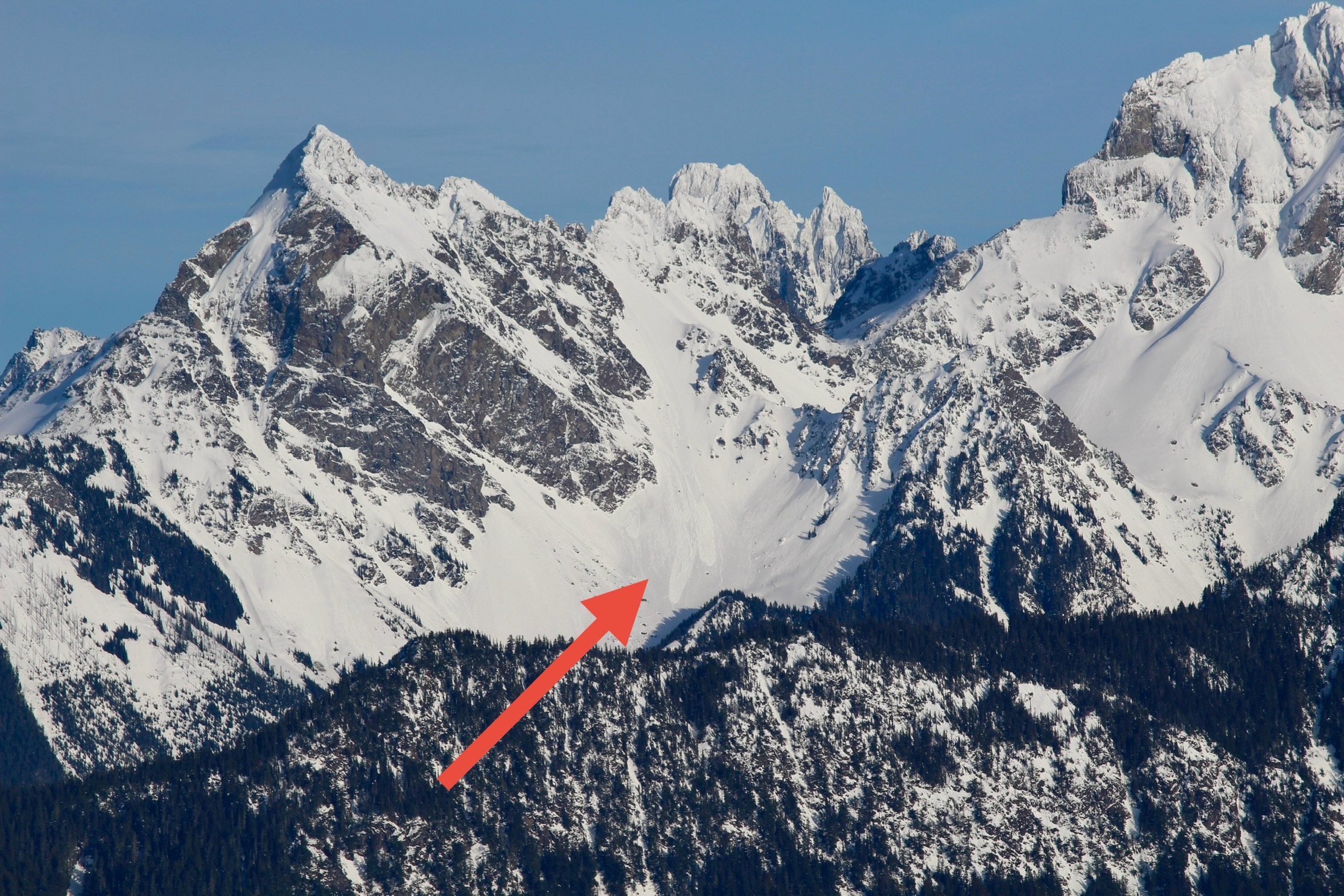
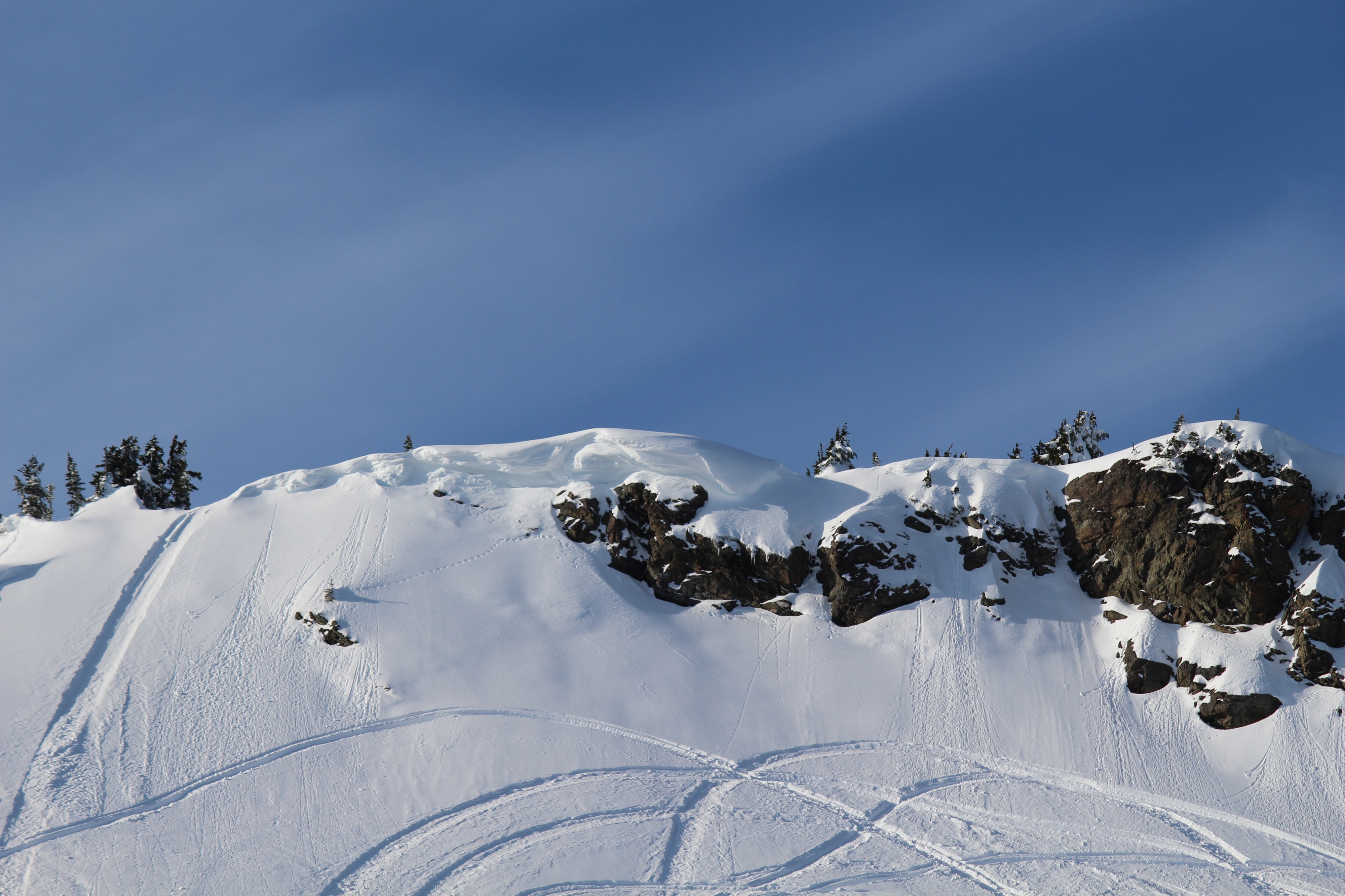
One distant small (D1.5) wet loose avalanche was seen on Canadian Border Peak. SW, 6000ft. See photo. No other avalanches were obvserved- just an abundance of rollerballs, mainly from previous days on south-facing slopes.Weather
- Air Temp
- 39
- Cloud Cover
- clear
- Wind Loading
- previous
- Snow Avail For Transport
- small smounts
Calm. Warm in sun, cool in shade. There was a bit of an inversion- warmer at higher elevations than lower.
Snowpack
The snowpack from 5300-5600ft was 150-190cm. At 6000ft, snow was over 200cm. The 12/24 crust was consistently just over a foot, 35cm, deep.
I didn't find any instabilities of large concern in snow pits I dug or in hand pits. The only failure I found was a weakness 3cm above the 12/24 crust in soft decomposing forms that yielded a CT20RP, yet an ECTX. Popping the extended column off after the test distinctly showed the failure plane.
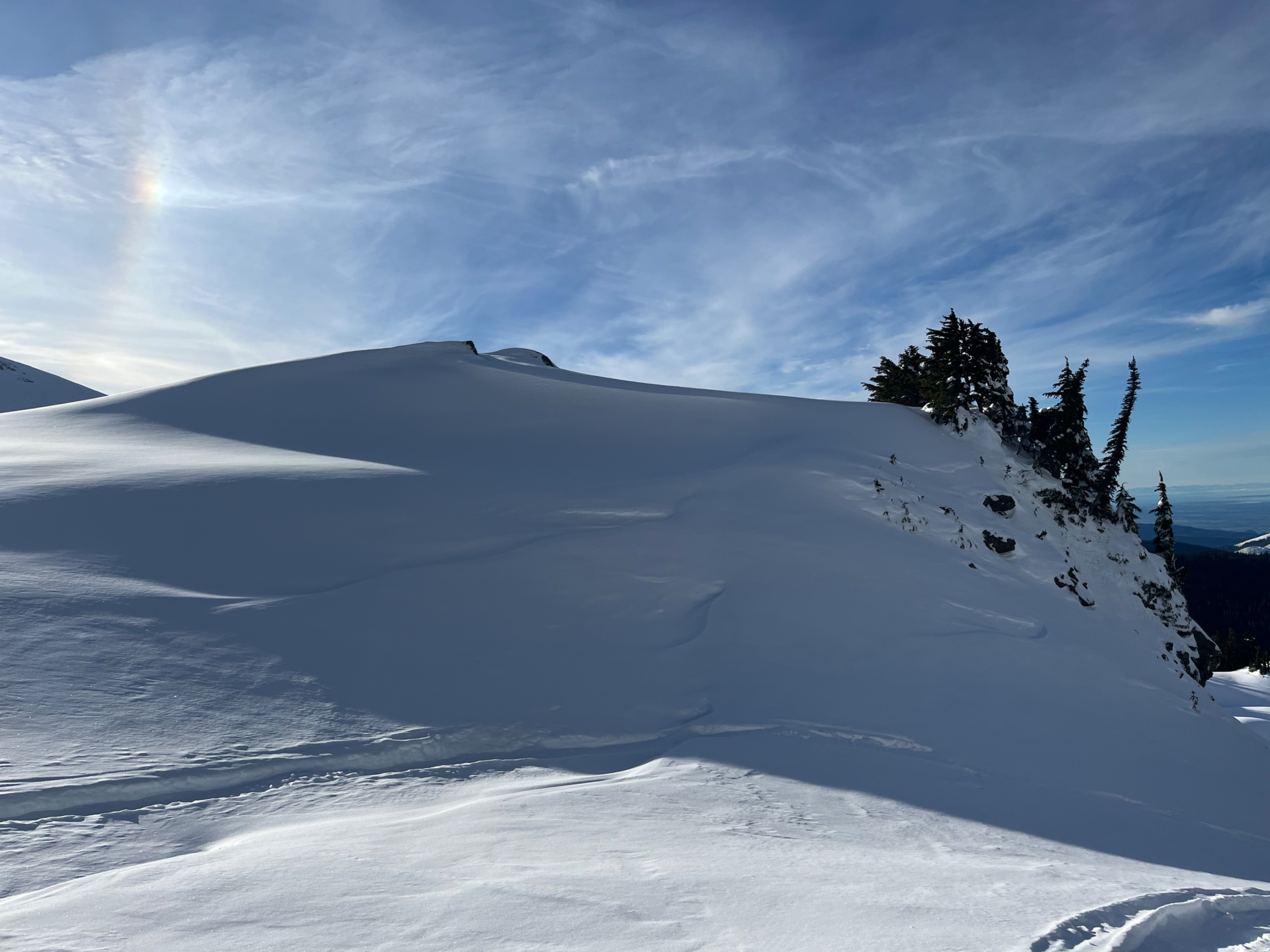
Sunny and shady aspects are notably different now- an abundance of low density dry snow exists in shady areas, whereas melt-freeze at the surface on steep south-facing slopes. I found a sheltered meadow at 4700ft with an abundance of surface hoar. I did not find any higher up.
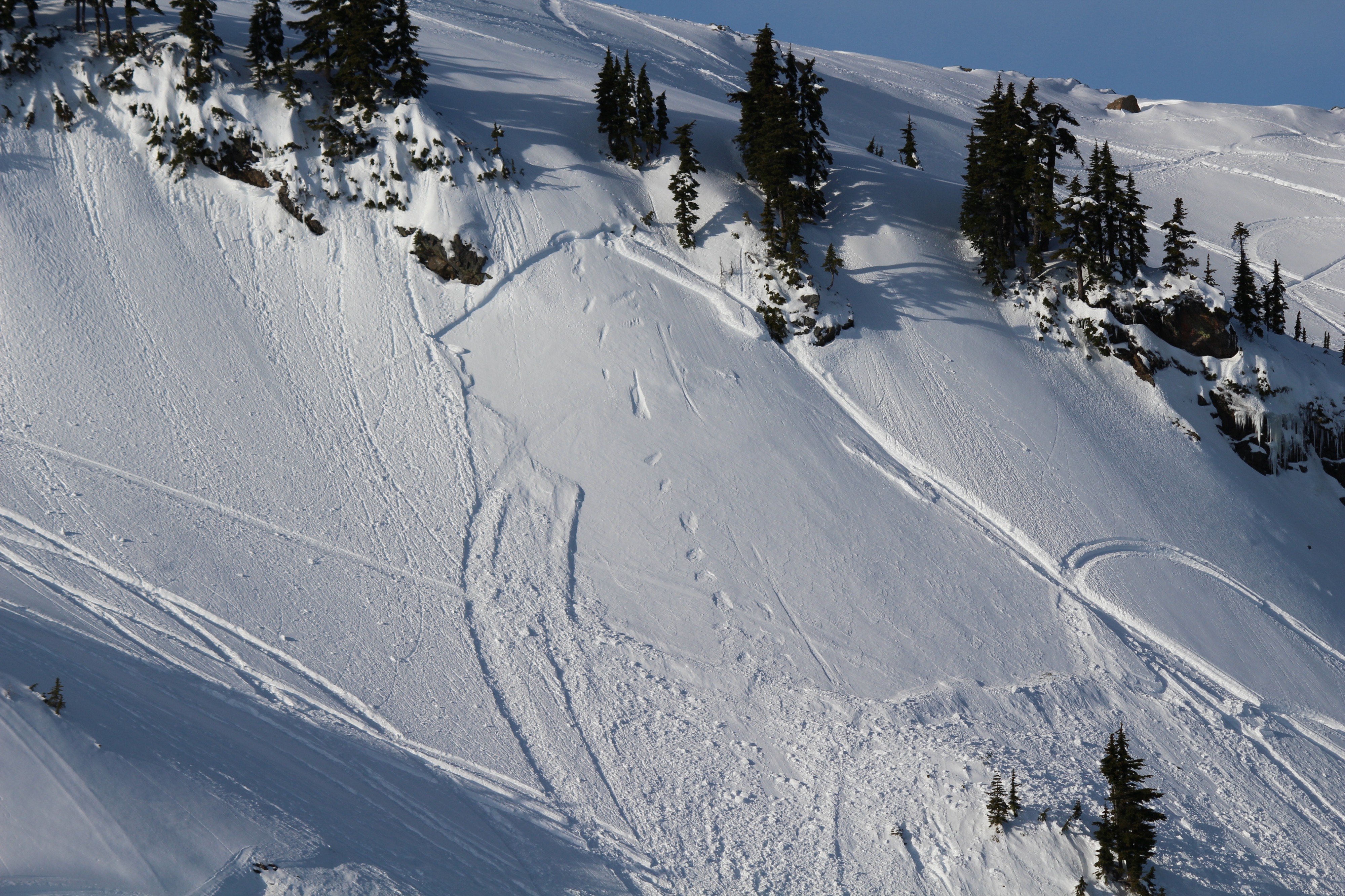
One glide crack was seen, with an unknown time of occurrence (see photo).