
Quick report
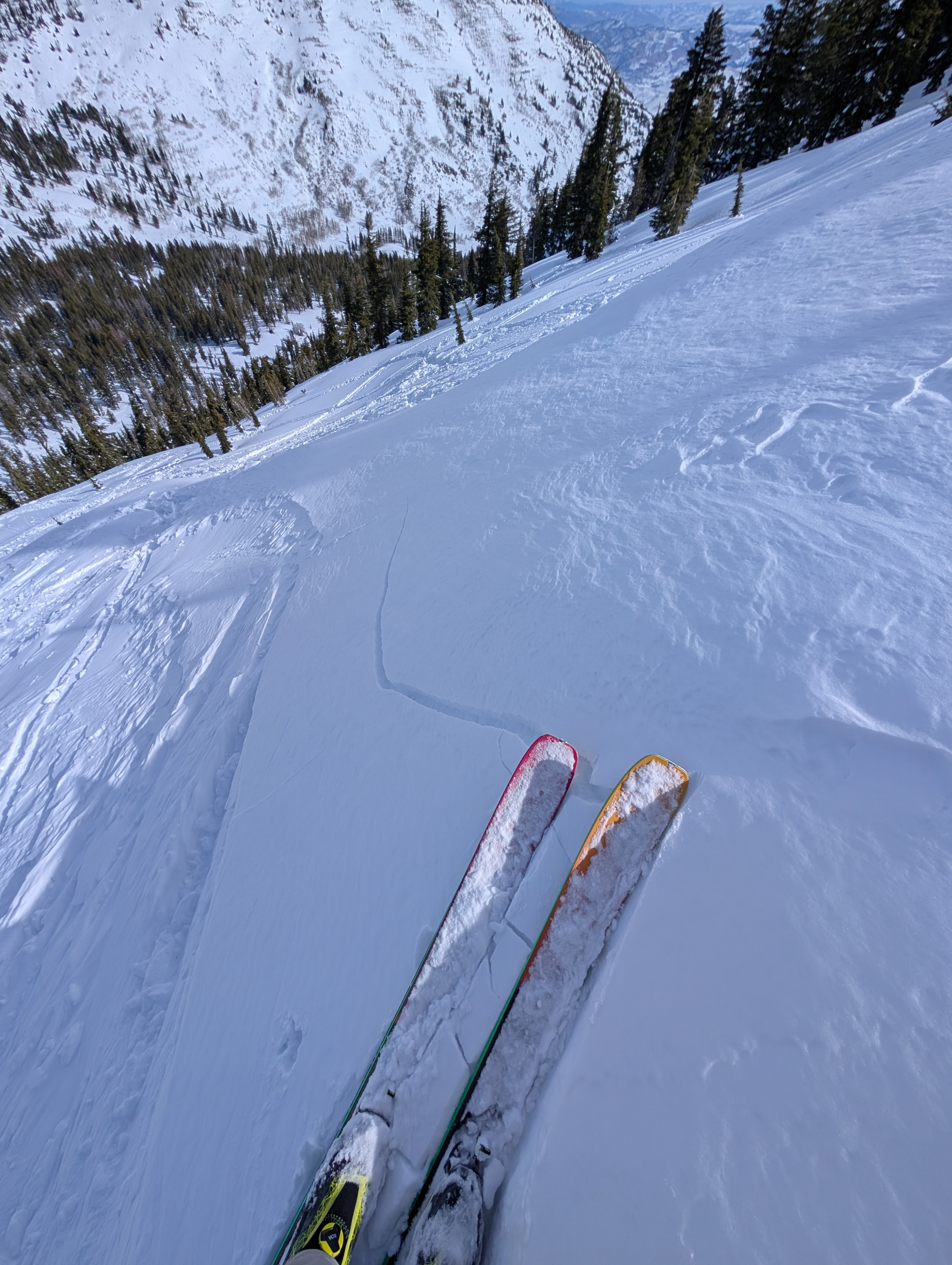
- Cracking
- specific
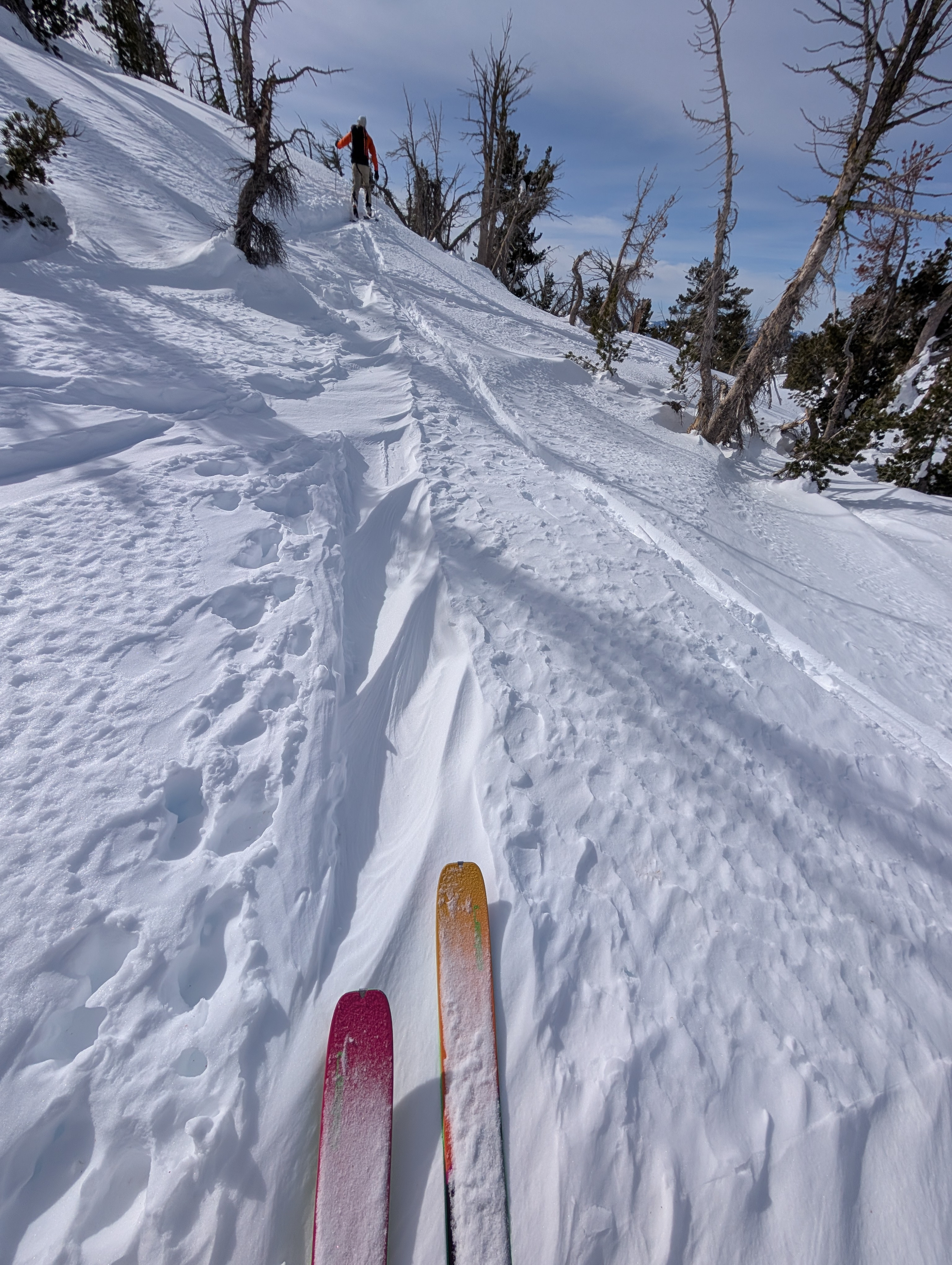
Today, we ventured into an area where we knew weak snow existed on the surface before the storm. We avoided steeper slopes and stayed away from anything with steep terrain above us. After probing around to establish that the weak layer existed where we thought it might, we dug into the snowpack. We found the Feb 10 facet layer (weak sugary snow) buried 3.5 to 4 ft below the surface. Tests on this weak layer indicated that fractures could still propagate through it. The recent storm snow above it continues to get more cohesive (see the snowpack section for more details).
The storm snow remains soft and cold on the northerly aspects, and the more sun-exposed slopes hold a thin melt-freeze crust above still-cold snow. Blowing snow remained somewhat limited in this area today, but we still found stiff wind slabs and shallow new wind slabs resting on weak snow (buried surface hoar) in wind-exposed areas near the ridges. These were small in this area, but they cracked when we kicked them, especially when the slope was undercut.
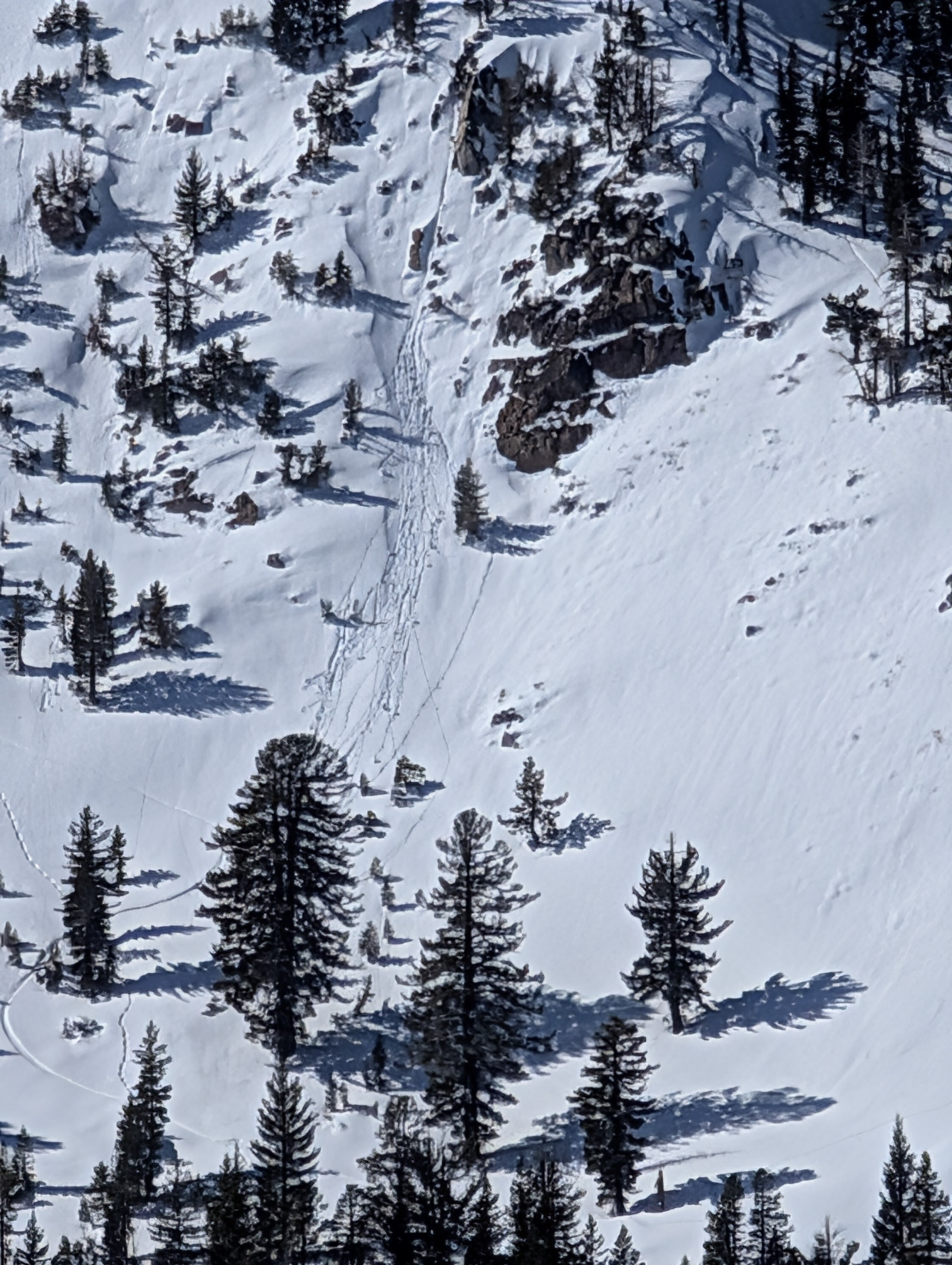
The snow began to warm quickly throughout the day, and many slopes that had held cold snow in the morning became wet and sticky in the afternoon. We also saw some roller-balls on Incline Lake Peak across the road.
We triggered some shooting cracks on wind-loaded test slopes. These cracks mostly occurred on previously undercut slopes and were only 3 to 4 inches deep. They failed on a layer of surface hoar.Weather
- Cloud Cover
- few
- Wind Loading
- moderate
- Snow Avail For Transport
- moderate amounts
Warm and partly cloudy weather with moderate SW winds along the ridges.
Snowpack
The storm snow continues to settle and consolidate. Tests in the upper snowpack did not produce unstable results. This storm snow still rests on old weak snow (Feb 10 facets) buried 110 cm to 125 cm below the surface. Tests targeting this weak layer indicated that triggering it is becoming more difficult, but if it does break, fractures could still propagate along it.