
Quick report
- Cracking
- isolated
- Collapsing
- specific
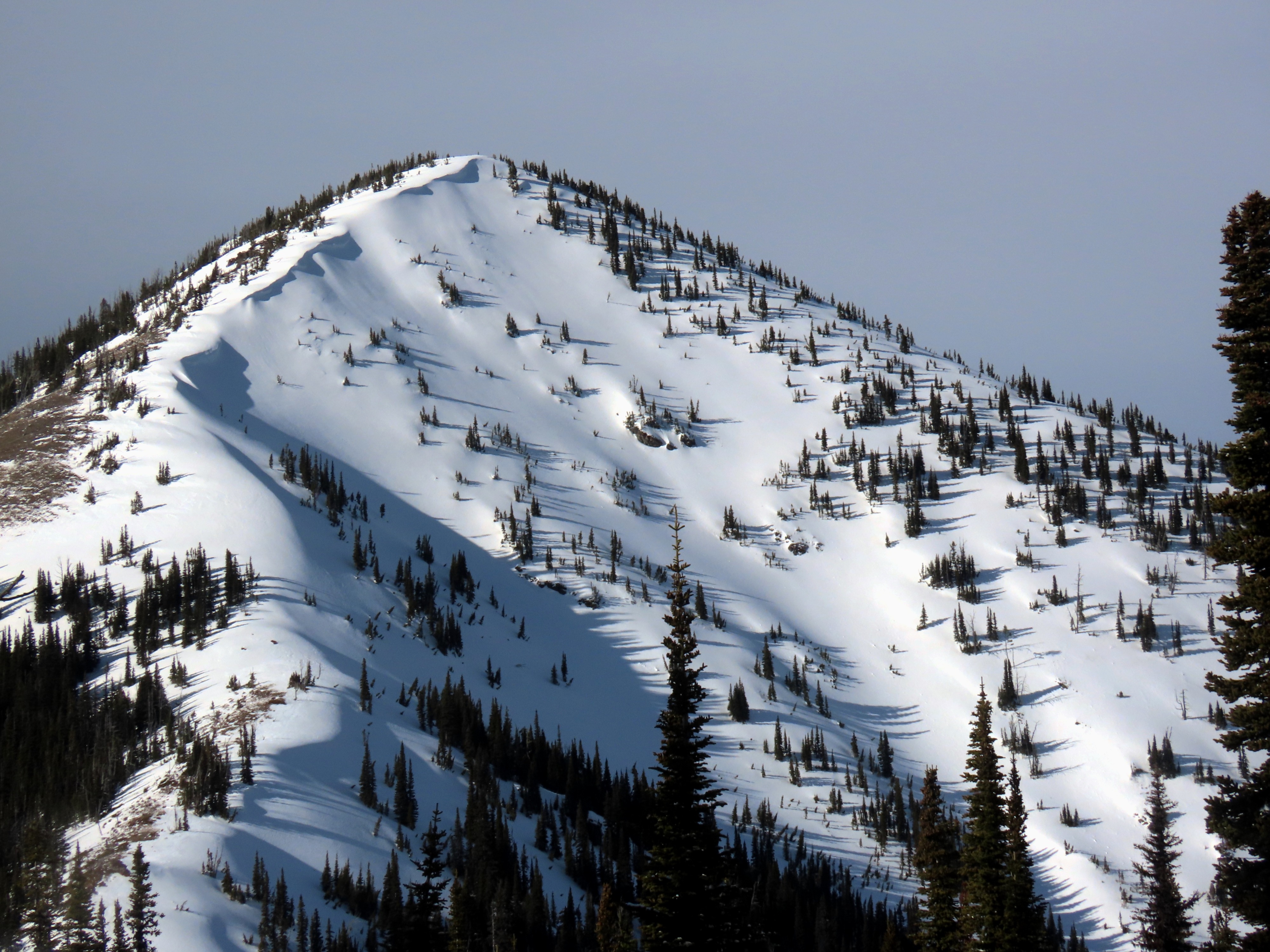
We returned to Patrol Ridge 11 days after our last visit to reassess conditions and evaluate how the weak layer and slab are evolving.
Takeaways:
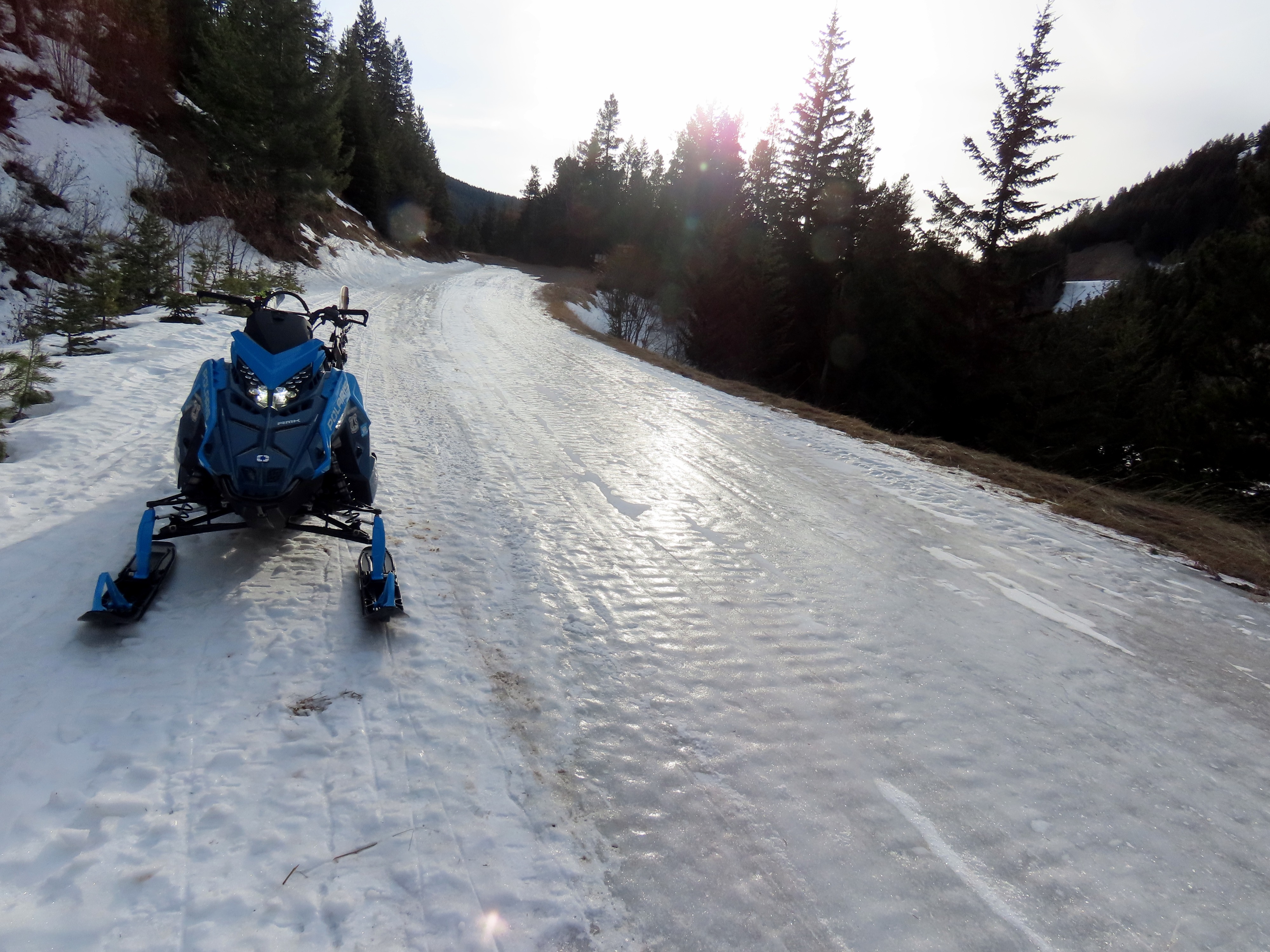
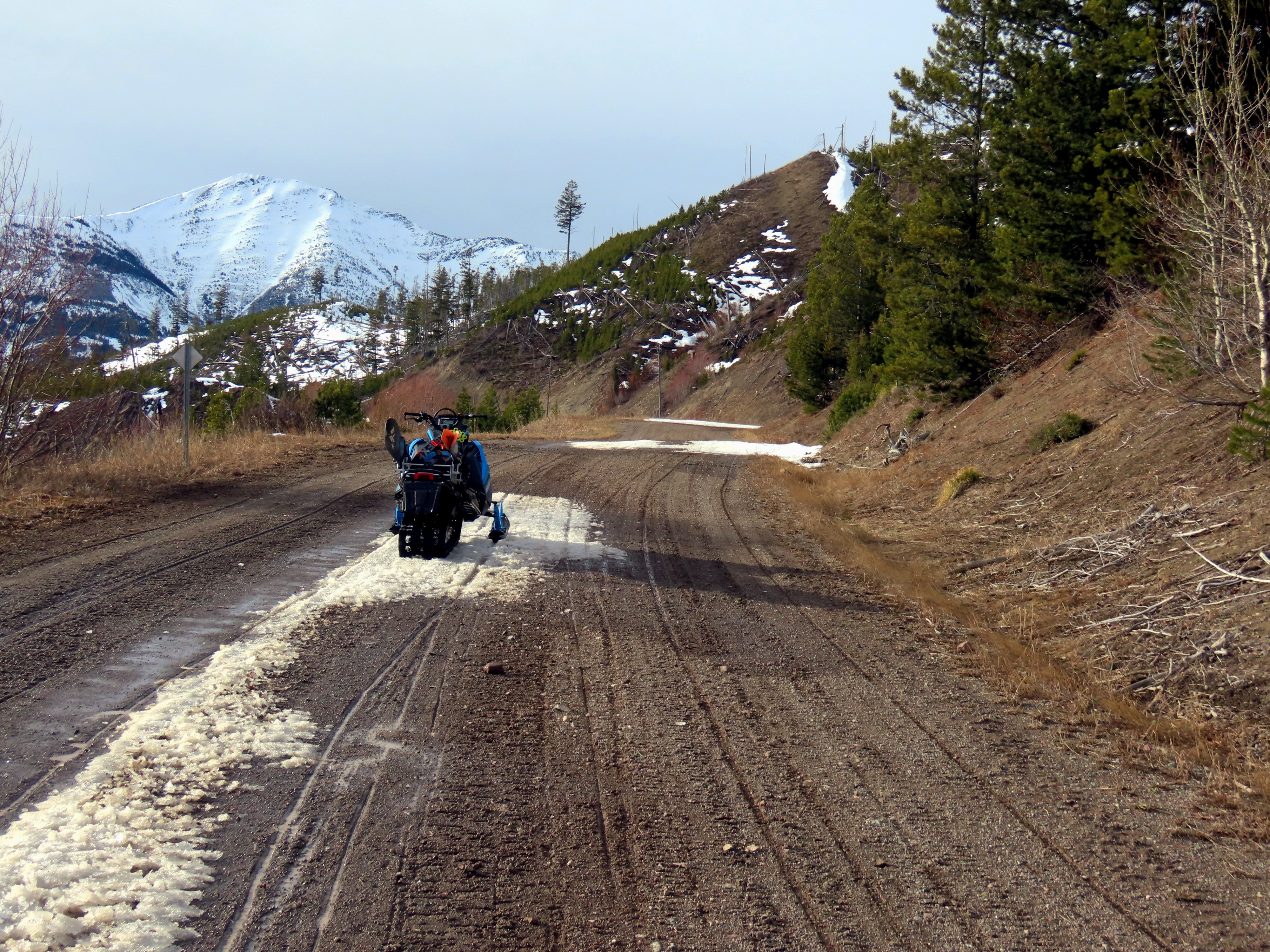
- The first few miles of Skyland Road feature a good amount of bare ground and sheet ice. Patience, persistence, and a way to keep your sled cool are essential right now.
- Above 6,000', the surface crust begins to deteriorate on shaded aspects. By 6,300–6,500', only one or two thin, denser layers remain in the upper snowpack.
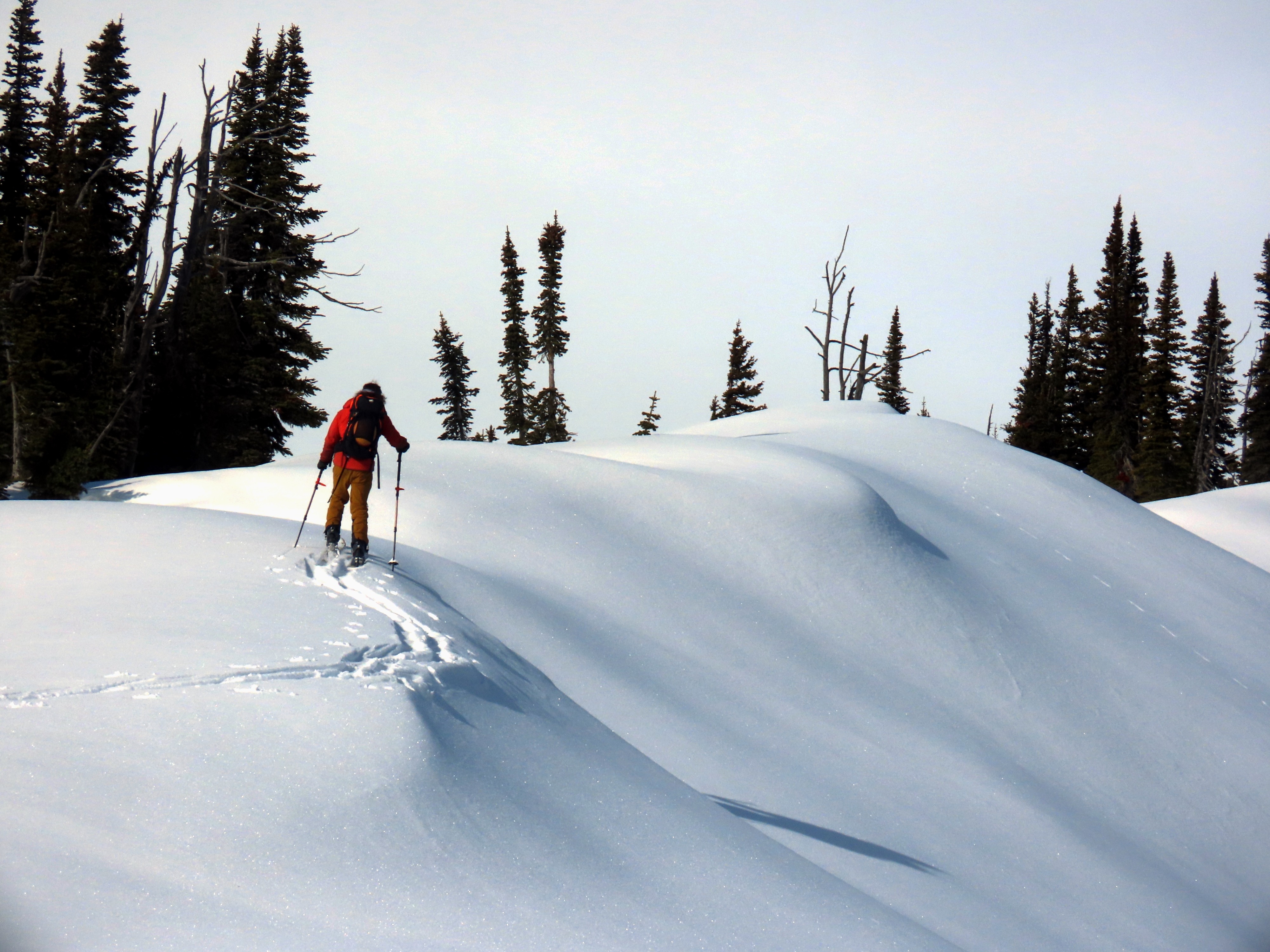
- At upper elevations, ski penetration is 3–4" down to the new/old snow interface. While this layer is ski supportable, it is not nearly stout enough to keep weight off the buried surface hoar 10–12" down, as evidenced by copious whumpfing (see below).
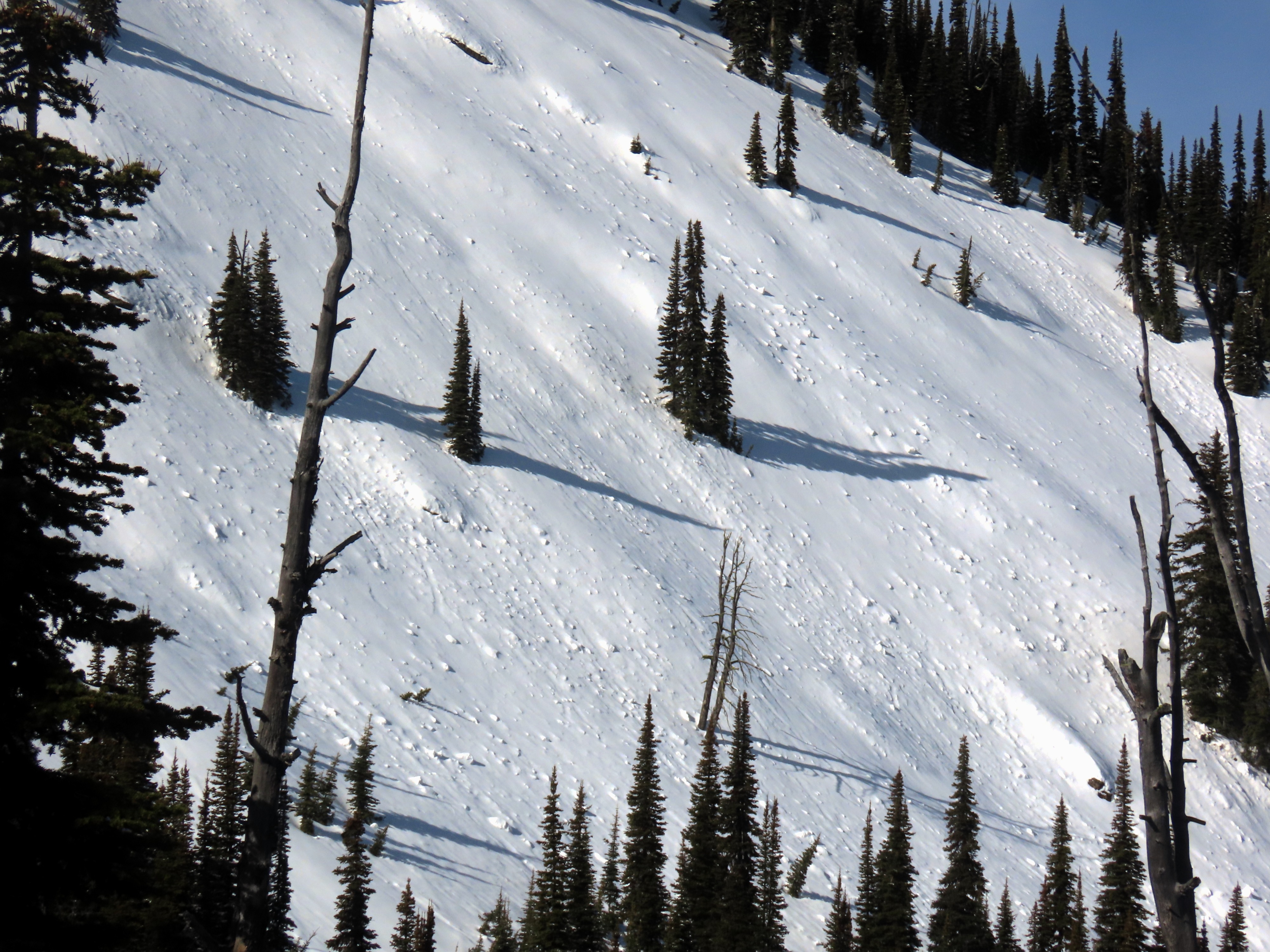
- On slopes even slightly south of east, the crust beneath the recent snow is strong, slick, and supportable.
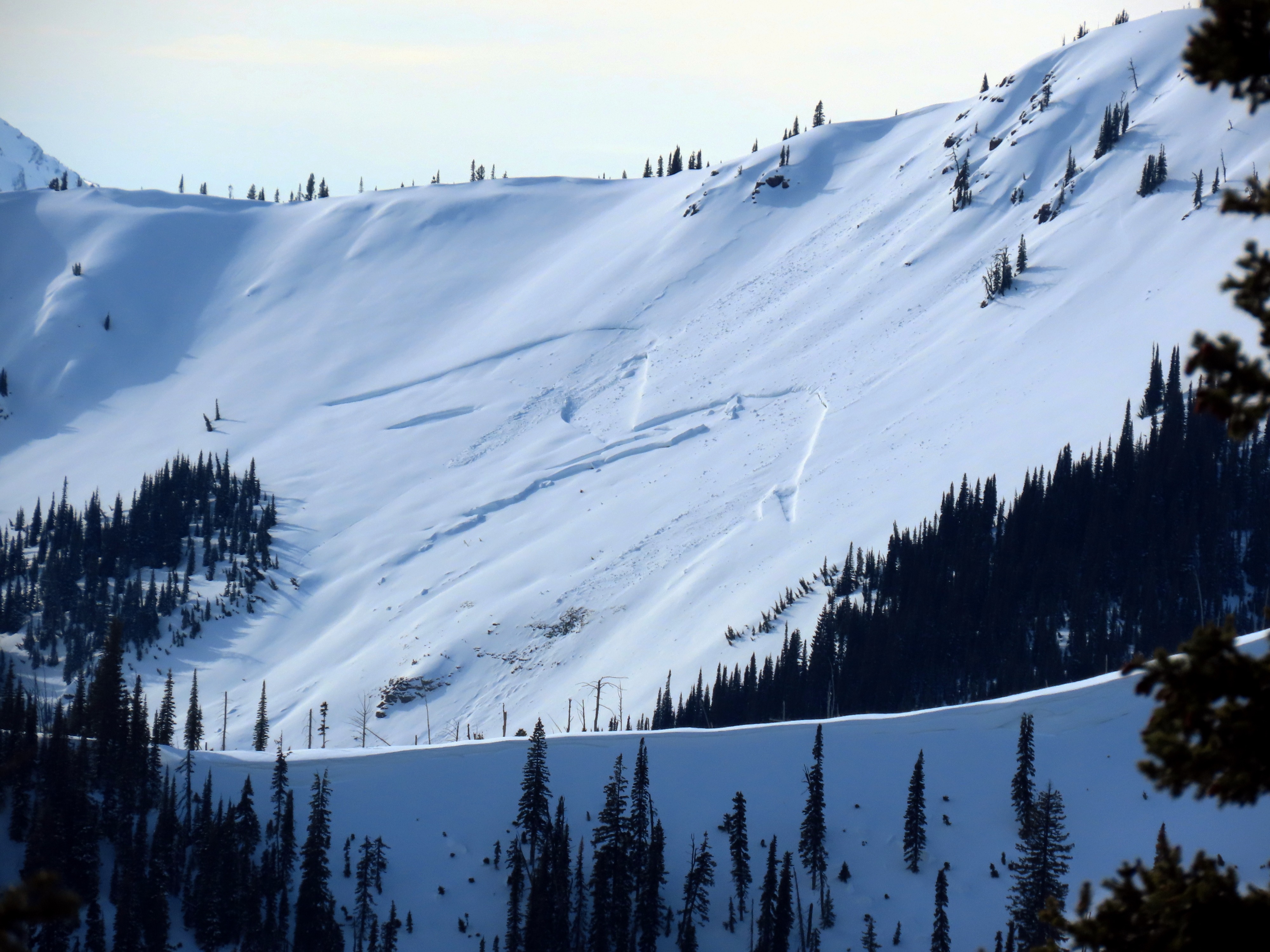
- On 2/1, we observed non-propagating test results with only a 4" slab over the surface hoar. Today, with a thicker slab, we produced a propagating result—though it required more force. More notably, we experienced repeated collapses along the ridge. Some whumpfs propagated 25–100', and one in particular was thunderous enough to make my heart skip a beat.
- All observed whumpfs occurred on leeward slopes with fetch to windward. Although wind loading has been minimal since burial of the weak layer, there appears to have been just enough wind stiffening to create a cohesive slab capable of propagating cracks on these exposed slopes. We did not experience widespread collapsing in wind-sheltered terrain.
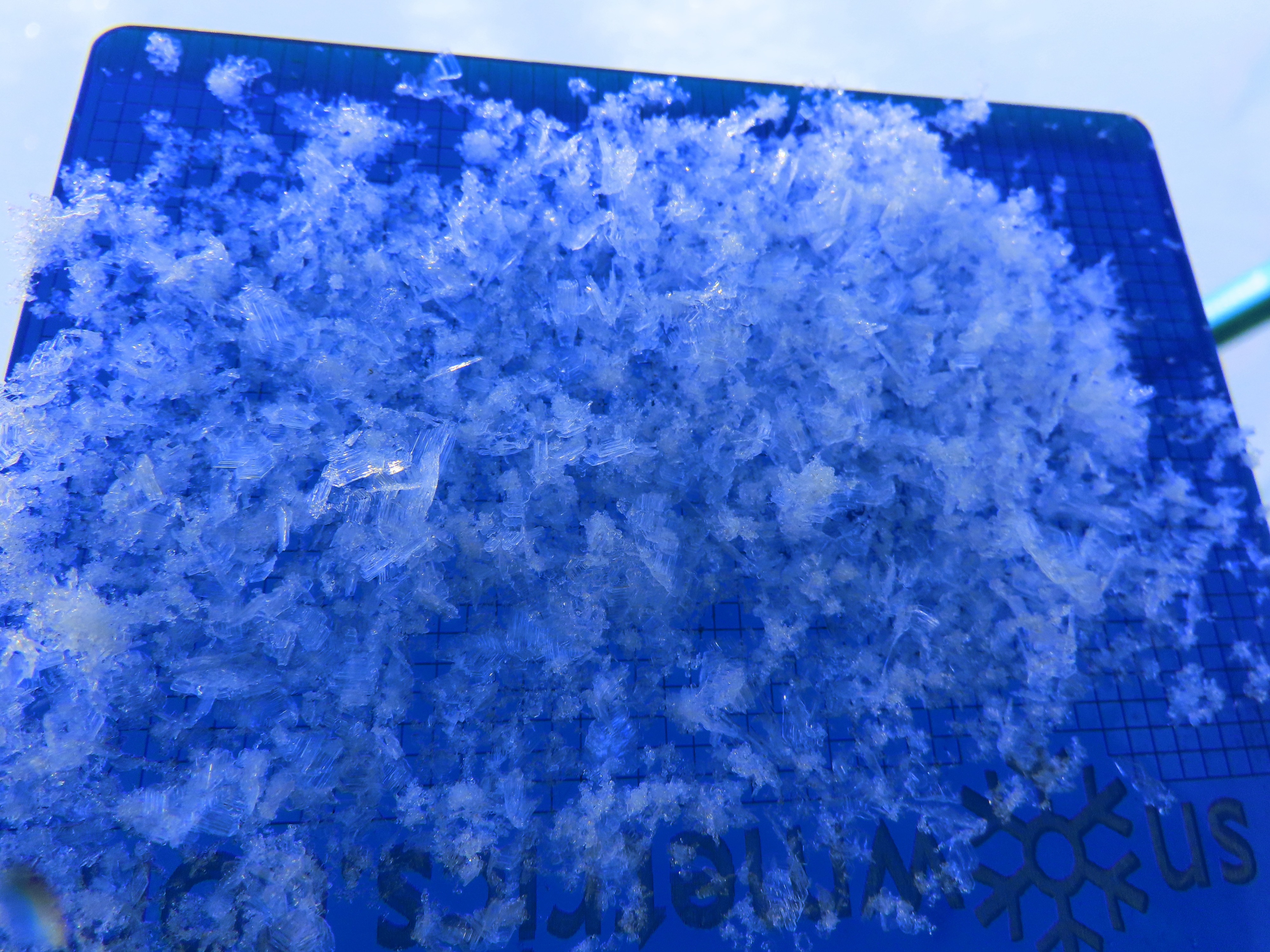
- We have once again deposited a new layer of surface hoar over the past few nights, currently standing proud at 4-6 mm. It is widespread, all the way to ridgeline. Only a problem if it becomes buried, but that could certainly add another wrinkle to an already problematic structure.
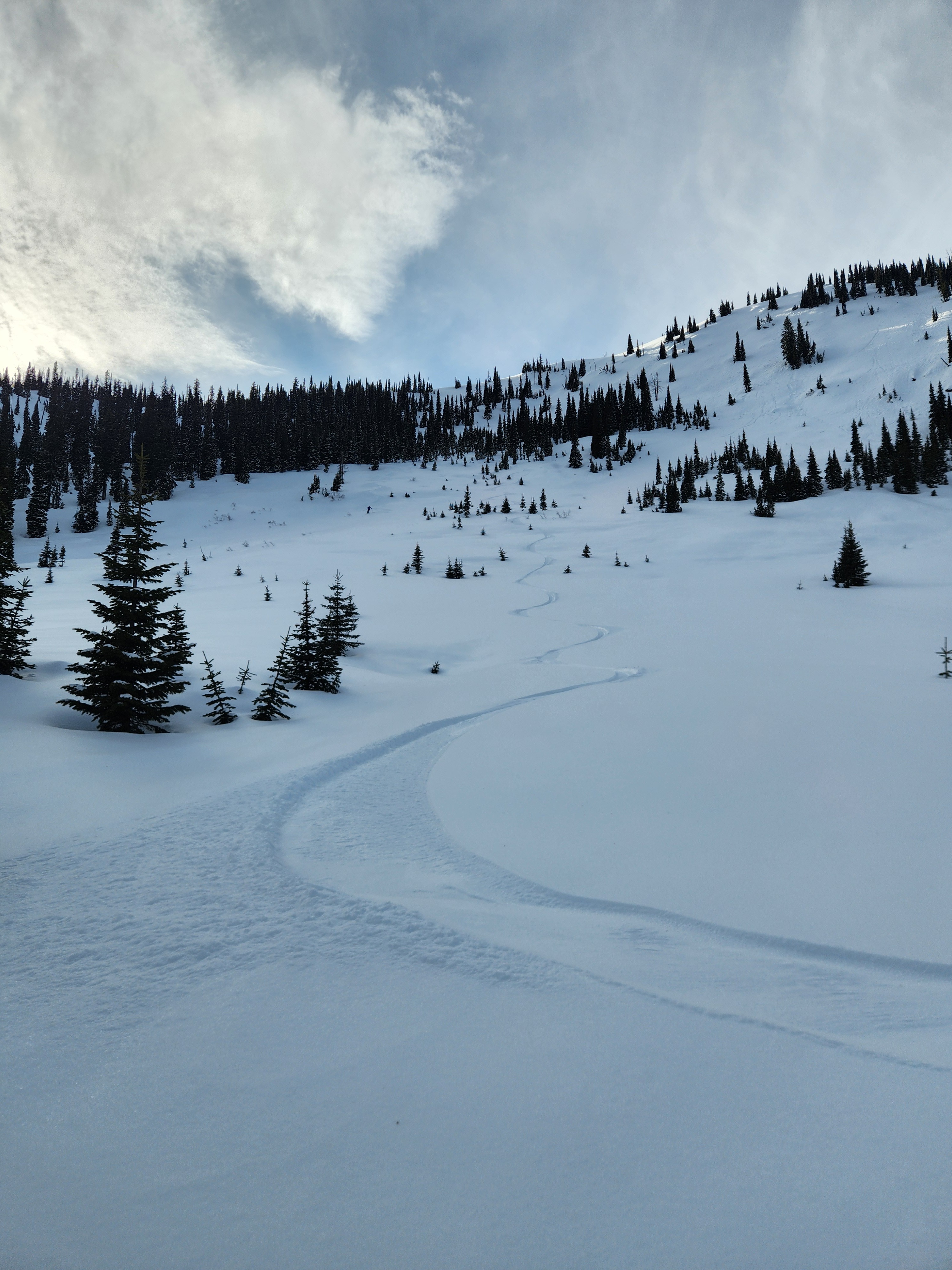
Given the current conditions, our tour plan had us avoiding steep, open slopes lacking a supportable crust beneath the recent snow. Today’s observations reinforced that decision. We found enjoyable, soft turns in recycled powder on a lower-angle treed slope off the ridge before transitioning into lower-angle open terrain further down the mountain.
Continuous whumpfing along the ridge, many localized to within 5-10 feet, some louder and wider (+-25'), and one rolling and thunderous (+-100').
Weather
- Cloud Cover
- scattered
- Wind Loading
- none
- Recent Snowfall
- 6-10
- Snow Avail For Transport
- small smounts
It was a gorgeous day in the mountains. Passing clouds with filtered sunshine, calm to light winds, and comfortable temperatures.
Snowpack
We dug two quick holes and one test pit:
Quick Hole @ 6670' - NNE aspect
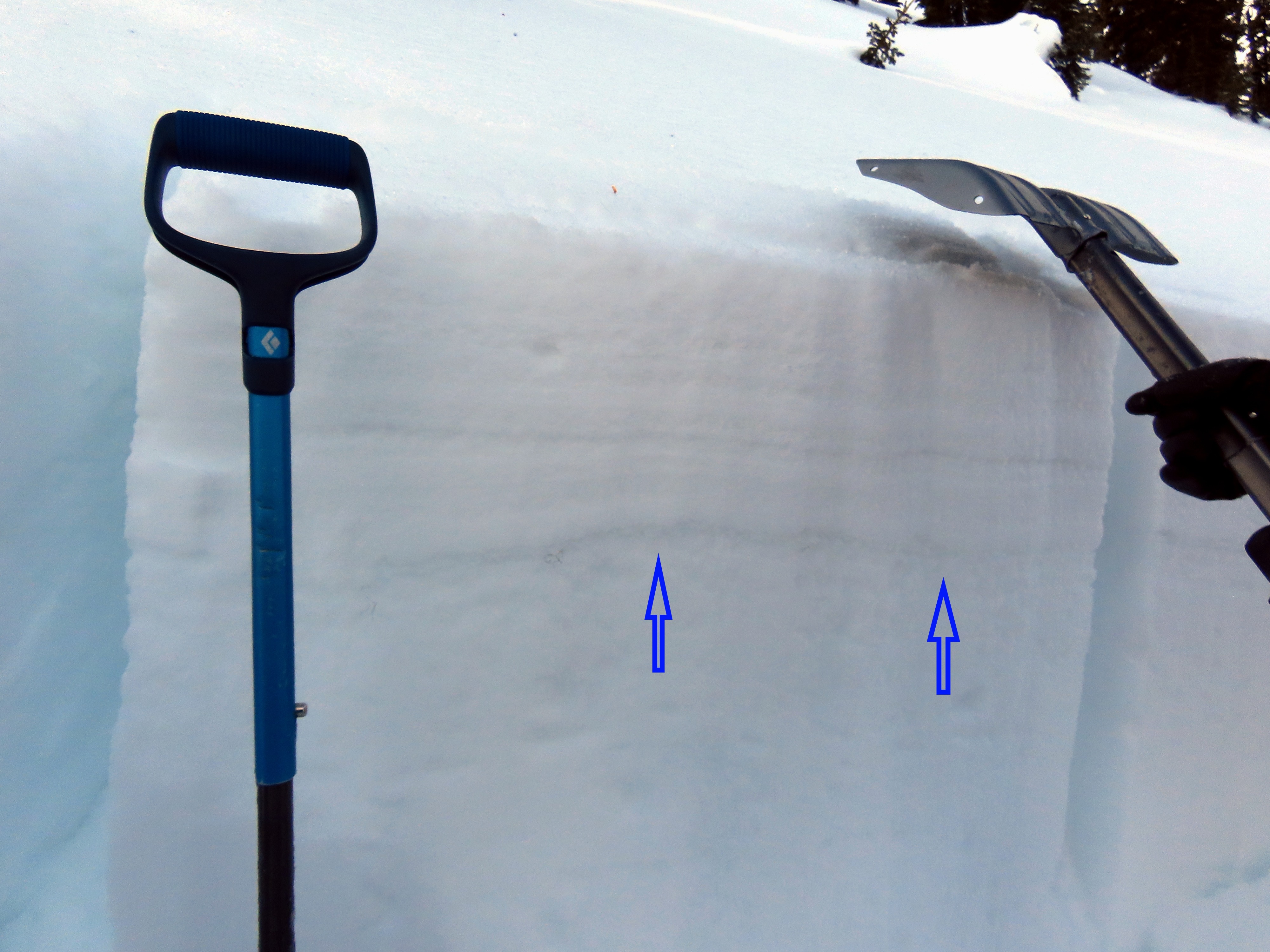
4–6 mm surface hoar sits atop 8 cm of fist-hard recent snow. The upper few centimeters below the surface hoar are faceting. Beneath this is 14 cm of 4F older snow and facets, overlying the buried surface hoar layer of concern, which rests on a crust. A few thin 1F layers are present below the recent snow and within the older snow, formed on the surface during breaks between precipitation events.
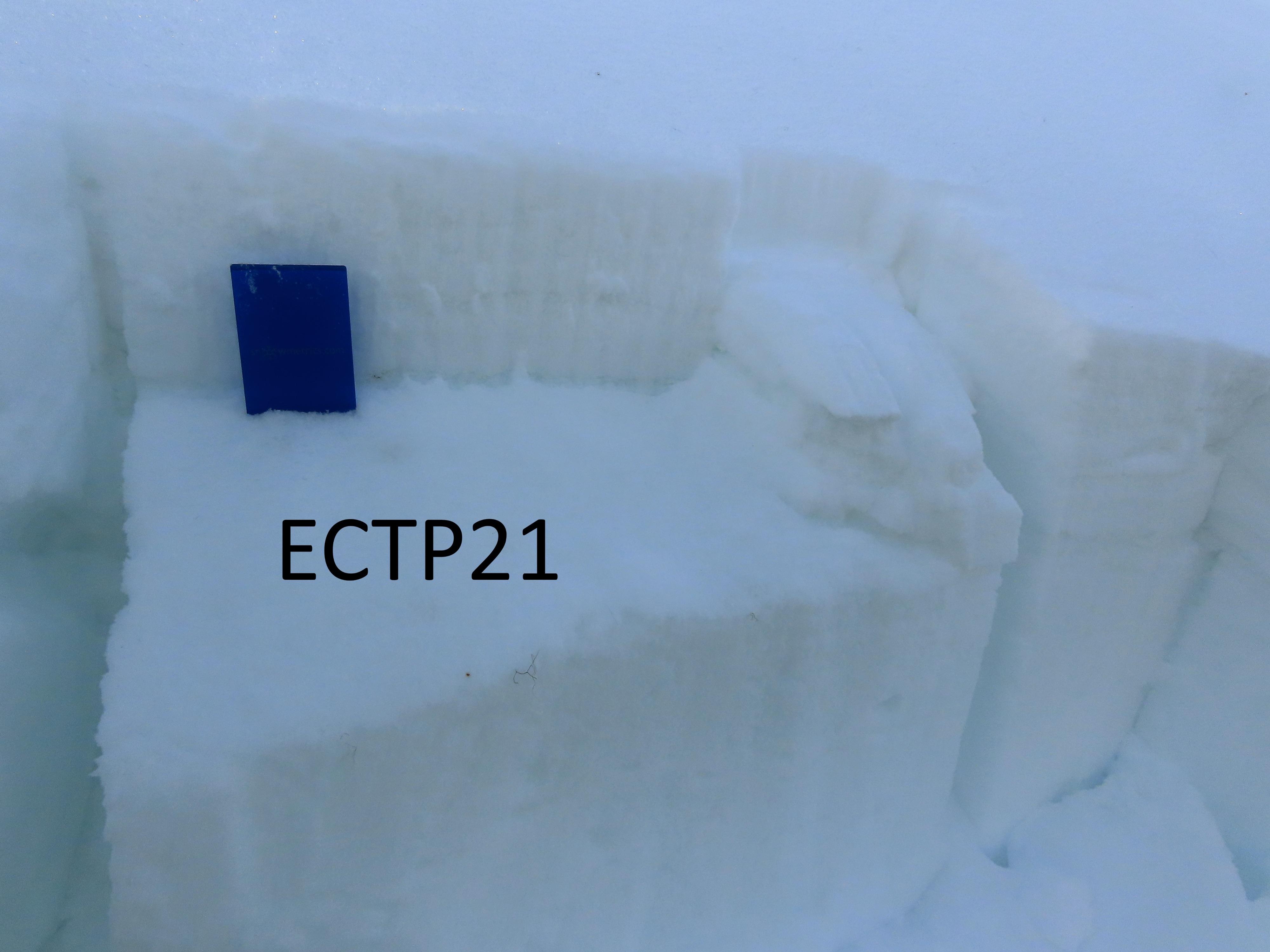
Test Pit @ 6970' - ENE aspect - adjacent to pit dug on 2/1
ECTP21 down 25 cm on 4-6 mm buried surface hoar
ECTN9 down 10 cm and new/old interface
Very similar structure to the quick hole at 6670', with the exception that the buried surface hoar layer was thinner, a bit less uniform, and perhaps a bit less intact.
Very Quick Hole @ 7150' - NE aspect - immediately adjacent to rumbling whumpf
Here, as expected, the buried surface hoar layer was thicker and quite intact. Slab was still relatively soft, but a bit more 4F than F.