
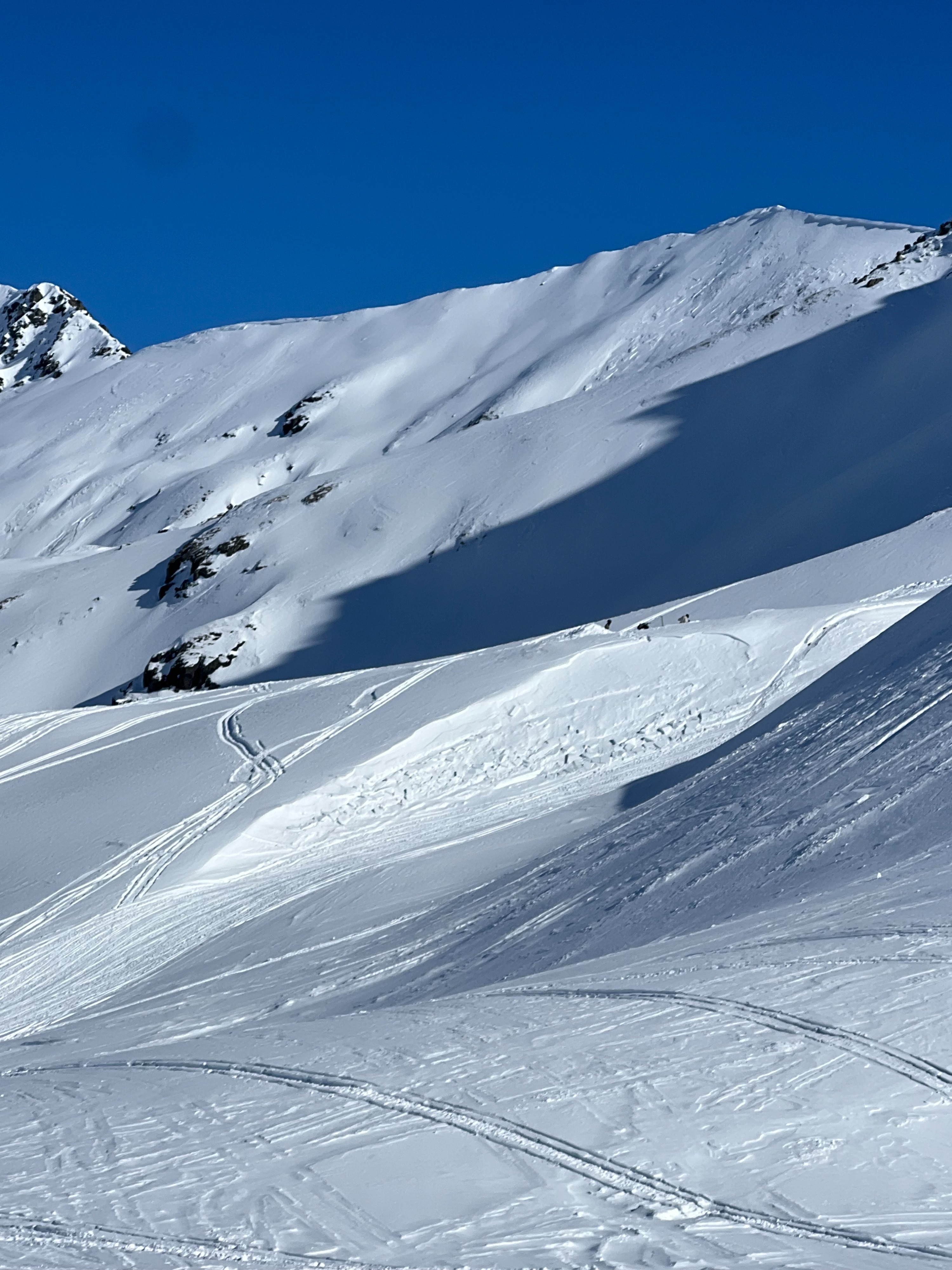
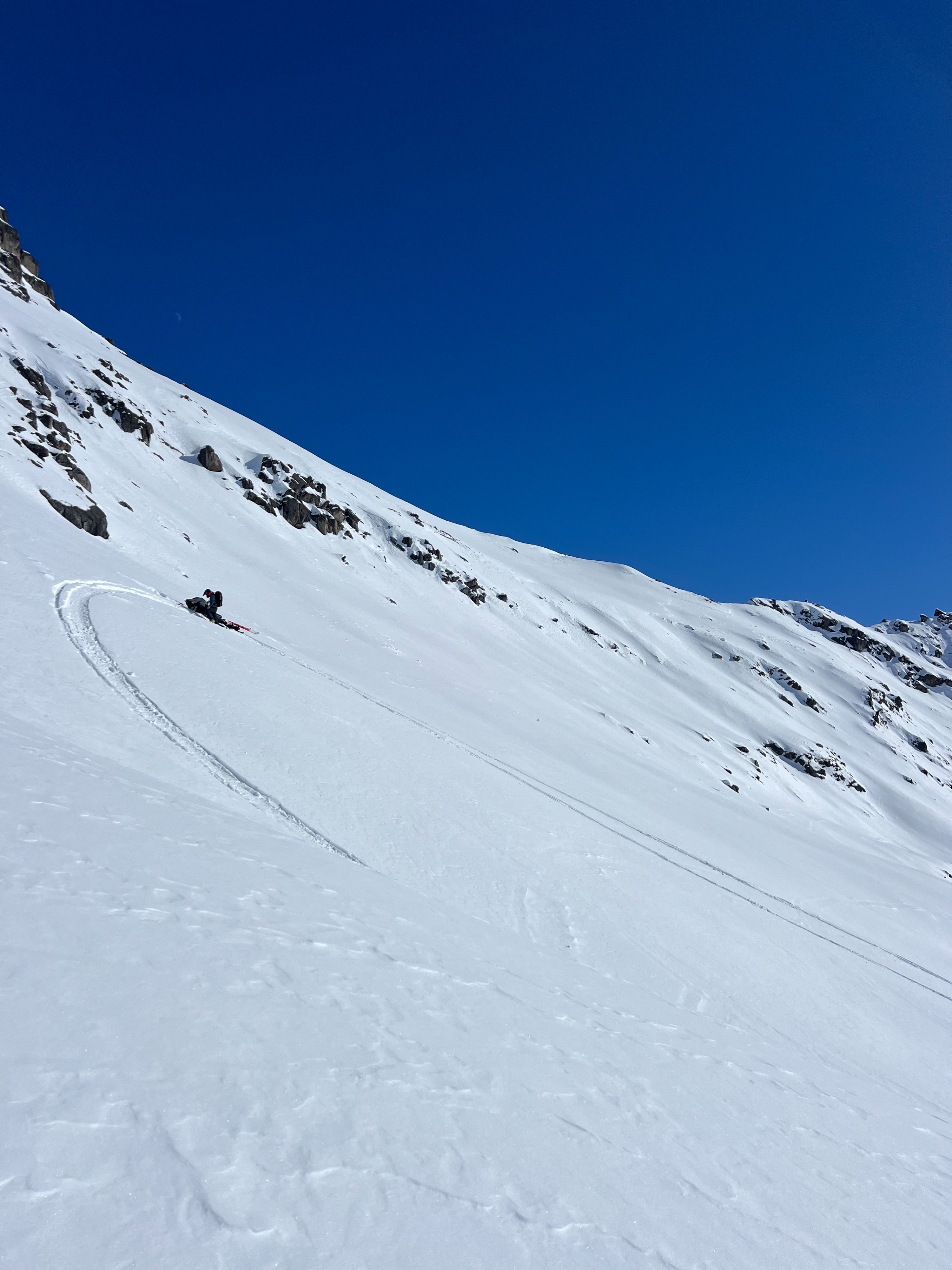
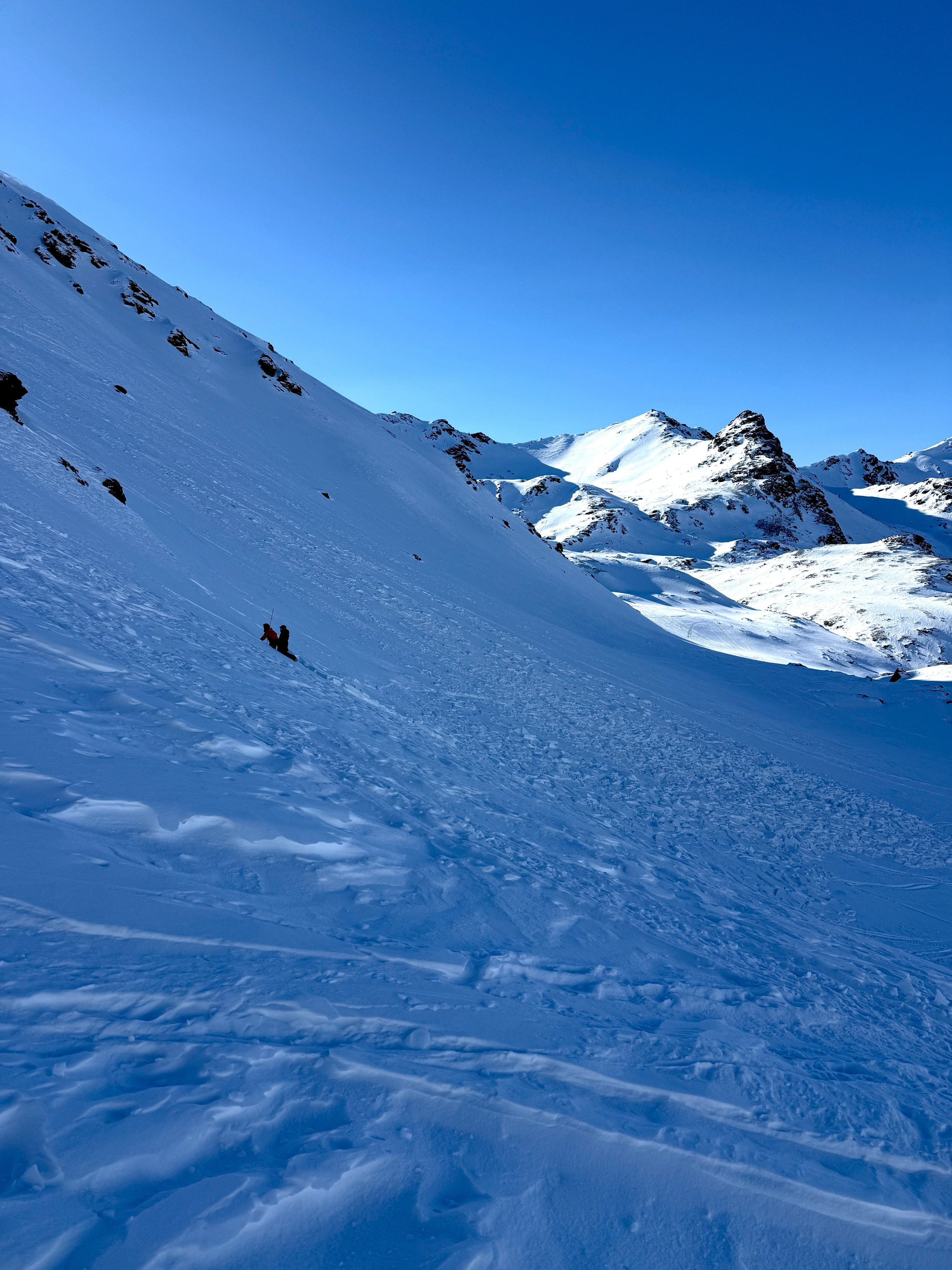
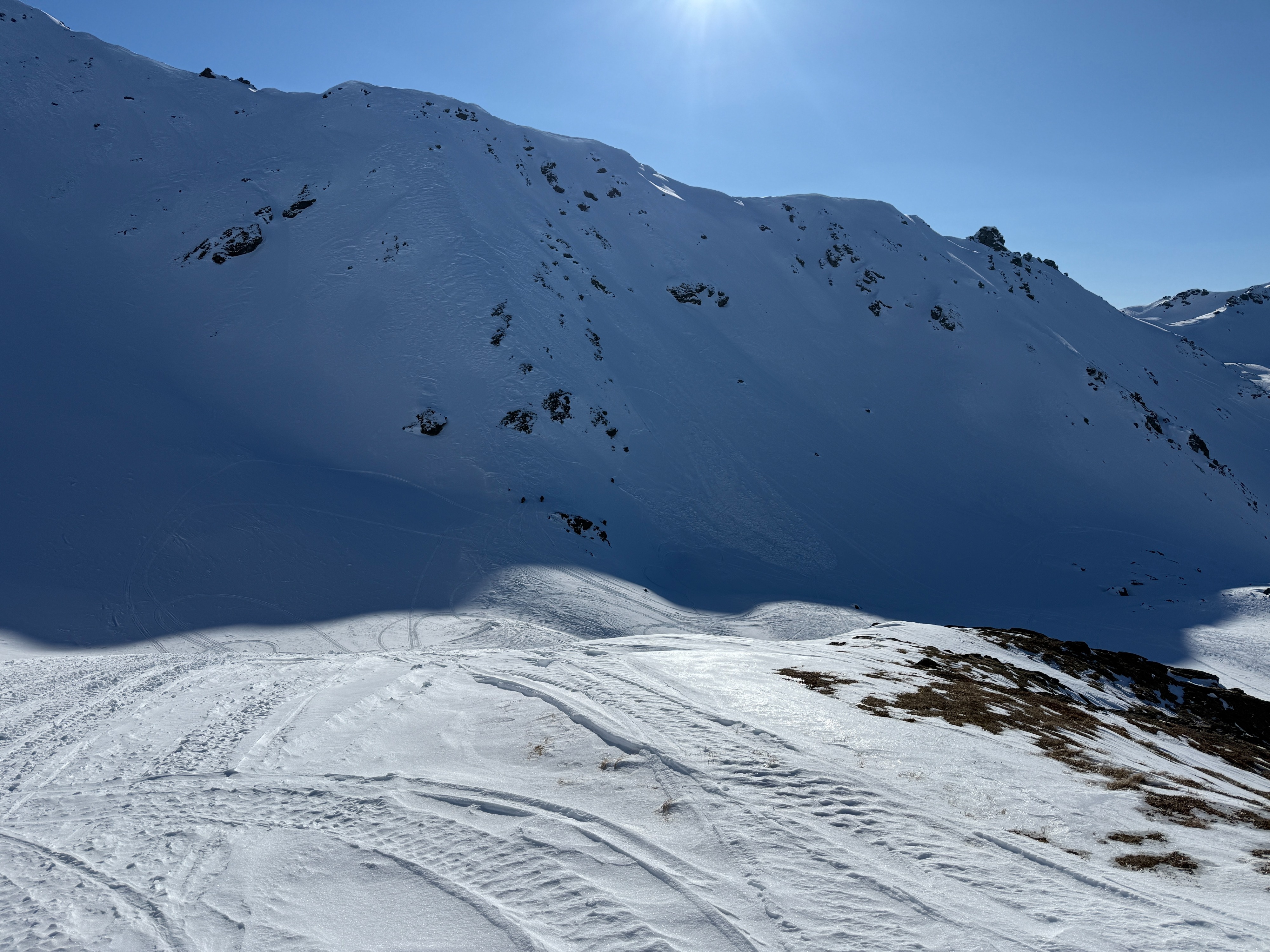
Quick report
- Cracking
- isolated
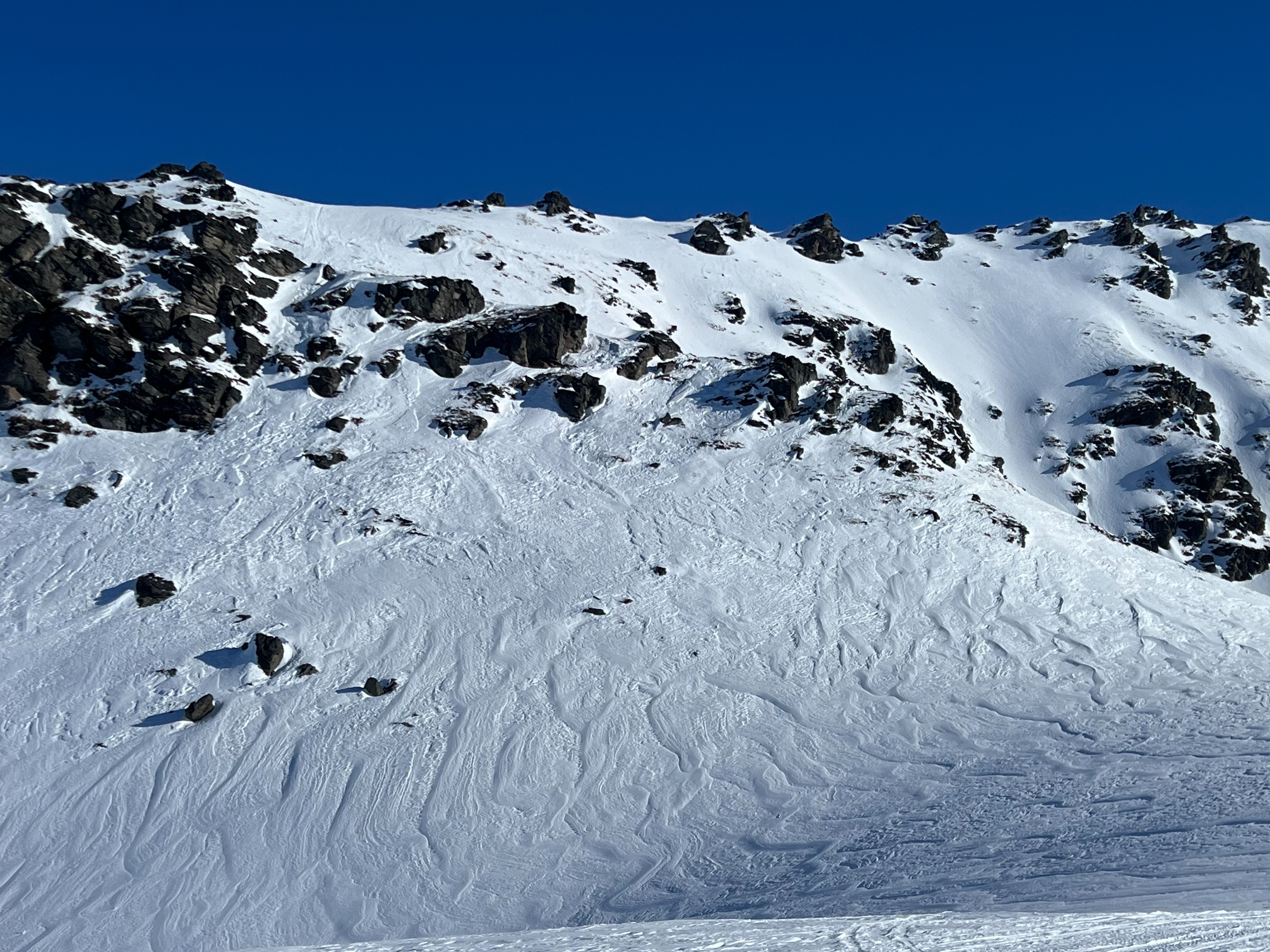
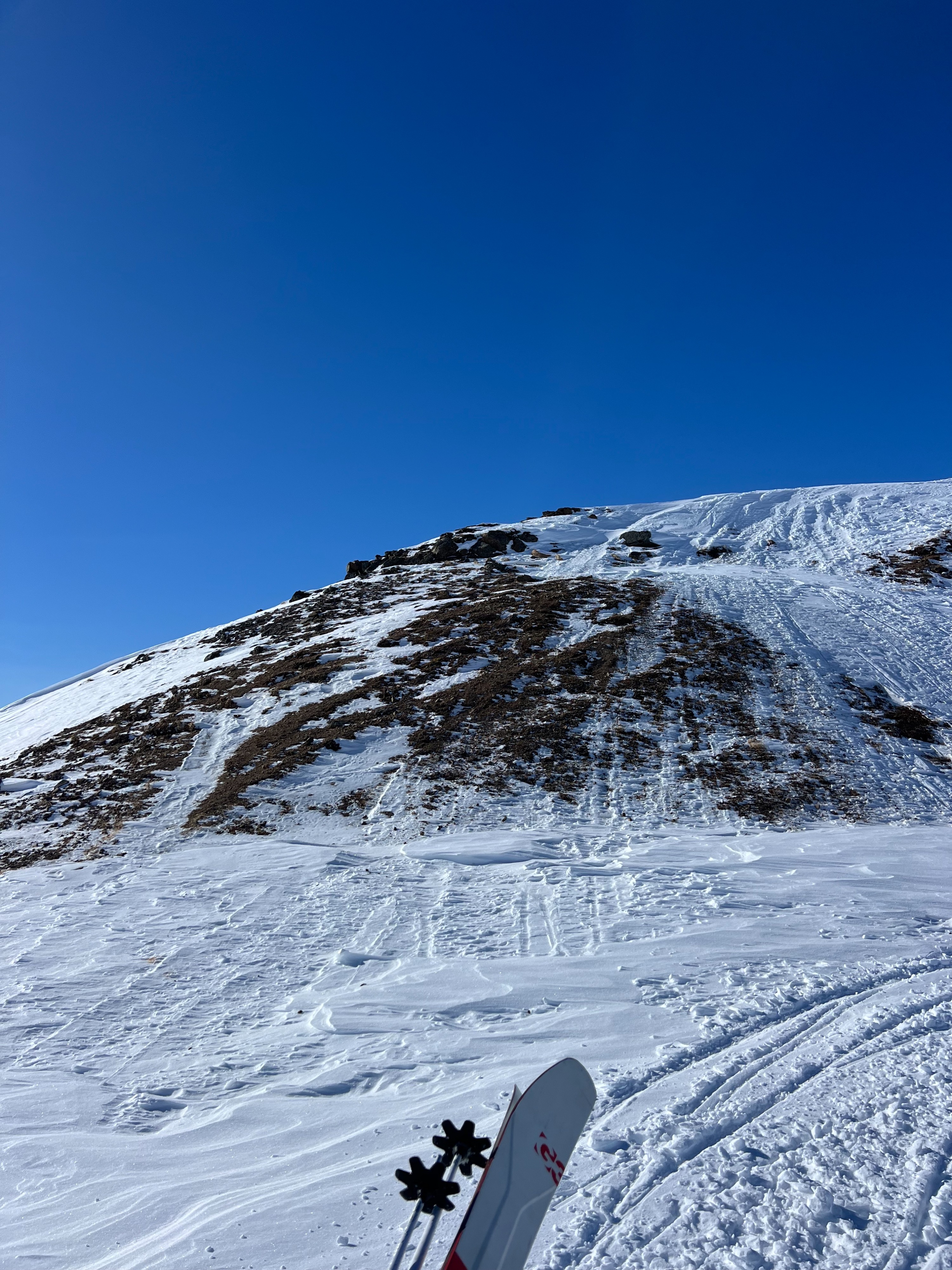
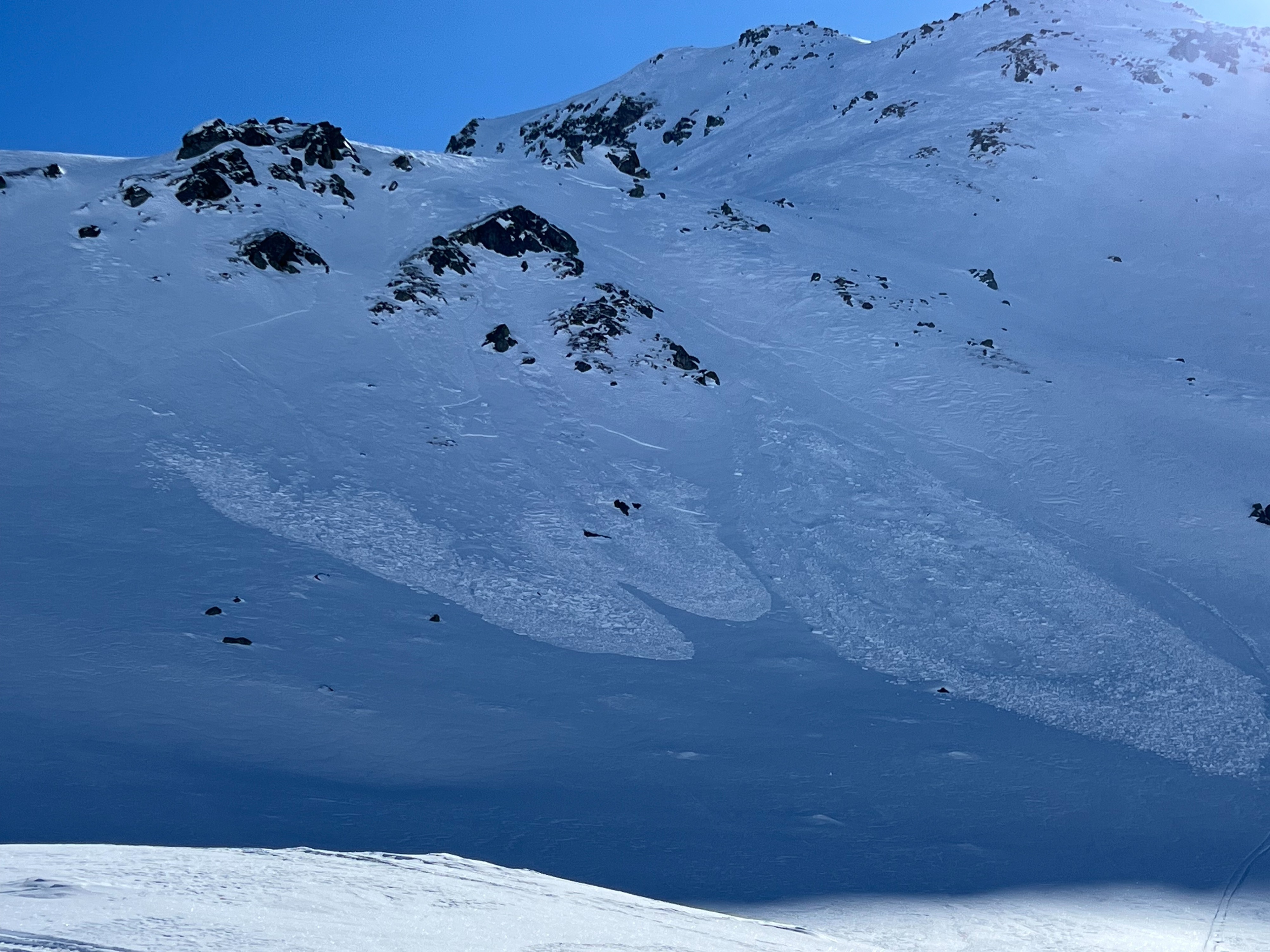
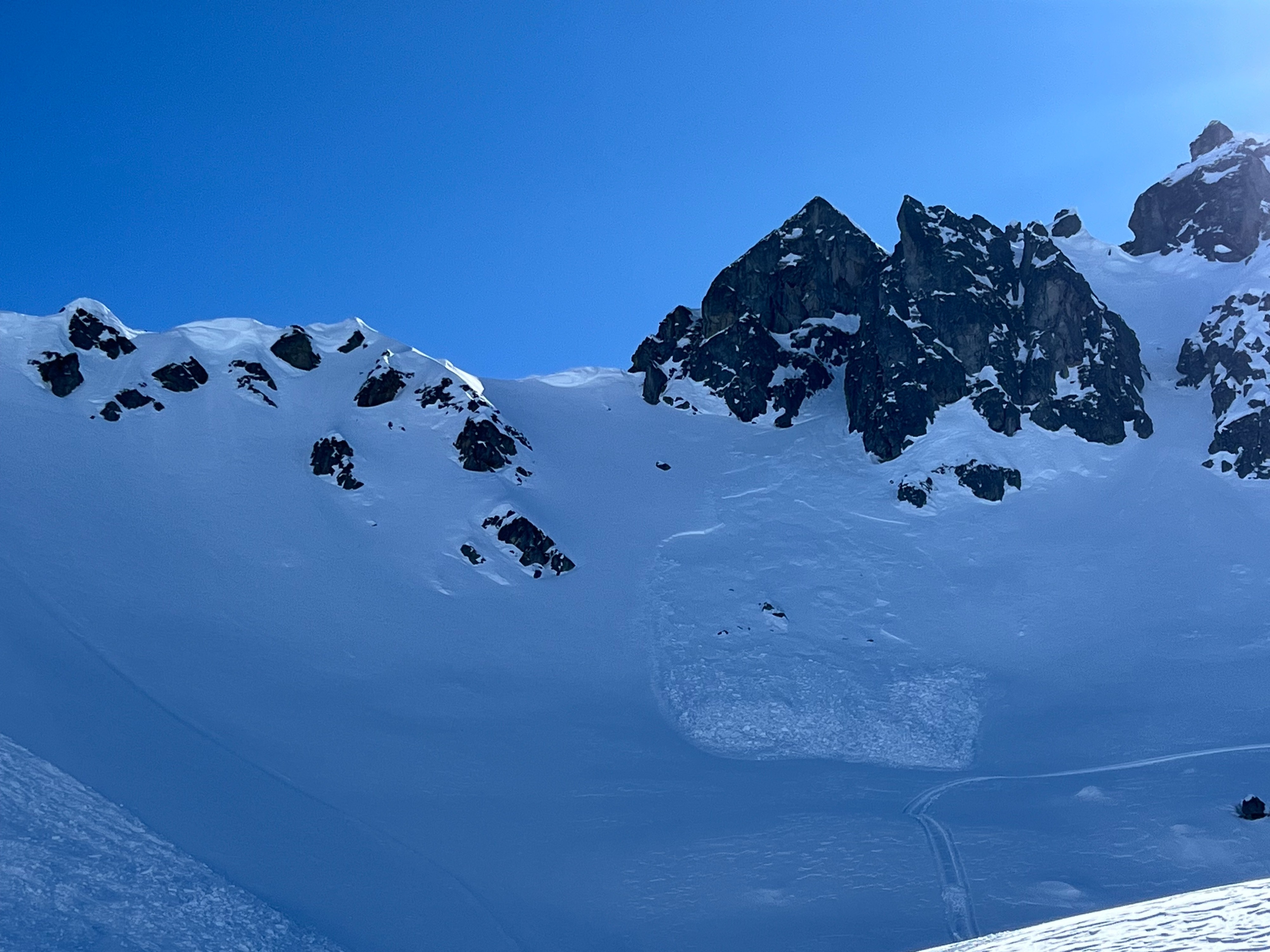
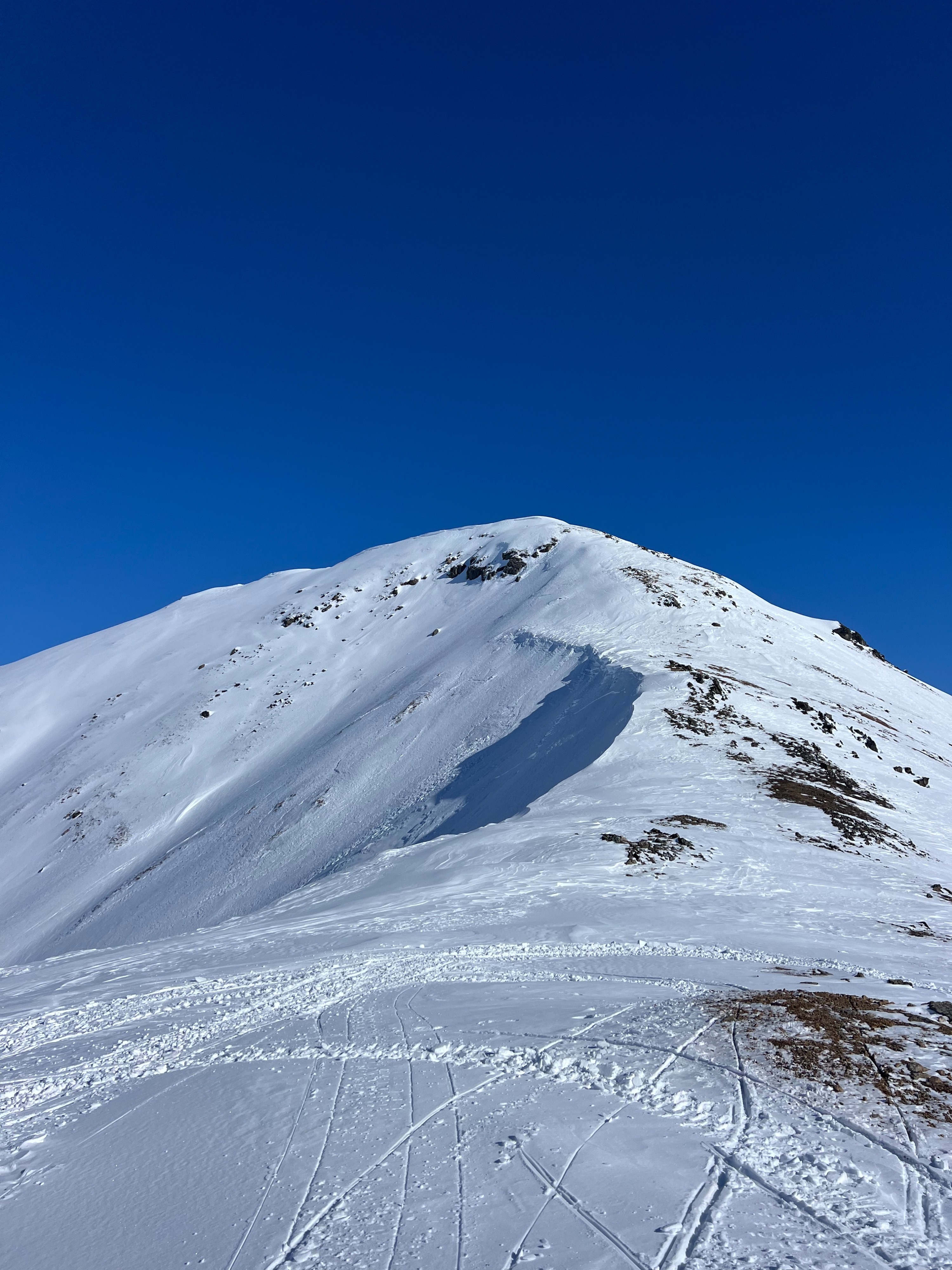
We found good riding today among otherwise wind-buffed surfaces. Most of the terrain we rode today harbored punchy wind crusts formed by last weekend's winds, but in isolated spots, we found thick, hard, stiff wind slabs that produced several natural and at least one rider-triggered slide—likely near the end of the weekend. We touched most aspects today, and despite clear skies and moderate temperatures, the snow remained dry on S and W-facing slopes by about 3 PM.
While sled cutting slopes, we peeled away a few thin slabs of wind-drifted snow. These were very small, and cracking was isolated to the space between tracks.Weather
- Cloud Cover
- clear
- Wind Loading
- previous
- Snow Avail For Transport
- small smounts
Clear skies, cool temperatures, and light easterly winds.
Snowpack
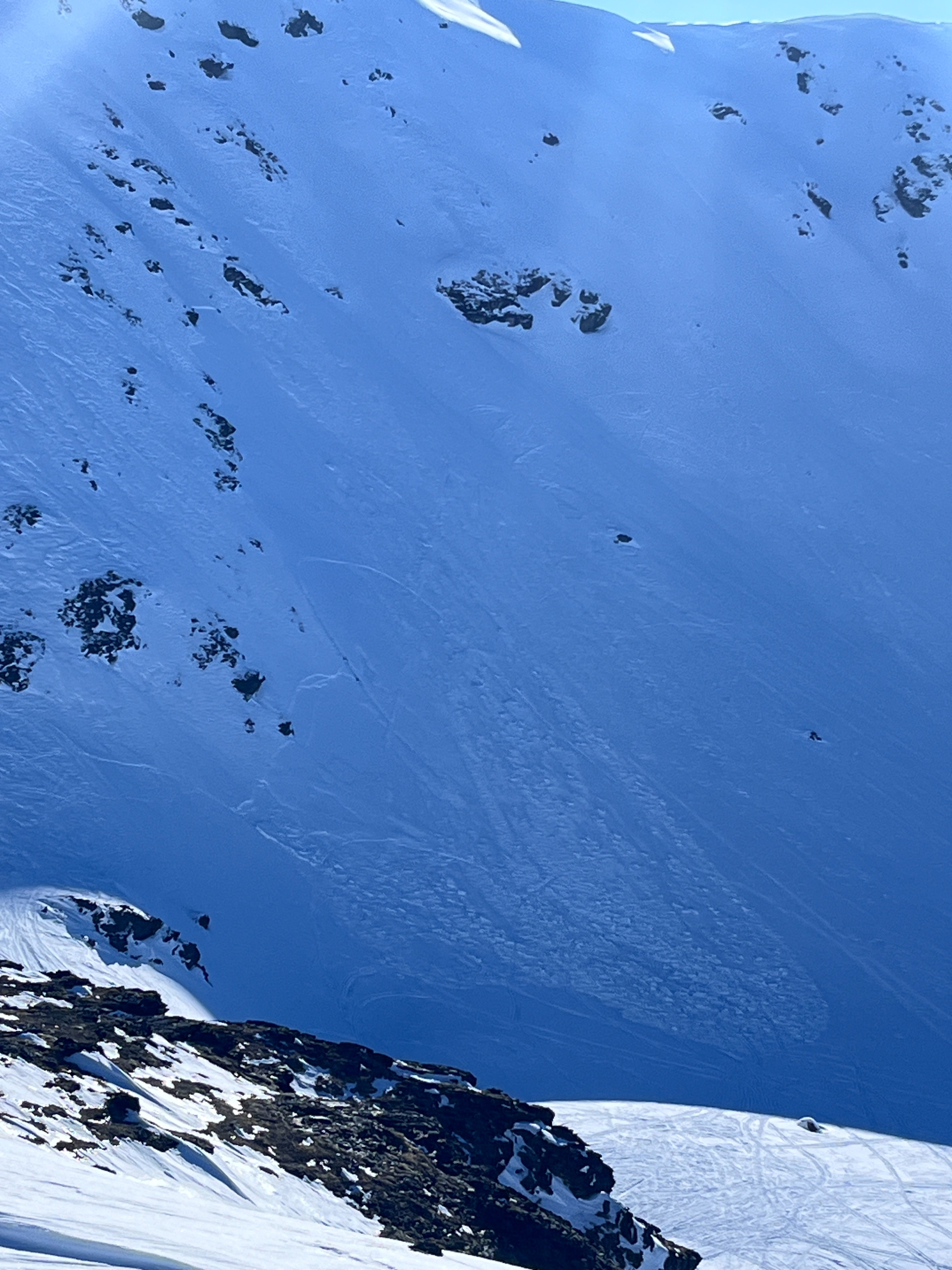
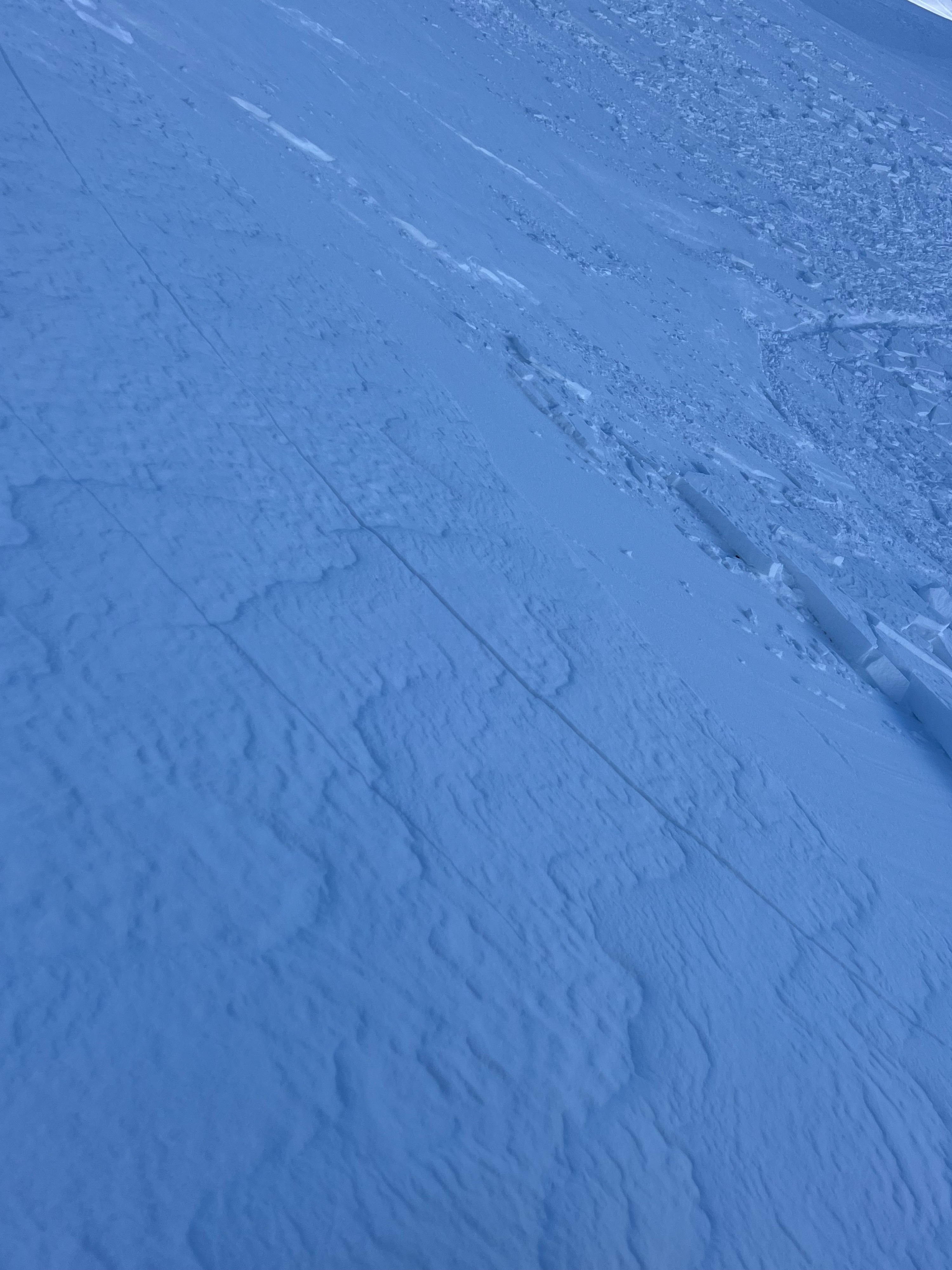
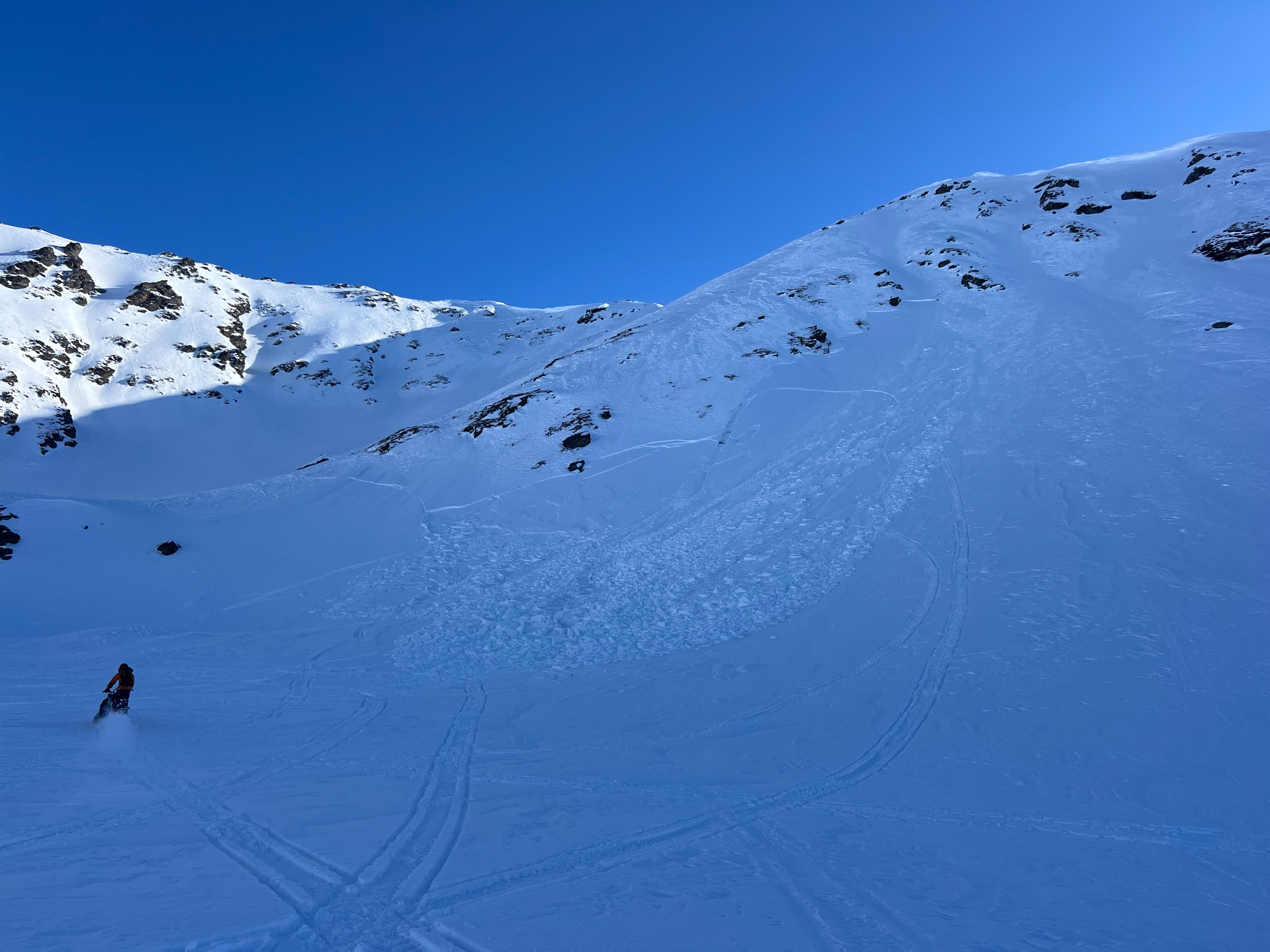
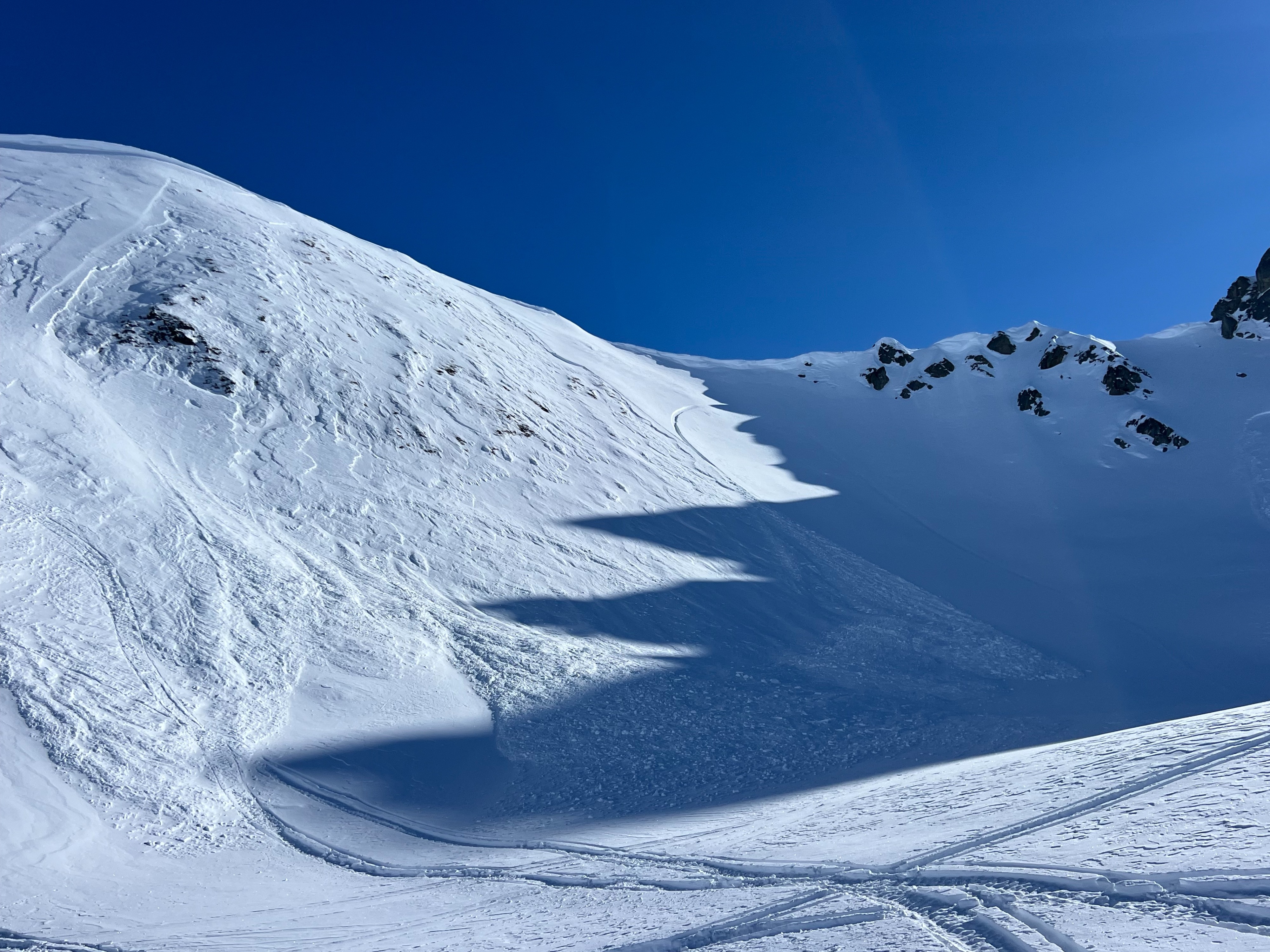
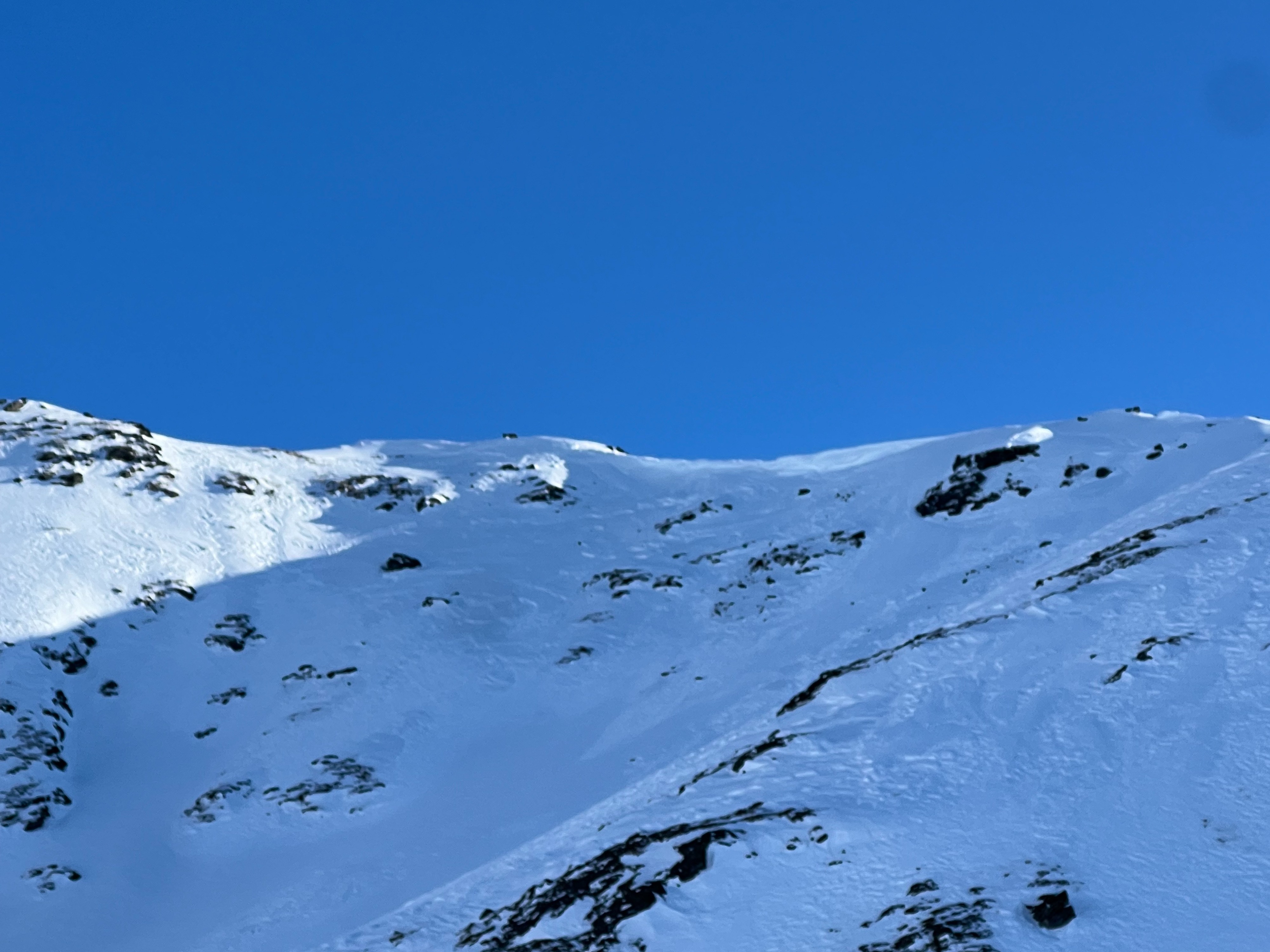
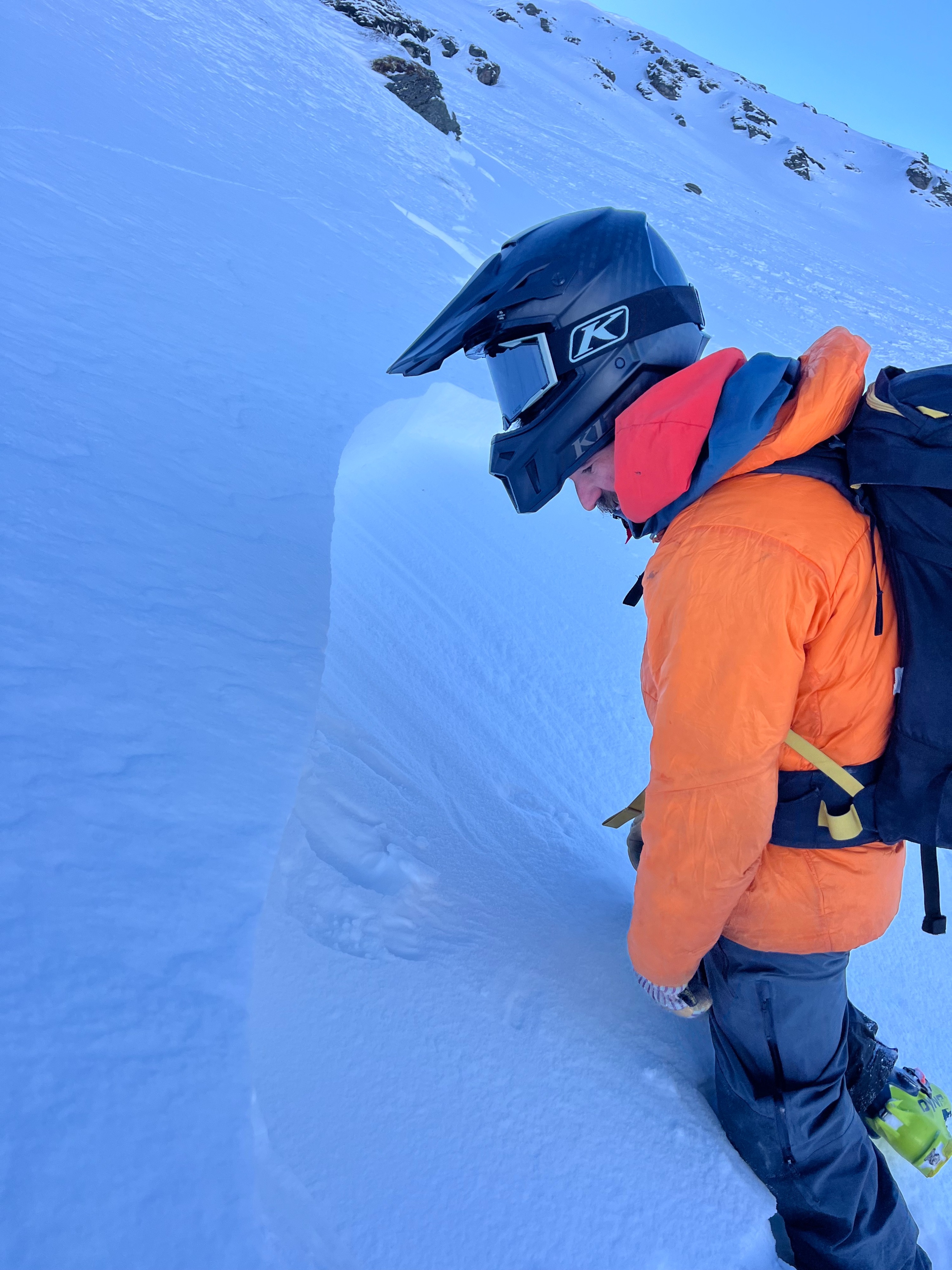
Surfaces ranged from firm pencil to knife-hard wind slabs, to soft wind-protected snow along the aprons of slopes. Throughout the ride, we dug numerous hand pits and found a wide range of wind slab thicknesses from the most recent round of strong winds. In most places, only a 1-3" wind skin rests above last week's snowfall. The expectations were heavily wind-loaded slopes where recent winds built dense drifts over small facets—like the avalanche we investigated on the west side of Hatch Peak. This was likely a similar setup to other natural hard slab slides we observed near Willow Creek.
Avalanche
- Size
- D1.5
- Type
- HS
- Aspect
- W
- Elevation
- 4000 ft
We saw several small, D1, slides that likely occurred sometime during the high winds last weekend. Below a convex roll on the west side of Hatch Peak, near about 4000', we saw what was likely a snowmachine-triggered slide. This slide, D1.5, was thin, only 9-12" at the deepest part, and broke ~150-200' wide. This avalanche failed on the older windcrust/new wind slab interface on small grain facets. The slab was pencil-knife hard.