
Quick report
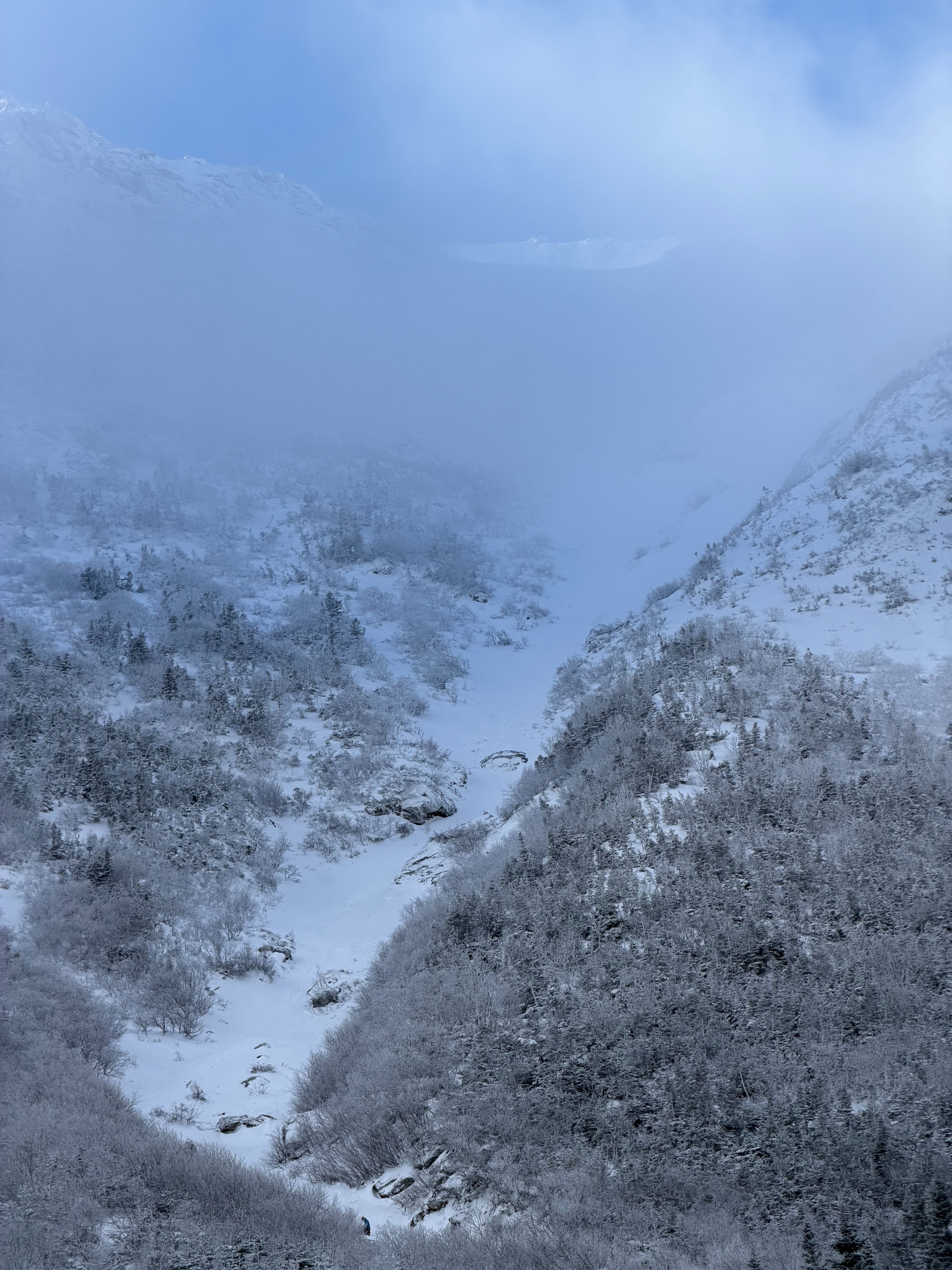
The snowpack was observed to be generally stable today. Snow surfaces are still showing areas of exposed rain crust from 12/19 as well as both small pockets of softer, wind-sheltered, snow and small areas of wind-hardened snow. Areas of softer snow can be found in highly protected areas from the wind near cliffs and in narrow gullies.
No obvious signs of instability were observed. No cracking, collapsing, active wind loading, or recent avalanches.Weather
- Air Temp
- 20
- Cloud Cover
- broken
- Wind Loading
- none
- Recent Snowfall
- 2
- Snow Avail For Transport
- small smounts
Pleasant conditions with very light winds and temperatures around 20 degrees F. Incoming snow had not yet begun when we left the field around 1pm.
Snowpack
A variable snowpack exists in easterly avalanche terrain above 3000' in elevation.
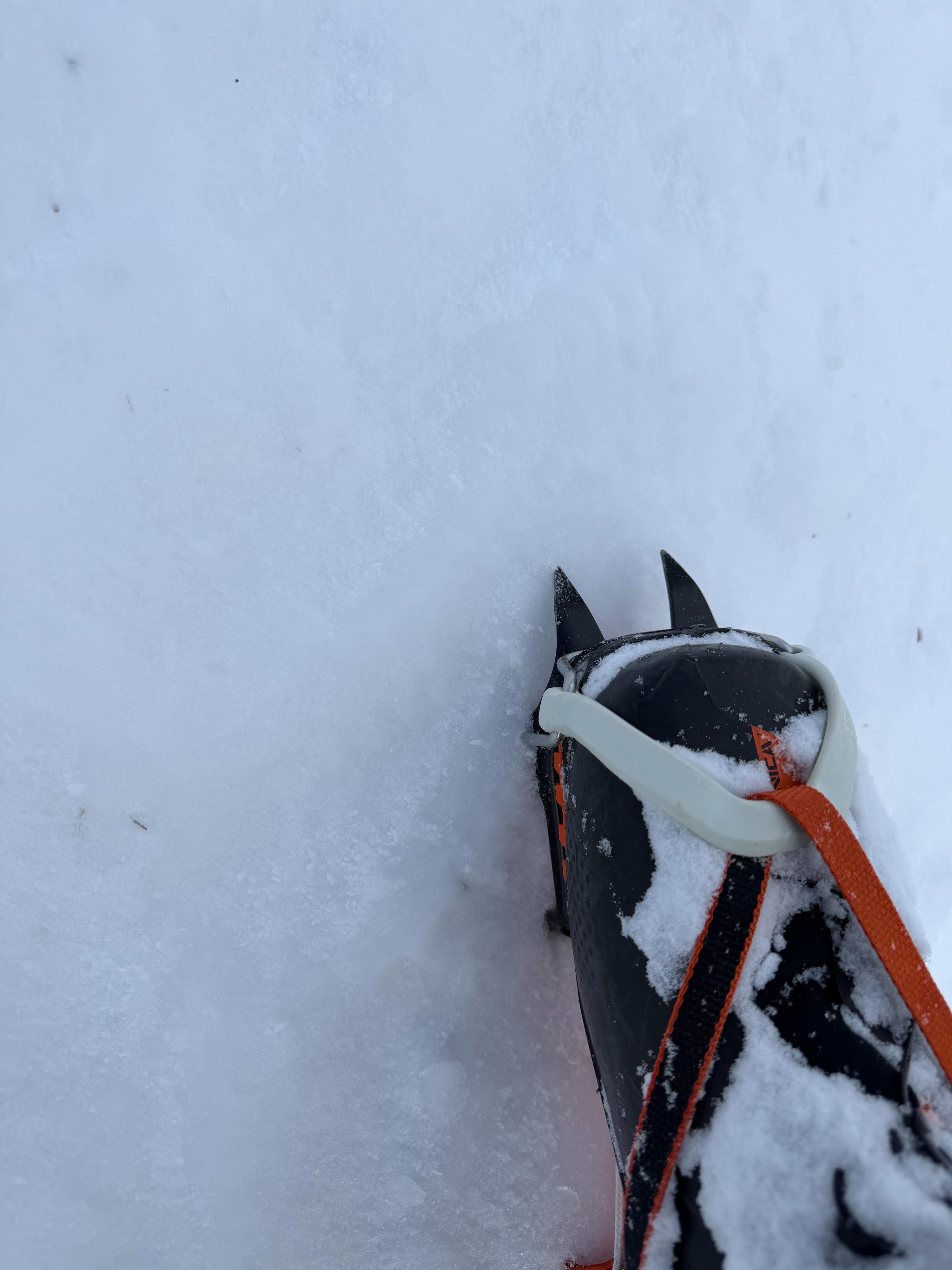
Scoured surfaces: Exposed December 19th rain crust can be found in many areas, especially at the bottoms and tops of long avalanche paths, like Hillman's Highway, where there has been more exposure to the wind. This surface is slick and very hard (knife), requiring crampons and an ice axe to safely travel.
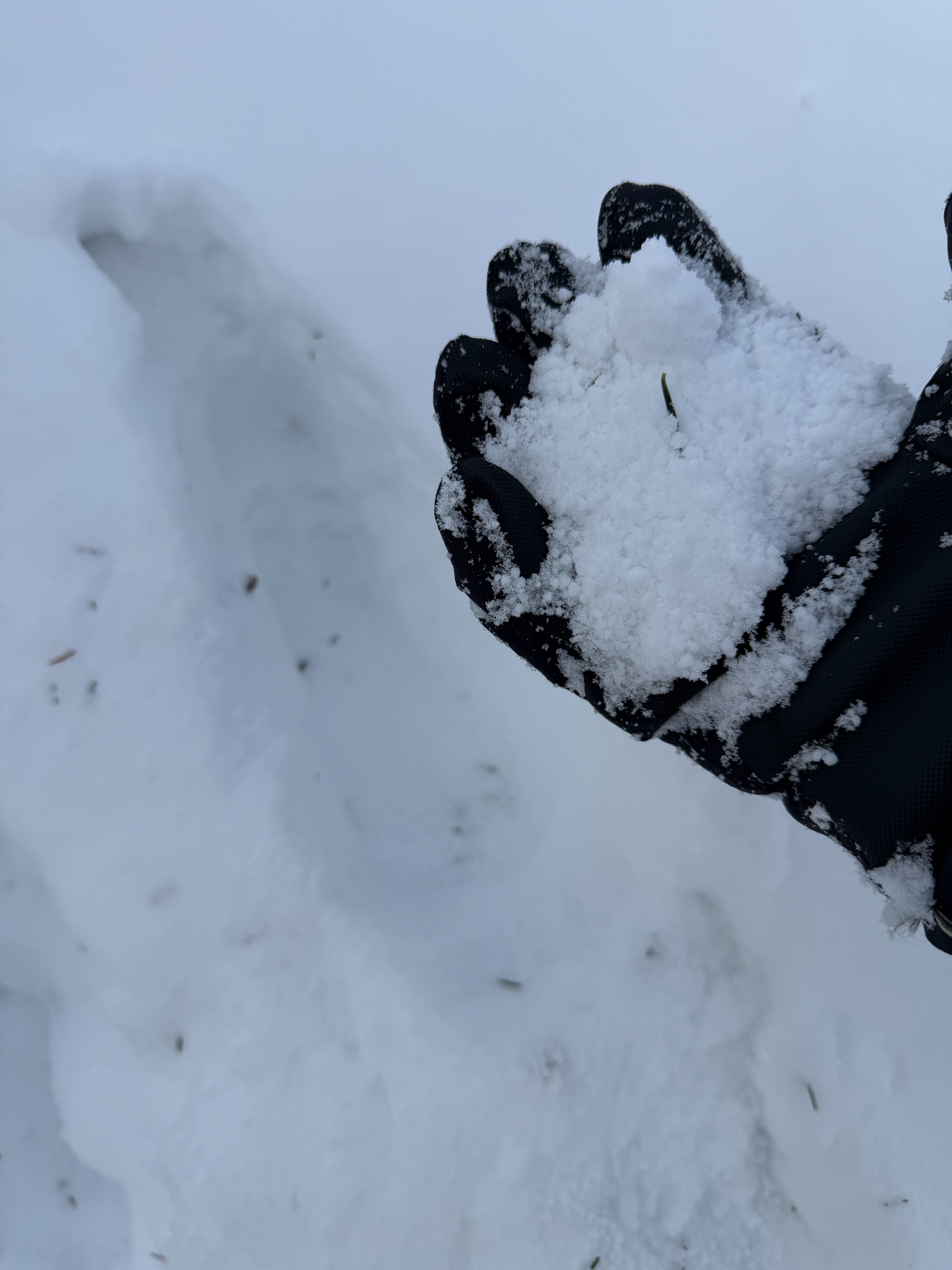
Softer snow and old wind slabs: In highly wind-sheltered terrain, and in the middle sections of some avalanche paths, there are small 'pockets' of softer snow (varying in hardness from 4F to P depending on the wind protection). The depth of these pockets varies from 6 inches to about 2 feet and that depth range can be observed in a span of just 20 feet, side-to-side. However, where these older slabs do exist, we observed faceting rounds (weakening snow) at the interface of the buried rain crust. In our snowpit, no propagating results were observed, and we did not observe any warning signs of propagation while traveling in the terrain. Extended column tests revealed compressive failure without propagation on a mid-slab density change and also on the rain crust interface in a layer of faceting rounds and graupel. It's important to note that this faceting layer does not exist everywhere and is actually quite isolated in it's distribution, but it was an interesting find today.
It's also worth noting that there were a couple of areas of deeper old snow in Hillman's around 4500' in elevation, below the "Y", that we chose to avoid traveling on. While they were generally small in size, the consequence of triggering a small avalanche on an icy bed surface with rocks, ice, and trees below, would be devastating.